Books About

BoingyBooks Classics

238 published works

About the Author

B

BoingyBooks Classics

BoingyBooks Classics brings timeless children's stories to life with interactive read-along technology. Each book features word-by-word bouncing ball animation synchronized to professional AI narration, helping young readers follow along and build reading skills.

238 books published on BoingyBooks

All Books

The Mango Tree Voice

The Mango Tree

The Mango Tree (English), written by Kanchan Bannerjee, illustrated by Kavya Singh, published by Pratham Books under a CC BY 4.0 license on StoryWeaver. 'The Mango Tree' has been published on StoryWeaver by Pratham Books. The illustration and design of this book has been undertaken by Srishti School of Art, Design and Technology. www.prathambooks.org This BoingyBooks Classics edition is an interactive read-along adaptation by John Shoufler. You may copy, modify, distribute, and use the original story and illustrations commercially under CC BY 4.0 (https://creativecommons.org/licenses/by/4.0/) if you keep this attribution. John Shoufler is not the original writer or illustrator. StoryWeaver's separate read-along videos are not used.

$1.99 9 pages
Details
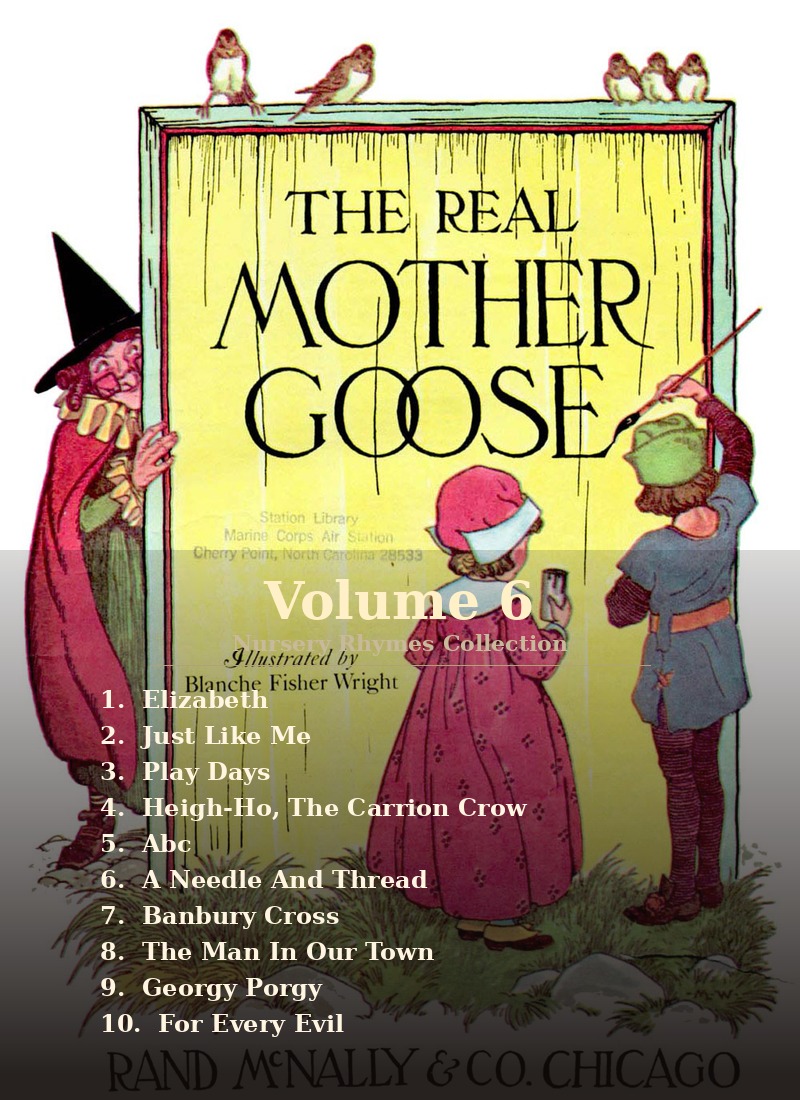
Mother Goose Nursery Rhymes: Volume 6 Voice

Mother Goose Nursery Rhymes: Volume 6

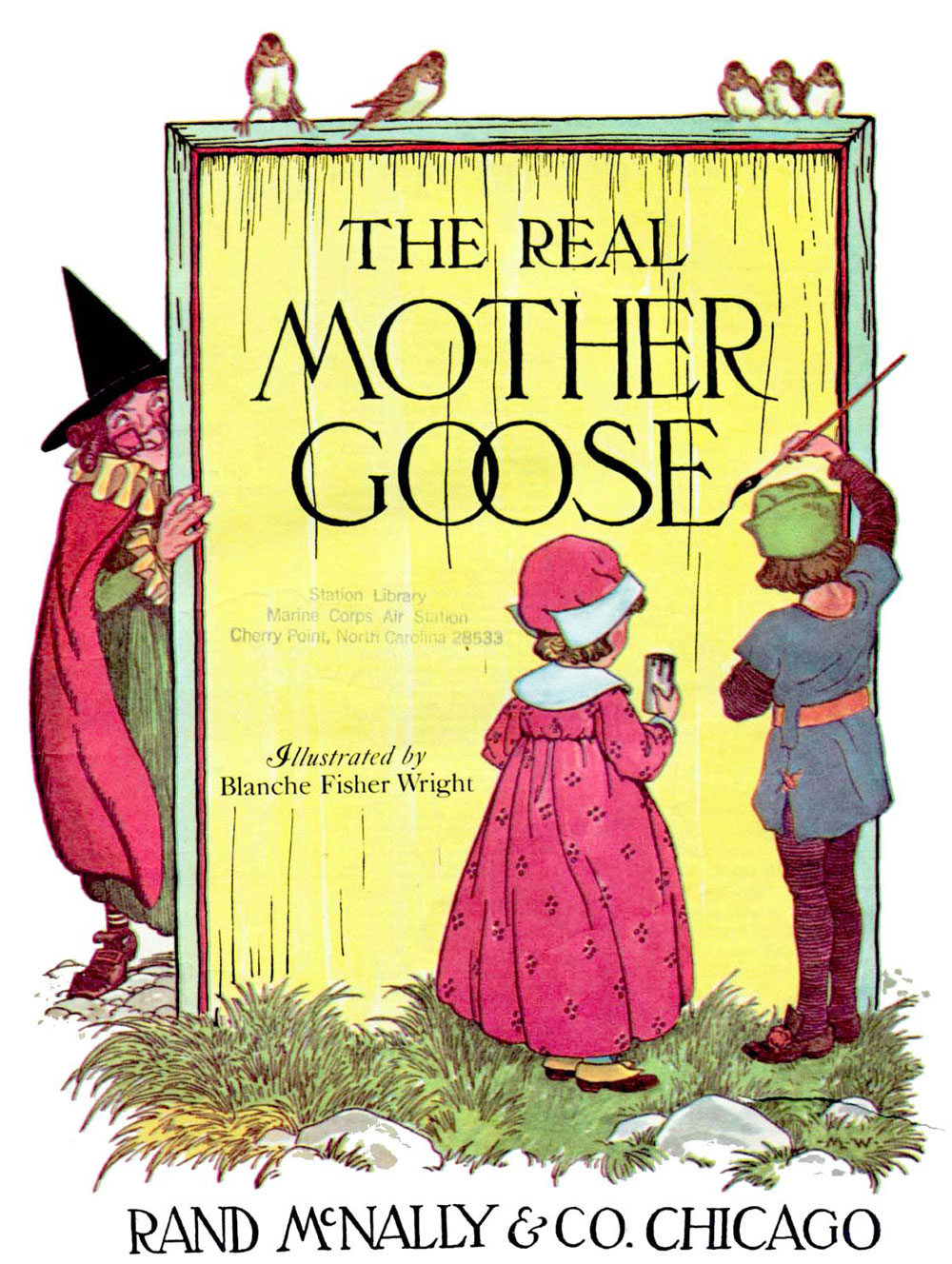
Ten beloved nursery rhymes from The Real Mother Goose (1916), illustrated by Blanche Fisher Wright. This interactive read-along edition features the original public domain illustrations paired with word-by-word bouncing text. Rhymes in this volume: 1. Elizabeth 2. Just Like Me 3. Play Days 4. Heigh-Ho, The Carrion Crow 5. Abc 6. A Needle And Thread 7. Banbury Cross 8. The Man In Our Town 9. Georgy Porgy 10. For Every Evil These rhymes are drawn from the rich oral tradition of English nursery verse, many dating back to the 17th and 18th centuries. They were first collected and published in this illustrated form by Blanche Fisher Wright in 1916.

$1.99 10 pages
Details
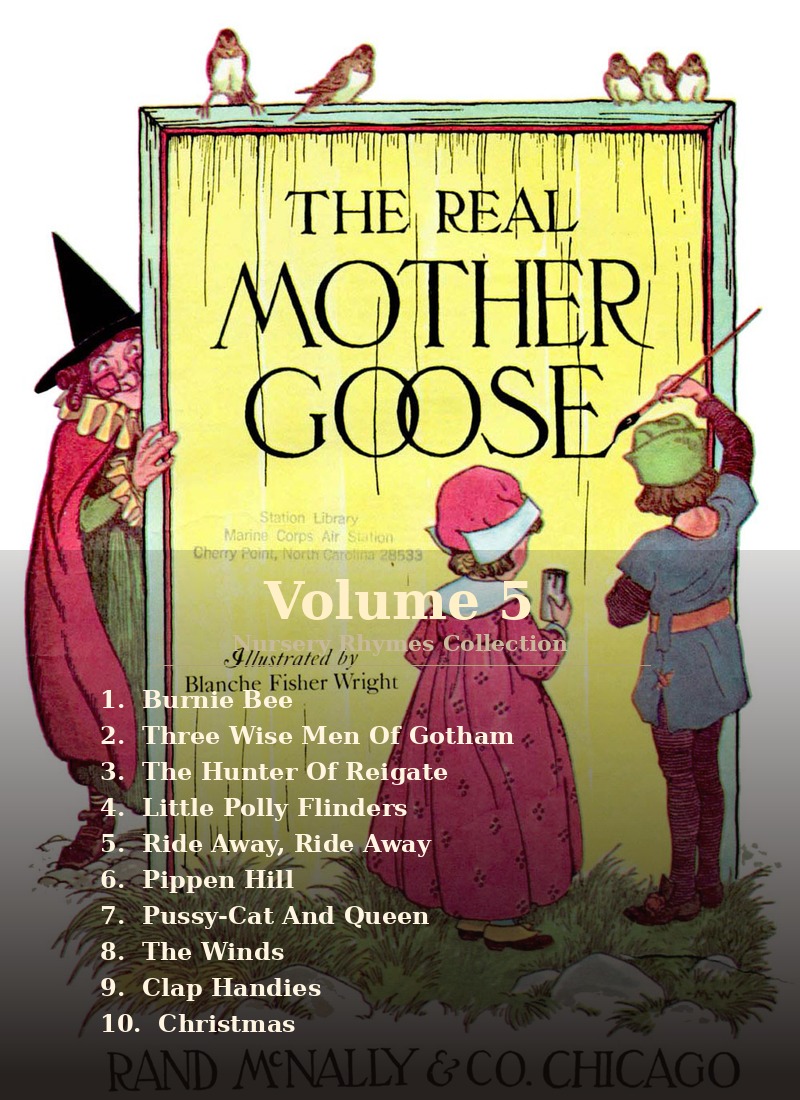
Mother Goose Nursery Rhymes: Volume 5 Voice

Mother Goose Nursery Rhymes: Volume 5

Ten beloved nursery rhymes from The Real Mother Goose (1916), illustrated by Blanche Fisher Wright. This interactive read-along edition features the original public domain illustrations paired with word-by-word bouncing text. Rhymes in this volume: 1. Burnie Bee 2. Three Wise Men Of Gotham 3. The Hunter Of Reigate 4. Little Polly Flinders 5. Ride Away, Ride Away 6. Pippen Hill 7. Pussy-Cat And Queen 8. The Winds 9. Clap Handies 10. Christmas These rhymes are drawn from the rich oral tradition of English nursery verse, many dating back to the 17th and 18th centuries. They were first collected and published in this illustrated form by Blanche Fisher Wright in 1916.

$1.99 10 pages
Details
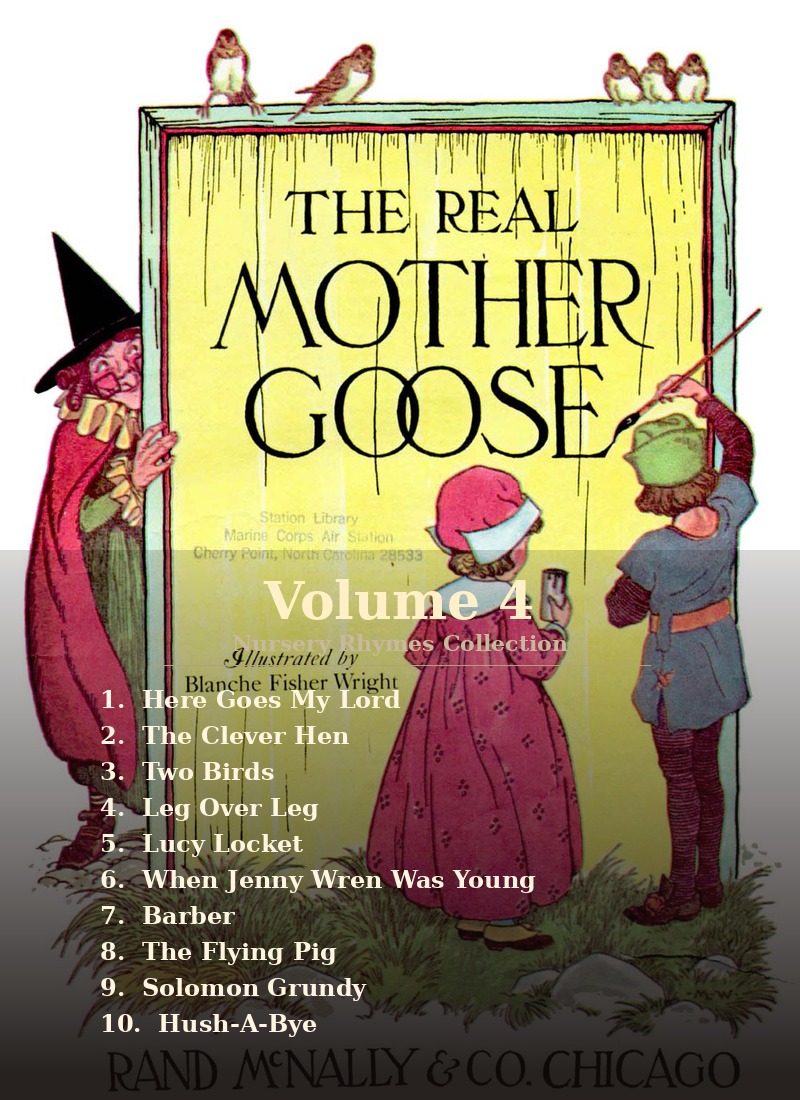
Mother Goose Nursery Rhymes: Volume 4 Voice

Mother Goose Nursery Rhymes: Volume 4

Ten beloved nursery rhymes from The Real Mother Goose (1916), illustrated by Blanche Fisher Wright. This interactive read-along edition features the original public domain illustrations paired with word-by-word bouncing text. Rhymes in this volume: 1. Here Goes My Lord 2. The Clever Hen 3. Two Birds 4. Leg Over Leg 5. Lucy Locket 6. When Jenny Wren Was Young 7. Barber 8. The Flying Pig 9. Solomon Grundy 10. Hush-A-Bye These rhymes are drawn from the rich oral tradition of English nursery verse, many dating back to the 17th and 18th centuries. They were first collected and published in this illustrated form by Blanche Fisher Wright in 1916.

$1.99 10 pages
Details
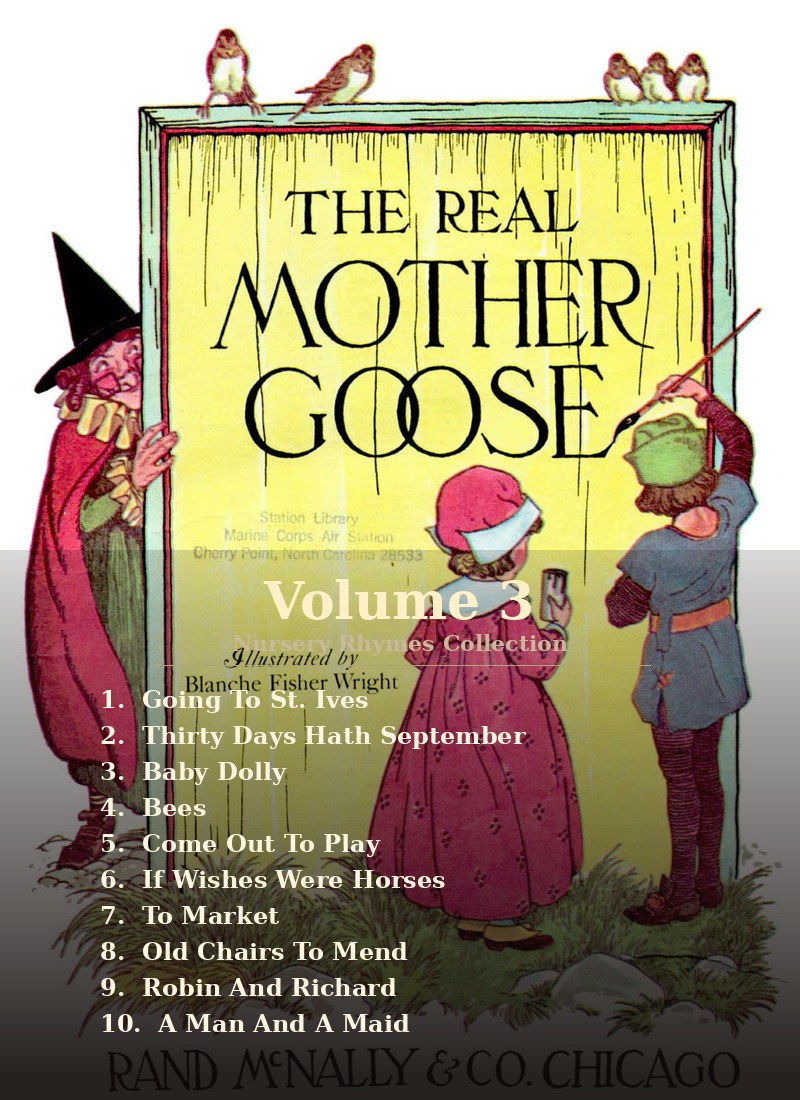
Mother Goose Nursery Rhymes: Volume 3 Voice

Mother Goose Nursery Rhymes: Volume 3

Ten beloved nursery rhymes from The Real Mother Goose (1916), illustrated by Blanche Fisher Wright. This interactive read-along edition features the original public domain illustrations paired with word-by-word bouncing text. Rhymes in this volume: 1. Going To St. Ives 2. Thirty Days Hath September 3. Baby Dolly 4. Bees 5. Come Out To Play 6. If Wishes Were Horses 7. To Market 8. Old Chairs To Mend 9. Robin And Richard 10. A Man And A Maid These rhymes are drawn from the rich oral tradition of English nursery verse, many dating back to the 17th and 18th centuries. They were first collected and published in this illustrated form by Blanche Fisher Wright in 1916.

$1.99 10 pages
Details
Mother Goose Nursery Rhymes: Volume 2 Voice

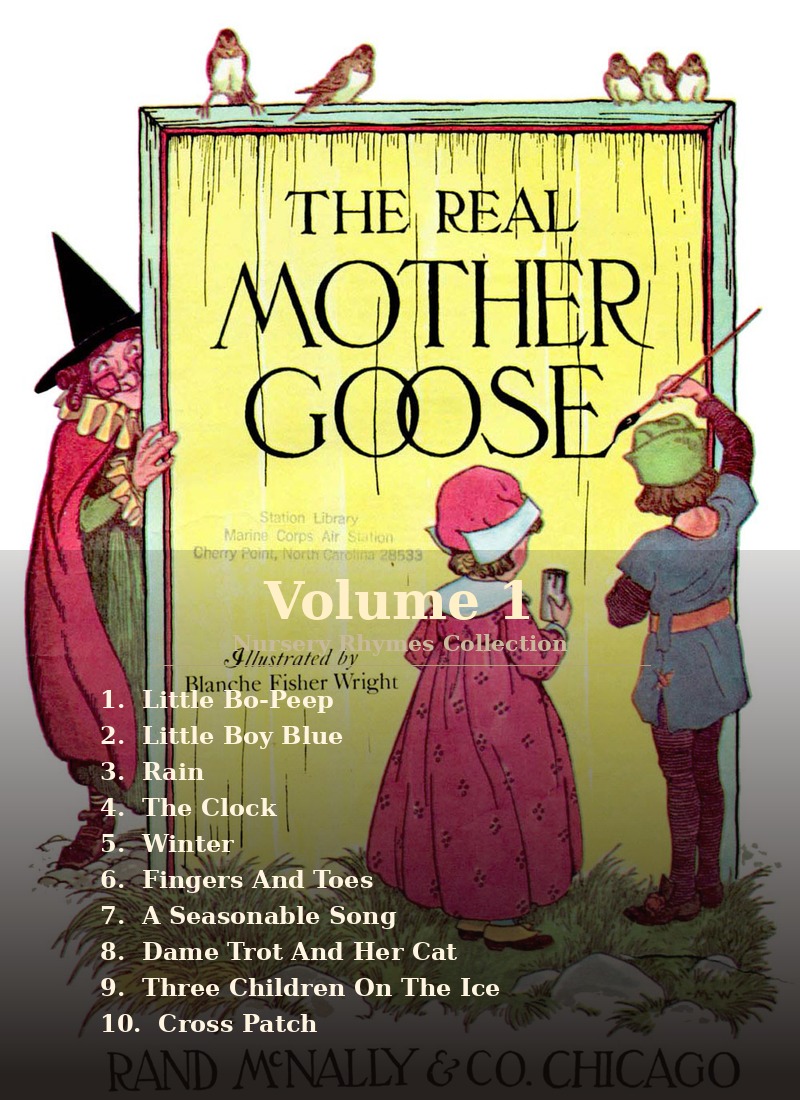
Mother Goose Nursery Rhymes: Volume 2

Ten beloved nursery rhymes from The Real Mother Goose (1916), illustrated by Blanche Fisher Wright. This interactive read-along edition features the original public domain illustrations paired with word-by-word bouncing text. Rhymes in this volume: 1. The Old Woman Under A Hill 2. Tweedle-Dum And Tweedle-Dee 3. Oh, Dear! 4. Old Mother Goose 5. Little Jumping Joan 6. Pat-A-Cake 7. Money And The Mare 8. Robin Redbreast 9. A Melancholy Song 10. Jack These rhymes are drawn from the rich oral tradition of English nursery verse, many dating back to the 17th and 18th centuries. They were first collected and published in this illustrated form by Blanche Fisher Wright in 1916.

$1.99 10 pages
Details
Mother Goose Nursery Rhymes: Volume 1 Voice

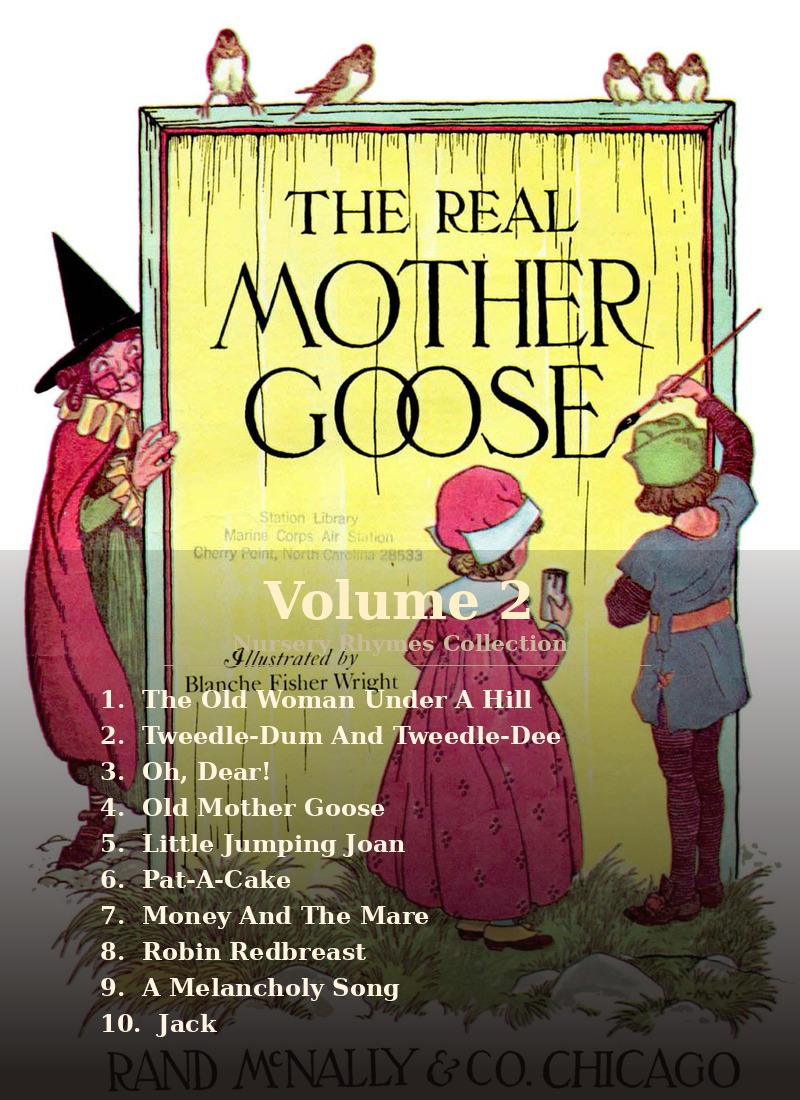
Mother Goose Nursery Rhymes: Volume 1

Ten beloved nursery rhymes from The Real Mother Goose (1916), illustrated by Blanche Fisher Wright. This interactive read-along edition features the original public domain illustrations paired with word-by-word bouncing text. Rhymes in this volume: 1. Little Bo-Peep 2. Little Boy Blue 3. Rain 4. The Clock 5. Winter 6. Fingers And Toes 7. A Seasonable Song 8. Dame Trot And Her Cat 9. Three Children On The Ice 10. Cross Patch Historical Origins: Little Bo-Peep — First recorded around 1805. 'Bo-peep' referred to a peek-a-boo game from the 16th century, referenced by Shakespeare in King Lear. May also allude to the punishment pillory. Little Boy Blue — First published in Tommy Thumb's Song Book (1744). The boy was attributed to Cardinal Thomas Wolsey, Henry VIII's Lord Chancellor, who was the son of an Ipswich butcher. Rain — An ancient weather charm. Children have chanted rain-banishing verses across Europe for centuries, reflecting a folk belief that spoken words could influence the weather. The Clock — A teaching rhyme from 18th-century England, when household clocks became common. Used to help children learn to tell time through verse. Winter — A seasonal folk verse capturing English countryside winters. Part of the oral tradition mothers recited during long cold evenings by the fire. Fingers And Toes — A counting rhyme teaching toddlers numbers using their own body, a tradition dating back centuries across European cultures. A Seasonable Song — A street vendor's cry turned nursery rhyme. London's streets were filled with such cries as sellers hawked hot pease and other seasonal foods. Dame Trot And Her Cat — First printed in 1803, though the character was known a century earlier, appearing in Pills to Purge Melancholy (1706). A close cousin to Old Mother Hubbard. Three Children On The Ice — A cautionary tale warning about frozen ponds, reflecting a real danger in pre-modern England where drowning through ice was a leading cause of childhood winter deaths. Cross Patch — First published in Mother Goose's Melody (c.1765). 'Crosspatch' meant a cranky person; 'patch' was an old word for fool, from the haphazard patches worn by court jesters.

$1.99 10 pages
Details
Romeo and Juliet

Romeo and Juliet

Romeo and Juliet by William Shakespeare (c. 1595) The most famous love story ever written. Shakespeare's tragedy of "star-cross'd lovers" has defined romantic love in Western culture for over four centuries. Historical Significance: Shakespeare wrote Romeo and Juliet around 1594-1596, early in his career. It was first published in a quarto edition in 1597. The story was not entirely original — Shakespeare adapted it from Arthur Brooke's narrative poem "The Tragical History of Romeus and Juliet" (1562), which itself derived from Italian sources going back to Masuccio Salernitano (1476). What Shakespeare added was genius: the balcony scene, the Nurse's comic warmth, Mercutio's brilliant wordplay ("A plague on both your houses!"), and above all, the poetry. "But soft, what light through yonder window breaks?" and "What's in a name? That which we call a rose by any other name would smell as sweet" are among the most quoted lines in English. The play was enormously popular in Shakespeare's lifetime and was performed by his company, the Lord Chamberlain's Men, at The Theatre and later the Globe. It was one of the first plays revived after the Restoration in 1660. Cultural Impact: Romeo and Juliet has been adapted into every art form: Prokofiev's ballet (1935), Bernstein's West Side Story (1957), Zeffirelli's film (1968), Baz Luhrmann's modern retelling (1996), and thousands more. "Romeo" has become a synonym for a romantic young man in multiple languages. The play is performed more often than any other Shakespeare work and is typically the first Shakespeare students encounter. This public domain classic was originally written c. 1595. Free to read and share.

$0.00 37 pages
Details
The Picture of Dorian Gray

The Picture of Dorian Gray

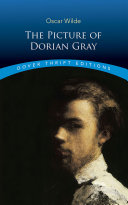
The Picture of Dorian Gray by Oscar Wilde (1890) Oscar Wilde's only novel — a Gothic masterpiece about beauty, corruption, and the price of eternal youth. A young man's portrait ages while he remains forever beautiful. Historical Significance: First published in the July 1890 issue of Lippincott's Monthly Magazine, the story caused immediate scandal. Critics called it "poisonous," "unclean," and "corrupt." The Daily Chronicle declared it would suit "none but outlawed noblemen and perverted telegraph boys" — a coded reference to homosexuality. Wilde revised and expanded the novel for book publication in 1891, adding a preface containing his famous artistic manifesto: "All art is quite useless" and "There is no such thing as a moral or an immoral book. Books are well written, or badly written. That is all." The novel's themes of hidden sin, the mask of respectability, and the gap between appearance and reality were deeply personal to Wilde, who was living a double life as a married father with secret homosexual relationships. Five years after publication, his own life would mirror the novel's themes when his relationship with Lord Alfred Douglas led to his criminal trial, imprisonment, and ruin. Cultural Impact: The novel has never gone out of print and has been adapted into over 30 films. The concept of a "Dorian Gray" — someone who appears youthful while hiding corruption — has entered the cultural lexicon. The story influenced countless works exploring vanity and moral decay, from The Twilight Zone to modern social media commentary. Wilde's epigrammatic prose style ("I can resist everything except temptation") remains endlessly quotable. This public domain classic was originally published in 1890. Free to read and share.

$0.00 21 pages
Details
Strange Case of Dr Jekyll and Mr Hyde

Strange Case of Dr Jekyll and Mr Hyde

Strange Case of Dr Jekyll and Mr Hyde by Robert Louis Stevenson (1886) A chilling novella about the duality of human nature that gave the English language a permanent metaphor for the battle between good and evil within every person. Historical Significance: Stevenson wrote the first draft in just three days during a feverish period in late September 1885 in Bournemouth, England. According to legend, his wife Fanny read the draft and criticized it, whereupon Stevenson burned the manuscript and rewrote it from scratch in another three days. The published version appeared on January 5, 1886. The novella was an instant sensation, selling 40,000 copies in Britain in six months. In America, it sold over 250,000 copies, partly as a cheap pirated edition. The story tapped into Victorian anxieties about respectability, repression, and the fear that beneath every gentleman lurked a beast. Stevenson, a Scottish author already famous for Treasure Island, claimed the central idea came to him in a dream — the "fine bogey tale" of a man who drinks a potion and transforms into his evil alter ego. The novella's power lies in its restraint: the actual transformation is barely described, forcing the reader's imagination to fill in the horror. Cultural Impact: "Jekyll and Hyde" is now a universal metaphor for split personality and moral duality, used in psychology, law, journalism, and everyday conversation in every English-speaking country. The story has been adapted into over 120 films and stage productions. It directly influenced Freud's theories of the id and ego, and remains one of the most powerful explorations of human psychology in all of fiction. This public domain classic was originally published in 1886. Free to read and share.

$0.00 15 pages
Details
Moby Dick; Or, The Whale

Moby Dick; Or, The Whale

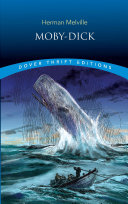
Moby-Dick; or, The Whale by Herman Melville (1851) "Call me Ishmael." — three words that open one of the greatest and most ambitious novels in the English language. Captain Ahab's obsessive hunt for the white whale is an epic meditation on obsession, nature, God, and the limits of human knowledge. Historical Significance: Melville wrote Moby-Dick between 1850 and 1851, during which time he developed an intense friendship with Nathaniel Hawthorne, to whom the novel is dedicated. Melville drew on his own experience as a sailor, including 18 months aboard the whaling ship Acushnet (1841-42), and on the true story of the Essex, a Nantucket whaler sunk by a sperm whale in 1820. Published on October 18, 1851, by Richard Bentley in London (as "The Whale") and Harper & Brothers in New York, the novel was a commercial and critical disaster. It sold only 3,715 copies in Melville's lifetime and earned him $1,260 total. Critics found it baffling — too long, too digressive, too philosophical. Melville never recovered professionally and spent his last 19 years as a customs inspector in New York. The novel's resurrection began in the 1920s, when scholars rediscovered it during the "Melville Revival." By mid-century, it was recognized as perhaps the greatest American novel ever written — a work so vast in scope that it encompasses cetology, philosophy, theology, economics, and the entire human condition. Cultural Impact: Moby-Dick is now considered the Great American Novel by many scholars. Captain Ahab and the white whale have become universal symbols of obsession and the unknowable. The novel has influenced writers from Faulkner to Cormac McCarthy, and has been adapted into films starring Gregory Peck (1956) and Patrick Stewart (1998). Starbucks coffee took its name from Ahab's first mate. This public domain classic was originally published in 1851. Free to read and share.

$0.00 136 pages
Details
The Adventures of Sherlock Holmes

The Adventures of Sherlock Holmes

The Adventures of Sherlock Holmes by Arthur Conan Doyle (1892) Twelve brilliant short stories featuring the world's most famous detective. "Elementary, my dear Watson" — though Holmes never actually says this exact phrase in any of the original stories. Historical Significance: Arthur Conan Doyle, a struggling doctor in Southsea, created Sherlock Holmes in 1887 with "A Study in Scarlet." The character was inspired by Dr. Joseph Bell, Doyle's professor at the University of Edinburgh Medical School, who amazed students with his powers of observation and deduction. The Adventures of Sherlock Holmes was published on October 14, 1892, collecting twelve stories that had appeared in The Strand Magazine between July 1891 and June 1892. The Strand's circulation skyrocketed from 300,000 to 500,000 during the Holmes stories' run. When Doyle killed Holmes off in "The Final Problem" (1893), 20,000 readers cancelled their subscriptions and people wore black mourning bands in the streets. The twelve stories in this collection include some of the most famous mysteries ever written: "A Scandal in Bohemia" (introducing Irene Adler, "the woman"), "The Red-Headed League," "The Adventure of the Speckled Band" (which Doyle himself considered his best), and "The Adventure of the Blue Carbuncle." Holmes' methods of deductive reasoning, forensic science, and logical analysis were revolutionary for the 1890s and influenced the development of real-world criminal investigation techniques. Cultural Impact: Sherlock Holmes is the most portrayed literary character in film and television history, with over 250 actors playing the role. The character has appeared in more than 25,000 stage, film, radio, and TV adaptations. 221B Baker Street receives mail from fans worldwide. Holmes' deerstalker cap, magnifying glass, and pipe are universally recognized symbols. Benedict Cumberbatch and Robert Downey Jr. brought Holmes to new generations. This public domain classic was originally published in 1892. Free to read and share.

$0.00 20 pages
Details
Little Women

Little Women

Little Women by Louisa May Alcott (1868) The beloved story of the four March sisters — Meg, Jo, Beth, and Amy — growing up during the Civil War. Jo March remains one of the most iconic heroines in American literature. Historical Significance: Alcott wrote Little Women at the request of her publisher Thomas Niles, who wanted "a girls' story." She was reluctant, writing in her journal: "Never liked girls or knew many, except my sisters." She based the March family closely on her own: Jo is Louisa herself, Meg is her older sister Anna, Beth is her younger sister Elizabeth (who died at 22), and Amy is her youngest sister May. Published in two volumes (September 1868 and April 1869), the novel was an immediate bestseller, earning Alcott financial independence for the first time in her life. Her father, the Transcendentalist philosopher Bronson Alcott (friend of Emerson and Thoreau), had kept the family in genteel poverty for decades. The novel was revolutionary in depicting girls as complex, ambitious individuals rather than passive angels. Jo March's refusal to marry Laurie — and her fierce desire to be a writer — shocked readers but inspired generations of women. Cultural Impact: Little Women has been continuously in print for over 155 years and adapted into numerous films, including Greta Gerwig's critically acclaimed 2019 version. Jo March is cited by countless women writers as their inspiration for pursuing literary careers. The novel is a foundational text of American feminism. Simone de Beauvoir, J.K. Rowling, and Elena Ferrante have all named it as a formative influence. This public domain classic was originally published in 1868. Free to read and share.

$0.00 58 pages
Details
Jane Eyre

Jane Eyre

Jane Eyre: An Autobiography by Charlotte Brontë (1847) "Reader, I married him." — The passionate, gothic love story of a plain but fiercely independent governess and the brooding Mr. Rochester, hiding a terrible secret in the attic of Thornfield Hall. Historical Significance: Charlotte Brontë published Jane Eyre on October 16, 1847, under the male pseudonym "Currer Bell" — the only way a woman could be taken seriously as a novelist in Victorian England. Her sisters Emily ("Ellis Bell," Wuthering Heights) and Anne ("Acton Bell," The Tenant of Wildfell Hall) published their own novels the same year. The novel drew heavily on Charlotte's own difficult life: her childhood at the harsh Clergy Daughters' School at Cowan Bridge (the model for Lowood), her years as a governess, and her unrequited love for her Belgian professor Constantin Heger. The novel's frank depiction of female desire and Jane's declaration of moral and intellectual equality with Rochester was radical for its time. Cultural Impact: Jane Eyre has been adapted into over 30 films and TV productions. The "madwoman in the attic" (Bertha Mason Rochester) became a feminist symbol explored in Jean Rhys's Wide Sargasso Sea (1966). Jane's refusal to compromise her principles — "I am no bird; and no net ensnares me: I am a free human being with an independent will" — established a template for the strong female protagonist that endures to this day. This public domain classic was originally published in 1847. Free to read and share.

$0.00 39 pages
Details
Wuthering Heights

Wuthering Heights

Wuthering Heights by Emily Brontë (1847) A dark, passionate, and utterly unique tale of doomed love on the Yorkshire moors. Heathcliff and Catherine Earnshaw's destructive obsession spans generations and defies every convention of Victorian fiction. Historical Significance: Emily Brontë published Wuthering Heights in December 1847 under the pseudonym "Ellis Bell." It was her only novel — she died of tuberculosis on December 19, 1848, at age 30, just one year after publication. She never knew the book would become one of the greatest novels in the English language. Contemporary critics were baffled and horrified. The Spectator called it "wild, confused, disjointed, and improbable." The characters were considered too brutal, too passionate, and too morally ambiguous for Victorian taste. Unlike her sister Charlotte's Jane Eyre, there is no clear hero or moral lesson. The novel operates on a mythic, almost elemental level. Emily Brontë, who rarely left the family parsonage in Haworth, Yorkshire, created a world of staggering emotional intensity from the raw landscape of the moors she walked daily. Her poetry — discovered by Charlotte in 1845 — reveals the same fierce, visionary imagination. Cultural Impact: Wuthering Heights is now considered one of the greatest novels in English literature. Kate Bush's 1978 song "Wuthering Heights" became a #1 hit. The novel has inspired films, operas, and countless adaptations. "Heathcliff" and "Catherine" have become bywords for passionate, destructive love. This public domain classic was originally published in 1847. Free to read and share.

$0.00 34 pages
Details
Adventures of Huckleberry Finn

Adventures of Huckleberry Finn

Adventures of Huckleberry Finn by Mark Twain (1884) "All modern American literature comes from one book by Mark Twain called Huckleberry Finn." — Ernest Hemingway. The story of a boy and a runaway slave rafting down the Mississippi River is America's most important — and most controversial — novel. Historical Significance: Mark Twain (Samuel Clemens) began writing Huckleberry Finn in 1876 as a sequel to Tom Sawyer, but set it aside for years. He returned to it intermittently, finally publishing it in the United Kingdom in December 1884 and in the United States in February 1885. The novel was immediately banned by the Concord Public Library as "trash and suitable only for the slums." Twain responded: "That will sell 25,000 copies for us, sure." It has been banned, challenged, and debated continuously ever since — primarily for its use of racial language, which Twain employed deliberately to satirize racism, not to endorse it. Written in Huck's own vernacular voice — uneducated, funny, and profoundly moral — the novel was revolutionary in its use of American dialect as a literary language. Twain's depiction of the friendship between Huck and Jim remains one of literature's most powerful arguments against racism. Cultural Impact: Huckleberry Finn is widely considered the Great American Novel alongside Moby-Dick. It influenced every major American writer who followed, from Hemingway to Faulkner to Toni Morrison. The novel continues to generate controversy and classroom discussion, which is precisely what Twain intended. It remains one of the most-read, most-taught, and most-debated books in history. This public domain classic was originally published in 1884. Free to read and share.

$0.00 43 pages
Details
The Count of Monte Cristo

The Count of Monte Cristo

The Count of Monte Cristo by Alexandre Dumas (1844-1846) The ultimate revenge story. A young sailor is wrongfully imprisoned for 14 years, escapes, discovers a vast treasure, and reinvents himself as the mysterious Count of Monte Cristo to exact elaborate vengeance on those who destroyed his life. Historical Significance: Alexandre Dumas published The Count of Monte Cristo as a serial in the Journal des Débats from August 1844 to January 1846. Serialization was the Netflix of the 19th century — readers waited eagerly for each installment, and Dumas was paid by the line, which partly explains the novel's epic length. The story was inspired by a real case Dumas found in the police archives: François Picaud, a shoemaker who was falsely imprisoned for seven years by jealous friends, inherited a fortune from a fellow prisoner, and spent ten years pursuing revenge. Dumas transformed this into one of the most intricate and satisfying plots in all of fiction. Dumas was the grandson of a Haitian slave — his father, General Thomas-Alexandre Dumas, was the highest-ranking person of color in any European army. The themes of injustice, identity, and the corrupting power of wealth in Monte Cristo may partly reflect Dumas' own experience of racial prejudice in French society. Cultural Impact: The Count of Monte Cristo has been adapted into over 40 films, TV series, and anime. It remains one of the most popular novels ever written, selling millions of copies annually. The phrase "Edmond Dantès" is a cultural shorthand for wrongful imprisonment. The novel's structure — patient, meticulous revenge served over years — has influenced everything from Batman to The Shawshank Redemption to Kill Bill. This public domain classic was originally published in 1844. Free to read and share.

$0.00 117 pages
Details
Crime and Punishment

Crime and Punishment

Crime and Punishment by Fyodor Dostoyevsky (1866) A destitute student murders a pawnbroker, believing himself to be an extraordinary man above moral law. What follows is one of literature's most intense psychological explorations of guilt, conscience, and redemption. Historical Significance: Dostoyevsky wrote Crime and Punishment while in severe financial distress, having lost his savings gambling in Wiesbaden. He serialized it in The Russian Messenger from January to December 1866. He was simultaneously writing another novel, The Gambler, to meet a crushing deadline — he dictated it to a young stenographer, Anna Snitkina, whom he married four months later. The novel was partly inspired by the case of Pierre-François Lacenaire, a French murderer who justified his crimes through intellectual philosophy. Dostoyevsky, who had himself been sentenced to death (commuted at the last moment to hard labor in Siberia), understood the psychology of extreme situations better than perhaps any other novelist. Raskolnikov's theory — that extraordinary people like Napoleon are above conventional morality — was Dostoyevsky's critique of the nihilism and utilitarianism spreading through Russian intellectual circles in the 1860s. Cultural Impact: Crime and Punishment is considered one of the greatest novels ever written and the founding text of psychological fiction. It influenced Nietzsche, Freud, Kafka, Camus, and virtually every crime novelist who followed. The "Raskolnikov complex" — intellectual justification for immoral acts — remains a concept in psychology and philosophy. The novel is required reading in universities worldwide. This public domain classic was originally published in 1866. Free to read and share.

$0.00 40 pages
Details
The Importance of Being Earnest

The Importance of Being Earnest

The Importance of Being Earnest by Oscar Wilde (1895) "A Trivial Comedy for Serious People" — Oscar Wilde's wittiest and most perfect play. A farce about two men who each create fictitious alter egos to escape social obligations, only to discover that truth is stranger than fiction. Historical Significance: The play premiered at the St James's Theatre in London on February 14, 1895, and was an immediate triumph. The audience erupted in laughter throughout, and the reviews were ecstatic. It was the pinnacle of Wilde's career — and the last moment of happiness in his life. Just days after the premiere, the Marquess of Queensberry left a card at Wilde's club accusing him of homosexuality. Wilde disastrously sued for libel, lost, and was subsequently tried, convicted of "gross indecency," and sentenced to two years of hard labor. The play was pulled from theaters, Wilde's name removed from the playbills. He emerged from prison broken and impoverished, dying in Paris in 1900 at age 46. The play itself is a masterpiece of comic construction, with every line polished to gleaming perfection. "I never travel without my diary. One should always have something sensational to read in the train." "To lose one parent may be regarded as a misfortune; to lose both looks like carelessness." Cultural Impact: The Importance of Being Earnest is the most performed of all Wilde's plays and is considered the greatest comedy in the English language. It has been adapted into films, musicals, and performed continuously in theaters worldwide since its revival in 1902. Wilde's epigrammatic wit — sharp, paradoxical, and devastatingly funny — has influenced every comedy writer since. This public domain classic was originally written in 1895. Free to read and share.

$0.00 14 pages
Details
The Wonderful Wizard of Oz

The Wonderful Wizard of Oz

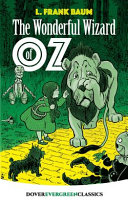
The Wonderful Wizard of Oz by L. Frank Baum (1900) Dorothy, Toto, the Scarecrow, the Tin Woodman, the Cowardly Lion, and the Emerald City — the first great American fairy tale, written to be distinctly American rather than European in spirit. Historical Significance: L. Frank Baum published The Wonderful Wizard of Oz on May 17, 1900, with illustrations by W.W. Denslow. In his introduction, Baum declared his intention to create "a modernized fairy tale, in which the wonderment and joy are retained and the heartaches and nightmares are left out." He wanted an American fairy tale, free from the darkness of Grimm and Andersen. The book was an enormous success, becoming the bestselling children's book of 1900 and 1901. Baum went on to write 13 more Oz books, creating one of literature's richest fictional worlds. Some scholars interpret the story as a political allegory of 1890s populism — the Yellow Brick Road representing the gold standard, the silver slippers (ruby in the film) representing silver currency, and the Emerald City representing the deceptive greenback dollar. Baum was a fascinating figure: a failed chicken farmer, newspaper editor, traveling salesman, and window dresser before becoming an author at age 44. Cultural Impact: The 1939 MGM film starring Judy Garland is the most-watched film in history. "There's no place like home," "We're not in Kansas anymore," and "Follow the Yellow Brick Road" are among the most quoted lines in cinema. The Wicked Witch of the West is one of fiction's greatest villains. Gregory Maguire's Wicked (1995) and its Broadway musical reimagined the story from the witch's perspective, becoming a cultural phenomenon. This public domain classic was originally published in 1900. Free to read and share.

$0.00 25 pages
Details
Treasure Island

Treasure Island

Treasure Island by Robert Louis Stevenson (1883) The ultimate pirate adventure. Young Jim Hawkins, Long John Silver, buried treasure, the Black Spot, and "fifteen men on a dead man's chest" — Stevenson created every pirate trope we know. Historical Significance: Stevenson began the story in the summer of 1881 while on holiday in Braemar, Scotland, drawing a watercolor treasure map with his stepson Lloyd Osbourne. The map inspired the story, which was serialized as "The Sea Cook" in the children's magazine Young Folks from October 1881 to January 1882. Published as a book in 1883, Treasure Island was the novel that made Stevenson famous. He drew on Daniel Defoe's Robinson Crusoe, Washington Irving's tales, and Edgar Allan Poe's "The Gold-Bug," but synthesized them into something entirely new — the modern adventure novel. Long John Silver, the charming one-legged pirate cook, is one of literature's greatest morally ambiguous characters. Stevenson based him partly on his friend W.E. Henley (author of "Invictus"), who had lost a leg to tuberculosis. Cultural Impact: Treasure Island invented the popular image of pirates: buried treasure with X marks the spot, treasure maps, one-legged pirates with parrots, the Black Spot death curse, and the skull-and-crossbones flag. Before Stevenson, pirates in literature were straightforward villains. Every pirate film, book, and theme park attraction owes a debt to this novel. Disney's Pirates of the Caribbean franchise draws directly from Stevenson's template. This public domain classic was originally published in 1883. Free to read and share.

$0.00 48 pages
Details
The Jungle Book

The Jungle Book

The Jungle Book by Rudyard Kipling (1894) Mowgli, Baloo, Bagheera, Shere Khan, and Kaa — the timeless stories of a boy raised by wolves in the jungles of India, learning the Law of the Jungle and finding his place between two worlds. Historical Significance: Rudyard Kipling wrote The Jungle Book in 1893-1894 while living in Brattleboro, Vermont, with his American wife Carrie. He was already the most famous writer in the English-speaking world, and these stories cemented his reputation as a master storyteller. Born in Bombay (now Mumbai) in 1865, Kipling spent his early childhood in India before being sent to England for education — an experience of abandonment and cruelty he never forgot. The Jungle Book reflects his deep love for India and his understanding of the complex relationship between civilization and nature. The Mowgli stories are set in the Seoni hills of central India, and Kipling researched Indian wildlife extensively, consulting Robert Armitage Sterndale's "Natural History of the Mammalia of India." The non-Mowgli stories ("Rikki-Tikki-Tavi," "Toomai of the Elephants," "The White Seal") are equally beloved. In 1907, Kipling became the first English-language writer to receive the Nobel Prize in Literature. Cultural Impact: Disney's animated adaptation (1967) with its beloved songs became one of the most popular animated films ever made. The 2016 live-action/CGI remake grossed nearly $1 billion worldwide. The Cub Scouts movement adopted Jungle Book terminology (Akela, den, pack). Kipling's "Law of the Jungle" — "the strength of the pack is the wolf, and the strength of the wolf is the pack" — is quoted in contexts from business to military. This public domain classic was originally published in 1894. Free to read and share.

$0.00 19 pages
Details
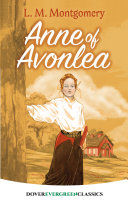
Anne of Green Gables

Anne of Green Gables

Anne of Green Gables by L.M. Montgomery (1908) The irrepressible, imaginative, red-haired orphan Anne Shirley arrives at Green Gables on Prince Edward Island and transforms every life she touches. One of the most beloved characters in children's literature. Historical Significance: Lucy Maud Montgomery drew on her own childhood in Cavendish, Prince Edward Island, to create Anne's world. She began writing the novel in 1905 after finding a notebook entry about "a couple who applied to an orphan asylum for a boy. By mistake a girl was sent them." The manuscript was rejected by five publishers before L.C. Page & Company of Boston accepted it. Published in June 1908, Anne of Green Gables was an immediate bestseller. Mark Twain called Anne "the dearest child of fiction since the immortal Alice." Montgomery went on to write seven more Anne books, following the character from childhood through marriage and motherhood. Montgomery's own life was far less idyllic than Anne's. She was raised by strict grandparents after her mother's death, endured a difficult marriage to a minister suffering from depression, and struggled with her own mental health while maintaining the public persona of a cheerful author. Cultural Impact: Anne of Green Gables has sold over 50 million copies and been translated into 36 languages. It is a cultural phenomenon in Japan, where it has been beloved since a 1952 translation — Japanese tourists make up a significant portion of visitors to Prince Edward Island. The 1985 CBC television film and Netflix's Anne with an E brought the character to new generations. Anne Shirley remains a powerful symbol of female independence, imagination, and resilience. This public domain classic was originally published in 1908. Free to read and share.

$0.00 38 pages
Details
The War of the Worlds

The War of the Worlds

The War of the Worlds by H.G. Wells (1898) The first and greatest alien invasion novel. Martian war machines stride across the English countryside on metal legs, annihilating everything in their path with heat rays and poisonous black smoke. Humanity faces extinction. Historical Significance: H.G. Wells serialized The War of the Worlds in Pearson's Magazine from April to December 1897. The novel was partly inspired by the British colonization of Tasmania, where indigenous peoples were nearly wiped out by technologically superior invaders. Wells asked: what if it happened to us? Wells wrote the novel during a period of intense speculation about life on Mars, following astronomer Giovanni Schiaparelli's 1877 observation of "canali" (channels) on the Martian surface, which English speakers mistranslated as "canals" — implying intelligent construction. The novel's most famous moment comes not from the book itself but from Orson Welles' 1938 radio adaptation, broadcast as realistic news bulletins on Halloween night. Listeners who tuned in late believed Martians had actually invaded New Jersey, causing widespread panic — one of the most famous media events of the 20th century. Cultural Impact: The War of the Worlds established virtually every trope of the alien invasion genre: superior technology, desperate resistance, unexpected resolution, and the critique of human arrogance. Steven Spielberg's 2005 film, Jeff Wayne's musical version (1978), and countless other adaptations have kept the story alive. The "tripod" war machine is an iconic image of science fiction. This public domain classic was originally published in 1898. Free to read and share.

$0.00 34 pages
Details
The Time Machine

The Time Machine

The Time Machine by H.G. Wells (1895) The novella that invented time travel as a science fiction concept. A Victorian scientist journeys to the year 802,701 AD and discovers humanity has evolved into two species: the childlike Eloi and the predatory Morlocks. Historical Significance: H.G. Wells published The Time Machine as his first novel in 1895, at age 28. It originated as an 1888 essay called "The Chronic Argonauts" and went through several revisions. Wells, a biology student of T.H. Huxley (Darwin's most famous advocate), used the story to explore the implications of evolution and class division taken to their logical extreme. The Eloi — beautiful, idle, and helpless — represent the upper class, while the Morlocks — underground, industrial, and cannibalistic — represent the working class. Wells, a committed socialist, was warning that Victorian class divisions could literally evolve humanity into separate species. The concept of a "time machine" — a device that moves through time as a vehicle moves through space — was Wells' invention. The idea that time is a "fourth dimension" was cutting-edge physics at the time, drawing on the work of mathematician Charles Howard Hinton. Cultural Impact: The Time Machine created the entire time travel genre. Every subsequent time travel story — from Doctor Who to Back to the Future to Interstellar — owes a debt to Wells. The novel has been adapted into numerous films (1960, 2002) and inspired the naming of the DeLorean time machine. The terms "time machine," "time travel," and "fourth dimension" entered everyday language through this book. This public domain classic was originally published in 1895. Free to read and share.

$0.00 22 pages
Details
Heart of Darkness

Heart of Darkness

Heart of Darkness by Joseph Conrad (1899) "The horror! The horror!" — A haunting journey up the Congo River into the heart of European colonialism's darkest impulses. One of the most powerful and controversial novellas in English literature. Historical Significance: Joseph Conrad, born Józef Teodor Konrad Korzeniowski in Poland, drew on his own 1890 experience commanding a steamboat on the Congo River for Belgium's King Leopold II. What he witnessed — the systematic brutalization and enslavement of Congolese people in the rubber trade — traumatized him and fueled this devastating novella. Serialized in Blackwood's Magazine in 1899, Heart of Darkness follows the narrator Marlow as he travels deeper into the Congo to find the enigmatic ivory trader Kurtz, who has abandoned civilization's pretenses and become a brutal tyrant worshipped as a god. Conrad's genius was to frame the story as a critique of imperialism while also exploring the universal human capacity for evil. The "darkness" is not Africa — it is the darkness within European civilization itself. Cultural Impact: Heart of Darkness directly inspired Francis Ford Coppola's Apocalypse Now (1979), transposing the story to the Vietnam War. It is one of the most taught novellas in English literature, though it has also been criticized — notably by Chinua Achebe — for its portrayal of Africans. This ongoing debate makes it one of the most important texts for understanding colonialism, racism, and the responsibilities of literature. This public domain classic was originally published in 1899. Free to read and share.

$0.00 8 pages
Details
The Scarlet Letter

The Scarlet Letter

The Scarlet Letter by Nathaniel Hawthorne (1850) Hester Prynne, forced to wear a scarlet "A" for adultery in Puritan Boston, endures public shame with quiet dignity while the father of her child hides in plain sight. A searing examination of sin, guilt, hypocrisy, and the American conscience. Historical Significance: Hawthorne wrote The Scarlet Letter in 1849 after losing his job at the Salem Custom House, channeling his frustration into a novel about his own Puritan ancestors. His great-great-grandfather John Hathorne was one of the judges in the Salem witch trials of 1692 — a source of deep ancestral guilt that pervades the novel. Published on March 16, 1850, it was an immediate bestseller, with the first edition of 2,500 copies selling out in ten days. Critics recognized its power immediately, though some condemned its sympathetic portrayal of an adulteress. The novel is set in the 1640s but speaks directly to 1850s America, where debates about women's rights, religious hypocrisy, and individual freedom versus community judgment were intensifying. Hester Prynne's transformation of the scarlet letter from a mark of shame into a symbol of strength was revolutionary. Cultural Impact: The Scarlet Letter is one of the most-read American novels and a staple of high school and college curricula. The scarlet letter "A" has become a universal symbol of public shaming and societal judgment. The novel anticipated modern discussions about cancel culture, public confession, and the relationship between private sin and public morality. Demi Moore's 1995 film and numerous other adaptations have kept the story in popular culture. This public domain classic was originally published in 1850. Free to read and share.

$0.00 60 pages
Details
Metamorphosis

Metamorphosis

The Metamorphosis by Franz Kafka (1915) "One morning, when Gregor Samsa woke from troubled dreams, he found himself transformed in his bed into a horrible vermin." — The most famous opening line in 20th-century literature. A traveling salesman becomes a giant insect and watches his family's love curdle into disgust. Historical Significance: Franz Kafka wrote Die Verwandlung (The Metamorphosis) in late 1912 in a burst of creative energy, completing it in about three weeks. It was published in the October 1915 issue of the literary magazine Die Weißen Blätter. Kafka, a German-speaking Jew living in Prague, worked as an insurance clerk — a soul-crushing job that informed the story's themes of alienation and dehumanization. Kafka famously instructed his friend Max Brod to burn all his unpublished manuscripts after his death. Brod refused, preserving The Trial, The Castle, and Amerika for the world. Kafka died of tuberculosis in 1924 at age 40, having published very little during his lifetime. The Metamorphosis defies simple interpretation. Is it about alienation in modern capitalism? The burden of family obligation? Anti-Semitism? Disability? Depression? Kafka himself offered no explanation, and the story's power lies precisely in its resistance to reduction. Cultural Impact: "Kafkaesque" has become an adjective in virtually every language, describing absurd, nightmarish bureaucratic situations. The Metamorphosis is the most widely read work of 20th-century German literature and is taught in universities worldwide. It influenced existentialist philosophy, the Theatre of the Absurd, and every writer who has explored alienation and identity — from Camus to Murakami. The image of Gregor Samsa as a beetle is one of literature's most haunting and unforgettable. This public domain classic was originally published in 1915. Free to read and share.

$0.00 4 pages
Details
The Adventures of Tom Sawyer

The Adventures of Tom Sawyer

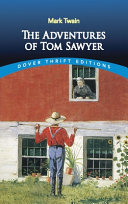
The Adventures of Tom Sawyer by Mark Twain (1876) The novel that captured American boyhood forever. Tom Sawyer, Huck Finn, Becky Thatcher, Injun Joe, and the whitewashed fence — set along the Mississippi River in the fictional town of St. Petersburg, Missouri. Historical Significance: Mark Twain drew directly from his own childhood in Hannibal, Missouri for this novel, published in 1876 — America's centennial year. Tom Sawyer was Twain's first solo novel and established him as more than a humorist: a literary artist capable of capturing the American experience. The famous fence-whitewashing scene, where Tom tricks his friends into doing his chore by pretending it's a privilege, has become a universal metaphor for persuasion and the psychology of desire. Twain claimed "most of the adventures recorded in this book really occurred; one or two were experiences of my own, the rest those of boys who were schoolmates of mine." Tom was a composite of three real boys; Huck Finn was based on Tom Blankenship, the son of the town drunkard. The novel's cave scenes were inspired by the real Mark Twain Cave in Hannibal. Cultural Impact: Tom Sawyer has been translated into every major language, adapted into dozens of films, and remains one of the most-read American novels. "Tom Sawyer" has become shorthand for a mischievous but good-hearted boy. The novel spawned one of literature's greatest sequels — Adventures of Huckleberry Finn. The fence-whitewashing trick is studied in business schools as an example of reverse psychology marketing. This public domain classic was originally published in 1876. Free to read and share.

$0.00 36 pages
Details
A Tale of Two Cities

A Tale of Two Cities

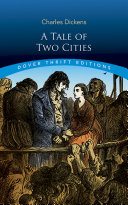
A Tale of Two Cities by Charles Dickens (1859) "It was the best of times, it was the worst of times" — the most famous opening line in English literature. Set against the French Revolution, this is Dickens' most dramatic and emotionally devastating novel, culminating in one of literature's greatest acts of self-sacrifice. Historical Significance: Dickens serialized A Tale of Two Cities in his own weekly journal, All the Year Round, from April to November 1859. It was inspired by Thomas Carlyle's The French Revolution and by Dickens' involvement in amateur theatricals — particularly The Frozen Deep by Wilkie Collins, in which Dickens played a man who sacrifices his life for his rival in love. With approximately 200 million copies sold, it is possibly the bestselling novel of all time. Sydney Carton's final words — "It is a far, far better thing that I do, than I have ever done; it is a far, far better rest that I go to than I have ever known" — are among the most quoted passages in English literature. This public domain classic was originally published in 1859. Free to read and share.

$0.00 45 pages
Details
Great Expectations

Great Expectations

Great Expectations by Charles Dickens (1861) Young orphan Pip encounters an escaped convict, inherits mysterious wealth from an unknown benefactor, and learns that true gentility comes from character, not fortune. Dickens' most personal and psychologically complex novel. Historical Significance: Serialized in All the Year Round from December 1860 to August 1861, Great Expectations was written when Dickens was at the height of his powers — and in personal crisis, having separated from his wife Catherine and begun a secret relationship with the actress Ellen Ternan. Pip's shame about his origins and his desperate desire to reinvent himself mirror Dickens' own feelings about his impoverished childhood and his father's imprisonment in the Marshalsea debtors' prison. Miss Havisham — jilted at the altar, still wearing her wedding dress decades later, her clocks stopped at twenty minutes to nine — is one of the most extraordinary characters in all fiction. The original ending, in which Pip and Estella do not reunite, was changed at the urging of Edward Bulwer-Lytton. Both endings survive and are still debated by scholars. This public domain classic was originally published in 1861. Free to read and share.

$0.00 59 pages
Details
Oliver Twist

Oliver Twist

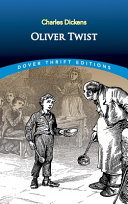
Oliver Twist by Charles Dickens (1838) "Please, sir, I want some more." The orphan boy who dared to ask for a second helping of gruel — and was thrust into London's criminal underworld of Fagin, the Artful Dodger, and the murderous Bill Sikes. Dickens' furious attack on the workhouse system and child exploitation. Historical Significance: Oliver Twist was Dickens' second novel, serialized in Bentley's Miscellany from February 1837 to April 1839. Dickens was just 25 when he began it. The novel was a direct assault on the Poor Law Amendment Act of 1834, which created the brutal workhouse system. Dickens had experienced poverty firsthand as a child, working in a boot-blacking factory at age 12 while his father was in debtors' prison. The character of Fagin was based partly on the real criminal Ikey Solomon. The novel's depiction of Fagin has been controversial for its anti-Semitic stereotyping, though Dickens later expressed regret and created more sympathetic Jewish characters. The 1968 musical film Oliver! won the Academy Award for Best Picture. This public domain classic was originally published in 1838. Free to read and share.

$0.00 54 pages
Details
Through the Looking-Glass

Through the Looking-Glass

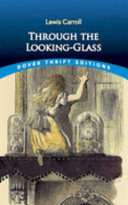
Through the Looking-Glass, and What Alice Found There by Lewis Carroll (1871) Alice steps through a mirror into a world where everything is reversed — a giant chess game where she must become a queen. Featuring Tweedledee and Tweedledum, the Jabberwocky, Humpty Dumpty, and the Red Queen's race where you must run just to stay in place. Historical Significance: Carroll's sequel to Alice's Adventures in Wonderland was published in December 1871, again illustrated by John Tenniel. While the first Alice book was pure nonsense, Looking-Glass has a more structured plot — based on an actual chess game that can be played out on a board. Carroll, a mathematics lecturer at Oxford, embedded logical puzzles and wordplay that continue to delight mathematicians. The Jabberwocky poem ("'Twas brillig, and the slithy toves") is the most famous nonsense poem in English. Humpty Dumpty's declaration that "When I use a word, it means just what I choose it to mean" has been cited in Supreme Court decisions and philosophy papers. The Red Queen's hypothesis in evolutionary biology takes its name from this book. This public domain classic was originally published in 1871. Free to read and share.

$0.00 12 pages
Details
The Odyssey

The Odyssey

The Odyssey by Homer (c. 8th century BC) The original adventure story. Odysseus' ten-year journey home from the Trojan War — battling the Cyclops, resisting the Sirens, navigating between Scylla and Charybdis, and returning to faithful Penelope. The foundation of all Western literature. Historical Significance: Composed in ancient Greek around the 8th century BC, The Odyssey is one of the two oldest works of Western literature (alongside The Iliad). Whether "Homer" was a single poet or a tradition of oral storytellers remains one of the great scholarly debates. The poem was transmitted orally for centuries before being written down. The Odyssey established virtually every storytelling convention: the hero's journey, the faithful spouse, the coming-of-age subplot (Telemachus), the disguised return, the final confrontation. Joseph Campbell's "monomyth" theory draws heavily from Odysseus' journey. James Joyce's Ulysses, the Coen Brothers' O Brother Where Art Thou, and countless other works are direct retellings. Every adventure story, from Star Wars to The Lord of the Rings, follows the narrative template Homer established three thousand years ago. This public domain classic was originally composed c. 8th century BC. Free to read and share.

$0.00 25 pages
Details
The Iliad

The Iliad

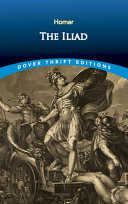
The Iliad by Homer (c. 8th century BC) The rage of Achilles and the fall of Troy. The greatest war epic ever written — a poem about the wrath of a demigod warrior that explores honor, mortality, grief, and the terrible beauty of combat. The fountainhead of Western literature. Historical Significance: The Iliad covers just 52 days during the tenth year of the Trojan War, focusing on the conflict between Achilles and King Agamemnon. Archaeological excavations at Hisarlik (modern Turkey) by Heinrich Schliemann in the 1870s confirmed that Troy was a real city, lending historical weight to Homer's epic. The poem was the primary educational text of ancient Greece — every educated Greek knew it by heart. Alexander the Great slept with a copy under his pillow and modeled himself on Achilles. The concepts of heroism, honor, fate, and the futility of war that Homer explored have shaped Western civilization's understanding of conflict for three millennia. This public domain classic was originally composed c. 8th century BC. Free to read and share.

$0.00 26 pages
Details
Don Quixote

Don Quixote

Don Quixote by Miguel de Cervantes (1605/1615) The first modern novel. An aging Spanish gentleman reads so many chivalric romances that he loses his mind, dubs himself "Don Quixote de la Mancha," and sets out to right wrongs — tilting at windmills he believes are giants, with his faithful squire Sancho Panza. Historical Significance: Cervantes published Part One in 1605 and Part Two in 1615. He wrote much of it while in prison and dire poverty. The novel was an immediate bestseller across Europe and has never gone out of print in over 400 years. In 2002, the Norwegian Book Club's survey of 100 prominent authors named Don Quixote the greatest work of fiction ever written. Cervantes invented the modern novel by creating fiction that is aware of itself as fiction — characters in Part Two have read Part One. The phrase "tilting at windmills" (fighting imaginary enemies) has entered every European language. Don Quixote and Sancho Panza represent the eternal tension between idealism and pragmatism. This public domain classic was originally published in 1605. Free to read and share.

$0.00 128 pages
Details
Les Misérables

Les Misérables

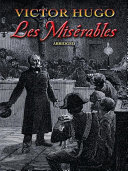
Les Misérables by Victor Hugo (1862) The epic story of Jean Valjean — imprisoned 19 years for stealing bread, redeemed by a bishop's mercy, hunted by the relentless Inspector Javert — set against the turbulent backdrop of post-Napoleonic France. A sweeping meditation on justice, love, and the possibility of redemption. Historical Significance: Victor Hugo spent 17 years writing Les Misérables, publishing it in 1862 while in political exile on Guernsey. The novel was an immediate worldwide sensation — so anticipated that crowds lined up at bookstores in Paris at dawn on release day. Hugo's publisher reportedly sent him a telegram consisting of a single "?" to ask about sales. Hugo replied with a single "!" — both the shortest and most eloquent sales report in publishing history. The novel's depiction of poverty, social injustice, and the redemptive power of love influenced social reform movements across Europe. The musical adaptation (1985) became the world's longest-running musical, translated into 22 languages and seen by over 130 million people. This public domain classic was originally published in 1862. Free to read and share.

$0.00 367 pages
Details
The Three Musketeers

The Three Musketeers

The Three Musketeers by Alexandre Dumas (1844) "All for one and one for all!" Young d'Artagnan travels to Paris to join the King's Musketeers and befriends Athos, Porthos, and Aramis in this swashbuckling adventure of swordplay, intrigue, and romance in 17th-century France. Historical Significance: Serialized in the newspaper Le Siècle from March to July 1844, The Three Musketeers made Dumas the most popular author in the world. The novel is loosely based on Mémoires de M. d'Artagnan by Gatien de Courtilz de Sandras (1700), which fictionalized a real musketeer named Charles de Batz-Castelmore d'Artagnan. Dumas' genius was pacing — the novel reads like a modern thriller, with cliffhangers at every chapter break. Cardinal Richelieu, the scheming Milady de Winter, and the diamond studs plot create one of fiction's most intricate webs of intrigue. Dumas wrote with such speed (aided by collaborator Auguste Maquet) that he produced over 100,000 pages in his lifetime. This public domain classic was originally published in 1844. Free to read and share.

$0.00 68 pages
Details
Anna Karenina

Anna Karenina

Anna Karenina by Leo Tolstoy (1877) "All happy families are alike; each unhappy family is unhappy in its own way." Anna Karenina's passionate, destructive affair with Count Vronsky unfolds against the backdrop of Russian aristocratic society — a novel Dostoyevsky called "flawless as a work of art." Historical Significance: Tolstoy serialized Anna Karenina in The Russian Messenger from 1875 to 1877. The novel was inspired by a real event: in 1872, a woman named Anna Pirogova threw herself under a train at a railway station near Tolstoy's estate after being abandoned by her lover. Tolstoy attended the autopsy. The novel interweaves Anna's tragic love story with Levin's search for meaning through farming and family — Levin being Tolstoy's autobiographical portrait of himself. Faulkner, Nabokov, and Thomas Mann all named it the greatest novel ever written. In 2007, Time magazine's list of the 10 greatest novels placed it at number one. This public domain classic was originally published in 1877. Free to read and share.

$0.00 239 pages
Details
War and Peace

War and Peace

War and Peace by Leo Tolstoy (1869) The Russian epic. Five aristocratic families navigate love, loss, and destiny against Napoleon's 1812 invasion of Russia. At 587,287 words, it is one of the longest novels ever written — and many consider it the greatest. Historical Significance: Tolstoy published War and Peace in serial form from 1865 to 1869, then in book form. He began writing it after visiting the battlefield of Borodino, where 70,000 men died in a single day in 1812. Tolstoy's genius was to show history not through generals and emperors but through the daily lives of ordinary people caught in extraordinary events. The novel required immense research — Tolstoy read every account of the Napoleonic Wars he could find, interviewed survivors, and visited every battlefield. He rewrote the opening sentence dozens of times. His wife Sophia copied the entire manuscript seven times by hand. The novel permanently changed what fiction could achieve — no longer just entertainment, but a philosophical investigation of free will, fate, and the forces that drive history. This public domain classic was originally published in 1869. Free to read and share.

$0.00 365 pages
Details
The Brothers Karamazov

The Brothers Karamazov

The Brothers Karamazov by Fyodor Dostoyevsky (1880) Dostoyevsky's final and greatest novel. Three brothers — the passionate Dmitri, the intellectual Ivan, and the saintly Alyosha — are drawn into the murder of their despicable father. A murder mystery that becomes the deepest exploration of faith, doubt, morality, and free will in all of literature. Historical Significance: Serialized in The Russian Messenger from 1879 to 1880, The Brothers Karamazov was completed just months before Dostoyevsky's death in January 1881. He had planned a sequel that was never written. The novel contains "The Grand Inquisitor," a parable within the story that is considered one of the most powerful pieces of philosophical writing ever composed. Freud called it "the most magnificent novel ever written." Einstein said it taught him more about the world than any scientific paper. The novel asks the question that has haunted philosophy for millennia: if God does not exist, is everything permitted? Dostoyevsky's answer is complex, devastating, and ultimately hopeful. This public domain classic was originally published in 1880. Free to read and share.

$0.00 96 pages
Details
Sense and Sensibility

Sense and Sensibility

Sense and Sensibility by Jane Austen (1811) Austen's first published novel. Sisters Elinor (sense) and Marianne (sensibility) Dashwood navigate love, heartbreak, and financial insecurity after their father's death leaves them nearly destitute. A masterful exploration of the tension between reason and emotion. Historical Significance: Published in 1811 under the pseudonym "A Lady," Sense and Sensibility was Austen's debut — though she had drafted it as "Elinor and Marianne" in her teens. She self-published it with help from her brother Henry, and it sold out its first edition of 750 copies, earning Austen £140. The novel established her signature style: wit, social observation, and the marriage plot as a lens for examining economic and moral questions. Ang Lee's 1995 film adaptation, starring Emma Thompson and Kate Winslet, won the Academy Award for Best Adapted Screenplay. This public domain classic was originally published in 1811. Free to read and share.

$0.00 50 pages
Details
Emma

Emma

Emma by Jane Austen (1815) "Emma Woodhouse, handsome, clever, and rich" — a young woman convinced of her matchmaking genius repeatedly misreads everyone around her, including herself. Austen's most sophisticated comedy and her personal favorite. Historical Significance: Austen described Emma as "a heroine whom no one but myself will much like." She was wrong — Emma Woodhouse became one of literature's most beloved characters precisely because of her flaws. The novel is dedicated to the Prince Regent (later George IV), who was a fan of Austen's work. Published in December 1815 by John Murray (Lord Byron's publisher), it was the last novel published in Austen's lifetime — she died in July 1817 at age 41. The 1995 film Clueless transposed the plot to a Beverly Hills high school, proving Austen's social observations are timeless. This public domain classic was originally published in 1815. Free to read and share.

$0.00 55 pages
Details
Persuasion

Persuasion

Persuasion by Jane Austen (1817) Austen's last completed novel and her most mature love story. Anne Elliot, persuaded at 19 to break her engagement to Captain Wentworth, meets him again eight years later — older, wiser, and still in love. A tender meditation on second chances and the constancy of true feeling. Historical Significance: Austen completed Persuasion in August 1816, while already suffering from the illness (likely Addison's disease) that would kill her in July 1817. Published posthumously in December 1817 alongside Northanger Abbey, with a biographical note by her brother Henry revealing her identity for the first time. Captain Wentworth's letter — "You pierce my soul. I am half agony, half hope" — is considered one of the greatest love declarations in English literature. This public domain classic was originally published posthumously in 1817. Free to read and share.

$0.00 24 pages
Details
The Phantom of the Opera

The Phantom of the Opera

The Phantom of the Opera by Gaston Leroux (1910) The masked genius haunting the Paris Opera House, his obsessive love for the soprano Christine Daaé, the underground lake, the chandelier crash — the Gothic romance that spawned the longest-running Broadway musical in history. Historical Significance: Leroux, a French journalist and novelist, serialized Le Fantôme de l'Opéra in 1909-1910. He based the novel on real events at the Palais Garnier opera house: an underground lake does exist beneath the building, a counterweight from the chandelier did fall during a performance in 1896, and the opera house's labyrinthine basement passages fueled rumors of ghosts. Andrew Lloyd Webber's 1986 musical has grossed over $1.3 billion on Broadway alone, making it the highest-grossing entertainment event in history. Lon Chaney's 1925 silent film performance remains one of cinema's most iconic images. This public domain classic was originally published in 1910. Free to read and share.

$0.00 27 pages
Details
The Hound of the Baskervilles

The Hound of the Baskervilles

The Hound of the Baskervilles by Arthur Conan Doyle (1902) The greatest Sherlock Holmes novel. A spectral hound stalks the Baskerville family on the fog-shrouded moors of Devon. Is the curse supernatural, or is there a human villain? Holmes investigates the most atmospheric and terrifying case of his career. Historical Significance: Doyle wrote The Hound after a friend, journalist Bertram Fletcher Robinson, told him legends of ghostly hounds on Dartmoor. Published in The Strand Magazine from August 1901 to April 1902, it was technically set before Holmes' death at Reichenbach Falls (Doyle had killed him off in 1893), allowing Doyle to capitalize on Holmes' popularity without committing to reviving him — though he eventually did. The Strand's circulation doubled during serialization. The novel perfectly blends Gothic horror with rational detection. The image of a glowing hound bounding across moonlit moors is one of the most vivid in all detective fiction. This public domain classic was originally published in 1902. Free to read and share.

$0.00 16 pages
Details
A Study in Scarlet

A Study in Scarlet

A Study in Scarlet by Arthur Conan Doyle (1887) The very first Sherlock Holmes story. Dr. Watson meets the eccentric detective at 221B Baker Street, and together they investigate a mysterious murder in an empty London house. The beginning of the world's greatest literary partnership. Historical Significance: Doyle wrote A Study in Scarlet at age 27 while waiting for patients in his struggling medical practice in Southsea. He modeled Holmes on Dr. Joseph Bell of Edinburgh, who could diagnose patients' occupations by their appearance. The story was rejected by several publishers before Ward, Lock & Co. bought it for £25 — about £3,000 today. Doyle never received another penny for it. The phrase "the game is afoot," Watson's narrative voice, and Holmes' methods of deduction were all established here and would captivate readers for the next 40 years across 4 novels and 56 short stories. This public domain classic was originally published in 1887. Free to read and share.

$0.00 14 pages
Details
Twenty Thousand Leagues Under the Seas

Twenty Thousand Leagues Under the Seas

Twenty Thousand Leagues Under the Seas by Jules Verne (1870) Captain Nemo and the submarine Nautilus — a visionary adventure beneath the world's oceans, written 90 years before nuclear submarines made Verne's fiction reality. Historical Significance: Verne published Vingt mille lieues sous les mers in 1870, predicting submarines, scuba diving, electric propulsion, and underwater exploration with remarkable accuracy. Captain Nemo — whose name means "No One" in Latin — is a complex anti-hero: a brilliant scientist waging war against imperialism from beneath the waves. Verne based some of Nemo's characteristics on real engineers and rebels of his era. The novel established Verne as the "Father of Science Fiction" alongside H.G. Wells. Disney's 1954 film starring James Mason as Nemo won two Academy Awards and remains a classic. This public domain classic was originally published in 1870. Free to read and share.

$0.00 47 pages
Details
Around the World in Eighty Days

Around the World in Eighty Days

Around the World in Eighty Days by Jules Verne (1873) Phileas Fogg wagers £20,000 that he can circumnavigate the globe in just 80 days. With his loyal valet Passepartout, he races across continents by steamer, train, and elephant — with a detective in pursuit who suspects him of bank robbery. Historical Significance: Serialized in Le Temps in 1872, the novel was inspired by real advances in transportation: the completion of the Suez Canal (1869) and the First Transcontinental Railroad (1869) had dramatically shortened global travel times. Journalist Nellie Bly famously recreated Fogg's journey in 1889, completing it in 72 days. The novel was Verne's biggest commercial success, adapted into the 1956 Best Picture-winning film starring David Niven. It established the "race against time" narrative template used by countless adventure stories since. This public domain classic was originally published in 1873. Free to read and share.

$0.00 37 pages
Details
The Invisible Man

The Invisible Man

The Invisible Man by H.G. Wells (1897) A scientist discovers the secret of invisibility — then discovers that being unseen drives him to madness and murder. A chilling exploration of power without accountability. Historical Significance: Published in 1897, the same year as The War of the Worlds, The Invisible Man cemented Wells' reputation as a master of scientific horror. Griffin, the invisible scientist, begins as a sympathetic figure — a brilliant man driven to extreme measures — but invisibility corrupts him absolutely. Wells was exploring a theme that would define the 20th century: what happens when technology outpaces morality? The 1933 Universal film starring Claude Rains was a landmark in special effects. The concept has been adapted into dozens of films, most recently Leigh Whannell's 2020 horror thriller. This public domain classic was originally published in 1897. Free to read and share.

$0.00 29 pages
Details
Gulliver's Travels

Gulliver's Travels

Gulliver's Travels by Jonathan Swift (1726) Lemuel Gulliver voyages to Lilliput (tiny people), Brobdingnag (giants), Laputa (flying island of mad scientists), and the land of the Houyhnhnms (intelligent horses). Often read as a children's adventure, it is actually the most savage satire in the English language. Historical Significance: Jonathan Swift, the Anglo-Irish Dean of St Patrick's Cathedral in Dublin, published Gulliver's Travels anonymously in 1726. The book was an immediate bestseller — the first edition sold out in a week. Swift used each voyage to satirize different aspects of human folly: Lilliput mocks petty politics, Brobdingnag exposes human cruelty, Laputa ridicules impractical intellectualism, and the Houyhnhnms question whether humans are rational at all. The novel coined the words "Lilliputian" and "yahoo" (the degraded human-like creatures). It remains the greatest satire in English and a devastating critique of human nature. This public domain classic was originally published in 1726. Free to read and share.

$0.00 40 pages
Details
The Call of the Wild

The Call of the Wild

The Call of the Wild by Jack London (1903) Buck, a domesticated dog stolen from a California estate and sold into the Yukon gold rush as a sled dog, gradually sheds civilization and answers the primal call of the wild. A brutal, beautiful novella about survival and the animal nature within us all. Historical Significance: Jack London wrote The Call of the Wild in just 30 days in 1903, drawing on his own experience in the Klondike Gold Rush of 1897-98. Published first in the Saturday Evening Post, it was an immediate sensation. London sold the book rights for just $2,000 — he later called it the worst business decision of his life, as the novel became one of the bestselling American books of the 20th century. At age 27, London became the highest-paid author in America. The novel is credited with helping establish the Yukon as a mythic landscape in American imagination. This public domain classic was originally published in 1903. Free to read and share.

$0.00 7 pages
Details
White Fang

White Fang

White Fang by Jack London (1906) The companion novel to The Call of the Wild, told in reverse: a wild wolf-dog hybrid is gradually domesticated. Where Buck journeys from civilization to wilderness, White Fang journeys from wilderness to civilization. London's meditation on nature versus nurture. Historical Significance: London intended White Fang as "a companion book to The Call of the Wild — the reverse process, the evolution and domestication of an animal." Serialized in the magazine Outing from May to October 1906, it explored whether love and kindness could overcome a lifetime of brutality — a question London, who had survived a desperate childhood of poverty and abuse, knew intimately. The novel has been adapted into multiple films and remains one of the most popular animal stories ever written. This public domain classic was originally published in 1906. Free to read and share.

$0.00 25 pages
Details
The Secret Garden

The Secret Garden

The Secret Garden by Frances Hodgson Burnett (1911) Spoiled, unloved Mary Lennox is sent to live at her uncle's gloomy Yorkshire manor, where she discovers a hidden, neglected garden — and in nurturing it back to life, heals herself and everyone around her. One of the most beloved children's novels ever written. Historical Significance: Frances Hodgson Burnett, already famous for Little Lord Fauntleroy, wrote The Secret Garden while living at Great Maytham Hall in Kent, which had its own walled garden. Serialized in The American Magazine from November 1910 to August 1911, the novel was not initially considered her best work. It was only after her death in 1924 that it gradually surpassed her other books in popularity, becoming one of the most treasured children's classics of the 20th century. The novel's themes of healing through nature, the power of positive thinking, and the resilience of children were ahead of their time. Modern horticultural therapy programs cite it as an early articulation of their principles. This public domain classic was originally published in 1911. Free to read and share.

$0.00 28 pages
Details
A Little Princess

A Little Princess

A Little Princess by Frances Hodgson Burnett (1905) Sara Crewe, a wealthy boarding school student, loses everything when her father dies penniless — yet maintains her dignity, imagination, and kindness through poverty and cruelty. A story about the true meaning of being a princess. Historical Significance: Originally a short story called "Sara Crewe" (1888), Burnett expanded it into a play (1902) and then this novel (1905). The story was partly autobiographical — Burnett herself experienced dramatic reversals of fortune, going from poverty to wealth to poverty again. Sara's philosophy — "Whatever comes cannot alter one thing. If I am a princess in rags and tatters, I can be a princess inside" — has inspired children for over a century. The 1995 Alfonso Cuarón film is considered one of the finest children's films ever made. This public domain classic was originally published in 1905. Free to read and share.

$0.00 28 pages
Details
Peter Pan

Peter Pan

Peter and Wendy (Peter Pan) by J.M. Barrie (1911) The boy who never grows up. Peter Pan, Wendy Darling, Captain Hook, Tinker Bell, the Lost Boys, and Neverland — the ultimate fantasy of eternal childhood, tinged with melancholy and the ache of growing up. Historical Significance: Peter Pan first appeared in Barrie's 1902 novel The Little White Bird, then became a phenomenally successful play in 1904, before being novelized as Peter and Wendy in 1911. Barrie, a Scottish playwright haunted by the death of his older brother David at age 13 (after which his mother idealized the boy who would never grow up), created Peter Pan partly from his friendship with the Llewelyn Davies boys, whom he eventually adopted. Barrie donated the copyright of Peter Pan to Great Ormond Street Hospital for Sick Children in London, which has earned millions in royalties for the hospital. Peter Pan is the rare literary character who belongs genuinely to the collective imagination — "All children, except one, grow up." This public domain classic was originally published in 1911. Free to read and share.

$0.00 18 pages
Details
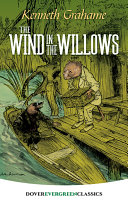
The Wind in the Willows

The Wind in the Willows

The Wind in the Willows by Kenneth Grahame (1908) Mole, Ratty, Badger, and the irrepressible Toad of Toad Hall — a gentle pastoral tale of friendship, adventure, and the English countryside. One of the most cherished children's books in the English language. Historical Significance: Kenneth Grahame, Secretary of the Bank of England, began the stories as bedtime tales and letters for his son Alastair ("Mouse"). Published in 1908, the book received mixed reviews — critics expected something different from the author of The Golden Age. But readers loved it, and it gradually became a classic. A.A. Milne's 1929 stage adaptation, Toad of Toad Hall, introduced the story to millions. President Theodore Roosevelt wrote Grahame a fan letter saying he had "read it and reread it, and have come to accept the characters as old friends." This public domain classic was originally published in 1908. Free to read and share.

$0.00 1 pages
Details
Black Beauty

Black Beauty

Black Beauty by Anna Sewell (1877) The autobiography of a horse. From a happy colt in an English meadow through years of varying treatment — kindness and cruelty, wealth and poverty — Black Beauty's story changed how the world treats animals. Historical Significance: Anna Sewell wrote Black Beauty as her first and only novel while bedridden with a debilitating illness. She dictated portions to her mother, completing it in 1877. She sold it to the publisher Jarrolds for £20 and died five months after publication, never knowing that her book would become one of the bestselling novels of all time (over 50 million copies). The novel was written specifically to promote the humane treatment of horses. It directly influenced the abolition of the bearing rein (a device that forced horses' heads into uncomfortable positions) and supported the growing animal welfare movement. The RSPCA and American Humane Association used it as advocacy literature. It is credited as the book that changed humanity's relationship with animals. This public domain classic was originally published in 1877. Free to read and share.

$0.00 59 pages
Details
Grimm's Fairy Tales

Grimm's Fairy Tales

Grimm's Fairy Tales by Jacob and Wilhelm Grimm A selection of 62 tales in English, based on translations by Edgar Taylor and Marian Edwardes. This edition includes Rapunzel, Hansel and Gretel, Rumpelstiltskin, Little Red-Cap, Briar Rose, Ashputtel and many other stories. This is a selected collection, not the complete collection of more than 200 Grimm tales. Some familiar stories appear under older English titles: Ashputtel is Cinderella, Briar Rose is Sleeping Beauty, and Snowdrop is Snow White. Retained text source: Project Gutenberg ebook 2591.

$0.00 68 pages
Details
Andersen's Fairy Tales

Andersen's Fairy Tales

Andersen's Fairy Tales by Hans Christian Andersen Eighteen stories, including The Emperor's New Clothes, The Snow Queen, The Little Match Girl, The Red Shoes, The Fir Tree and The Shadow. The selection also contains The Swineherd, The Real Princess, The Shoes of Fortune, The Leap-Frog, The Elderbush, The Bell, The Old House, The Happy Family, The Story of a Mother, The False Collar, The Dream of Little Tuk and The Naughty Boy. This edition does not include The Ugly Duckling, The Little Mermaid or Thumbelina. Retained English text source: Project Gutenberg ebook 1597.

$0.00 24 pages
Details
Dubliners

Dubliners

Dubliners by James Joyce (1914) Fifteen short stories capturing the paralysis and quiet desperation of early 20th-century Dublin. "The Dead," the collection's masterpiece, is widely considered the greatest short story in the English language. Historical Significance: Joyce completed Dubliners in 1905 but endured nine years of rejection and censorship before it was finally published in 1914. Publishers objected to its frank depiction of Dublin life — its references to real businesses, its sexual content, and its use of the word "bloody." One printer destroyed the typeset sheets rather than print the book. The fifteen stories follow a deliberate arc from childhood through adolescence, maturity, and public life. Each story captures a moment of "epiphany" — Joyce's term for a sudden revelation of truth. "The Dead," which closes the collection, achieves a transcendence rare in all of literature, as Gabriel Conroy realizes how little he knows about even those closest to him. "His soul swooned slowly as he heard the snow falling faintly through the universe." This public domain classic was originally published in 1914. Free to read and share.

$0.00 20 pages
Details
Ulysses

Ulysses

Ulysses by James Joyce (1922) One day in Dublin — June 16, 1904. Leopold Bloom, an advertising canvasser, wanders through Dublin in a modern retelling of Homer's Odyssey. The novel that changed literature forever and was banned as obscene for over a decade. Historical Significance: Joyce spent seven years writing Ulysses, publishing it in Paris on his 40th birthday, February 2, 1922, through Sylvia Beach's Shakespeare and Company bookshop. It was immediately banned in the United States and United Kingdom for obscenity — the Molly Bloom soliloquy, with its frank depiction of female sexuality, scandalized authorities. The landmark 1933 court decision United States v. One Book Called Ulysses lifted the ban, with Judge John Woolsey declaring the book was not pornographic but a "sincere and honest effort to show how the minds of certain characters work." The decision was a milestone for literary freedom. June 16 is now celebrated worldwide as "Bloomsday." T.S. Eliot called the novel "the most important expression which the present age has found." It consistently tops lists of the greatest novels of the 20th century. This public domain classic was originally published in 1922. Free to read and share.

$0.00 89 pages
Details
The Age of Innocence

The Age of Innocence

The Age of Innocence by Edith Wharton (1920) Newland Archer is engaged to the perfect May Welland but falls passionately in love with her unconventional cousin, the Countess Olenska. Set in 1870s New York high society, a devastating portrait of how social conventions destroy authentic feeling. Historical Significance: Edith Wharton became the first woman to win the Pulitzer Prize for Fiction with The Age of Innocence in 1921. She wrote the novel in her 50s, looking back at the Gilded Age New York of her youth with both nostalgia and ruthless clarity. The "innocence" of the title is deeply ironic — it refers not to purity but to willful ignorance, the polite society that crushes individuality and passion beneath an impenetrable surface of good manners. Martin Scorsese's 1993 film adaptation, starring Daniel Day-Lewis and Michelle Pfeiffer, captured the novel's exquisite claustrophobia. This public domain classic was originally published in 1920. Free to read and share.

$0.00 44 pages
Details
The Turn of the Screw

The Turn of the Screw

The Turn of the Screw by Henry James (1898) A governess at a remote English estate becomes convinced that two ghostly figures are corrupting the children in her care. But are the ghosts real, or is she descending into madness? The most brilliantly ambiguous ghost story ever written. Historical Significance: Henry James published The Turn of the Screw in 1898, describing it as a "trap for the unwary." Over a century of scholarship has failed to resolve its central ambiguity: are the ghosts of Peter Quint and Miss Jessel real supernatural entities, or hallucinations of a repressed, unreliable narrator? James deliberately refused to clarify, making the story a Rorschach test for readers' own anxieties. The novella has been adapted into Benjamin Britten's opera (1954), Jack Clayton's film The Innocents (1961) — one of the greatest horror films ever made — and Netflix's The Haunting of Bly Manor (2020). It remains the gold standard for psychological horror and literary ambiguity. This public domain classic was originally published in 1898. Free to read and share.

$0.00 30 pages
Details
Siddhartha

Siddhartha

Siddhartha by Hermann Hesse (1922) A young Brahmin's spiritual journey through asceticism, sensual pleasure, wealth, and despair to find enlightenment by a river. Not about the historical Buddha, but about a man named Siddhartha seeking his own path to wisdom. Historical Significance: Hermann Hesse, a German-Swiss Nobel laureate, wrote Siddhartha during a period of personal crisis following psychoanalysis with a student of Carl Jung. Published in 1922 in German, it was not translated into English until 1951. The novel became a phenomenon during the 1960s counterculture movement, when millions of young Westerners discovered Eastern philosophy. Hesse's message — that wisdom cannot be taught but must be experienced — resonated with a generation questioning Western materialism. The novel has sold over 10 million copies in the US alone and remains one of the most influential books on spiritual seeking. Steve Jobs, who read it as a young man, listed it as one of his most important influences. This public domain classic was originally published in 1922. Free to read and share.

$0.00 20 pages
Details
Narrative of the Life of Frederick Douglass

Narrative of the Life of Frederick Douglass

Narrative of the Life of Frederick Douglass, an American Slave by Frederick Douglass (1845) The autobiography of a man who escaped slavery, taught himself to read, and became the most powerful voice for abolition in American history. One of the most important documents in American literature and civil rights history. Historical Significance: Frederick Douglass published his Narrative in 1845, just seven years after escaping slavery in Maryland. It was an immediate bestseller, selling 5,000 copies in four months and 30,000 copies within five years. The book was so eloquent that skeptics accused Douglass of being unable to have written it himself — precisely the kind of racist assumption the book was written to demolish. Douglass' account of learning to read — his mistress began teaching him until her husband forbade it, saying literacy would make a slave unfit for slavery — is one of American literature's most powerful passages. The Narrative made Douglass internationally famous but also put him at risk of recapture under the Fugitive Slave Act, forcing him to flee to Britain for two years. This public domain classic was originally published in 1845. Free to read and share.

$0.00 13 pages
Details
The Awakening and Selected Short Stories

The Awakening and Selected Short Stories

The Awakening and Selected Short Stories by Kate Chopin The Awakening follows Edna Pontellier as she questions the expectations placed on her as a wife and mother in Louisiana. This edition contains the novel together with eight additional short stories by Chopin. The stories are Beyond the Bayou, Ma'ame Pelagie, Desiree's Baby, A Respectable Woman, The Kiss, A Pair of Silk Stockings, The Locket and A Reflection. They follow the novel as separate works. Retained text source: Project Gutenberg ebook 160.

$0.00 59 pages
Details
Candide

Candide

Candide, or Optimism by Voltaire (1759) A naive young man, taught that "all is for the best in the best of all possible worlds," is expelled from paradise and experiences every catastrophe imaginable — war, earthquake, slavery, disease — yet somehow survives. The most devastating satire of the Enlightenment. Historical Significance: Voltaire wrote Candide in 1758-1759, partly in response to the Lisbon earthquake of 1755, which killed 30,000-50,000 people and shook European confidence in a benevolent God. The novella was published simultaneously in five countries in January 1759 and immediately banned everywhere — which only increased its sales. Voltaire denied authorship for years. Candide is a sustained attack on Leibniz's philosophical optimism (satirized through Dr. Pangloss) and on religious hypocrisy, war, and human cruelty. Its final line — "we must cultivate our garden" — has been interpreted as Voltaire's practical philosophy: stop theorizing about the world and do useful work. It remains one of the most widely read works of the French Enlightenment. This public domain classic was originally published in 1759. Free to read and share.

$0.00 74 pages
Details
David Copperfield

David Copperfield

David Copperfield by Charles Dickens (1850) "Whether I shall turn out to be the hero of my own life, or whether that station will be held by anybody else, these pages must show." Dickens' most autobiographical novel, following young David from a troubled childhood through the discovery of his true calling as a writer. Historical Significance: Dickens called David Copperfield "my favourite child" among all his novels. Serialized from May 1849 to November 1850, it drew heavily on his own experiences: like David, young Charles Dickens was put to work in a factory while his father was imprisoned for debt. Mr. Micawber — eternally optimistic, perpetually in debt, always expecting "something to turn up" — was based directly on Dickens' father, John Dickens. The cruel Mr. Murdstone, the eccentric Aunt Betsey Trotwood, and the villainous Uriah Heep are among Dickens' most memorable creations. Tolstoy, Henry James, and Virginia Woolf all cited it as a masterpiece. This public domain classic was originally published in 1850. Free to read and share.

$0.00 65 pages
Details
Ethan Frome

Ethan Frome

Ethan Frome by Edith Wharton (1911) A bleak, devastating novella set in rural New England. Ethan Frome, trapped in a loveless marriage, falls for his wife's cousin Mattie Silver. Their desperate attempt to escape ends in tragedy. Wharton at her most spare and powerful. Historical Significance: Edith Wharton, known for novels of New York high society, wrote Ethan Frome as a deliberate departure — a story of rural poverty and emotional imprisonment. She based the setting on her observations of life in Lenox, Massachusetts, and the central catastrophe on a real sledding accident in 1904 that left five young people injured. The novella is only 30,000 words but achieves an emotional weight that dwarfs many longer works. It is one of the most-taught American novels and frequently cited as an example of literary perfection in miniature. This public domain classic was originally published in 1911. Free to read and share.

$0.00 14 pages
Details
The Island of Doctor Moreau

The Island of Doctor Moreau

The Island of Doctor Moreau by H.G. Wells (1896) A shipwrecked man discovers an island where a mad scientist surgically transforms animals into human-like beings. A horrifying exploration of vivisection, evolution, and the thin line between human and beast. Historical Significance: Published in 1896, one year after The Time Machine, The Island of Doctor Moreau caused a sensation for its graphic depictions of surgical experimentation. Wells wrote it during heated public debate over vivisection (animal experimentation), which was legal and widespread in Victorian England. The novel asks: if we can make animals human, what does that say about our own humanity? Dr. Moreau's creatures, chanting their "Laws" — "Are we not Men?" — are among the most disturbing images in science fiction. The novel has been adapted into three major films and influenced everything from Planet of the Apes to Jurassic Park. This public domain classic was originally published in 1896. Free to read and share.

$0.00 29 pages
Details
The Yellow Wallpaper

The Yellow Wallpaper

The Yellow Wallpaper by Charlotte Perkins Gilman (1892) A woman confined to a room for a "rest cure" becomes obsessed with the pattern of the yellow wallpaper — and the woman she believes is trapped behind it. A shattering short story about women's mental health and patriarchal medicine. Historical Significance: Charlotte Perkins Gilman wrote "The Yellow Wallpaper" based on her own experience with the "rest cure" prescribed by Dr. Silas Weir Mitchell, the leading neurologist of his era. Mitchell's treatment for "female hysteria" consisted of complete bed rest, no intellectual activity, and forced feeding — a treatment that nearly drove Gilman insane. She wrote the story as a warning. When published in 1892, the story was read as a horror tale. It was rediscovered in the 1970s by feminist scholars who recognized it as a masterpiece of feminist literature — a devastating critique of how patriarchal medicine pathologized women's independence. Mitchell reportedly changed his treatment methods after reading the story. It is now one of the most widely taught short stories in American literature. This public domain classic was originally published in 1892. Free to read and share.

$0.00 4 pages
Details
A Room with a View

A Room with a View

A Room with a View by E.M. Forster (1908) Lucy Honeychurch, a young Englishwoman on holiday in Florence, is torn between the passionate, freethinking George Emerson and the stuffy, conventional Cecil Vyse. A sparkling comedy about breaking free from social convention to follow your heart. Historical Significance: Forster wrote A Room with a View during the Edwardian era, when England's rigid class system was beginning to crack. The novel contrasts the emotional freedom of Italy with the suffocating propriety of English society. Lucy's journey from repression to self-knowledge mirrors the broader social awakening of women in the early 20th century. The Merchant Ivory 1985 film adaptation, starring Helena Bonham Carter and Daniel Day-Lewis, won three Academy Awards and introduced Forster to a new generation. With over 60,000 downloads on Project Gutenberg, it remains one of the most beloved English novels. This public domain classic was originally published in 1908. Free to read and share.

$0.00 20 pages
Details
The Blue Castle

The Blue Castle

The Blue Castle by L.M. Montgomery (1926) Valancy Stirling, a 29-year-old woman suffocated by her controlling family, receives a terminal diagnosis — and decides to finally live. She breaks every rule, speaks her mind, and finds unexpected love. Montgomery's most beloved adult novel. Historical Significance: L.M. Montgomery, famous for Anne of Green Gables, wrote The Blue Castle as her only novel set outside Prince Edward Island, placing it in Ontario's Muskoka region. Published in 1926, it was largely overlooked for decades until a 21st-century rediscovery made it a viral sensation — it now has nearly 50,000 downloads on Project Gutenberg, making it one of the most downloaded books on the platform. Modern readers connect with Valancy's rebellion against family expectations and her refusal to live a small, safe life. It has been called "the original hot girl summer novel." This public domain classic was originally published in 1926. Free to read and share.

$0.00 45 pages
Details
The Enchanted April

The Enchanted April

The Enchanted April by Elizabeth Von Arnim (1922) Four very different Englishwomen escape their dreary London lives by renting a medieval Italian castle for the month of April. Under the spell of wisteria, sunshine, and the Mediterranean, each woman is transformed. Historical Significance: Elizabeth Von Arnim wrote The Enchanted April from personal experience — she had lived in Italy and knew the transformative power of the Mediterranean on repressed English souls. Published in 1922, it was a bestseller on both sides of the Atlantic. The 1991 stage adaptation and 1992 film (nominated for three Academy Awards) revived interest in this enchanting novel. With 45,000+ Gutenberg downloads, it is one of the most popular comfort reads in the public domain — a book people return to when they need to believe in the possibility of happiness. This public domain classic was originally published in 1922. Free to read and share.

$0.00 22 pages
Details
Middlemarch

Middlemarch

Middlemarch: A Study of Provincial Life by George Eliot (1872) The novel Virginia Woolf called "one of the few English novels written for grown-up people." Dorothea Brooke, Dr. Lydgate, and a vast cast navigate marriage, ambition, politics, and moral choice in a fictional English Midlands town during the Reform era of 1829-1832. Historical Significance: George Eliot (Mary Ann Evans) published Middlemarch in eight installments from 1871 to 1872. She used a male pen name because she wanted her work judged on its merits, not dismissed as "mere feminine fiction." The novel weaves together multiple storylines — idealistic Dorothea's disastrous marriage to the pedantic Casaubon, ambitious Dr. Lydgate's entanglement with the beautiful but materialistic Rosamond — into a panoramic portrait of English society in transition. It is consistently voted the greatest novel in the English language in surveys of writers and critics. Martin Amis and Julian Barnes both called it "the greatest novel." This public domain classic was originally published in 1872. Free to read and share.

$0.00 88 pages
Details
The King in Yellow

The King in Yellow

The King in Yellow by Robert W. Chambers (1895) A collection of stories linked by a mysterious play called "The King in Yellow" — anyone who reads Act II goes insane. Carcosa, the Yellow Sign, and the Pallid Mask created a mythology of cosmic horror that influenced H.P. Lovecraft and inspired HBO's True Detective. Historical Significance: Robert W. Chambers published The King in Yellow in 1895, drawing on Ambrose Bierce's story "An Inhabitant of Carcosa" (1893). The first four stories are interconnected weird fiction; the remaining stories are more conventional. Chambers never returned to horror, becoming instead a bestselling romance novelist — but these early stories became foundational texts of cosmic horror. H.P. Lovecraft incorporated Chambers' mythology into his own Cthulhu Mythos. The book experienced a massive revival in 2014 when HBO's True Detective Season 1 referenced Carcosa, the Yellow King, and other elements, sending the book to the top of Amazon's bestseller list over a century after publication. This public domain classic was originally published in 1895. Free to read and share.

$0.00 51 pages
Details
Rebecca of Sunnybrook Farm

Rebecca of Sunnybrook Farm

Rebecca of Sunnybrook Farm by Kate Douglas Wiggin (1903) Spirited, imaginative Rebecca Rowena Randall is sent to live with her stern aunts and transforms their lives — and an entire town — with her irrepressible optimism and creativity. A forerunner to Anne of Green Gables. Historical Significance: Published in 1903, five years before Anne of Green Gables, Rebecca was the bestselling children's novel of its era. Kate Douglas Wiggin was already famous as a kindergarten pioneer — she established the first free kindergarten on the West Coast in 1878. Jack London called Rebecca "one of the very best characters in American fiction." Shirley Temple's 1938 film adaptation was a box office hit. The novel influenced L.M. Montgomery, who acknowledged that Anne Shirley owed a debt to Rebecca Randall. This public domain classic was originally published in 1903. Free to read and share.

$0.00 39 pages
Details
Little Lord Fauntleroy

Little Lord Fauntleroy

Little Lord Fauntleroy by Frances Hodgson Burnett (1886) A poor American boy discovers he is heir to an English earldom. His innocent goodness transforms his crusty grandfather and everyone he meets. The novel that made Burnett famous and launched a fashion craze. Historical Significance: Serialized in St. Nicholas Magazine in 1885-86, Little Lord Fauntleroy was the bestselling children's novel of the decade and one of the bestselling books of the entire 19th century. It sparked the "Fauntleroy suit" fashion craze — velvet suits with lace collars that mothers forced on reluctant boys for a generation. The novel made Burnett wealthy and internationally famous. It was adapted into a hit play and three films. While its sentimentality fell out of fashion in the 20th century, it remains a fascinating artifact of Victorian idealism and the belief that a child's innocence could redeem the world. This public domain classic was originally published in 1886. Free to read and share.

$0.00 19 pages
Details
The Prisoner of Zenda

The Prisoner of Zenda

The Prisoner of Zenda by Anthony Hope (1894) An English gentleman on holiday in the fictional kingdom of Ruritania discovers he is the exact double of the king — and must impersonate him to save the throne. The original swashbuckling adventure romance. Historical Significance: Anthony Hope wrote The Prisoner of Zenda in just 30 days in 1894. It created the "Ruritanian romance" genre — adventure stories set in small fictional European kingdoms — that influenced everything from The Scarlet Pimpernel to Star Wars' Princess Leia storyline. The novel has been adapted into over a dozen films and inspired countless imitators. "Ruritania" entered the English language as a word for any small, romantically unstable European kingdom. This public domain classic was originally published in 1894. Free to read and share.

$0.00 23 pages
Details
Northanger Abbey

Northanger Abbey

Northanger Abbey by Jane Austen (1817) Catherine Morland, an avid reader of Gothic novels, visits the ancient Northanger Abbey and lets her imagination run wild, suspecting her host of terrible crimes. Austen's delightful satire of Gothic fiction and the dangers of confusing novels with reality. Historical Significance: Austen wrote Northanger Abbey around 1798-99 (originally titled "Susan"), making it one of her earliest completed works, though it was published posthumously in December 1817 alongside Persuasion. The novel is both a loving parody of Gothic novels like Ann Radcliffe's The Mysteries of Udolpho and a sharp commentary on the expectations placed on young women. Catherine Morland is Austen's most naive heroine — her education through disillusionment is both comic and touching. The novel's defense of the novel as an art form ("only a novel!") remains one of the most important early statements of fiction's literary value. This public domain classic was originally published posthumously in 1817. Free to read and share.

$0.00 32 pages
Details
Mansfield Park

Mansfield Park

Mansfield Park by Jane Austen (1814) Fanny Price, a poor relation taken in by wealthy relatives, quietly observes their moral failures while struggling with her own feelings for her cousin Edmund. Austen's most morally complex and controversial novel. Historical Significance: Published in 1814, Mansfield Park divided readers from the start — and still does. Its heroine Fanny Price is passive, pious, and judgmental where Elizabeth Bennet is witty and bold. But Austen was doing something radical: showing that moral clarity and quiet strength are their own form of heroism. The novel addresses slavery (Sir Thomas Bertram's wealth comes from a plantation in Antigua), theatricality versus sincerity, and the corruption of London versus the stability of the countryside. Modern scholars consider it Austen's most sophisticated work, even if it is her least immediately lovable. This public domain classic was originally published in 1814. Free to read and share.

$0.00 48 pages
Details
The Return of Sherlock Holmes

The Return of Sherlock Holmes

The Return of Sherlock Holmes by Arthur Conan Doyle (1905) Holmes is alive! Thirteen stories marking the detective's triumphant return from the dead after "The Final Problem." Including "The Adventure of the Empty House," "The Adventure of the Dancing Men," and "The Adventure of the Six Napoleons." Historical Significance: After killing Holmes at Reichenbach Falls in 1893, Doyle resisted enormous pressure to revive him for ten years. The American magazine Collier's finally offered such a staggering sum ($45,000 for 13 stories — over $1.5 million today) that Doyle relented. "The Adventure of the Empty House," published in October 1903, caused a sensation — queues formed at newsstands, and The Strand Magazine's print run sold out immediately. Holmes' explanation of his survival (a fictional martial art called "baritsu") is one of the great hand-waving moments in literature. This public domain classic was originally published in 1905. Free to read and share.

$0.00 18 pages
Details
The Memoirs of Sherlock Holmes

The Memoirs of Sherlock Holmes

The Memoirs of Sherlock Holmes by Arthur Conan Doyle Twelve Sherlock Holmes stories, from Silver Blaze to The Final Problem. This edition includes The Adventure of the Cardboard Box, which is omitted from some editions of the collection. Other cases include The Musgrave Ritual, The Greek Interpreter and The Naval Treaty. In The Final Problem, Holmes confronts Professor Moriarty at the Reichenbach Falls. Retained text source: Project Gutenberg ebook 834. The count follows the twelve numbered stories in this retained file.

$0.00 17 pages
Details
The Sign of the Four

The Sign of the Four

The Sign of the Four by Arthur Conan Doyle (1890) The second Sherlock Holmes novel. A young woman seeks Holmes' help after receiving mysterious pearls annually for six years following her father's disappearance. The case leads to a stolen Indian treasure, a one-legged convict, and a dramatic Thames river chase. Historical Significance: Commissioned at a dinner party where Doyle met Oscar Wilde (who was simultaneously commissioned to write The Picture of Dorian Gray), The Sign of the Four was published in Lippincott's Monthly Magazine in February 1890. It introduced Holmes' cocaine habit ("a seven-per-cent solution"), deepened his character with his famous observation that his brain "rebels at stagnation," and provided Watson with a wife — Mary Morstan. The novel's depiction of British colonialism in India and the theft of treasure reflects Victorian anxieties about empire. This public domain classic was originally published in 1890. Free to read and share.

$0.00 12 pages
Details
A Connecticut Yankee in King Arthur's Court

A Connecticut Yankee in King Arthur's Court

A Connecticut Yankee in King Arthur's Court by Mark Twain (1889) A 19th-century American factory superintendent is knocked unconscious and wakes up in 6th-century Camelot, where he uses his modern knowledge to become "The Boss" — industrializing medieval England with guns, telephones, and democracy. Historical Significance: Twain's novel is simultaneously one of the earliest time travel stories, a savage satire of monarchy and aristocracy, and a prescient warning about the destructive power of technology. Published in 1889, it attacked the romanticization of the Middle Ages popularized by Tennyson's Idylls of the King. The novel's ending — where the Yankee's modern weapons massacre thousands of knights — is one of the darkest conclusions in American fiction, foreshadowing the industrialized slaughter of World War I by 25 years. Bing Crosby's 1949 musical film softened the story considerably. This public domain classic was originally published in 1889. Free to read and share.

$0.00 45 pages
Details
The Prince and the Pauper

The Prince and the Pauper

The Prince and the Pauper by Mark Twain (1881) Young Prince Edward VI and pauper Tom Canty, identical in appearance, swap places — the prince discovers the cruelty of poverty while the pauper struggles with the burden of power. Twain's first historical novel. Historical Significance: Set in 1547 England, The Prince and the Pauper was Twain's attempt to prove he could write "serious" literature beyond his humor. Published in 1881, it was his first novel set in England and his first attempt at historical fiction. The "switched identities" plot device, while not invented by Twain, was perfected here and has been imitated in hundreds of subsequent works from Disney's The Parent Trap to countless films. Twain's daughter Susy called it his best book. The novel's exploration of how circumstance shapes identity remains powerful. This public domain classic was originally published in 1881. Free to read and share.

$0.00 34 pages
Details
Pygmalion

Pygmalion

Pygmalion by George Bernard Shaw (1913) Professor Henry Higgins bets he can transform Cockney flower girl Eliza Doolittle into a duchess through elocution lessons. But Eliza has more to teach Higgins than he realizes. The play that became My Fair Lady. Historical Significance: Shaw wrote Pygmalion in 1912 and it premiered in Vienna in 1913, with its London premiere in 1914 starring Mrs. Patrick Campbell as Eliza. Shaw was furious when audiences wanted a romantic ending — he insisted the play was about class and language, not love. Despite his protests, the 1938 film added romantic elements, and the 1956 Lerner and Loewe musical My Fair Lady became one of the most successful musicals in history, winning eight Academy Awards in its 1964 film version. Shaw won the Nobel Prize for Literature in 1925, partly on the strength of Pygmalion. This public domain classic was originally written in 1913. Free to read and share.

$0.00 6 pages
Details
The Souls of Black Folk

The Souls of Black Folk

The Souls of Black Folk by W.E.B. Du Bois (1903) "The problem of the twentieth century is the problem of the color-line." A groundbreaking collection of essays on race, identity, and the African American experience that changed the course of American history. Historical Significance: W.E.B. Du Bois — the first African American to earn a Ph.D. from Harvard — published The Souls of Black Folk in 1903, directly challenging Booker T. Washington's accommodationist approach to racial progress. Du Bois introduced the concept of "double consciousness" — the psychological tension of being both Black and American — that remains central to understanding racial identity. The book's chapter on the death of his infant son is one of the most heartbreaking passages in American literature. The Souls of Black Folk helped inspire the Niagara Movement and the founding of the NAACP. Martin Luther King Jr., James Baldwin, and Ta-Nehisi Coates all cited it as a foundational influence. This public domain classic was originally published in 1903. Free to read and share.

$0.00 21 pages
Details
Walden and Civil Disobedience

Walden and Civil Disobedience

Walden and Civil Disobedience by Henry David Thoreau This combined edition contains Walden, Thoreau's account of life beside Walden Pond, followed by the separate essay On the Duty of Civil Disobedience. Walden explores daily work, the natural world, solitude and the choices that shape a life. The accompanying essay discusses conscience and an individual's relationship with government. Retained text source: Project Gutenberg ebook 205. Civil Disobedience is also offered separately in the catalog; this edition includes it after Walden.

$0.00 26 pages
Details
Civil Disobedience

Civil Disobedience

Civil Disobedience by Henry David Thoreau (1849) "That government is best which governs least." Thoreau's essay on the moral duty to resist unjust government — written after spending a night in jail for refusing to pay a poll tax in protest of slavery and the Mexican-American War. Historical Significance: Originally published as "Resistance to Civil Government" in 1849, this short essay became one of the most influential political texts in world history. Thoreau argued that individuals have a moral obligation to disobey unjust laws, even at personal cost. Mahatma Gandhi read it in a South African prison and credited it as a major inspiration for his campaign of nonviolent resistance. Martin Luther King Jr. read it as a student at Morehouse College and later wrote that it was his "first intellectual contact with the theory of nonviolent resistance." The essay has influenced every major civil rights and protest movement since. This public domain classic was originally published in 1849. Free to read and share.

$0.00 5 pages
Details
The Art of War

The Art of War

The Art of War by Sun Tzu (c. 5th century BC) The oldest and most influential military strategy text ever written. "All warfare is based on deception." Thirteen chapters of strategic wisdom that transcend military application and are now studied in business schools, sports coaching, and leadership programs worldwide. Historical Significance: Attributed to Sun Tzu, a Chinese military general and strategist who may have lived around 544-496 BC during the Spring and Autumn period, The Art of War was compiled over centuries of military thought. The text was first translated into a European language (French) by Jesuit missionary Jean Joseph Marie Amiot in 1772. Napoleon reportedly studied it; the book was required reading for KGB agents during the Cold War. In the late 20th century, The Art of War crossed over from military to business strategy. CEOs, athletes, lawyers, and politicians adopted its principles: "Know your enemy and know yourself," "Appear weak when you are strong," "The supreme art of war is to subdue the enemy without fighting." It remains one of the bestselling nonfiction books in the world. This public domain classic was originally composed c. 5th century BC. Free to read and share.

$0.00 15 pages
Details
The Republic

The Republic

The Republic by Plato (c. 380 BC) The foundational text of Western philosophy. Socrates and his companions debate justice, the ideal state, the nature of the soul, and the famous Allegory of the Cave — where prisoners mistake shadows for reality. Historical Significance: Written around 380 BC as a Socratic dialogue, The Republic addresses the most fundamental question of political philosophy: what is justice? Plato's vision of the ideal state — ruled by philosopher-kings, with citizens divided into classes based on their nature — has been debated, admired, and condemned for 2,400 years. The Allegory of the Cave, in which prisoners chained in darkness mistake flickering shadows for reality, remains the most powerful metaphor for ignorance and enlightenment ever conceived. Every subsequent work of political philosophy, from Aristotle to Rawls, is in some way a response to The Republic. This public domain classic was originally composed c. 380 BC. Free to read and share.

$0.00 21 pages
Details
Meditations

Meditations

Meditations by Marcus Aurelius (c. 161-180 AD) The private journal of a Roman Emperor — never intended for publication. Marcus Aurelius' reflections on duty, mortality, self-discipline, and finding peace amid chaos. The most accessible and beloved work of Stoic philosophy. Historical Significance: Marcus Aurelius wrote the Meditations in Greek during his military campaigns on the Germanic frontier, between 170 and 180 AD. He was the last of the "Five Good Emperors" and the most powerful man in the world, yet his private writings reveal a man struggling with the same anxieties as anyone: anger, distraction, fear of death, and the search for meaning. The Meditations were never meant to be read by anyone else — they are literally a man talking to himself. This intimacy is what makes them so powerful 1,800 years later. Bill Clinton, Tim Ferriss, and countless Silicon Valley executives cite Meditations as their most important book. The Stoic philosophy it contains — focus on what you can control, accept what you cannot — has become a cornerstone of modern self-help and cognitive behavioral therapy. This public domain classic was originally written c. 170-180 AD. Free to read and share.

$0.00 7 pages
Details
Thus Spoke Zarathustra

Thus Spoke Zarathustra

Thus Spoke Zarathustra by Friedrich Nietzsche (1883-1885) "God is dead." The prophet Zarathustra descends from his mountain to teach humanity about the Übermensch (Superman), the eternal recurrence, and the will to power. Nietzsche's most ambitious and poetic work — part philosophy, part prophecy, part prose poem. Historical Significance: Nietzsche wrote Zarathustra in intense bursts of inspiration between 1883 and 1885, while wandering through Italy and Switzerland in near-poverty and failing health. He described Part One as having been written in just ten days. The book sold almost nothing during his lifetime — his sister later claimed he printed 40 copies of Part Four at his own expense. Zarathustra's influence after Nietzsche's death in 1900 was enormous — and often disastrously misinterpreted. The Nazis appropriated the concept of the Übermensch for their racial ideology, which Nietzsche would have despised (he broke with Wagner over anti-Semitism). Properly understood, the Übermensch is an individual who creates their own values rather than following inherited morality. Richard Strauss' tone poem (1896) and Stanley Kubrick's use of it in 2001: A Space Odyssey made the opening bars among the most recognizable music in the world. This public domain classic was originally published in 1883-1885. Free to read and share.

$0.00 54 pages
Details
The Prince

The Prince

The Prince by Niccolò Machiavelli (1532) "It is better to be feared than loved, if you cannot be both." The most notorious political treatise ever written. Machiavelli's cold-eyed manual for acquiring and maintaining political power shocked the world and made his name a synonym for cunning. Historical Significance: Niccolò Machiavelli, a Florentine diplomat who had served the Republic of Florence, wrote The Prince in 1513 after being exiled, imprisoned, and tortured by the returning Medici family. He dedicated the book to Lorenzo de' Medici, hoping to regain political favor — it didn't work. Published posthumously in 1532, the book was condemned by the Pope and placed on the Index of Forbidden Books. What made The Prince revolutionary was its rejection of idealism. Where previous political writers described how rulers should behave, Machiavelli described how they actually behave — and how to win. "Machiavellian" became an adjective meaning deviously cunning, though scholars argue Machiavelli was simply being honest about power. The Prince is required reading in political science programs worldwide. This public domain classic was originally published in 1532. Free to read and share.

$0.00 28 pages
Details
Common Sense

Common Sense

Common Sense by Thomas Paine (1776) The pamphlet that started a revolution. In just 47 pages, Paine demolished the case for British rule, argued for American independence, and convinced a nation of colonists to become revolutionaries. The bestselling work of the 18th century. Historical Significance: Thomas Paine, an English immigrant who had arrived in America just 14 months earlier, published Common Sense anonymously on January 10, 1776. It sold 500,000 copies in its first year — in a country of 2.5 million people. Proportionally, it remains the bestselling American publication of all time. Paine wrote in plain, direct language that ordinary people could understand, deliberately rejecting the learned style of political philosophy. "These are the times that try men's souls" (from his later Crisis papers) became a rallying cry. George Washington had Common Sense read aloud to his troops. John Adams said, "Without the pen of the author of Common Sense, the sword of Washington would have been raised in vain." The pamphlet directly precipitated the Declaration of Independence six months later. This public domain classic was originally published in 1776. Free to read and share.

$0.00 14 pages
Details
The Communist Manifesto

The Communist Manifesto

The Communist Manifesto by Karl Marx and Friedrich Engels (1848) "A spectre is haunting Europe — the spectre of communism." The most influential political pamphlet of the modern era. In just 12,000 words, Marx and Engels laid out a theory of history, class struggle, and revolution that would reshape the 20th century. Historical Significance: Commissioned by the Communist League and published in London on February 21, 1848, the Manifesto appeared just as revolutions erupted across Europe in the Spring of Nations. Marx was 29 years old. The text argues that all history is the history of class struggles, that capitalism contains the seeds of its own destruction, and that the working class will inevitably overthrow the bourgeoisie. Whatever one thinks of communism as a political system, the Manifesto's influence on world history is undeniable. It inspired revolutions in Russia, China, Cuba, and Vietnam; shaped labor movements, social democratic parties, and welfare states worldwide; and fundamentally changed how we think about economics, class, and power. It remains one of the most assigned texts in university courses and one of the most debated documents in human history. This public domain classic was originally published in 1848. Free to read and share.

$0.00 12 pages
Details
Autobiography of Benjamin Franklin

Autobiography of Benjamin Franklin

The Autobiography of Benjamin Franklin by Benjamin Franklin (written 1771-1790, published 1791) America's first self-help book. Franklin's account of his rise from a runaway printer's apprentice to the most famous American of his age — scientist, inventor, diplomat, and Founding Father. Historical Significance: Franklin began writing his autobiography in 1771 at age 65 and worked on it intermittently until shortly before his death in 1790. It was first published in French translation in 1791. The book pioneered the rags-to-riches narrative that became central to the American Dream. Franklin's "13 Virtues" self-improvement program — temperance, silence, order, resolution, frugality, industry, sincerity, justice, moderation, cleanliness, tranquility, chastity, humility — is the direct ancestor of every self-help system from Dale Carnegie to Stephen Covey. The book has been continuously in print for over 230 years and remains one of the most widely read American autobiographies. This public domain classic was originally published in 1791. Free to read and share.

$0.00 38 pages
Details
My Ántonia

My Ántonia

My Ántonia by Willa Cather (1918) The story of Ántonia Shimerda, a Bohemian immigrant girl on the Nebraska prairie, told through the memories of her childhood friend Jim Burden. A luminous, heartbreaking portrait of the American pioneer experience. Historical Significance: Willa Cather based Ántonia on Annie Sadilek Pavelka, a real Bohemian immigrant she knew growing up in Red Cloud, Nebraska. Published in 1918, the novel captured a vanishing world — the first generation of European immigrants who broke the Great Plains — with extraordinary beauty and empathy. Cather wrote, "the best thing I've done is My Ántonia. I feel I've made a contribution to American letters with that book." The novel's celebration of immigrant resilience and its unflinching portrait of prairie hardship make it one of the great American novels. Cather won the Pulitzer Prize for One of Ours in 1923, but My Ántonia is considered her masterpiece. This public domain classic was originally published in 1918. Free to read and share.

$0.00 6 pages
Details
Tarzan of the Apes

Tarzan of the Apes

Tarzan of the Apes by Edgar Rice Burroughs (1912) An English nobleman's infant son, orphaned in the African jungle, is raised by great apes and becomes the Lord of the Jungle. Tarzan — one of fiction's most enduring characters, spawning the most successful franchise of the early 20th century. Historical Significance: Edgar Rice Burroughs, a 36-year-old failed businessman, wrote Tarzan of the Apes in 1911 while working as a pencil sharpener wholesaler. Published in All-Story Magazine in October 1912, it was an immediate sensation. Burroughs went on to write 24 Tarzan novels, but the character's cultural footprint extends far beyond the books — over 200 films, TV series, radio shows, comics, and merchandise made Tarzan one of the most recognized fictional characters in the world. The famous Tarzan yell (created for Johnny Weissmuller's 1932 film) is one of the most iconic sounds in cinema history. Tarzan has been translated into more than 60 languages. This public domain classic was originally published in 1912. Free to read and share.

$0.00 28 pages
Details
A Princess of Mars

A Princess of Mars

A Princess of Mars by Edgar Rice Burroughs (1912) Civil War veteran John Carter is mysteriously transported to Mars (Barsoom), where he discovers a dying planet of warring alien races, four-armed green warriors, and the beautiful princess Dejah Thoris. The novel that inspired Star Wars, Avatar, and modern science fiction. Historical Significance: Serialized as "Under the Moons of Mars" in All-Story Magazine in 1912 (the same year as Tarzan), A Princess of Mars created the "planetary romance" genre. George Lucas has cited it as a major influence on Star Wars — the desert planet, the warrior princess, the fish-out-of-water hero transplanted to an alien world. James Cameron's Avatar drew heavily on Barsoom's ecology and warrior cultures. Ray Bradbury, Arthur C. Clarke, and Carl Sagan all acknowledged Burroughs' influence on their love of space exploration. Disney's 2012 film adaptation John Carter, while a box office disappointment, introduced a new generation to Burroughs' imaginative world. This public domain classic was originally published in 1912. Free to read and share.

$0.00 29 pages
Details
The Lost World

The Lost World

The Lost World by Arthur Conan Doyle (1912) Professor Challenger leads an expedition to a South American plateau where dinosaurs still live. The original "lost world" adventure — the book that put dinosaurs into popular culture and directly inspired Jurassic Park. Historical Significance: Arthur Conan Doyle, seeking an escape from Sherlock Holmes, created the bombastic, brilliant Professor Challenger as a new hero. Published in 1912, The Lost World tapped into real excitement about paleontology — major dinosaur discoveries were being made in the American West and Argentina. Doyle promoted the book with an elaborate hoax, presenting doctored photographs of himself in "prehistoric" settings. The novel established the template that Michael Crichton would follow 78 years later with Jurassic Park: scientists discover living dinosaurs in a remote location, with terrifying consequences. Every "lost world" story since — from King Kong to Jurassic World — follows the path Doyle blazed. This public domain classic was originally published in 1912. Free to read and share.

$0.00 18 pages
Details
She: A History of Adventure

She: A History of Adventure

She: A History of Adventure by H. Rider Haggard (1887) Two Englishmen journey to the heart of Africa and discover a lost kingdom ruled by Ayesha, "She-who-must-be-obeyed" — a 2,000-year-old white queen of supernatural beauty and terrifying power who has been waiting for her reincarnated lover. Historical Significance: H. Rider Haggard wrote She in just six weeks in 1886, calling it "a strange story." Published in 1887, it became one of the bestselling novels of all time, with over 83 million copies sold. Haggard was a colonial administrator in South Africa, and the novel reflects Victorian fascination with — and anxiety about — the "Dark Continent." Ayesha is one of fiction's most compelling and problematic characters: powerful, brilliant, and terrifying, yet also a product of colonial fantasy. Freud and Jung both analyzed the novel. It influenced C.S. Lewis's Narnia and Tolkien's Galadriel. The phrase "She who must be obeyed" entered common usage (famously used in Rumpole of the Bailey). This public domain classic was originally published in 1887. Free to read and share.

$0.00 37 pages
Details
King Solomon's Mines

King Solomon's Mines

King Solomon's Mines by H. Rider Haggard (1885) Allan Quatermain leads an expedition into uncharted Africa to find a missing man — and discovers the legendary diamond mines of King Solomon. The original adventure quest that set the template for Indiana Jones. Historical Significance: Haggard wrote King Solomon's Mines on a bet with his brother that he could write a novel as good as Treasure Island. Published in 1885, it became the first English adventure novel set in Africa and created the "lost world" genre. Allan Quatermain — tough, experienced, modest — became the archetype for every adventure hero from Indiana Jones to Lara Croft. Steven Spielberg and George Lucas have both acknowledged the novel's direct influence on the Indiana Jones franchise. This public domain classic was originally published in 1885. Free to read and share.

$0.00 21 pages
Details
The Thirty-Nine Steps

The Thirty-Nine Steps

The Thirty-Nine Steps by John Buchan (1915) Richard Hannay, a bored mining engineer, stumbles into an international espionage conspiracy and must flee across the Scottish Highlands with both the police and enemy agents on his trail. The novel that invented the modern spy thriller. Historical Significance: John Buchan, a Scottish politician and future Governor-General of Canada, wrote The Thirty-Nine Steps in 1915 while recovering from illness during World War I. The novel created the "man on the run" thriller template: an innocent man is framed, pursues the real villains while being pursued himself, and must solve the mystery to clear his name. Alfred Hitchcock's 1935 film adaptation is one of his greatest works. Every spy thriller from James Bond to Jason Bourne follows the structural template Buchan established. This public domain classic was originally published in 1915. Free to read and share.

$0.00 11 pages
Details
Flatland: A Romance of Many Dimensions

Flatland: A Romance of Many Dimensions

Flatland: A Romance of Many Dimensions by Edwin A. Abbott (1884) A square living in a two-dimensional world is visited by a sphere from the third dimension, shattering everything he thought he knew about reality. A mathematical satire that is also a sharp social commentary on Victorian class and gender hierarchies. Historical Significance: Edwin Abbott Abbott, a schoolmaster and theologian, published Flatland in 1884 under the pseudonym "A Square." The novella uses dimensional analogy to explain higher mathematics: just as a two-dimensional being cannot comprehend three dimensions, perhaps we three-dimensional beings cannot perceive the fourth dimension. The book was largely forgotten until physicists and mathematicians rediscovered it in the 20th century. Flatland is now beloved by STEM readers, taught in mathematics and physics courses worldwide, and cited in discussions of string theory and extra dimensions. Carl Sagan devoted a segment of his Cosmos TV series to explaining Flatland. It is also a cutting satire of Victorian social rigidity — women are mere lines, the working class are triangles, and priests are circles. This public domain classic was originally published in 1884. Free to read and share.

$0.00 5 pages
Details
The Scarlet Pimpernel

The Scarlet Pimpernel

The Scarlet Pimpernel by Baroness Orczy (1905) During the French Revolution's Reign of Terror, a mysterious English nobleman secretly rescues French aristocrats from the guillotine, leaving only a small red flower as his calling card. The original secret-identity superhero. Historical Significance: Baroness Emmuska Orczy, a Hungarian-born British author, first wrote The Scarlet Pimpernel as a play in 1903, then novelized it in 1905. The character of Sir Percy Blakeney — an apparently foolish aristocrat who is secretly a brilliant hero — directly created the "secret identity" archetype that would define superheroes for the next century. Zorro (1919), Batman (1939), and Superman (1938) all owe a direct debt to the Scarlet Pimpernel. The novel also pioneered the "love triangle complicated by secret identity" plot that became a staple of superhero fiction. "Is he in heaven? Is he in hell? That demmed, elusive Pimpernel!" is one of adventure fiction's most famous verses. This public domain classic was originally published in 1905. Free to read and share.

$0.00 32 pages
Details
The Jungle

The Jungle

The Jungle by Upton Sinclair (1906) Lithuanian immigrant Jurgis Rudkus works in Chicago's meatpacking plants, where he encounters appalling working conditions, corrupt bosses, and contaminated food. The novel that changed American food safety laws forever. Historical Significance: Upton Sinclair spent seven weeks undercover in Chicago's stockyards researching The Jungle. Published in 1906, the novel's graphic descriptions of unsanitary meatpacking practices — workers falling into rendering tanks, diseased meat being sold to consumers, rat droppings mixed into sausage — caused a national uproar. President Theodore Roosevelt, initially skeptical, sent investigators who confirmed Sinclair's findings. Within months, Congress passed the Pure Food and Drug Act and the Meat Inspection Act, creating the framework for modern food safety regulation. Sinclair famously said, "I aimed at the public's heart, and by accident I hit it in the stomach." He had intended the novel as a socialist argument about labor exploitation, but readers focused on the food safety revelations. Nevertheless, the novel remains one of the most powerful examples of literature directly changing law. This public domain classic was originally published in 1906. Free to read and share.

$0.00 31 pages
Details
Sister Carrie

Sister Carrie

Sister Carrie by Theodore Dreiser (1900) A young woman from small-town Wisconsin comes to Chicago, becomes the mistress of two men, and rises to fame as an actress — while the men who supported her are destroyed. The novel that launched American literary realism. Historical Significance: Theodore Dreiser's first novel was so frank in its treatment of sexuality, social climbing, and moral ambiguity that his own publisher, Doubleday, tried to suppress it after publication in 1900. Frank Norris, a reader at the publisher, championed the book, but Doubleday printed only 1,008 copies and refused to promote it. The novel sold just 456 copies and earned Dreiser $68.40. Sister Carrie's radical innovation was its refusal to punish its heroine for her sexual transgressions — Carrie rises while the men fall, without moral judgment from the author. This was shocking in 1900 and established the naturalistic tradition in American fiction. The novel was rediscovered in the 1980s when the original manuscript was restored, revealing extensive cuts made by Dreiser's wife. This public domain classic was originally published in 1900. Free to read and share.

$0.00 47 pages
Details
Main Street

Main Street

Main Street by Sinclair Lewis (1920) Carol Kennicott, an idealistic young woman, marries a small-town doctor and moves to Gopher Prairie, Minnesota — where she discovers that small-town America is not charming but narrow-minded, materialistic, and hostile to change. Historical Significance: Main Street was the bestselling novel of 1921 and made Sinclair Lewis the most talked-about writer in America. The novel shattered the myth of the wholesome American small town, portraying it instead as a place of stultifying conformity and cultural mediocrity. Lewis based Gopher Prairie on his hometown of Sauk Centre, Minnesota — and Sauk Centre's residents were furious. Lewis became the first American to win the Nobel Prize for Literature in 1930, with the committee specifically citing Main Street. The novel spawned a national debate about small-town values that continues today, from Garrison Keillor's Lake Wobegon to the "flyover country" discourse. The phrase "Main Street" became shorthand for middle-American conservatism, used by politicians from both parties. This public domain classic was originally published in 1920. Free to read and share.

$0.00 40 pages
Details
Beyond Good and Evil

Beyond Good and Evil

Beyond Good and Evil by Friedrich Nietzsche (1886) "He who fights with monsters should look to it that he himself does not become a monster. And if you gaze long into an abyss, the abyss also gazes into you." Nietzsche's most systematic critique of traditional morality and philosophy. Historical Significance: Published in 1886 at Nietzsche's own expense (it sold only 114 copies in its first year), Beyond Good and Evil challenges every assumption of Western philosophy since Plato. Nietzsche attacks democracy, nationalism, Christianity, utilitarianism, and the very concept of objective truth. He proposes that morality is not universal but created by the powerful to serve their interests — what he calls "master morality" versus "slave morality." The book is Nietzsche at his most provocative and quotable. Its influence on 20th-century philosophy — existentialism, postmodernism, deconstructionism — is immeasurable. Foucault, Derrida, and Heidegger all built on Nietzsche's foundations. The book's aphoristic style makes it one of the most accessible works of serious philosophy. This public domain classic was originally published in 1886. Free to read and share.

$0.00 11 pages
Details
The Age of Reason

The Age of Reason

The Age of Reason by Thomas Paine (1794-1807) Thomas Paine's explosive attack on organized religion and defense of deism — the belief in God through reason and nature rather than scripture and clergy. The book that made Paine the most hated man in America. Historical Significance: Paine wrote The Age of Reason while imprisoned in Paris during the French Revolution's Terror — he narrowly escaped the guillotine when the chalk mark on his cell door was accidentally placed on the wrong side. Published in three parts (1794, 1795, 1807), the book systematically challenged the Bible's claims to divine authorship, pointing out contradictions, historical errors, and moral problems. The backlash was immediate and devastating. Paine, who had been a hero of the American Revolution for writing Common Sense, was vilified as an atheist (he wasn't — he believed in God, just not in organized religion). Theodore Roosevelt called him "a filthy little atheist." Paine died in poverty in 1809, with only six people attending his funeral. History has been kinder — The Age of Reason is now recognized as a foundational text of religious skepticism and freethought. This public domain classic was originally published in 1794. Free to read and share.

$0.00 22 pages
Details
Lady Susan

Lady Susan

Lady Susan by Jane Austen (written c. 1794, published 1871) An epistolary novella featuring Austen's most deliciously wicked character: Lady Susan Vernon, a beautiful, manipulative widow who schemes to secure wealthy husbands for herself and her reluctant daughter. Austen's darkest and funniest creation. Historical Significance: Written when Austen was about 18 or 19, Lady Susan was not published until 1871, over 50 years after her death. The novella is told entirely through letters, a format Austen would abandon for her later novels. Lady Susan is unlike any other Austen heroine — she is an anti-heroine, a charming villain who uses her intelligence and beauty to manipulate everyone around her. Some scholars see her as a prototype for Mary Crawford in Mansfield Park. Whit Stillman's 2016 film adaptation, Love & Friendship, was a critical and commercial hit that introduced Lady Susan to a new audience. This public domain classic was originally written c. 1794 and published posthumously in 1871. Free to read and share.

$0.00 47 pages
Details
The Second Jungle Book

The Second Jungle Book

The Second Jungle Book by Rudyard Kipling Five Mowgli stories continue his life in the jungle: How Fear Came, Letting in the Jungle, The King's Ankus, Red Dog and The Spring Running. Three other stories complete the collection: The Miracle of Purun Bhagat, The Undertakers and Quiquern. Each story is accompanied by poetry. This is the eight-story sequel to The Jungle Book, not a collection containing five additional non-Mowgli tales. Retained text source: Project Gutenberg ebook 1937.

$0.00 21 pages
Details
Kim

Kim

Kim by Rudyard Kipling (1901) Kimball O'Hara, an Irish orphan raised as a street urchin in Lahore, becomes entangled in the "Great Game" of British espionage along the Grand Trunk Road of India. A picaresque masterpiece of adventure, spirituality, and cultural identity. Historical Significance: Considered Kipling's finest novel, Kim was published in 1901 and draws on Kipling's deep love for India, where he was born and spent his formative years. The novel is both a spy thriller and a spiritual quest — Kim serves the British Secret Service while also seeking enlightenment alongside a Tibetan lama. T.S. Eliot called it "a masterpiece." It remains the most vivid portrait of colonial India in English literature and has been praised for its sympathetic, detailed portrayal of Indian cultures and religions. This public domain classic was originally published in 1901. Free to read and share.

$0.00 15 pages
Details
The Merry Adventures of Robin Hood

The Merry Adventures of Robin Hood

The Merry Adventures of Robin Hood by Howard Pyle (1883) The definitive retelling of the Robin Hood legend. Robin Hood, Little John, Friar Tuck, Maid Marian, and the Merry Men rob from the rich, give to the poor, and outwit the Sheriff of Nottingham in Sherwood Forest. Historical Significance: Howard Pyle, America's greatest illustrator, wrote and illustrated this book in 1883, creating the version of Robin Hood that all subsequent adaptations draw from. Pyle consolidated scattered medieval ballads into a coherent narrative with the characters we know today. His Robin Hood is jovial, generous, and loyal — the template for Errol Flynn's 1938 film, Disney's animated fox (1973), Kevin Costner's 1991 version, and every retelling since. Pyle's own illustrations, in a medieval woodcut style, are considered masterpieces of book illustration. This public domain classic was originally published in 1883. Free to read and share.

$0.00 29 pages
Details
The Legend of Sleepy Hollow

The Legend of Sleepy Hollow

The Legend of Sleepy Hollow by Washington Irving (1820) Schooltacher Ichabod Crane, courting the beautiful Katrina Van Tassel, encounters the terrifying Headless Horseman on a dark night ride through the haunted glen. America's most famous ghost story. Historical Significance: Published in 1820 as part of The Sketch Book of Geoffrey Crayon, this story and "Rip Van Winkle" made Washington Irving the first American author to achieve international fame. Irving wrote both stories while living in England, homesick for the Hudson Valley of his youth. The Headless Horseman — a Hessian soldier decapitated by a cannonball during the Revolutionary War — became one of America's most enduring folklore figures. Tim Burton's 1999 film starring Johnny Depp and Disney's 1949 animated adaptation brought the tale to new generations. Every Halloween, the real Sleepy Hollow in New York hosts thousands of visitors. This public domain classic was originally published in 1820. Free to read and share.

$0.00 5 pages
Details
Rip Van Winkle

Rip Van Winkle

Rip Van Winkle by Washington Irving (1819) A lazy but likable Dutch-American farmer wanders into the Catskill Mountains, encounters mysterious men playing ninepins, drinks their liquor, and falls asleep for twenty years — waking to find his wife dead, his friends gone, and America transformed by revolution. Historical Significance: Published in 1819, "Rip Van Winkle" was the first great American short story and made Washington Irving the first American writer recognized in Europe. The tale draws on German folklore (the legend of Peter Klaus) but is thoroughly Americanized — Rip sleeps through the entire American Revolution. The phrase "Rip Van Winkle" has entered the English language as a term for anyone hopelessly out of touch with the times. The story captures a fundamental American anxiety: the fear of being left behind by progress. This public domain classic was originally published in 1819. Free to read and share.

$0.00 10 pages
Details
The Last of the Mohicans

The Last of the Mohicans

The Last of the Mohicans by James Fenimore Cooper (1826) During the French and Indian War, frontiersman Hawkeye (Natty Bumppo) and his Mohican companions Chingachgook and Uncas escort two sisters through hostile territory. The most famous American adventure novel of the 19th century. Historical Significance: Published in 1826, The Last of the Mohicans was the second of Cooper's five Leatherstocking Tales and his greatest commercial success. It was the bestselling American novel of the 19th century and was translated into virtually every European language. While Cooper's portrayal of Native Americans has been criticized as romanticized and stereotypical, the novel was groundbreaking in presenting indigenous characters as heroic protagonists. Daniel Day-Lewis's 1992 film adaptation revived interest in the novel. Cooper essentially invented the American frontier adventure genre. This public domain classic was originally published in 1826. Free to read and share.

$0.00 34 pages
Details
The House of Mirth

The House of Mirth

The House of Mirth by Edith Wharton (1905) Lily Bart, beautiful and intelligent but impoverished, navigates New York high society's marriage market with increasing desperation, unable to secure the wealthy husband she needs or abandon the world that is slowly destroying her. Historical Significance: Edith Wharton's first major novel was serialized in Scribner's Magazine in 1905, boosting circulation by 100,000 copies. The novel sold 140,000 copies in its first year — extraordinary for literary fiction. Wharton, herself a member of the New York aristocracy she satirized, created in Lily Bart one of American literature's most tragic heroines: a woman too intelligent for the shallow world she inhabits but too conditioned by it to escape. The novel's unflinching depiction of how society destroys women who lack independent wealth remains devastatingly relevant. This public domain classic was originally published in 1905. Free to read and share.

$0.00 29 pages
Details
Tess of the d'Urbervilles

Tess of the d'Urbervilles

Tess of the d'Urbervilles by Thomas Hardy (1891) A pure young woman is seduced, abandoned, and ultimately destroyed by a hypocritical society. Hardy's most powerful novel and his most devastating critique of Victorian moral double standards. Historical Significance: Hardy subtitled the novel "A Pure Woman Faithfully Presented," deliberately provoking Victorian readers who would judge Tess as "fallen." Published in 1891 after being rejected by two magazines for its sexual content, Tess was Hardy's most controversial and commercially successful novel. The critical backlash against his next novel, Jude the Obscure (1895), was so vicious that Hardy abandoned fiction entirely and spent the rest of his life writing poetry. Tess remains one of English literature's most devastating tragedies — a story about how society punishes women for the sins committed against them. This public domain classic was originally published in 1891. Free to read and share.

$0.00 3 pages
Details
Far from the Madding Crowd

Far from the Madding Crowd

Far from the Madding Crowd by Thomas Hardy (1874) Bathsheba Everdene, a fiercely independent woman farmer, attracts three very different suitors: the steadfast shepherd Gabriel Oak, the reckless soldier Sergeant Troy, and the obsessive farmer Boldwood. Hardy's most beloved and accessible novel. Historical Significance: Published in 1874, Far from the Madding Crowd was Hardy's first major success and established the fictional Wessex that would become his literary landscape. The title comes from Thomas Gray's "Elegy Written in a Country Churchyard." Bathsheba Everdene — resourceful, proud, and flawed — was a remarkably modern heroine for the 1870s, running her own farm in a world of men. Suzanne Collins named her Hunger Games heroine Katniss Everdeen as a deliberate homage. The 2015 film starring Carey Mulligan was a critical success. This public domain classic was originally published in 1874. Free to read and share.

$0.00 73 pages
Details
The Mayor of Casterbridge

The Mayor of Casterbridge

The Mayor of Casterbridge by Thomas Hardy (1886) Michael Henchard, a hay-trusser, gets drunk at a country fair and sells his wife and baby daughter to a sailor. Years later, now a prosperous mayor, his past returns to destroy everything he has built. Historical Significance: Hardy's subtitle — "The Life and Death of a Man of Character" — signals this is a classical tragedy transplanted to Victorian Dorset. Published in 1886, the novel explores how one terrible act committed in youth can haunt an entire life. Henchard is one of literature's greatest flawed protagonists — violent, proud, generous, and self-destructive. Hardy, who trained as an architect, constructed the plot with architectural precision, every element building toward inevitable catastrophe. This public domain classic was originally published in 1886. Free to read and share.

$0.00 51 pages
Details
The Secret Agent

The Secret Agent

The Secret Agent by Joseph Conrad (1907) A seedy London shop owner who is secretly an anarchist agent provocateur is ordered to bomb the Greenwich Observatory. Conrad's darkest novel — a proto-thriller about terrorism, surveillance, and the corruption that links governments and the criminals they fight. Historical Significance: Based on the real 1894 Greenwich bombing, The Secret Agent was published in 1907 and is widely considered the first modern political thriller. Conrad's London is a city of fog, paranoia, and moral ambiguity where the line between law enforcement and criminality has dissolved. Alfred Hitchcock's Sabotage (1936) was based on the novel. In the post-9/11 era, the book's themes — state surveillance, manufactured terrorism, the banality of political violence — have made it more relevant than ever. This public domain classic was originally published in 1907. Free to read and share.

$0.00 14 pages
Details
Lord Jim

Lord Jim

Lord Jim by Joseph Conrad (1900) A young British seaman abandons a sinking ship full of pilgrims in a moment of cowardice, then spends the rest of his life seeking redemption in the remote jungles of Southeast Asia. Conrad's masterpiece of moral complexity. Historical Significance: Published in 1900, Lord Jim was based on a real incident — the 1880 SS Jeddah affair, where officers abandoned a ship carrying nearly 1,000 Muslim pilgrims. Conrad, a former merchant sailor who had experienced similar moral tests at sea, created in Jim one of literature's most psychologically complex characters. The novel's innovative narrative structure — told through multiple perspectives by the narrator Marlow — influenced modernist fiction profoundly. F. Scott Fitzgerald cited it as a major influence on The Great Gatsby. This public domain classic was originally published in 1900. Free to read and share.

$0.00 46 pages
Details
The Marvelous Land of Oz

The Marvelous Land of Oz

The Marvelous Land of Oz by L. Frank Baum (1904) The second Oz book. Tip, a boy raised by the witch Mombi, escapes with a pumpkin-headed man he brought to life and discovers a shocking truth about his own identity. Features the Tin Woodman, the Scarecrow, and the Woggle-Bug. Historical Significance: Published in 1904 as a sequel to The Wonderful Wizard of Oz, this book expands the Land of Oz into a richly detailed fantasy world. Dorothy doesn't appear — instead Baum introduced Tip, whose surprise transformation at the novel's climax into Princess Ozma has been discussed by modern scholars as one of the earliest positive depictions of gender identity in children's literature. The book established Oz as a matriarchal society ruled by women, a radical concept for 1904. This public domain classic was originally published in 1904. Free to read and share.

$0.00 32 pages
Details
Ozma of Oz

Ozma of Oz

Ozma of Oz by L. Frank Baum (1907) Dorothy returns to Oz via a shipwreck, accompanied by a talking yellow hen named Billina. Together they face the terrifying Nome King and rescue the Royal Family of Ev. Often considered the best of the Oz sequels. Historical Significance: Published in 1907, Ozma of Oz introduced Tik-Tok (one of the earliest robots in fiction), the Hungry Tiger, and the horrifying Princess Langwidere who changes heads the way others change hats. The Nome King's throne room — where prisoners are transformed into ornaments — influenced Disney's Return to Oz (1985) and countless fantasy works. Baum was a remarkably inventive world-builder, and this third Oz book shows him at his most imaginative and darkly creative. This public domain classic was originally published in 1907. Free to read and share.

$0.00 28 pages
Details
Anne of Avonlea

Anne of Avonlea

Anne of Avonlea by L.M. Montgomery (1909) Anne Shirley, now 16, becomes the teacher at Avonlea school and continues to get into scrapes while helping establish a village improvement society. The beloved sequel to Anne of Green Gables. Historical Significance: Published in 1909, Anne of Avonlea was written in response to overwhelming demand from readers who wanted more of Anne. Montgomery wrote in her journal that she didn't enjoy writing it as much as the first book, feeling pressured to replicate its success. Nevertheless, it was another bestseller and deepened Anne's character as she matured from a girl into a young woman. The novel's themes of community building and finding purpose through teaching remain deeply appealing. This public domain classic was originally published in 1909. Free to read and share.

$0.00 2 pages
Details
Anne of the Island

Anne of the Island

Anne of the Island by L.M. Montgomery (1915) Anne attends Redmond College, navigates multiple proposals of marriage, and finally recognizes her love for Gilbert Blythe. Many fans consider this the most romantic of the Anne books. Historical Significance: Published in 1915, Anne of the Island follows Anne through college — one of the first major children's novels to depict a female character pursuing higher education. Anne's rejection of the handsome, wealthy Roy Gardner in favor of the steadfast Gilbert Blythe is one of the most satisfying romantic resolutions in fiction. Montgomery drew on her own college years at Dalhousie University. The novel's portrayal of female friendship, intellectual ambition, and romantic awakening continues to resonate with readers worldwide. This public domain classic was originally published in 1915. Free to read and share.

$0.00 42 pages
Details
The Story of My Life

The Story of My Life

The Story of My Life by Helen Keller (1903) The autobiography of the deaf-blind woman who learned to communicate, graduated from Radcliffe College, and became one of the most inspirational figures in American history. Written when Keller was just 22 years old. Historical Significance: Helen Keller lost her sight and hearing at 19 months due to illness (likely scarlet fever or meningitis). Her breakthrough moment — when teacher Anne Sullivan spelled W-A-T-E-R into her hand while water flowed over the other — is one of the most famous scenes in American autobiography. Published in 1903 while Keller was still a student at Radcliffe, the book became an international sensation. Keller went on to become a political activist, suffragist, and advocate for disability rights. She met every U.S. president from Grover Cleveland to Lyndon Johnson. Mark Twain, who befriended her, called her "the most marvelous person of her sex that has existed on this earth since Joan of Arc." This public domain classic was originally published in 1903. Free to read and share.

$0.00 29 pages
Details
The Tenant of Wildfell Hall

The Tenant of Wildfell Hall

The Tenant of Wildfell Hall by Anne Brontë (1848) A mysterious young woman arrives at a ruined mansion with her small son, sparking gossip. Her diary reveals a harrowing story of marriage to a dissolute husband and her daring escape. The most radical of the Brontë novels. Historical Significance: Published in 1848, The Tenant of Wildfell Hall was Anne Brontë's second and final novel — she died of tuberculosis the following year at age 29. It is widely considered the first sustained feminist novel in English: Helen's decision to leave her abusive, alcoholic husband and support herself through her art was revolutionary in an era when married women had no legal rights to property, custody, or independence. Charlotte Brontë suppressed the novel after Anne's death, calling it "an entire mistake." Modern scholars have restored it to its rightful place as a masterpiece. May Sinclair called it "the most astonishing work of female genius in any country or any age." This public domain classic was originally published in 1848. Free to read and share.

$0.00 54 pages
Details
The Works of Edgar Allan Poe, Volume 1

The Works of Edgar Allan Poe, Volume 1

The Works of Edgar Allan Poe, Volume 1 — Tales of Mystery and Imagination The complete tales of the master of horror: "The Fall of the House of Usher," "The Masque of the Red Death," "The Pit and the Pendulum," "The Tell-Tale Heart," "The Cask of Amontillado," "The Black Cat," and more. Historical Significance: Edgar Allan Poe (1809-1849) invented the detective story ("The Murders in the Rue Morgue"), pioneered science fiction, and perfected the horror tale — all while living in poverty, battling alcoholism, and mourning his young wife Virginia who died of tuberculosis. Poe's influence is immeasurable: Arthur Conan Doyle modeled Sherlock Holmes on Poe's C. Auguste Dupin; H.P. Lovecraft called him the patriarch of cosmic horror; Alfred Hitchcock acknowledged Poe as his primary inspiration. Baudelaire, who translated Poe into French, said "Poe was the literature of the United States." His tales remain the gold standard for atmospheric horror. This public domain classic collects works published before 1849. Free to read and share.

$0.00 21 pages
Details
The Raven

The Raven

The Raven by Edgar Allan Poe A grieving speaker receives a midnight visit from a raven whose repeated answer deepens his sorrow. This edition contains the complete single poem The Raven. It is not The Raven and Other Poems and does not include Annabel Lee, The Bells, Lenore, To Helen or other poems. Retained text source: Project Gutenberg ebook 1065.

$0.00 4 pages
Details
Carmilla

Carmilla

Carmilla by Sheridan Le Fanu (1872) A young woman in an isolated Austrian castle is visited by a mysterious, beautiful girl who is drawn to her with disturbing intensity. The original vampire novella — predating Dracula by 25 years and introducing the female vampire to literature. Historical Significance: Published in 1872, Carmilla directly influenced Bram Stoker's Dracula (1897) — Stoker acknowledged Le Fanu's story as inspiration. The novella's homoerotic subtext between Carmilla and the narrator Laura was groundbreaking for Victorian literature and has made it a touchstone of LGBTQ+ literary studies. The story established many vampire tropes that Stoker would later adopt: the aristocratic vampire, the slow seduction, the weakness to sunlight, the connection between vampirism and sexuality. It has been adapted into over 20 films and the popular YouTube web series "Carmilla" (2014-16). This public domain classic was originally published in 1872. Free to read and share.

$0.00 1 pages
Details
The Castle of Otranto

The Castle of Otranto

The Castle of Otranto by Horace Walpole (1764) The very first Gothic novel. A giant helmet falls from the sky and crushes the heir of Otranto on his wedding day. Supernatural terrors, secret passages, and prophetic curses follow in this wildly imaginative tale that launched an entire literary genre. Historical Significance: Horace Walpole published The Castle of Otranto in 1764, initially pretending it was a medieval manuscript he had merely "translated." When its popularity encouraged him to reveal his authorship, he subtitled the second edition "A Gothic Story" — coining the genre name. The novel created the template for all Gothic fiction: the gloomy castle, the tyrannical patriarch, the imprisoned maiden, the supernatural revenge, the hidden identity revealed. Without Otranto, there would be no Frankenstein, no Dracula, no Jane Eyre, no Wuthering Heights, no Edgar Allan Poe. This public domain classic was originally published in 1764. Free to read and share.

$0.00 6 pages
Details
Tao Te Ching

Tao Te Ching

Tao Te Ching by Lao Tzu (c. 4th century BC) "The Tao that can be told is not the eternal Tao." Eighty-one short, enigmatic verses on the nature of existence, leadership, and living in harmony with the universe. The foundational text of Taoism and one of the most translated books in human history. Historical Significance: Attributed to Lao Tzu ("Old Master"), a semi-legendary Chinese philosopher who may have lived in the 6th or 4th century BC, the Tao Te Ching is the second most translated book in the world after the Bible. In just 5,000 Chinese characters, it outlines a philosophy of effortless action (wu wei), humility, and alignment with nature that has influenced everything from martial arts to management theory to environmental ethics. The text's paradoxical style — "The softest thing in the universe overcomes the hardest" — continues to generate new interpretations after 2,500 years. Silicon Valley leaders, military strategists, and therapists all draw on its wisdom. This public domain classic was originally composed c. 4th century BC. Free to read and share.

$0.00 2 pages
Details
Faust, Part One

Faust, Part One

Faust, Part One by Johann Wolfgang von Goethe English translation by Bayard Taylor Dissatisfied scholar Faust encounters Mephistopheles and enters a bargain that leads him into the life of Gretchen. Goethe's drama moves between verse, dialogue and changing scenes. This edition contains Part One only, ending with the prison scene. It does not include Faust, Part Two. Taylor's translation presents the work in English in the original metres. Retained text source: Project Gutenberg ebook 14591.

$0.00 39 pages
Details
On the Origin of Species

On the Origin of Species

On the Origin of Species by Charles Darwin (1859) The book that changed everything. Darwin's theory of evolution by natural selection overturned centuries of belief about the natural world and humanity's place in it. The most important scientific book ever published. Historical Significance: Charles Darwin spent 20 years developing his theory before publishing On the Origin of Species on November 24, 1859. The first edition of 1,250 copies sold out on the first day. Darwin had delayed publication for years, fearing the religious and social backlash — which duly came. Bishop Wilberforce debated Thomas Huxley ("Darwin's Bulldog") at Oxford in 1860 in one of the most famous confrontations in intellectual history. The book did not use the word "evolution" (it appeared only in later editions) and mentioned human evolution only once, obliquely: "Light will be thrown on the origin of man." Despite — or because of — continued controversy, it remains the foundational text of modern biology. This public domain classic was originally published in 1859. Free to read and share.

$0.00 29 pages
Details
On Liberty

On Liberty

On Liberty by John Stuart Mill (1859) "The only purpose for which power can be rightfully exercised over any member of a civilized community, against his will, is to prevent harm to others." The foundational text of classical liberalism and individual rights. Historical Significance: Published in 1859 — the same year as On the Origin of Species — Mill's essay is the most important defense of individual liberty in Western philosophy. Mill argued that society has no right to restrict individual behavior unless it harms others (the "harm principle"). He defended freedom of speech even for opinions society finds repugnant, arguing that suppressing ideas — even wrong ideas — harms everyone. Written partly in collaboration with his wife Harriet Taylor Mill, On Liberty influenced the development of civil liberties law worldwide. The harm principle is cited in Supreme Court decisions and human rights charters to this day. This public domain classic was originally published in 1859. Free to read and share.

$0.00 7 pages
Details
Utopia

Utopia

Utopia by Thomas More (1516) The book that gave us the word "utopia" — literally "no place." More describes an ideal island society with communal property, religious tolerance, and a six-hour workday. But is he serious, or is it all an elaborate joke? Historical Significance: Sir Thomas More, Lord Chancellor of England (later beheaded by Henry VIII for refusing to acknowledge the king's supremacy over the Church), wrote Utopia in Latin in 1516. The work invented a genre: the utopian novel. More's imaginary island has no private property, no lawyers, and universal education — radical ideas for the 16th century that influenced socialist thought for centuries. The deliberate ambiguity of whether More endorsed or satirized his fictional society has generated 500 years of debate. The word "utopia" — a pun on the Greek "eu-topos" (good place) and "ou-topos" (no place) — perfectly captures this ambiguity. This public domain classic was originally published in 1516. Free to read and share.

$0.00 16 pages
Details
Leviathan

Leviathan

Leviathan by Thomas Hobbes (1651) "The life of man: solitary, poor, nasty, brutish, and short." Hobbes' argument that only a powerful sovereign can prevent the war of "all against all" — the most influential work of political philosophy in the English language. Historical Significance: Thomas Hobbes published Leviathan in 1651 during the English Civil War, arguing that peace requires surrendering individual freedoms to an absolute sovereign (the "Leviathan"). Writing from exile in Paris, Hobbes created the concept of the social contract — the idea that government derives its authority from the consent of the governed, even if that consent is motivated by fear. Locke, Rousseau, and every subsequent political philosopher responded to Hobbes. The book remains essential reading in political science, philosophy, and law programs worldwide. This public domain classic was originally published in 1651. Free to read and share.

$0.00 48 pages
Details
The Social Contract

The Social Contract

The Social Contract by Jean-Jacques Rousseau (1762) "Man is born free, and everywhere he is in chains." Rousseau's radical argument that legitimate political authority must rest on the "general will" of the people — the philosophical dynamite that helped ignite the French Revolution. Historical Significance: Published in 1762, The Social Contract was immediately banned in France and Geneva. Rousseau argued that sovereignty belongs to the people, not to kings — a revolutionary idea that influenced the French Revolution's Declaration of the Rights of Man (1789) and the American Constitution. Robespierre carried a copy; Napoleon claimed to have read it. The book's concept of the "general will" has been both celebrated as the foundation of democracy and criticized as a justification for totalitarianism. It remains one of the most debated texts in political philosophy. This public domain classic was originally published in 1762. Free to read and share.

$0.00 49 pages
Details
As a Man Thinketh

As a Man Thinketh

As a Man Thinketh by James Allen (1903) "As a man thinketh in his heart, so is he." A short, powerful essay arguing that our thoughts shape our character, circumstances, and destiny. The grandfather of all self-help books. Historical Significance: James Allen, a British philosophical writer who lived in poverty for most of his life, published As a Man Thinketh in 1903. It was his second book and initially sold modestly. After his death in 1912, it became one of the bestselling self-help books of all time, influencing Norman Vincent Peale (The Power of Positive Thinking), Napoleon Hill (Think and Grow Rich), Dale Carnegie, and the entire modern personal development industry. At just 15,000 words, it can be read in under an hour — but its central idea, that thought precedes all achievement, has shaped millions of lives. The title is drawn from Proverbs 23:7. This public domain classic was originally published in 1903. Free to read and share.

$0.00 10 pages
Details
The Science of Getting Rich

The Science of Getting Rich

The Science of Getting Rich by Wallace D. Wattles (1910) A practical guide to wealth creation through "thinking in a Certain Way." Wattles argues that getting rich is an exact science governed by natural laws, and that anyone can learn to apply these laws. Historical Significance: Wallace Wattles, a socialist and New Thought writer from Indiana, published The Science of Getting Rich in 1910, three years before his death. The book languished in obscurity for nearly a century until Rhonda Byrne credited it as the primary inspiration for The Secret (2006), which sold over 30 million copies. Byrne said she discovered Wattles' book "at one of the darkest times in my life" and it transformed her thinking. The Science of Getting Rich is now one of the most downloaded self-help books on the internet. Its blend of practical advice and metaphysical philosophy anticipated the entire modern manifestation/abundance movement. This public domain classic was originally published in 1910. Free to read and share.

$0.00 12 pages
Details
Hamlet

Hamlet

Hamlet, Prince of Denmark by William Shakespeare (c. 1600) "To be, or not to be, that is the question." The greatest play ever written. Prince Hamlet, commanded by his father's ghost to avenge his murder by his uncle Claudius, descends into madness — real or feigned — in literature's most profound exploration of death, conscience, and the human condition. Historical Significance: Shakespeare wrote Hamlet around 1600-1601, and it was first published in quarto form in 1603. It is the most performed, most studied, and most quoted play in the English language. Every generation finds new meaning in it: Romantic critics saw Hamlet as a sensitive intellectual; Freudians saw an Oedipus complex; existentialists saw the absurdity of action in a meaningless universe. The role of Hamlet is considered the ultimate test for an actor — virtually every great stage actor has played it. The play contains more famous quotations than any other single work of literature. This public domain classic was originally written c. 1600. Free to read and share.

$0.00 7 pages
Details
Macbeth

Macbeth

Macbeth by William Shakespeare (c. 1606) "Is this a dagger which I see before me?" Three witches prophesy that Macbeth will become King of Scotland. Spurred by his wife's relentless ambition, he murders his way to the throne — and is consumed by guilt and paranoia. Historical Significance: Shakespeare wrote Macbeth around 1606, shortly after the Gunpowder Plot — an attempted assassination of King James I. The play was likely written partly to flatter James, who was fascinated by witchcraft. At just 2,100 lines, Macbeth is Shakespeare's shortest tragedy but his most intense — a compression of ambition, guilt, and supernatural horror into a white-hot narrative. Lady Macbeth's sleepwalking scene ("Out, damned spot!") and Macbeth's "Tomorrow, and tomorrow, and tomorrow" soliloquy are among the most psychologically penetrating moments in all drama. Theater tradition holds that the play is cursed — actors refer to it as "The Scottish Play" to avoid saying the name aloud. This public domain classic was originally written c. 1606. Free to read and share.

$0.00 8 pages
Details
A Midsummer Night's Dream

A Midsummer Night's Dream

A Midsummer Night's Dream by William Shakespeare (c. 1595) "Lord, what fools these mortals be!" Four young lovers flee Athens into an enchanted forest, where fairy king Oberon and the mischievous Puck use a magical flower to create romantic chaos — and Bottom the weaver gets a donkey's head. Historical Significance: Written around 1595-96, A Midsummer Night's Dream is Shakespeare's most magical and joyous play — a celebration of love, imagination, and theater itself. The fairy world of Oberon, Titania, and Puck drew on English folklore and classical mythology. The "play within a play" — the hilariously bad "Pyramus and Thisbe" performed by Bottom and his friends — is both a parody of bad theater and a defense of theater's transformative power. Mendelssohn's incidental music (1842), Britten's opera (1960), and countless film adaptations have kept the play in popular culture. It remains the most frequently performed Shakespeare comedy. This public domain classic was originally written c. 1595. Free to read and share.

$0.00 6 pages
Details
The Tempest

The Tempest

The Tempest by William Shakespeare (c. 1611) "We are such stuff as dreams are made on, and our little life is rounded with a sleep." Prospero, the exiled Duke of Milan, uses magic to shipwreck his enemies on his enchanted island, where the spirit Ariel and the monster Caliban serve him. Historical Significance: Widely believed to be Shakespeare's last solo play (c. 1611), The Tempest reads as his farewell to the theater. Prospero's final speech — "Now my charms are all o'erthrown" — is often interpreted as Shakespeare himself laying down his pen. The play has been reinterpreted through every lens imaginable: as a colonialism allegory (Prospero as European colonizer, Caliban as indigenous victim), a meditation on art and power, and a father's love letter to his daughter. Aimé Césaire's Une Tempête (1969) reimagined it as an anti-colonial work. It remains Shakespeare's most debated and reinterpreted play. This public domain classic was originally written c. 1611. Free to read and share.

$0.00 6 pages
Details
Leaves of Grass

Leaves of Grass

Leaves of Grass by Walt Whitman (1855-1891) "I celebrate myself, and sing myself." The most revolutionary collection of poetry in American literature. Whitman reinvented poetry with his free verse, sensual imagery, and democratic vision that embraced all of America. Historical Significance: Whitman self-published the first edition of Leaves of Grass in 1855 — just 12 poems, including "Song of Myself." He spent the rest of his life revising and expanding it through nine editions, the final "deathbed edition" appearing in 1891-92 with nearly 400 poems. Ralph Waldo Emerson greeted the first edition with a famous letter: "I greet you at the beginning of a great career." The book scandalized America with its frank sexuality and was banned in Boston. Whitman's free verse — no rhyme, no meter, just the rhythm of speech — broke open English-language poetry and made possible everything from Allen Ginsberg to hip-hop. This public domain classic was originally published in 1855. Free to read and share.

$0.00 35 pages
Details
The Divine Comedy

The Divine Comedy

The Divine Comedy by Dante Alighieri (c. 1308-1320) "Abandon all hope, ye who enter here." Dante's journey through Hell, Purgatory, and Paradise — guided by the Roman poet Virgil and his beloved Beatrice. The supreme achievement of medieval literature and one of the greatest poems ever written. Historical Significance: Dante Alighieri wrote the Commedia (the "Divine" was added later by Boccaccio) between 1308 and his death in 1321, while in political exile from Florence. Written in Italian rather than Latin — a radical choice — it established the Tuscan dialect as the standard Italian language. The Inferno, with its nine circles of Hell and inventive punishments for sinners, is the most read and adapted section. Dante populated Hell with real people, including popes and political enemies, making the poem both a theological vision and a savage political satire. The structure — 100 cantos, 14,233 lines, all in terza rima — is a mathematical masterpiece. This public domain classic was originally completed c. 1320. Free to read and share.

$0.00 101 pages
Details
Paradise Lost

Paradise Lost

Paradise Lost by John Milton (1667) "Better to reign in Hell than serve in Heaven." Satan's rebellion against God, the Fall of Man, and the expulsion from Eden — told in the most majestic English verse ever written. Milton's blind dictation of this epic is one of literature's great feats. Historical Significance: John Milton, blind and politically disgraced after the Restoration of Charles II, dictated Paradise Lost to his daughters between 1658 and 1663. Published in 1667, it is the last great epic poem in the English language. Milton's Satan — charismatic, eloquent, defiant — is literature's most complex villain and arguably its most compelling character. William Blake said Milton was "of the Devil's party without knowing it." The poem's influence on English literature is second only to Shakespeare — it shaped the language, the narrative of the Fall, and the very concept of literary ambition. This public domain classic was originally published in 1667. Free to read and share.

$0.00 1 pages
Details
Songs of Innocence and of Experience

Songs of Innocence and of Experience

Songs of Innocence and of Experience by William Blake (1789/1794) "Tyger Tyger, burning bright, / In the forests of the night." Blake's paired collections contrast the innocent wonder of childhood with the dark experience of the adult world. Each poem in Innocence has a shadowy counterpart in Experience. Historical Significance: William Blake published Songs of Innocence in 1789 and Songs of Experience in 1794, combining them with the subtitle "Shewing the Two Contrary States of the Human Soul." Blake hand-printed and hand-colored each copy using a technique he called "illuminated printing," making every copy unique. During his lifetime, he was considered eccentric at best, mad at worst. Today he is recognized as one of the greatest poets and artists in English history. "The Tyger," "The Lamb," "London," and "The Sick Rose" are among the most anthologized poems in the English language. This public domain classic was originally published in 1789/1794. Free to read and share.

$0.00 55 pages
Details
Sonnets from the Portuguese

Sonnets from the Portuguese

Sonnets from the Portuguese by Elizabeth Barrett Browning (1850) "How do I love thee? Let me count the ways." Forty-four love sonnets written secretly during Elizabeth Barrett's courtship with Robert Browning — the most famous love poems in the English language. Historical Significance: Elizabeth Barrett was a famous poet and semi-invalid when Robert Browning wrote her a fan letter in 1845: "I love your verses with all my heart, dear Miss Barrett." Their courtship, conducted largely through letters, was one of the great love stories of the 19th century. Elizabeth wrote these sonnets during the courtship but showed them to Robert only after their secret marriage and elopement to Italy in 1846. He insisted she publish them, disguised as translations "from the Portuguese." Sonnet 43 ("How Do I Love Thee?") is the most famous love poem in English. The Brownings' love story has been the subject of plays, films, and the musical Robert and Elizabeth. This public domain classic was originally published in 1850. Free to read and share.

$0.00 50 pages
Details
Nicomachean Ethics

Nicomachean Ethics

Nicomachean Ethics by Aristotle (c. 340 BC) Aristotle's investigation into the nature of the good life. What is happiness? What is virtue? How should we live? The foundational text of Western ethical philosophy, still studied in every philosophy department on Earth. Historical Significance: Named for Aristotle's son Nicomachus, the Ethics was likely compiled from Aristotle's lecture notes at the Lyceum in Athens around 340 BC. Aristotle's central concept — eudaimonia, often translated as "happiness" but better understood as "human flourishing" — remains the basis of virtue ethics. His idea that virtue is a "golden mean" between extremes (courage is the mean between cowardice and recklessness) has influenced moral philosophy for 2,300 years. Thomas Aquinas built Catholic moral theology on Aristotle's framework. The Ethics remains the most widely assigned philosophy text in universities worldwide. This public domain classic was originally composed c. 340 BC. Free to read and share.

$0.00 118 pages
Details
The Genealogy of Morals

The Genealogy of Morals

The Genealogy of Morals by Friedrich Nietzsche Three essays examine the development of moral concepts, guilt and ascetic ideals. This edition contains the main work together with the separate supplementary fragment Peoples and Countries. The Genealogy of Morals is translated by Horace Barnett Samuel. Peoples and Countries is translated by J. M. Kennedy. The edition is volume thirteen of The Complete Works of Friedrich Nietzsche, edited by Oscar Levy. The fragment label applies to the supplement, not to the three Genealogy essays. Retained English text source: Project Gutenberg ebook 52319.

$0.00 15 pages
Details
Cranford

Cranford

Cranford by Elizabeth Gaskell (1853) A charming, gently comic portrait of life in a small English town dominated by genteel elderly ladies who navigate social crises — a lost letter, a surprise visit, a financial disaster — with dignity, kindness, and considerable eccentricity. Historical Significance: Elizabeth Gaskell serialized Cranford in Charles Dickens' magazine Household Words from 1851 to 1853. Based on her childhood memories of Knutsford, Cheshire, the novel captures a vanishing world of pre-industrial English village life with warmth and wit. Unlike Dickens' sweeping social novels, Cranford focuses on the small dramas of ordinary women's lives — and finds in them quiet heroism and deep humanity. The BBC's 2007-09 adaptation starring Judi Dench was a beloved hit. The novel is considered a masterpiece of social comedy and a forerunner of the "cozy" literary tradition. This public domain classic was originally published in 1853. Free to read and share.

$0.00 18 pages
Details
The Portrait of a Lady

The Portrait of a Lady

The Portrait of a Lady by Henry James (1881) Isabel Archer, a spirited young American woman, inherits a fortune and travels to Europe, where her independence and idealism are tested by the manipulations of the sinister Gilbert Osmond. James' masterpiece of psychological realism. Historical Significance: Serialized in The Atlantic Monthly and Macmillan's Magazine in 1880-81, The Portrait of a Lady established Henry James as the foremost American novelist of his generation. The novel's "international theme" — innocent Americans confronting the sophisticated corruption of European society — became James' signature. Isabel Archer's refusal to flee her terrible marriage, choosing moral duty over personal happiness, has been debated by readers for 140 years. T.S. Eliot called it "the most perfect of all James' novels." The 1996 Jane Campion film starred Nicole Kidman. This public domain classic was originally published in 1881. Free to read and share.

$0.00 28 pages
Details
The Wings of the Dove

The Wings of the Dove

The Wings of the Dove by Henry James (1902) Kate Croy plots to have her impoverished lover Merton Densher court Milly Theale, a wealthy American heiress who is dying, so they can inherit her fortune. But genuine love complicates the scheme. Historical Significance: Published in 1902 as part of James' late "major phase," The Wings of the Dove is considered one of his three supreme achievements alongside The Ambassadors and The Golden Bowl. James' prose style had become extraordinarily complex — sentences that circle and qualify and reveal through indirection. The novel explores how the innocent generosity of a dying woman redeems those who sought to exploit her. Helena Bonham Carter starred in the 1997 film adaptation. The novel's moral complexity — where sympathy for the schemers coexists with admiration for their victim — is quintessentially Jamesian. This public domain classic was originally published in 1902. Free to read and share.

$0.00 36 pages
Details
Vanity Fair

Vanity Fair

Vanity Fair: A Novel Without a Hero by William Makepeace Thackeray (1848) The contrasting fortunes of sweet, passive Amelia Sedley and brilliant, ruthless Becky Sharp as they navigate Regency-era English society. Thackeray's satirical masterpiece — "a novel without a hero" because everyone is flawed. Historical Significance: Serialized in 20 monthly parts from January 1847 to July 1848, Vanity Fair was Thackeray's bid to rival Dickens as England's greatest novelist. Where Dickens created lovable heroes and hissable villains, Thackeray created morally ambiguous characters in a corrupt world. Becky Sharp — witty, amoral, irresistibly charming — is one of literature's great anti-heroines. The title comes from John Bunyan's Pilgrim's Progress, where Vanity Fair is a marketplace of worldly temptations. The novel has been adapted numerous times, including a 2004 film starring Reese Witherspoon. This public domain classic was originally published in 1848. Free to read and share.

$0.00 68 pages
Details
The Mill on the Floss

The Mill on the Floss

The Mill on the Floss by George Eliot (1860) Maggie Tulliver, passionate, intelligent, and trapped by the narrow expectations of provincial English life, struggles between duty to her family and her own desires. Eliot's most autobiographical and emotionally powerful novel. Historical Significance: Published in 1860, The Mill on the Floss drew heavily on George Eliot's (Mary Ann Evans') own childhood in rural Warwickshire and her painful estrangement from her brother Isaac after she began living with the married George Henry Lewes. Maggie Tulliver's hunger for knowledge in a world that sees education as wasted on women, and her tormented relationship with her beloved brother Tom, mirror Eliot's own experiences. The novel's devastating flood ending remains one of the most debated conclusions in English fiction. This public domain classic was originally published in 1860. Free to read and share.

$0.00 58 pages
Details
Silas Marner

Silas Marner

Silas Marner: The Weaver of Raveloe by George Eliot (1861) A lonely, miserly weaver, falsely accused of theft and betrayed by his best friend, withdraws from humanity — until a golden-haired orphan child appears at his hearth and redeems his life. Eliot's most compact and beloved novel. Historical Significance: George Eliot wrote Silas Marner in just four months in 1861, calling it a story that "thrust itself between me and the other book I was meditating." At just 70,000 words, it is her shortest and most accessible novel — a fairy tale for adults about how love and community can heal even the deepest wounds. The parallel between Silas's stolen gold and the golden-haired child who replaces it gives the novel a symbolic richness beneath its simple surface. It remains one of the most widely assigned novels in English schools. This public domain classic was originally published in 1861. Free to read and share.

$0.00 22 pages
Details
Jude the Obscure

Jude the Obscure

Jude the Obscure by Thomas Hardy (1895) Jude Fawley, a self-taught stonemason, dreams of studying at the university of Christminster (Oxford) but is thwarted at every turn by class, convention, and his own disastrous relationships. Hardy's darkest and most controversial novel. Historical Significance: The critical reaction to Jude the Obscure was so savage that Hardy never wrote another novel. The Bishop of Wakefield burned his copy. Critics called it "Jude the Obscene" for its frank treatment of sexuality, marriage, and the hypocrisy of the church. Hardy was devastated and spent the remaining 33 years of his life writing poetry instead. The novel's attack on the class barriers to education, its sympathetic portrayal of divorce and free love, and the horrifying fate of the children made it genuinely shocking in 1895. Modern readers recognize it as Hardy's most powerful and prophetic work. This public domain classic was originally published in 1895. Free to read and share.

$0.00 1 pages
Details
The Return of the Native

The Return of the Native

The Return of the Native by Thomas Hardy (1878) On the brooding Egdon Heath, Clym Yeobright returns from Paris, the beautiful Eustacia Vye longs to escape, and the reddleman Diggory Venn watches over all. A tragedy of thwarted desires set against Hardy's most powerful landscape. Historical Significance: Published in 1878, The Return of the Native opens with one of literature's most famous descriptive chapters — "A Face on Which Time Makes but Little Impression" — establishing Egdon Heath as a dark, elemental presence that dwarfs the human dramas played out upon it. Hardy was influenced by Greek tragedy, and the novel follows a near-classical structure of inevitability and doom. Eustacia Vye — passionate, restless, modern — is one of Hardy's most compelling and sympathetic characters, trapped in a world too small for her ambitions. This public domain classic was originally published in 1878. Free to read and share.

$0.00 60 pages
Details
Sons and Lovers

Sons and Lovers

Sons and Lovers by D.H. Lawrence (1913) Paul Morel, a sensitive young man in a Nottinghamshire mining town, is torn between his intensely possessive mother and the women he loves. Lawrence's autobiographical masterpiece and the novel that launched his career. Historical Significance: Published in 1913, Sons and Lovers was Lawrence's third novel and his breakthrough. It drew directly on his own childhood — his father was a coal miner, his mother was educated and ambitious, and their volatile marriage dominated his emotional life. Freud's theories were just reaching England, and the novel is one of the earliest and most powerful explorations of the Oedipus complex in fiction. Lawrence's working-class perspective was revolutionary — no major English novelist before him had depicted the mining communities of the industrial Midlands with such intimacy and authority. This public domain classic was originally published in 1913. Free to read and share.

$0.00 6 pages
Details
Women in Love

Women in Love

Women in Love by D.H. Lawrence (1920) Two sisters — Ursula and Gudrun Brangwen — pursue relationships with two friends — Rupert Birkin and Gerald Crich — through a radical exploration of love, power, sexuality, and modern industrial civilization. Historical Significance: Lawrence completed Women in Love in 1916 but could not find a publisher until 1920 — it was considered too sexually explicit and too critical of English society during wartime. The novel is now regarded as Lawrence's greatest achievement: a fierce, visionary work that rejects both Victorian repression and modern mechanization. The wrestling scene between Birkin and Gerald is one of the most famous and analyzed passages in English literature. Ken Russell's 1969 film adaptation, starring Glenda Jackson and Oliver Reed, won Jackson the Academy Award for Best Actress. This public domain classic was originally published in 1920. Free to read and share.

$0.00 31 pages
Details
The Rainbow

The Rainbow

The Rainbow by D.H. Lawrence (1915) Three generations of the Brangwen family in the English Midlands, from the agricultural rhythms of the 1840s to the industrial upheaval of the early 1900s. Lawrence's most lyrical novel — and the one that got him prosecuted for obscenity. Historical Significance: Published in September 1915, The Rainbow was seized by police and all copies destroyed by court order in November 1915 under the Obscene Publications Act. The prosecution was motivated less by sexual content (mild by modern standards) than by Lawrence's positive depiction of a lesbian relationship and his anti-war stance during World War I. The suppression devastated Lawrence and contributed to his self-imposed exile from England. The novel was not republished in Britain until 1949. It is now recognized as one of the great English novels — a sweeping family saga that traces how industrialization and modernity transformed English life and consciousness. This public domain classic was originally published in 1915. Free to read and share.

$0.00 11 pages
Details
Mrs Dalloway

Mrs Dalloway

Mrs Dalloway by Virginia Woolf (1925) "Mrs. Dalloway said she would buy the flowers herself." One day in the life of Clarissa Dalloway as she prepares for a party in post-war London, her consciousness flowing between past and present, joy and despair. Historical Significance: Published in 1925, Mrs Dalloway was Virginia Woolf's fourth novel and her first masterpiece. Using a stream-of-consciousness technique influenced by James Joyce, Woolf mapped the interior lives of her characters with unprecedented delicacy. The novel takes place on a single day in June 1923, paralleling the society hostess Clarissa with the shell-shocked war veteran Septimus Warren Smith — connected only by the striking of Big Ben. Michael Cunningham's The Hours (1998) reimagined Mrs Dalloway across three time periods, winning the Pulitzer Prize. Nicole Kidman won an Oscar playing Woolf in the 2002 film adaptation. This public domain classic was originally published in 1925. Free to read and share.

$0.00 5 pages
Details
The Voyage Out

The Voyage Out

The Voyage Out by Virginia Woolf (1915) Rachel Vinrace, a sheltered young Englishwoman, sails to South America, falls in love, and confronts the mysteries of adulthood, desire, and death. Woolf's first novel — already showing the brilliance that would transform English fiction. Historical Significance: Virginia Woolf spent six years writing and rewriting The Voyage Out, completing it in 1913 but suffering a severe mental breakdown before its publication in 1915. The novel already contains the seeds of everything Woolf would become: the sensitivity to consciousness, the feminist questioning of women's roles, the lyrical prose, and the preoccupation with death. Rachel's sudden death from fever has been read as both a rejection of the marriage plot and a reflection of Woolf's own precarious mental state. It is a remarkable debut that announces one of the 20th century's greatest literary voices. This public domain classic was originally published in 1915. Free to read and share.

$0.00 27 pages
Details
Howards End

Howards End

Howards End by E.M. Forster (1910) "Only connect!" The Schlegel sisters (intellectual, liberal) and the Wilcox family (practical, conservative) are drawn together by a country house called Howards End. Forster's meditation on class, culture, and the soul of England. Historical Significance: Published in 1910, Howards End was Forster's most ambitious attempt to bridge the divisions in Edwardian England — between rich and poor, head and heart, culture and commerce. The novel's epigraph, "Only connect the prose and the passion," became one of literature's most quoted injunctions. The Merchant Ivory 1992 film, starring Anthony Hopkins and Emma Thompson (who won the Oscar), was a critical and commercial triumph. The novel anticipated England's transformation from an imperial power to a modern welfare state, making it one of the most prescient novels of its era. This public domain classic was originally published in 1910. Free to read and share.

$0.00 44 pages
Details
The Magnificent Ambersons

The Magnificent Ambersons

The Magnificent Ambersons by Booth Tarkington (1918) The decline of the aristocratic Amberson family as the automobile age transforms their Midwestern city. George Amberson Minafer, spoiled and arrogant, gets his "comeuppance" as the world his family built crumbles around him. Historical Significance: Booth Tarkington won the Pulitzer Prize for The Magnificent Ambersons in 1919 — his second Pulitzer (a feat matched only by William Faulkner). The novel captures the moment when American small-town life was destroyed by industrialization and the automobile. Orson Welles' 1942 film adaptation is considered one of the greatest American films, despite being drastically re-edited by the studio against Welles' wishes. The novel's theme — that progress creates losers as well as winners — resonates in every era of technological disruption. This public domain classic was originally published in 1918. Free to read and share.

$0.00 35 pages
Details
Babbitt

Babbitt

Babbitt by Sinclair Lewis (1922) George F. Babbitt, a middle-aged real estate broker in the fictional city of Zenith, is the ultimate conformist — booster, joiner, and upholder of conventional values — until a midlife crisis drives him to rebellion. The definitive satire of American middle-class life. Historical Significance: Published in 1922, Babbitt made "Babbitt" and "Babbittry" permanent additions to the English language, meaning smug, materialistic conformity. Lewis' satirical portrait of a man who believes everything his culture tells him — that success means money, that conformity means virtue, that possessions mean happiness — was so precise that readers across America recognized themselves or their neighbors. The novel contributed to Lewis becoming the first American to win the Nobel Prize for Literature in 1930. H.L. Mencken called it "the best picture of an American community ever done." This public domain classic was originally published in 1922. Free to read and share.

$0.00 26 pages
Details
Arrowsmith

Arrowsmith

Arrowsmith by Sinclair Lewis (1925) Martin Arrowsmith, an idealistic young doctor, battles against commercial medicine, institutional politics, and his own ambition to pursue pure scientific research. Lewis' most sympathetic novel and his tribute to the scientific spirit. Historical Significance: Published in 1925, Arrowsmith was awarded the Pulitzer Prize for Fiction — which Lewis famously declined, saying the prize was awarded not for the best novel but for the one that "best presents the wholesome atmosphere of American life." Lewis' refusal was a deliberate provocation that made national headlines. The novel was written with extensive research assistance from bacteriologist Paul de Kruif, giving it scientific accuracy rare in fiction. It remains the most beloved American novel about medicine and science, inspiring generations of young people to pursue research careers. This public domain classic was originally published in 1925. Free to read and share.

$0.00 20 pages
Details
My Man Jeeves

My Man Jeeves

My Man Jeeves by P. G. Wodehouse An eight-story collection of comic predicaments. Four stories feature Bertie Wooster and Jeeves: Leave It to Jeeves, Jeeves and the Unbidden Guest, Jeeves and the Hard-Boiled Egg, and The Aunt and the Sluggard. The other four feature Reggie Pepper: Absent Treatment, Helping Freddie, Rallying Round Old George, and Doing Clarence a Bit of Good. Both sets belong to this edition and appear in their original collection order. Retained text source: Project Gutenberg ebook 8164.

$0.00 13 pages
Details
Greenmantle

Greenmantle

Greenmantle by John Buchan (1916) Richard Hannay is sent behind enemy lines during World War I to investigate a German plot to use Islamic jihad to destabilize the British Empire. A thrilling spy adventure across wartime Europe to Constantinople. Historical Significance: The sequel to The Thirty-Nine Steps, published in 1916 during World War I, Greenmantle was remarkably prescient about the strategic importance of the Middle East and the potential weaponization of religious fervor. Buchan, who worked in British military intelligence, based the plot on real German attempts to foment an Islamic uprising against Britain. The novel introduced the villain Doktor von Doorn and the memorable American character John S. Blenkiron. It remains one of the finest World War I adventure novels and a landmark of the spy thriller genre. This public domain classic was originally published in 1916. Free to read and share.

$0.00 23 pages
Details
The Riddle of the Sands

The Riddle of the Sands

The Riddle of the Sands by Erskine Childers (1903) Two young Englishmen on a sailing holiday in the Frisian Islands stumble upon a German plot to invade England. The first modern spy novel — written as a warning that became terrifyingly prophetic. Historical Significance: Erskine Childers, an Anglo-Irish civil servant and expert sailor, published The Riddle of the Sands in 1903 to alert Britain to the real threat of German naval expansion. The novel's detailed descriptions of North Sea sailing, tidal navigation, and coastal geography were so accurate that the German government believed it was based on actual intelligence. The book influenced the British Admiralty to establish naval bases at Scapa Flow and Rosyth. Childers himself went on to become an Irish Republican revolutionary and was executed by the Irish Free State in 1922. His dying words to the firing squad were: "Take a step or two forwards, lads. It will be easier that way." This public domain classic was originally published in 1903. Free to read and share.

$0.00 7 pages
Details
The Food of the Gods

The Food of the Gods

The Food of the Gods and How It Came to Earth by H.G. Wells (1904) Two scientists create a substance that causes everything that eats it to grow to enormous size — insects, plants, animals, and eventually children. As the giant children grow up, they clash with a fearful humanity that wants to destroy them. Historical Significance: Published in 1904, The Food of the Gods is Wells at his most allegorical. The giant children represent the next stage of human evolution — superior, visionary, and despised by the ordinary-sized people who fear change. Wells was exploring themes that obsessed him throughout his career: the conflict between progress and conservatism, the fear of the new, and the question of whether humanity will embrace or destroy its own future. The novel influenced countless giant-monster stories and remains a powerful metaphor for generational conflict. This public domain classic was originally published in 1904. Free to read and share.

$0.00 3 pages
Details
The First Men in the Moon

The First Men in the Moon

The First Men in the Moon by H.G. Wells (1901) An eccentric scientist invents "Cavorite," a substance that blocks gravity, and travels to the Moon with a bankrupt businessman. They discover an underground civilization of insect-like Selenites organized into a rigid caste system. Historical Significance: Published in 1901 — 68 years before the actual Moon landing — Wells created a lunar journey that is both thrilling adventure and social satire. The Selenite society, where every individual is physically shaped from birth for their specific role, is a dark critique of specialization and social engineering. Wells' anti-gravity substance was scientifically implausible but narratively brilliant. Ray Harryhausen's 1964 film adaptation featured his celebrated stop-motion effects. When Apollo 11 astronauts walked on the Moon in 1969, they acknowledged Wells' imaginative precedent. This public domain classic was originally published in 1901. Free to read and share.

$0.00 31 pages
Details
The Mysterious Island

The Mysterious Island

The Mysterious Island by Jules Verne (1875) Five American prisoners of war escape by balloon during the Civil War and are stranded on an uncharted Pacific island, where they must use science and ingenuity to survive — aided by a mysterious, unseen benefactor. Historical Significance: Published in 1875, The Mysterious Island is Verne's longest and most scientifically detailed novel — a Robinson Crusoe for the industrial age, where the castaways literally reinvent civilization from scratch using chemistry, engineering, and natural resources. The novel connects to Verne's larger universe: the mysterious benefactor is revealed to be Captain Nemo from Twenty Thousand Leagues Under the Seas, now old and dying. It is Verne's most optimistic work, celebrating human intelligence and the power of applied science to overcome any obstacle. This public domain classic was originally published in 1875. Free to read and share.

$0.00 62 pages
Details
From the Earth to the Moon

From the Earth to the Moon

From the Earth to the Moon by Jules Verne (1865) After the Civil War, the Baltimore Gun Club decides to fire a projectile at the Moon — and three men volunteer to ride inside it. Verne's remarkably prophetic novel predicted the Apollo program with uncanny accuracy. Historical Significance: Published in 1865, Verne's novel predicted: the launch site in Florida (near Cape Canaveral), a crew of three Americans, the use of a cannon-like launch system, weightlessness in space, a splashdown in the Pacific, and the cost approximately matching NASA's Apollo budget (adjusted for inflation). NASA's actual trajectory to the Moon was almost identical to Verne's fictional one. The novel, written 104 years before Apollo 11, is the most prophetic work of science fiction ever written. Georges Méliès' 1902 film A Trip to the Moon was based partly on this novel. This public domain classic was originally published in 1865. Free to read and share.

$0.00 51 pages
Details
The Gods of Mars

The Gods of Mars

The Gods of Mars by Edgar Rice Burroughs (1913) John Carter returns to Barsoom (Mars) and discovers that the planet's religion is a fraud maintained by a race of false gods who feed on the faithful. A thrilling sequel that demolishes organized religion with adventure-fiction panache. Historical Significance: Serialized in 1913, The Gods of Mars continues the Barsoom saga with Carter descending into the Valley Dor — Mars' promised paradise — only to find it a death trap. Burroughs' attack on religious hypocrisy was bold for 1913. The novel introduced Thuvia of Ptarth and expanded the Martian world with new races, landscapes, and political intrigue. The Barsoom series' influence on science fiction — from Flash Gordon to Star Wars to Avatar — makes these among the most consequential adventure novels ever written. This public domain classic was originally published in 1913. Free to read and share.

$0.00 23 pages
Details
The Warlord of Mars

The Warlord of Mars

The Warlord of Mars by Edgar Rice Burroughs (1914) John Carter pursues the villains who have kidnapped his wife Dejah Thoris across the entire planet of Barsoom — from the equatorial seas to the frozen north pole. The climactic third volume of the original Mars trilogy. Historical Significance: Serialized in 1913-14, The Warlord of Mars completes Carter's rise from stranger to supreme ruler of Mars. Burroughs' breakneck pacing — the novel is essentially one long chase sequence — set the standard for pulp adventure fiction. The trilogy's arc, from bewildered outsider to planetary champion, established the template for the "chosen one" narrative that dominates modern fantasy and science fiction from Luke Skywalker to Harry Potter. This public domain classic was originally published in 1914. Free to read and share.

$0.00 21 pages
Details
At the Earth's Core

At the Earth's Core

At the Earth's Core by Edgar Rice Burroughs (1914) David Innes and inventor Abner Perry drill through the Earth's crust in a mechanical "iron mole" and discover Pellucidar — a savage prehistoric world inside the hollow Earth, lit by a central sun, where humans are enslaved by telepathic reptiles. Historical Significance: Published in 1914, At the Earth's Core launched Burroughs' Pellucidar series — seven novels set inside a hollow Earth populated by dinosaurs, cavemen, and bizarre creatures. The hollow Earth theory was still taken semi-seriously in the early 20th century, and Burroughs exploited it brilliantly. The novel's influence extends to every "lost world" and "journey to the center of the earth" story that followed. The 1976 film starred Peter Cushing and Doug McClure. This public domain classic was originally published in 1914. Free to read and share.

$0.00 22 pages
Details
The Return of Tarzan

The Return of Tarzan

The Return of Tarzan by Edgar Rice Burroughs (1913) Tarzan, rejected by Jane, travels to Paris and North Africa as a secret agent before returning to the jungles of Africa, where he discovers the lost city of Opar and its treasure. The sequel that expanded Tarzan from a single story into an epic saga. Historical Significance: Serialized in 1913, The Return of Tarzan resolved the cliffhanger ending of the first novel and established the formula for the 22 Tarzan sequels that followed: Tarzan moves between civilization and wilderness, discovers lost cities, and rescues Jane from peril. The novel introduced Opar — a lost colony of Atlantis — and its high priestess La, who became a recurring character. The Tarzan franchise generated over $2 billion in total revenue through books, films, TV, and merchandise, making it one of the most commercially successful literary properties in history. This public domain classic was originally published in 1913. Free to read and share.

$0.00 26 pages
Details
The White Company

The White Company

The White Company by Arthur Conan Doyle (1891) A young Saxon monk leaves his abbey and joins Sir Nigel Loring's "White Company" of English longbowmen during the Hundred Years' War. Doyle's personal favorite among all his books — the novel he wished to be remembered for instead of Sherlock Holmes. Historical Significance: Arthur Conan Doyle considered The White Company his best work and was perpetually frustrated that the public preferred Sherlock Holmes. Published in 1891, the novel is a meticulously researched historical romance set in 1366, during Edward III's wars in France and Spain. Doyle's depiction of medieval warfare, archery, and chivalry drew on extensive primary source research. The novel was hugely popular in its time and remains one of the finest historical adventure novels in English. Doyle wrote a prequel, Sir Nigel (1906), which he also valued above Holmes. This public domain classic was originally published in 1891. Free to read and share.

$0.00 39 pages
Details
Dead Souls

Dead Souls

Dead Souls by Nikolai Gogol (1842) Chichikov, a charming con man, travels through provincial Russia buying "dead souls" — serfs who have died but still appear on the census rolls — as collateral for a fraudulent mortgage scheme. Russia's greatest satirical novel. Historical Significance: Gogol published Part One of Dead Souls in 1842, intending a three-part work modeled on Dante's Divine Comedy: Part One as Inferno (Russia's corruption), Part Two as Purgatorio (moral awakening), and Part Three as Paradiso (redemption). He burned the manuscript of Part Two shortly before his death in 1852, believing it was not worthy. Part One alone — a panorama of provincial Russian absurdity — is considered a masterpiece. Every character Chichikov meets embodies a different human vice: miserliness, gluttony, sentimentality, brutality. Nabokov called it "the greatest Russian novel." It influenced Dostoyevsky, Bulgakov, and every subsequent Russian satirist. This public domain classic was originally published in 1842. Free to read and share.

$0.00 16 pages
Details
The Idiot

The Idiot

The Idiot by Fyodor Dostoyevsky (1869) Prince Myshkin, a genuinely good man — innocent, compassionate, and epileptic — returns to Russia from a Swiss sanatorium and is destroyed by a society that cannot comprehend or tolerate his goodness. Historical Significance: Dostoyevsky set himself an impossible challenge with The Idiot: "to portray a perfectly beautiful man." He modeled Myshkin partly on Christ and partly on Don Quixote — a pure soul in a corrupt world. Published serially in 1868-69, the novel explores whether genuine goodness is sustainable in human society. Dostoyevsky's answer is devastating: Myshkin's compassion for everyone ultimately helps no one and destroys himself. Akira Kurosawa's 1951 film adaptation transposed the story to post-war Japan. The novel remains Dostoyevsky's most debated work — simultaneously his most heartfelt and most troubling. This public domain classic was originally published in 1869. Free to read and share.

$0.00 4 pages
Details
Notes from Underground

Notes from Underground

Notes from Underground by Fyodor Dostoyevsky (1864) "I am a sick man... I am a spiteful man." The anguished, paradoxical confessions of a retired civil servant — bitter, self-aware, and unable to change. The first existentialist novel and the birth of the modern anti-hero. Historical Significance: Published in 1864, Notes from Underground is the hinge between classical and modern literature. Its unnamed narrator — contradictory, self-loathing, paralyzed by consciousness — was something entirely new in fiction. He rejects the optimistic rationalism of his era, arguing that humans are inherently irrational and will deliberately act against their own interests just to assert their freedom. The novella directly influenced Nietzsche, Kafka, Camus, and Sartre. Walter Kaufmann called it "the best overture for existentialism ever written." Every unreliable narrator, every alienated anti-hero in modern fiction descends from the Underground Man. This public domain classic was originally published in 1864. Free to read and share.

$0.00 3 pages
Details
Fathers and Sons

Fathers and Sons

Fathers and Sons by Ivan Turgenev (1862) Bazarov, a young nihilist who rejects all authority, tradition, and sentiment, clashes with the older generation — until love makes a mockery of his philosophy. The novel that introduced the word "nihilism" to the world. Historical Significance: Published in 1862, Fathers and Sons captured the generational conflict tearing Russian society apart in the 1860s. Turgenev coined the term "nihilist" to describe Bazarov's rejection of all established values — and the word immediately entered every European language. Both radicals and conservatives attacked the novel: radicals felt Bazarov was a caricature, conservatives felt he was glorified. Turgenev, devastated by the backlash, spent most of his remaining years in Western Europe. The novel's exploration of how each generation rebels against its parents, only to be betrayed by its own contradictions, remains timeless. This public domain classic was originally published in 1862. Free to read and share.

$0.00 30 pages
Details
Resurrection

Resurrection

Resurrection by Leo Tolstoy (1899) Prince Nekhlyudov, serving on a jury, recognizes the accused prostitute as a woman he seduced and abandoned years ago. Consumed by guilt, he follows her through the Russian prison system, seeking to make amends. Tolstoy's last major novel. Historical Significance: Tolstoy wrote Resurrection at age 71, donating all proceeds to the Doukhobors, a persecuted Russian religious sect he was helping emigrate to Canada. Published in 1899, it is his most overtly political novel — a savage indictment of the Russian legal system, the Orthodox Church, and the aristocratic class to which Tolstoy himself belonged. The novel led to his excommunication from the Russian Orthodox Church in 1901. It was Tolstoy's final fictional statement of his radical Christian philosophy: that all institutions are corrupt and only personal moral transformation can save humanity. This public domain classic was originally published in 1899. Free to read and share.

$0.00 130 pages
Details
Madame Bovary

Madame Bovary

Madame Bovary by Gustave Flaubert (1857) Emma Bovary, a doctor's wife in provincial Normandy, seeks escape from her dull marriage through passionate love affairs and reckless spending — with devastating consequences. The novel that invented literary realism. Historical Significance: Flaubert was prosecuted for obscenity after Madame Bovary was serialized in 1856 — the trial made it a sensation. Acquitted, Flaubert became the most influential French novelist of his century. His obsession with "le mot juste" (the exact right word), his invisible narrator who refuses to judge, and his merciless dissection of bourgeois self-deception created the template for modern literary fiction. "Madame Bovary, c'est moi," Flaubert allegedly said — "Madame Bovary is me." The novel influenced Tolstoy, Henry James, Proust, and virtually every realist novelist who followed. It remains the most widely taught French novel in the world. This public domain classic was originally published in 1857. Free to read and share.

$0.00 4 pages
Details
The Hunchback of Notre-Dame

The Hunchback of Notre-Dame

The Hunchback of Notre-Dame by Victor Hugo (1831) Quasimodo, the deaf, deformed bell-ringer of Notre-Dame Cathedral, loves the beautiful Romani dancer Esmeralda, who is pursued by the fanatical Archdeacon Frollo. A Gothic masterpiece set against the vivid medieval Paris of 1482. Historical Significance: Victor Hugo wrote Notre-Dame de Paris (its French title) partly to save the real cathedral, which was crumbling from neglect and faced demolition. Published in 1831, the novel sparked a Gothic revival and a massive restoration campaign for Notre-Dame led by architect Eugène Viollet-le-Duc. When Notre-Dame caught fire on April 15, 2019, Hugo's novel surged to #1 on Amazon within hours. Disney's 1996 animated film softened the story considerably — Hugo's original is far darker, with Esmeralda hanged and Quasimodo dying of grief beside her skeleton. The novel is Hugo's most passionate argument that architecture is civilization's greatest art. This public domain classic was originally published in 1831. Free to read and share.

$0.00 60 pages
Details
Nana (French edition)

Nana (French edition)

Nana by Émile Zola Language: French This edition contains the original French text of Zola's novel, not an English translation. Nana, an actress and courtesan in Paris, becomes entangled with the wealthy society around her. The novel forms part of Zola's Rougon-Macquart cycle. Retained French text source: Project Gutenberg ebook 5250.

$0.00 19 pages
Details
The Red and the Black

The Red and the Black

The Red and the Black by Stendhal (1830) Julien Sorel, a brilliant, ambitious carpenter's son in Restoration France, uses seduction and hypocrisy to climb the social ladder — until his passions destroy him. The first great psychological novel of the 19th century. Historical Significance: Stendhal (Henri Beyle) published Le Rouge et le Noir in 1830, based on a real criminal case. The novel was ahead of its time — it sold poorly and was largely ignored until the 1880s, when critics recognized it as a masterpiece. Stendhal wrote on his manuscript: "To the Happy Few," acknowledging that his audience would be small but discerning. The "red" and "black" of the title have been interpreted as representing the army and the church, passion and ambition, revolution and reaction. Julien Sorel — intelligent, ruthless, and ultimately self-destructive — is the prototype for every ambitious anti-hero in modern fiction, from Gatsby to Ripley. This public domain classic was originally published in 1830. Free to read and share.

$0.00 76 pages
Details
The Confessions

The Confessions

The Confessions by Jean-Jacques Rousseau (1782-1789) "I have resolved on an enterprise which has no precedent: to show a man in all the truth of nature; and this man shall be myself." The autobiography that invented the modern memoir — radically, shockingly honest about sex, shame, and the inner life. Historical Significance: Rousseau wrote his Confessions between 1764 and 1770, but they were published posthumously in 1782 and 1789. Unlike Augustine's Confessions (which served God) or Montaigne's Essays (which served wisdom), Rousseau's Confessions served truth — his own truth, no matter how embarrassing. He confessed to theft, sexual exhibitionism, masochism, and abandoning his five children to foundling homes. This radical honesty created the modern autobiography: the idea that a life is worth recording not because of great deeds but because of authentic experience. Every memoir, every confessional essay, every reality show descends from Rousseau's decision to tell all. This public domain classic was originally published posthumously in 1782. Free to read and share.

$0.00 14 pages
Details
The Essays of Montaigne

The Essays of Montaigne

The Essays of Michel de Montaigne (1580-1592) "Que sais-je?" — "What do I know?" Montaigne invented the essay form: short, personal, digressive explorations of everything from cannibals to kidney stones, from death to the education of children. Historical Significance: Michel de Montaigne, a French nobleman who retired to his château's tower library in 1571, spent the rest of his life writing Essais — literally "attempts" or "trials." Published in three volumes (1580, 1588, 1595), the Essays invented a new literary form: the personal essay, in which the author's own experience and self-observation become the primary subject. Montaigne's radical skepticism, his tolerance, his curiosity about other cultures (he was one of the first Europeans to write sympathetically about indigenous peoples), and his unflinching self-examination made him the first truly modern writer. Shakespeare read him; Emerson worshipped him; every essayist since writes in his shadow. This public domain classic was originally published 1580-1592. Free to read and share.

$0.00 107 pages
Details
The Problems of Philosophy

The Problems of Philosophy

The Problems of Philosophy by Bertrand Russell (1912) The best introduction to philosophy ever written. In just 100 pages, Russell — Nobel laureate, mathematician, and public intellectual — explains what philosophy is, why it matters, and how it trains the mind to think clearly. Historical Significance: Russell wrote The Problems of Philosophy in 1912 for the Home University Library, a series of affordable educational books. He intended it as a simple introduction but produced a work of lasting brilliance. The book covers perception, reality, knowledge, truth, and the value of philosophy with extraordinary clarity. Russell's famous "table argument" — how do we know the table we see is real? — has introduced millions of students to epistemology. The final chapter, "The Value of Philosophy," is one of the most eloquent defenses of liberal education ever written: philosophy "keeps alive our sense of wonder" and frees us from "the tyranny of custom." This public domain classic was originally published in 1912. Free to read and share.

$0.00 16 pages
Details
Pragmatism

Pragmatism

Pragmatism: A New Name for Some Old Ways of Thinking by William James (1907) America's most original contribution to world philosophy. James argues that the truth of an idea is determined by its practical consequences — "truth happens to an idea; it is made true by events." Historical Significance: William James — Harvard professor, brother of novelist Henry James, and founder of American psychology — delivered the lectures that became Pragmatism in 1906-07. The book synthesized ideas from Charles Sanders Peirce and John Dewey into a distinctly American philosophy that rejected abstract metaphysics in favor of practical results. An idea is true if it works; beliefs are tools for navigating reality, not mirrors reflecting an absolute truth. Pragmatism influenced John Dewey's educational reforms, Oliver Wendell Holmes' legal philosophy, and Barack Obama's political approach. It remains America's most distinctive philosophical tradition. This public domain classic was originally published in 1907. Free to read and share.

$0.00 16 pages
Details
The Critique of Pure Reason

The Critique of Pure Reason

The Critique of Pure Reason by Immanuel Kant (1781) The most important work of modern philosophy. Kant asks: what can we know? His answer — that the mind actively structures experience rather than passively receiving it — revolutionized every branch of human knowledge. Historical Significance: Immanuel Kant, a professor in Königsberg, Prussia, who famously never traveled more than 10 miles from his birthplace, published the Critique of Pure Reason in 1781 after a decade of intensive work. The book is notoriously difficult — Kant himself called it "dry, obscure, contrary to all ordinary ideas, and on top of that prolix" — but its conclusions transformed philosophy, science, and culture. Kant demonstrated that space, time, and causality are not features of the world itself but structures imposed by the human mind. This "Copernican revolution in philosophy" influenced everything from Einstein's relativity to cognitive science to postmodern theory. This public domain classic was originally published in 1781. Free to read and share.

$0.00 22 pages
Details
The Wealth of Nations

The Wealth of Nations

An Inquiry into the Nature and Causes of the Wealth of Nations by Adam Smith (1776) The invisible hand, the division of labor, free markets, and the self-interest that drives economic prosperity. The book that invented modern economics and shaped the modern world. Historical Significance: Adam Smith, a Scottish moral philosopher, published The Wealth of Nations on March 9, 1776 — the same year as the American Declaration of Independence, and the two documents share a revolutionary spirit. Smith argued that national wealth comes not from hoarding gold (mercantilism) but from the productive labor of free individuals pursuing their own interests in competitive markets. His "invisible hand" metaphor — that individual self-interest inadvertently serves the public good — became the foundational principle of capitalism. The book influenced every subsequent economist from Ricardo to Marx to Keynes to Friedman. It remains the most important economics text ever written. This public domain classic was originally published in 1776. Free to read and share.

$0.00 35 pages
Details
Democracy in America

Democracy in America

Democracy in America by Alexis de Tocqueville (1835/1840) A young French aristocrat visits the United States in 1831 and writes the most penetrating analysis of American democracy ever produced — identifying both its strengths and its dangers with prophetic accuracy. Historical Significance: Alexis de Tocqueville, just 25 years old, traveled through America for nine months in 1831-32, ostensibly to study the prison system. Instead, he produced a two-volume masterwork (1835 and 1840) that remains the most quoted analysis of American society. Tocqueville predicted the tyranny of the majority, the isolating effects of individualism, the tension between liberty and equality, and the dangers of materialism — diagnoses that are more relevant today than when he made them. He also predicted that America and Russia would one day divide the world between them — 110 years before the Cold War. Presidents, Supreme Court justices, and political theorists of every persuasion cite Tocqueville as essential reading. This public domain classic was originally published in 1835. Free to read and share.

$0.00 44 pages
Details
Up from Slavery

Up from Slavery

Up from Slavery by Booker T. Washington (1901) The autobiography of a man born into slavery who founded the Tuskegee Institute and became the most powerful African American leader of his era — and the most controversial, as W.E.B. Du Bois challenged his accommodationist approach. Historical Significance: Booker T. Washington was born a slave in Virginia in 1856 and after emancipation worked in salt furnaces and coal mines before walking 500 miles to attend Hampton Normal and Agricultural Institute. He founded Tuskegee Institute in Alabama in 1881 and built it into the nation's premier Black educational institution. His 1895 "Atlanta Compromise" speech — accepting social segregation in exchange for economic opportunity — made him the most influential Black leader in America. Up from Slavery, published in 1901, became one of the most widely read American autobiographies. Though Du Bois criticized Washington's strategy in The Souls of Black Folk (1903), both men agreed on the fundamental goal of racial uplift. This public domain classic was originally published in 1901. Free to read and share.

$0.00 19 pages
Details
The Autobiography of an Ex-Colored Man

The Autobiography of an Ex-Colored Man

The Autobiography of an Ex-Colored Man by James Weldon Johnson (1912) A light-skinned man of mixed race navigates both Black and white worlds in turn-of-the-century America, ultimately choosing to "pass" as white — and living with the consequences of that choice. A groundbreaking novel of racial identity. Historical Significance: James Weldon Johnson — diplomat, songwriter ("Lift Every Voice and Sing," known as the Black national anthem), and NAACP executive secretary — published this novel anonymously in 1912, and many readers believed it was a true autobiography. The unnamed narrator's journey through ragtime clubs, European concert halls, lynching violence, and the decision to abandon his Black identity for the safety of whiteness was unprecedented in American fiction. The novel anticipated the Harlem Renaissance by a decade and explored questions of racial passing, cultural authenticity, and double consciousness that remain central to American life. It was republished under Johnson's name in 1927 to wide acclaim. This public domain classic was originally published in 1912. Free to read and share.

$0.00 16 pages
Details
The Canterbury Tales

The Canterbury Tales

The Canterbury Tales by Geoffrey Chaucer (c. 1387-1400) Thirty pilgrims journey from London to Canterbury Cathedral, each telling a tale to pass the time. From the bawdy Miller's Tale to the noble Knight's Tale — a panoramic portrait of medieval English society told with humor, humanity, and genius. Historical Significance: Chaucer began The Canterbury Tales around 1387 and worked on them until his death in 1400, leaving the collection unfinished (24 of a planned 120 tales). Written in Middle English rather than Latin or French, the Tales established English as a legitimate literary language. Chaucer drew on Boccaccio's Decameron for the frame narrative but created something uniquely English — a cross-section of 14th-century society from knight to nun to drunken cook, each speaking in their own voice. The Wife of Bath, with her frank defense of female sexuality and serial marriage, is one of literature's most vivid and modern characters — created 600 years ago. Chaucer is called the "Father of English Literature" for good reason. This public domain classic was originally composed c. 1387-1400. Free to read and share.

$0.00 2 pages
Details
The Swiss Family Robinson

The Swiss Family Robinson

The Swiss Family Robinson by Johann David Wyss (1812) A Swiss family is shipwrecked on a tropical island and builds an elaborate civilization — a treehouse, farm, workshop, and menagerie — using ingenuity and the convenient contents of the wreck. The ultimate family survival fantasy. Historical Significance: Johann David Wyss, a Swiss pastor, wrote The Swiss Family Robinson for his four sons as an instructional entertainment, teaching natural history and resourcefulness through adventure. Published in 1812, it was inspired by Robinson Crusoe but replaced the solitary castaway with a family — making it far more appealing to children. The novel has been continuously popular for over 200 years. Disney's 1960 film is a beloved classic, and the famous Swiss Family Treehouse attraction at Disney theme parks draws millions of visitors annually. The novel established the "family survival" subgenre that continues in everything from Lost to survival reality TV. This public domain classic was originally published in 1812. Free to read and share.

$0.00 27 pages
Details
The Phantom Rickshaw and Other Tales

The Phantom Rickshaw and Other Tales

The Phantom Rickshaw and Other Tales by Rudyard Kipling (1888) Ghost stories set in British India — a dead woman's spectral rickshaw haunts her faithless lover through the streets of Simla, a man is driven mad by his doppelgänger, and a child builds a terrifying "city of the dead." Kipling's early masterpieces of supernatural horror. Historical Significance: Kipling published these stories in 1888 when he was just 22 years old, working as a journalist in Lahore and Allahabad. "The Phantom Rickshaw" is considered one of the finest ghost stories in English — the lover who cannot escape his dead mistress's accusing presence even in broad daylight on a crowded street. "The Strange Ride of Morrowbie Jukes" — about a man trapped in a colony of the living dead — prefigures Kafka and the Theater of the Absurd. These early Indian stories show Kipling at his most psychologically complex, before the imperial confidence of his later work. They demonstrate that the master of adventure fiction was equally a master of horror. This public domain classic was originally published in 1888. Free to read and share.

$0.00 23 pages
Details
Herland

Herland

Herland by Charlotte Perkins Gilman (1915) Three male explorers discover a hidden country inhabited entirely by women who reproduce through parthenogenesis. The men's assumptions about gender are systematically demolished. A feminist utopia by the author of "The Yellow Wallpaper." Historical Significance: Charlotte Perkins Gilman serialized Herland in her own magazine, The Forerunner, in 1915. It was not published as a book until 1979, when feminist scholars rediscovered it. The novel uses the "lost world" adventure format to expose the absurdity of patriarchal assumptions: the male explorers expect the women to be helpless, irrational, and in need of male guidance, and are baffled when they find an advanced, peaceful, ecologically sustainable civilization that functions perfectly without men. Gilman's satire is sharp but good-humored — the men are not villains but products of their conditioning. The novel anticipates contemporary discussions about gender essentialism, reproductive rights, and environmental sustainability by a century. This public domain classic was originally published in 1915. Free to read and share.

$0.00 12 pages
Details
An Occurrence at Owl Creek Bridge

An Occurrence at Owl Creek Bridge

An Occurrence at Owl Creek Bridge by Ambrose Bierce A man awaits execution on a bridge during the American Civil War. The story follows his perceptions as the moment approaches. This edition contains the complete single short story An Occurrence at Owl Creek Bridge. It is not a collection of Bierce's stories and does not include Chickamauga or The Eyes of the Panther. Retained text source: Project Gutenberg ebook 375.

$0.00 8 pages
Details
The Narrative of Arthur Gordon Pym of Nantucket

The Narrative of Arthur Gordon Pym of Nantucket

The Narrative of Arthur Gordon Pym of Nantucket by Edgar Allan Poe (1838) Poe's only complete novel. A young man stows away on a whaling ship and encounters mutiny, shipwreck, cannibalism, and increasingly bizarre discoveries as the voyage presses deeper into the Antarctic — culminating in one of literature's most mysterious and debated endings. Historical Significance: Published in 1838, Arthur Gordon Pym was Poe's attempt to write a longer work that would bring him the financial success his short stories had not. The novel failed commercially, and Poe dismissed it as "a very silly book." But its influence has been extraordinary: Jules Verne wrote a sequel (An Antarctic Mystery, 1897), Herman Melville drew on it for Moby-Dick, H.P. Lovecraft incorporated its Antarctic imagery into At the Mountains of Madness, and Jorge Luis Borges was obsessed with its enigmatic final pages. The novel's abrupt, hallucinatory ending — a vast white figure rises from the Antarctic sea — has generated 180 years of interpretation and remains one of literature's great unsolved mysteries. This public domain classic was originally published in 1838. Free to read and share.

$0.00 26 pages
Details
The Last Man

The Last Man

The Last Man by Mary Shelley (1826) A devastating plague sweeps across the world in the late 21st century, reducing humanity to a single survivor who wanders the empty ruins of civilization. The first apocalyptic novel — by the author of Frankenstein. Historical Significance: Mary Shelley published The Last Man in 1826, eight years after Frankenstein and four years after her husband Percy Bysshe Shelley's death by drowning. The novel is deeply personal — its characters are thinly veiled portraits of Percy Shelley, Lord Byron, and their circle, and the plague that destroys the world mirrors the deaths that devastated Mary's own life (she lost her husband, three of her four children, and several close friends in quick succession). The novel was savaged by critics and largely forgotten for 150 years. Its rediscovery in the 1960s revealed it as astonishingly prophetic — the first novel to imagine a global pandemic destroying civilization, predating every subsequent apocalyptic narrative from The Stand to The Road to Station Eleven. It is now recognized as Mary Shelley's second masterpiece and the founding text of apocalyptic fiction. This public domain classic was originally published in 1826. Free to read and share.

$0.00 31 pages
Details
The Great God Pan

The Great God Pan

The Great God Pan by Arthur Machen (1894) A scientist performs brain surgery on a young woman to allow her to "see" the god Pan — the primal force behind reality. The experiment unleashes something terrible into Victorian London. Stephen King called it "maybe the best horror story in the English language." Historical Significance: Arthur Machen, a Welsh journalist and mystic, published The Great God Pan in 1894 to mixed reviews — one critic called it "an incoherent nightmare of sex and the supernatural." But the novella's influence on horror fiction has been immeasurable. H.P. Lovecraft cited Machen as a primary inspiration for his cosmic horror — the idea that reality conceals something ancient, vast, and terrifying. The story's structure — told through fragments, documents, and multiple perspectives — anticipated Lovecraft's technique. Guillermo del Toro has called Machen one of his favorite authors. The novella experienced a major revival after Stephen King's endorsement and is now recognized as a foundational text of modern horror. This public domain classic was originally published in 1894. Free to read and share.

$0.00 1 pages
Details
The Waste Land

The Waste Land

The Waste Land by T.S. Eliot (1922) "April is the cruelest month." The most important poem of the 20th century — a fragmented, allusive, devastating portrait of post-World War I civilization in ruins. 434 lines that changed literature forever. Historical Significance: T.S. Eliot, a 33-year-old American expatriate working as a bank clerk in London, published The Waste Land in October 1922 — the same year as Joyce's Ulysses and Woolf's Jacob's Room, making 1922 the annus mirabilis of modernism. Eliot's original manuscript was twice as long; Ezra Pound edited it down with ruthless brilliance, earning Eliot's dedication: "il miglior fabbro" (the better craftsman). The poem draws on the Grail legend, Dante, Shakespeare, the Upanishads, music hall songs, and overheard pub conversations, weaving them into a tapestry of cultural collapse. Its famous opening — "April is the cruelest month, breeding / Lilacs out of the dead land" — inverts Chaucer's joyful spring opening in The Canterbury Tales, signaling that the old literary certainties are dead. Eliot won the Nobel Prize for Literature in 1948, with the committee specifically citing The Waste Land. The poem has generated more scholarly commentary than any other 20th-century literary work. It made difficulty itself a literary value and established the template for modernist poetry. Every subsequent poet has had to reckon with it. This public domain classic was originally published in 1922. Free to read and share.

$0.00 11 pages
Details
Self-Reliance and Other Essays

Self-Reliance and Other Essays

Self-Reliance and Other Essays by Ralph Waldo Emerson (1841) "Trust thyself: every heart vibrates to that iron string." "A foolish consistency is the hobgoblin of little minds." "To be great is to be misunderstood." The most quoted American essayist — every sentence a proverb. Historical Significance: Ralph Waldo Emerson published his first series of Essays in 1841, establishing himself as the intellectual leader of American Transcendentalism and one of the most influential thinkers in American history. "Self-Reliance" — his most famous essay — argues for nonconformity, individual integrity, and trusting one's own intuition over social pressure. Emerson influenced Thoreau, Whitman, Dickinson, Nietzsche, William James, and every subsequent American writer and thinker who valued individualism. His Divinity School Address (1838), in which he challenged organized Christianity, got him banned from Harvard for 30 years. Obama, Jobs, and countless leaders have cited Emerson as foundational. This public domain classic was originally published in 1841. Free to read and share.

$0.00 7 pages
Details
The Master Key System

The Master Key System

The Master Key System by Charles F. Haanel (1912) A 24-week course in mental science, originally distributed as a correspondence course. Haanel teaches that thought is creative energy and that disciplined thinking can achieve any goal. The book that allegedly inspired Bill Gates. Historical Significance: Charles F. Haanel, a St. Louis businessman, created The Master Key System as a mail-order course in 1912, later published as a book in 1916. Legend holds that a young Bill Gates read it at Harvard before dropping out to start Microsoft — though Gates has never confirmed this. What is confirmed is that Rhonda Byrne cited Haanel alongside Wallace Wattles as primary inspirations for The Secret. The Master Key System was banned by the Catholic Church in 1933, which only increased its underground popularity. Each of the 24 chapters ends with a practical mental exercise — a structured meditation program that anticipated modern mindfulness practices by a century. This public domain classic was originally published in 1912. Free to read and share.

$0.00 12 pages
Details
The Game of Life and How to Play It

The Game of Life and How to Play It

The Game of Life and How to Play It by Florence Scovel Shinn (1925) "The game of life is a game of boomerangs. Our thoughts, deeds, and words return to us sooner or later with astounding accuracy." A metaphysical guide to using affirmations, intuition, and spiritual law to transform your life. Historical Significance: Florence Scovel Shinn, a New York artist and metaphysical teacher, self-published The Game of Life in 1925. It was largely unknown outside New Thought circles for decades, but experienced a massive revival in the 2010s through social media — particularly TikTok, where #florencescovelshinn has hundreds of millions of views. Shinn's practical, story-driven approach to manifestation — she illustrates principles with real-life examples from her counseling practice — makes the book more accessible than most metaphysical texts. She anticipated the modern manifestation movement by nearly a century. The book has sold millions of copies and is now considered a foundational text of the spiritual self-help genre. This public domain classic was originally published in 1925. Free to read and share.

$0.00 16 pages
Details
Heidi

Heidi

Heidi by Johanna Spyri (1881) An orphan girl is sent to live with her grumpy grandfather on an Alpine mountain — and transforms his life, her own, and everyone she meets with her irresistible joy and goodness. One of the most beloved children's books ever written. Historical Significance: Johanna Spyri, a Swiss author, published Heidi in 1881, and it became an international phenomenon. The novel has been translated into over 50 languages and sold over 50 million copies. Heidi's love of nature, her healing influence on the paralyzed Clara, and her relationship with her initially forbidding grandfather established templates used by countless children's books since. Shirley Temple's 1937 film cemented Heidi's place in popular culture. The book is credited with helping to establish Swiss Alpine tourism — visitors come specifically seeking "Heidi's mountains." It is Switzerland's most famous cultural export after chocolate and watches. This public domain classic was originally published in 1881. Free to read and share.

$0.00 24 pages
Details
The Water-Babies

The Water-Babies

The Water-Babies, A Fairy Tale for a Land Baby by Charles Kingsley (1863) Tom, a young chimney sweep, drowns and is transformed into a water-baby — a tiny aquatic creature who embarks on a journey of moral education through rivers and seas. A strange, beautiful, and deeply Victorian fairy tale. Historical Significance: Charles Kingsley, an Anglican clergyman and friend of Charles Darwin, wrote The Water-Babies partly as a protest against child labor — chimney sweeps were among the most exploited children in Victorian England. Published in 1863, the novel blends fantasy, natural science, moral instruction, and social criticism in a way that is entirely unique. Kingsley incorporated Darwin's theory of evolution (published just four years earlier) into a fairy tale, making it one of the first works of fiction to engage with evolutionary ideas. The novel helped inspire the Chimney Sweepers Regulation Act of 1864. This public domain classic was originally published in 1863. Free to read and share.

$0.00 21 pages
Details
Beowulf

Beowulf

Beowulf (c. 700-1000 AD) The oldest surviving epic poem in English. The warrior Beowulf sails to Denmark to fight the monster Grendel, then Grendel's mother, and finally — decades later — a dragon. A tale of heroism, mortality, and the passage of time. Historical Significance: Composed in Old English sometime between the 8th and early 11th centuries, Beowulf survives in a single manuscript (Cotton MS Vitellius A.xv) that was nearly destroyed in a fire in 1731. The poem was largely ignored until the 19th century, when scholars recognized it as a masterpiece. J.R.R. Tolkien's 1936 lecture "Beowulf: The Monsters and the Critics" transformed how the poem was understood — not as a flawed historical document but as a great work of art about the human confrontation with death. Tolkien's own Lord of the Rings is deeply influenced by Beowulf. Seamus Heaney's 1999 translation became a New York Times bestseller — an Old English poem topping modern charts. This public domain classic was originally composed c. 700-1000 AD. Free to read and share.

$0.00 48 pages
Details
Five Children and It

Five Children and It

Five Children and It by E. Nesbit (1902) Five siblings discover a Psammead — a grumpy, ancient sand-fairy — who grants them one wish per day. Each wish goes hilariously and catastrophically wrong. The book that invented modern children's fantasy. Historical Significance: Edith Nesbit published Five Children and It in 1902, and it changed children's literature forever. Before Nesbit, children's fantasy was either moralistic or set in entirely separate magical worlds. Nesbit was the first to place ordinary, recognizable children in a realistic modern setting and then introduce magic — the template that J.K. Rowling, Diana Wynne Jones, and virtually every subsequent children's fantasy author would follow. C.S. Lewis and Edward Eager both acknowledged her as a direct influence. The Psammead — irritable, powerful, and hilariously put-upon — is one of children's literature's most original and beloved magical creatures. This public domain classic was originally published in 1902. Free to read and share.

$0.00 12 pages
Details
The Princess and the Goblin

The Princess and the Goblin

The Princess and the Goblin by George MacDonald (1872) Princess Irene discovers a mysterious great-great-grandmother spinning in a tower, while miner boy Curdie uncovers a goblin plot to invade the castle from below. The fairy tale that inspired Tolkien, Lewis, and modern fantasy. Historical Significance: George MacDonald, a Scottish minister and author, published The Princess and the Goblin in 1872. C.S. Lewis wrote that reading MacDonald's Phantastes at age 16 "baptized my imagination" and called MacDonald "my master." Tolkien acknowledged MacDonald's influence on The Hobbit — the goblins tunneling beneath mountains are directly descended from MacDonald's goblins. G.K. Chesterton called The Princess and the Goblin "a book that has made a difference to my whole existence." Without MacDonald, there would likely be no Narnia, no Middle-earth, and no modern fantasy genre as we know it. This public domain classic was originally published in 1872. Free to read and share.

$0.00 41 pages
Details
The Prophet

The Prophet

The Prophet by Kahlil Gibran (1923) "Your children are not your children. They are the sons and daughters of Life's longing for itself." Twenty-six poetic essays on love, marriage, children, work, joy, sorrow, freedom, and death — spoken by a prophet departing his adopted city. Historical Significance: Kahlil Gibran, a Lebanese-American artist and poet, published The Prophet in 1923 after working on it for over a decade. It sold modestly at first but gained momentum through word of mouth, eventually selling over 100 million copies — making it one of the bestselling books of all time. The Prophet is the book people reach for at weddings ("Let there be spaces in your togetherness"), funerals, and moments of spiritual need. Gibran wrote in English, drawing on his Arabic heritage, Christian mysticism, and the transcendentalism of Emerson and Whitman. John Lennon, Elvis Presley, and Johnny Cash all cited it as important to them. It has been translated into over 100 languages. This public domain classic was originally published in 1923. Free to read and share.

$0.00 10 pages
Details
A Room of One's Own

A Room of One's Own

A Room of One's Own by Virginia Woolf (1929) "A woman must have money and a room of her own if she is to write fiction." Woolf's extended essay on women and literature — arguing that women's absence from the literary canon is not due to lack of talent but lack of opportunity. Historical Significance: Based on two lectures Woolf delivered at Cambridge in October 1928, A Room of One's Own was published in 1929 and became the foundational text of feminist literary criticism. Woolf imagined "Shakespeare's sister" — a woman equally talented who would have been married off, mocked, and driven to suicide. The essay argues that economic independence and physical space are prerequisites for creative work — a seemingly simple observation that had revolutionary implications. It influenced Simone de Beauvoir, Betty Friedan, and every subsequent feminist thinker. The title has become shorthand for women's need for independence and creative autonomy. This public domain classic was originally published in 1929. Free to read and share.

$0.00 33 pages
Details
The Art of Love

The Art of Love

Ars Amatoria (The Art of Love) by Ovid (c. 2 AD) The ancient world's most famous guide to seduction. Ovid instructs men and women on where to find lovers, how to attract them, how to keep them, and how to manage affairs — all with wit, irony, and astonishing frankness. Historical Significance: Ovid published Ars Amatoria around 2 AD, and it may have contributed to his mysterious exile by Emperor Augustus in 8 AD (the official charge was "a poem and a mistake"). The poem is simultaneously a practical dating manual, a parody of didactic poetry, and a subversive attack on Augustus' moral legislation promoting marriage and childbearing. Ovid advises readers on grooming, conversation, gift-giving, and the psychology of desire with a sophistication that feels startlingly modern. The poem was banned, burned, and condemned by the Church throughout the Middle Ages — which only increased its popularity. It influenced the troubadours, Chaucer, Shakespeare, and every subsequent writer on love and seduction. This public domain classic was originally composed c. 2 AD. Free to read and share.

$0.00 36 pages
Details
The Histories

The Histories

The Histories by Herodotus (c. 430 BC) "The Father of History" tells the story of the Greco-Persian Wars — Marathon, Thermopylae, Salamis — along with astonishing digressions about Egyptian pyramids, Scythian customs, Indian gold-digging ants, and flying snakes. Historical Significance: Herodotus of Halicarnassus wrote the first sustained narrative history in Western civilization around 430 BC. His purpose: "so that human achievements may not become forgotten in time, and great and marvelous deeds — some displayed by Greeks, some by barbarians — may not be without their glory." Unlike previous chroniclers who simply listed kings and battles, Herodotus investigated causes, interviewed witnesses, and told stories. He traveled throughout the Mediterranean and Near East gathering material. His account of the 300 Spartans at Thermopylae shaped Western civilization's ideal of heroic sacrifice. Cicero called him "the Father of History" — though some have called him "the Father of Lies" for his more fantastical claims. This public domain classic was originally composed c. 430 BC. Free to read and share.

$0.00 5 pages
Details
The Age of Fable

The Age of Fable

Bulfinch's Mythology: The Age of Fable by Thomas Bulfinch (1855) Zeus and Hera, Odysseus and Circe, Perseus and Medusa, Theseus and the Minotaur — the definitive retelling of Greek, Roman, and Norse mythology for English-speaking readers. How most of the Western world learns its myths. Historical Significance: Thomas Bulfinch, a Boston clerk who never married and lived modestly, wrote The Age of Fable in 1855 to make classical mythology accessible to ordinary Americans who hadn't had a classical education. He succeeded beyond all measure — "Bulfinch's Mythology" became the standard reference for generations of English-speaking readers, writers, and artists. Virtually every American and British writer who references Greek mythology learned it from Bulfinch. The book democratized knowledge that had been the exclusive property of the educated elite. It remains the most widely read mythology text in English and is still assigned in schools. This public domain classic was originally published in 1855. Free to read and share.

$0.00 79 pages
Details
A Portrait of the Artist as a Young Man

A Portrait of the Artist as a Young Man

A Portrait of the Artist as a Young Man by James Joyce (1916) Stephen Dedalus grows from infancy through a Jesuit education to his declaration of artistic independence: "I will not serve." Joyce's autobiographical novel about the birth of an artist's consciousness. Historical Significance: Joyce serialized Portrait in the magazine The Egoist from 1914 to 1915, with the book published in 1916. It is the bridge between the realism of Dubliners and the revolutionary experimentation of Ulysses. Joyce's technique evolves with Stephen's consciousness — the opening pages mimic a baby's language, the middle sections capture a schoolboy's world, and the final pages soar with the poetic prose of a young man discovering his vocation. The novel's famous epiphany on the beach — Stephen's vision of a girl wading that transforms into a vision of artistic destiny — is one of the most celebrated passages in modernist literature. "Welcome, O life! I go to encounter for the millionth time the reality of experience and to forge in the smithy of my soul the uncreated conscience of my race." This public domain classic was originally published in 1916. Free to read and share.

$0.00 5 pages
Details
Robinson Crusoe

Robinson Crusoe

Robinson Crusoe by Daniel Defoe (1719) Shipwrecked and alone on a deserted island for 28 years, Robinson Crusoe must build shelter, grow food, and survive — until he discovers he is not alone. The novel that invented the survival genre and is often called the first English novel. Historical Significance: Daniel Defoe published Robinson Crusoe on April 25, 1719, when he was nearly 60 years old. The novel was partly inspired by the real story of Alexander Selkirk, a Scottish sailor marooned on a Pacific island for four years (1704-1709). The book was an immediate and enormous success, spawning countless imitations — the genre became known as "Robinsonades." Rousseau called it "the most felicitous treatise on natural education." Marx used Crusoe as a model for economic theory. The novel invented the desert island story, the survival narrative, and arguably the realistic novel itself. It has never been out of print in over 300 years. This public domain classic was originally published in 1719. Free to read and share.

$0.00 20 pages
Details
The Pilgrim's Progress

The Pilgrim's Progress

The Pilgrim's Progress from This World to That Which Is to Come by John Bunyan (1678) Christian, burdened by sin, flees the City of Destruction for the Celestial City, encountering the Slough of Despond, Vanity Fair, Giant Despair, and the Delectable Mountains. The most widely read English book after the Bible for over 200 years. Historical Significance: John Bunyan, a tinker and Nonconformist preacher, wrote The Pilgrim's Progress while imprisoned in Bedford Gaol for preaching without a license. Published in 1678, it became the most popular book in the English-speaking world — read by rich and poor, educated and illiterate, in every English-speaking country. It has been translated into over 200 languages. Bunyan's allegorical place-names — Vanity Fair, the Slough of Despond, Doubting Castle — have entered the English language permanently. Thackeray named his novel after Bunyan's Vanity Fair. C.S. Lewis credited Bunyan as a major influence on The Chronicles of Narnia. This public domain classic was originally published in 1678. Free to read and share.

$0.00 22 pages
Details
Don Juan

Don Juan

Don Juan by Lord Byron (1819-1824) Not a seducer but a man seduced — Byron's comic masterpiece follows the hapless Juan from Spain to a harem in Constantinople, a Russian empress's bed, and the English countryside. The wittiest long poem in the English language. Historical Significance: Byron wrote Don Juan in ottava rima stanzas from 1818 until his death in Greece in 1824, leaving it unfinished at 16 cantos. The poem scandalized England with its sexual frankness, satirical attacks on contemporary figures, and Byron's refusal to play by literary rules. His publisher initially released it anonymously. Byron's digressive, conversational style — breaking the fourth wall constantly to address the reader — anticipated postmodern fiction by 150 years. The poem's wit is relentless: "Man's love is of man's life a thing apart, / 'Tis woman's whole existence." Byron himself called it "the most moral of poems" — and he was only half joking. This public domain classic was originally published 1819-1824. Free to read and share.

$0.00 4 pages
Details
The Book of the Thousand Nights and a Night

The Book of the Thousand Nights and a Night

The Arabian Nights (One Thousand and One Nights), translated by Richard F. Burton (1885) Scheherazade saves her life by telling her murderous husband a new story every night for 1,001 nights. Aladdin, Ali Baba and the Forty Thieves, Sinbad the Sailor — the most famous story collection in the world. Historical Significance: The Arabian Nights originated as a collection of Middle Eastern and South Asian folk tales compiled over centuries, with roots in Persian, Arabic, Indian, and Egyptian oral traditions. Antoine Galland's 1704 French translation introduced Europe to Aladdin, Ali Baba, and Sinbad — stories that may not have been in the original Arabic manuscripts but became the most famous. Richard Burton's 1885-88 English translation was the first unexpurgated version, preserving the sexual and violent content that previous translators had censored. The tales influenced everything from Edgar Allan Poe to Jorge Luis Borges to Disney's Aladdin. Scheherazade herself — the woman who saves her life through storytelling — is the ultimate symbol of narrative's power. This public domain classic was originally compiled over centuries and translated by Burton in 1885. Free to read and share.

$0.00 16 pages
Details
Dracula

Dracula

Dracula by Bram Stoker (1897) The novel that created the modern vampire myth and launched an entire genre of horror fiction. Count Dracula is one of the most recognizable characters in world literature. Historical Significance: Bram Stoker, an Irish author and theater manager, spent seven years researching and writing Dracula. He drew inspiration from Eastern European folklore, the historical Vlad the Impaler (Vlad III Dracula of Wallachia), and Emily Gerard's 1885 essay "Transylvanian Superstitions." Stoker never visited Transylvania — he researched it entirely through books at the British Museum. Published on May 26, 1897, by Archibald Constable and Company, the novel was well-received but not an immediate bestseller. Its epistolary format (told through diary entries, letters, newspaper clippings, and ship logs) was innovative for the time and created an atmosphere of mounting dread. The character of Count Dracula — aristocratic, seductive, ancient, and terrifying — was partly inspired by Stoker's employer, the actor Sir Henry Irving, whose commanding stage presence and domineering personality fascinated Stoker for decades. Cultural Impact: Dracula has been adapted into more films than any other novel in history — over 200 and counting. Bela Lugosi's 1931 portrayal established the cape-and-accent image. The novel created the template for virtually all vampire fiction that followed, from Anne Rice to Twilight to Castlevania. Transylvania tourism exists largely because of this book. The word "Dracula" is recognized in virtually every language on Earth. This public domain classic was originally published in 1897. Free to read and share.

$0.00 28 pages
Details
Alice's Adventures in Wonderland

Alice's Adventures in Wonderland

Alice's Adventures in Wonderland by Lewis Carroll (1865) One of the most beloved and influential children's books ever written, Alice's Adventures in Wonderland began as a story told by Charles Lutwidge Dodgson (pen name Lewis Carroll) to Alice Liddell and her sisters during a boat trip on the Thames on July 4, 1862. Historical Significance: Carroll, a mathematics lecturer at Christ Church, Oxford, wrote the story down at Alice Liddell's request and presented her with a handwritten manuscript titled "Alice's Adventures Under Ground" in November 1864. Encouraged by friends including George MacDonald (whose children loved the story), Carroll expanded and published it with John Tenniel's iconic illustrations in 1865. The book broke every rule of Victorian children's literature. Where other children's books were moralistic and instructional, Alice was pure nonsense — playful, subversive, and wildly imaginative. The Cheshire Cat, the Mad Hatter's Tea Party, the Queen of Hearts — Carroll created characters that have become permanent fixtures of world culture. Carroll was also a pioneering photographer, logician, and mathematician. Many scholars believe the book's wordplay and logic puzzles reflect his mathematical mind, with hidden references to non-Euclidean geometry and abstract algebra. Cultural Impact: Alice has been translated into at least 174 languages (more than any other novel). It has inspired Disney's animated classic (1951), Tim Burton's films, video games, fashion, art, and an entire literary genre of "nonsense literature." The phrase "down the rabbit hole" has entered everyday English. Scientists have named mathematical concepts, psychological conditions (Alice in Wonderland syndrome), and even a quantum physics phenomenon after the book. This public domain classic was originally published in 1865. Free to read and share.

$0.00 12 pages
Details
Pride and Prejudice

Pride and Prejudice

Pride and Prejudice by Jane Austen (1813) "It is a truth universally acknowledged, that a single man in possession of a good fortune, must be in want of a wife." — one of the most famous opening lines in all of literature. Historical Significance: Jane Austen completed this novel in 1797 under the title "First Impressions," but it was rejected by the publisher Thomas Cadell. She revised it extensively before it was finally published by Thomas Egerton on January 28, 1813. Austen sold the copyright for just £110 (roughly £10,000 today). The novel was an immediate success, with its first edition selling out within months. It offers a razor-sharp social commentary on class, marriage, and morality in Regency-era England, wrapped in one of literature's greatest love stories between Elizabeth Bennet and Fitzwilliam Darcy. Austen wrote during the Napoleonic Wars, yet her novels deliberately focus on the domestic world — "the little bit (two Inches wide) of Ivory on which I work," as she described it. This deliberate narrowing of scope allowed her to examine human nature with microscopic precision. Cultural Impact: Pride and Prejudice has never gone out of print in over 200 years. It has been translated into every major language, adapted into dozens of films and TV series (the 1995 BBC adaptation with Colin Firth being perhaps the most beloved), and inspired countless modern retellings including Bridget Jones's Diary. It consistently appears on "greatest novels ever written" lists and sells over 800,000 copies annually. This public domain classic was originally published in 1813. Free to read and share.

$0.00 60 pages
Details
The Great Gatsby

The Great Gatsby

The Great Gatsby by F. Scott Fitzgerald (1925) The defining novel of the Jazz Age and the American Dream, The Great Gatsby entered the public domain on January 1, 2021, becoming one of the most downloaded books in history overnight. Historical Significance: Fitzgerald wrote the novel in 1924 while living on the French Riviera, drawing on his experiences among the wealthy elite of Long Island's North Shore. Published by Scribner's on April 10, 1925, it was a commercial disappointment during Fitzgerald's lifetime, selling fewer than 20,000 copies before his death in 1940 at age 44. The novel's resurrection began during World War II, when the U.S. government distributed 155,000 copies to soldiers overseas as part of the Armed Services Editions. Soldiers brought it home, teachers began assigning it, and by the 1960s it had become the most taught novel in American high schools — a position it still holds today. Set in the summer of 1922, the novel follows narrator Nick Carraway's encounter with the mysterious millionaire Jay Gatsby, whose obsessive pursuit of the beautiful Daisy Buchanan serves as a meditation on wealth, class, love, and the corruption of the American Dream. Cultural Impact: The Great Gatsby now sells over 500,000 copies annually and has been adapted into five feature films, including Baz Luhrmann's 2013 version starring Leonardo DiCaprio. The green light at the end of Daisy's dock has become one of American literature's most enduring symbols. Fitzgerald's prose style — lyrical, precise, and devastating — influenced generations of writers. This public domain classic was originally published in 1925. Free to read and share.

$0.00 14 pages
Details
A Christmas Carol

A Christmas Carol

A Christmas Carol in Prose, Being a Ghost-Story of Christmas by Charles Dickens (1843) The story that saved Christmas. Ebenezer Scrooge, the Ghosts of Christmas Past, Present, and Yet to Come, and Tiny Tim — Dickens created the modern Christmas in a single novella. Historical Significance: Dickens wrote A Christmas Carol in just six weeks during October and November 1843, driven by financial pressures and outrage over child labor conditions he had witnessed in Manchester. He self-published it on December 19, 1843, and the entire first edition of 6,000 copies sold out by Christmas Eve. Before A Christmas Carol, Christmas was a relatively minor holiday in England and America. Church attendance was declining, the Puritan prohibition of Christmas celebrations still lingered, and there were no established secular traditions. Dickens almost single-handedly transformed Christmas into the family-centered celebration of generosity we know today. The novella was a direct response to a government report on child labor that horrified Dickens. Instead of writing a political pamphlet, he "resolved to strike a sledge hammer blow" through fiction. Scrooge's transformation from miser to generous benefactor was Dickens' argument that individual moral change could transform society. Cultural Impact: A Christmas Carol has never been out of print and has been adapted more than any other work of fiction — over 135 films, TV specials, stage productions, and musical adaptations. "Scrooge," "Bah, humbug!," and "God bless us, every one!" are embedded in the English language. The story is credited with reviving charitable giving and family celebrations as core Christmas values. This public domain classic was originally published in 1843. Free to read and share.

$0.00 26 pages
Details
Frankenstein

Frankenstein

Frankenstein; or, The Modern Prometheus by Mary Wollstonecraft Shelley (1818) The most downloaded book on Project Gutenberg and one of the most influential novels ever written. Mary Shelley conceived this masterpiece at age 18 during the famous ghost story contest at the Villa Diodati on Lake Geneva in the summer of 1816, alongside Lord Byron and Percy Bysshe Shelley. Historical Significance: Frankenstein is widely considered the first true science fiction novel, predating the genre by decades. It was born from the "Year Without a Summer" (1816), when the eruption of Mount Tambora in Indonesia caused global climate disruption, trapping Shelley's literary circle indoors with nothing to do but tell ghost stories. The novel explores themes that remain urgently relevant: the ethics of scientific creation, the responsibility of creators to their creations, the dangers of unchecked ambition, and the nature of humanity itself. Victor Frankenstein's unnamed creature — often mistakenly called "Frankenstein" — is one of literature's most tragic figures, rejected by his creator and society alike. The 1818 first edition was published anonymously; many assumed Percy Shelley had written it. The 1831 revised edition, with Mary Shelley's name, is the version most commonly read today. This edition preserves the original 1818 text. Cultural Impact: The novel has been adapted into over 100 films, countless stage productions, and has become a cornerstone of Gothic literature. The word "Frankenstein" has entered everyday language as a metaphor for any creation that turns against its creator. It remains required reading in universities worldwide and consistently ranks among the top 10 most-read classic novels. This public domain classic was originally published in 1818. Free to read and share.

$0.00 25 pages
Details
The Complete Real Mother Goose: 301 Nursery Rhymes

The Complete Real Mother Goose: 301 Nursery Rhymes

The Complete Real Mother Goose: 301 Classic Nursery Rhymes A comprehensive collection of every nursery rhyme from Blanche Fisher Wright's beloved 1916 edition of The Real Mother Goose, one of the most iconic nursery rhyme collections ever published. This complete compilation contains 301 rhymes organized into 30 chapters, featuring timeless favorites that have been passed down through generations: Little Bo-Peep, Little Boy Blue, Humpty Dumpty, Jack and Jill, Mary Mary Quite Contrary, Baa Baa Black Sheep, Jack Sprat, Old King Cole, Three Blind Mice, Hey Diddle Diddle, Sing a Song of Sixpence, London Bridge, Twinkle Twinkle Little Star, Georgie Porgie, Wee Willie Winkie, Old Mother Hubbard, Simple Simon, Pat-a-Cake, Ring a Ring o' Roses, Rock-a-Bye Baby, and hundreds more. Historical Origins: Many of these rhymes have fascinating — and sometimes dark — origins stretching back centuries: Little Bo-Peep (c.1805) — "Bo-peep" was a peek-a-boo game referenced by Shakespeare. It may also allude to the punishment pillory. Little Boy Blue (1744) — Attributed to Cardinal Thomas Wolsey, Henry VIII's Lord Chancellor and son of an Ipswich butcher. Humpty Dumpty — Widely believed to refer to a large cannon used by Royalist forces during the English Civil War siege of Colchester in 1648. Jack and Jill — May reference King Louis XVI ("Jack") and Marie Antoinette ("Jill") of France, or an earlier Scandinavian myth about children fetching water from the moon. Mary Mary Quite Contrary — Popularly linked to Bloody Mary (Mary I of England), with the "garden" representing graveyards and "silver bells" and "cockle shells" being instruments of torture. Ring a Ring o' Roses — Long claimed to describe the Great Plague of London (1665), though scholars debate this interpretation. Baa Baa Black Sheep — May reference medieval English wool taxes under King Edward I, where the wool was split three ways: one-third to the king, one-third to the church, and one-third to the farmer. Old King Cole — Possibly refers to a 3rd-century Celtic king, Coel Hen, ruler of Roman Britain, known as "Old King Cole" in Welsh tradition. London Bridge Is Falling Down — References the many collapses and rebuildings of London Bridge since Roman times. Some historians connect it to a Viking attack in 1014. Rock-a-Bye Baby — Possibly written about the son of King James II, whose legitimacy was questioned. The "wind" may represent the Protestant political forces that would topple the Stuart dynasty. About This Edition: This public domain classic was originally published by Rand McNally & Company in 1916. The text and illustrations by Blanche Fisher Wright are in the public domain and free to read, share, and enjoy. This digital edition preserves the complete original text with all 301 rhymes.

$0.00 30 pages
Details
'Twas the Night before Christmas Voice

'Twas the Night before Christmas

A public domain classic, originally published before 1928. Free to read and share. About This Edition This interactive read-along edition features the original illustrations by Jessie Willcox Smith from the 1912 Houghton Mifflin edition, paired with professional narration, word-by-word bouncing ball animation, and touch-to-pronounce on every word — helping young readers follow along and build reading skills. History of the Poem "A Visit from St. Nicholas," widely known as "Twas the Night Before Christmas," is one of the most beloved and influential poems in the English language. It was first published anonymously on December 23, 1823, in the Troy Sentinel newspaper in Troy, New York. The poem is traditionally attributed to Clement Clarke Moore, a professor of Biblical Learning at the General Theological Seminary in New York City. Moore reportedly wrote the poem for his children on Christmas Eve 1822, never intending it for publication. A family friend is believed to have submitted it to the newspaper without his knowledge. Moore did not publicly claim authorship until 1844, when it was included in his anthology of poems. Some scholars have alternatively attributed the poem to Henry Livingston Jr., a New York farmer and poet, based on claims by his descendants and stylistic analysis. This attribution remains debated among literary historians. The poem single-handedly shaped the modern American image of Santa Claus. Before its publication, St. Nicholas was depicted in various ways across different traditions. The poem established the now-iconic details: a jolly, plump figure who travels by reindeer-drawn sleigh, enters homes through the chimney, fills stockings with toys, and has a workshop at the North Pole. The eight reindeer — Dasher, Dancer, Prancer, Vixen, Comet, Cupid, Donder (later Donner), and Blitzen — were named for the first time in this poem. The poem also helped establish Christmas Eve as a night of anticipation and gift-giving in American culture, shifting the holiday focus toward children and family celebration. About the Illustrations The illustrations in this edition are by Jessie Willcox Smith (1863-1935), one of the most prominent female illustrators of the Golden Age of American Illustration. Smith studied under Howard Pyle at the Drexel Institute and became renowned for her sensitive portrayals of children. Her illustrations for this poem, first published by Houghton Mifflin in 1912, are considered among the finest visual interpretations of the classic text. The paintings capture the warmth, wonder, and magic of Christmas Eve through rich colors and intimate domestic scenes. Publication History 1823 — First published anonymously in the Troy Sentinel 1837 — First included in The New-York Book of Poetry 1844 — Clement Clarke Moore claims authorship in Poems 1848 — First standalone illustrated edition published 1864 — Thomas Nast creates the first major Santa Claus illustrations inspired by the poem for Harpers Weekly 1912 — Jessie Willcox Smith illustrates the definitive Houghton Mifflin edition used in this interactive book The poem entered the public domain in the United States and is freely available for reproduction, adaptation, and sharing.

$1.99 17 pages
Details