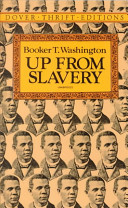
Up from Slavery
Credits and rights
- Original writer
- Booker T. Washington
- Publisher of this edition
- BoingyBooks Classics
- Original publisher
- Project Gutenberg
- Adaptation credits
- John Shoufler / BoingyBooks Classics — digital edition
- Original source / edition
- Up from Slavery (1901)
- License
- Public Domain
- Rights and adaptation notice
- This work is in the public domain. John Shoufler published this digital edition through BoingyBooks Classics. The original work remains public domain and may be copied, adapted, and shared.
Up from Slavery by Booker T. Washington (1901)
The autobiography of a man born into slavery who founded the Tuskegee Institute and became the most powerful African American leader of his era — and the most controversial, as W.E.B. Du Bois challenged his accommodationist approach.
Historical Significance:
Booker T. Washington was born a slave in Virginia in 1856 and after emancipation worked in salt furnaces and coal mines before walking 500 miles to attend Hampton Normal and Agricultural Institute. He founded Tuskegee Institute in Alabama in 1881 and built it into the nation's premier Black educational institution. His 1895 "Atlanta Compromise" speech — accepting social segregation in exchange for economic opportunity — made him the most influential Black leader in America. Up from Slavery, published in 1901, became one of the most widely read American autobiographies. Though Du Bois criticized Washington's strategy in The Souls of Black Folk (1903), both men agreed on the fundamental goal of racial uplift.
This public domain classic was originally published in 1901. Free to read and share.
Read the first chapter free — experience the full reader
Create a free account to read this book and 232+ more classics
What's Included
- Reflowable text that adapts to any screen
- Adjustable font size with pinch-to-zoom
- Light, Sepia, and Dark reading themes
- Serif/sans-serif font toggle
- Chapter navigation with swipe & keyboard
- Highlight text in 4 colors
- Add notes to highlighted passages
- Text-to-speech — listen to any chapter
- Remembers your reading position
- Download the complete edition for reading offline
- Works on all devices