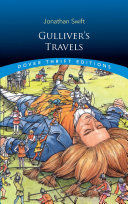
Gulliver's Travels
Credits and rights
- Original writer
- Jonathan Swift
- Publisher of this edition
- BoingyBooks Classics
- Original publisher
- Project Gutenberg
- Adaptation credits
- John Shoufler / BoingyBooks Classics — digital edition
- Original source / edition
- Gulliver's Travels (1726)
- License
- Public Domain
- Rights and adaptation notice
- This work is in the public domain. John Shoufler published this digital edition through BoingyBooks Classics. The original work remains public domain and may be copied, adapted, and shared.
Gulliver's Travels by Jonathan Swift (1726)
Lemuel Gulliver voyages to Lilliput (tiny people), Brobdingnag (giants), Laputa (flying island of mad scientists), and the land of the Houyhnhnms (intelligent horses). Often read as a children's adventure, it is actually the most savage satire in the English language.
Historical Significance:
Jonathan Swift, the Anglo-Irish Dean of St Patrick's Cathedral in Dublin, published Gulliver's Travels anonymously in 1726. The book was an immediate bestseller — the first edition sold out in a week. Swift used each voyage to satirize different aspects of human folly: Lilliput mocks petty politics, Brobdingnag exposes human cruelty, Laputa ridicules impractical intellectualism, and the Houyhnhnms question whether humans are rational at all. The novel coined the words "Lilliputian" and "yahoo" (the degraded human-like creatures). It remains the greatest satire in English and a devastating critique of human nature.
This public domain classic was originally published in 1726. Free to read and share.
Read the first chapter free — experience the full reader
Create a free account to read this book and 232+ more classics
What's Included
- Reflowable text that adapts to any screen
- Adjustable font size with pinch-to-zoom
- Light, Sepia, and Dark reading themes
- Serif/sans-serif font toggle
- Chapter navigation with swipe & keyboard
- Highlight text in 4 colors
- Add notes to highlighted passages
- Text-to-speech — listen to any chapter
- Remembers your reading position
- Download the complete edition for reading offline
- Works on all devices