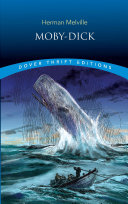
Moby Dick; Or, The Whale
Credits and rights
- Original writer
- Herman Melville
- Publisher of this edition
- BoingyBooks Classics
- Original publisher
- Project Gutenberg
- Adaptation credits
- John Shoufler / BoingyBooks Classics — digital edition
- Original source / edition
- Moby Dick; Or, The Whale (1851)
- License
- Public Domain
- Rights and adaptation notice
- This work is in the public domain. John Shoufler published this digital edition through BoingyBooks Classics. The original work remains public domain and may be copied, adapted, and shared.
Moby-Dick; or, The Whale by Herman Melville (1851)
"Call me Ishmael." — three words that open one of the greatest and most ambitious novels in the English language. Captain Ahab's obsessive hunt for the white whale is an epic meditation on obsession, nature, God, and the limits of human knowledge.
Historical Significance:
Melville wrote Moby-Dick between 1850 and 1851, during which time he developed an intense friendship with Nathaniel Hawthorne, to whom the novel is dedicated. Melville drew on his own experience as a sailor, including 18 months aboard the whaling ship Acushnet (1841-42), and on the true story of the Essex, a Nantucket whaler sunk by a sperm whale in 1820.
Published on October 18, 1851, by Richard Bentley in London (as "The Whale") and Harper & Brothers in New York, the novel was a commercial and critical disaster. It sold only 3,715 copies in Melville's lifetime and earned him $1,260 total. Critics found it baffling — too long, too digressive, too philosophical. Melville never recovered professionally and spent his last 19 years as a customs inspector in New York.
The novel's resurrection began in the 1920s, when scholars rediscovered it during the "Melville Revival." By mid-century, it was recognized as perhaps the greatest American novel ever written — a work so vast in scope that it encompasses cetology, philosophy, theology, economics, and the entire human condition.
Cultural Impact:
Moby-Dick is now considered the Great American Novel by many scholars. Captain Ahab and the white whale have become universal symbols of obsession and the unknowable. The novel has influenced writers from Faulkner to Cormac McCarthy, and has been adapted into films starring Gregory Peck (1956) and Patrick Stewart (1998). Starbucks coffee took its name from Ahab's first mate.
This public domain classic was originally published in 1851. Free to read and share.
Read the first chapter free — experience the full reader
Create a free account to read this book and 232+ more classics
What's Included
- Reflowable text that adapts to any screen
- Adjustable font size with pinch-to-zoom
- Light, Sepia, and Dark reading themes
- Serif/sans-serif font toggle
- Chapter navigation with swipe & keyboard
- Highlight text in 4 colors
- Add notes to highlighted passages
- Text-to-speech — listen to any chapter
- Remembers your reading position
- Download the complete edition for reading offline
- Works on all devices