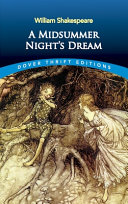
A Midsummer Night's Dream
Credits and rights
- Original writer
- William Shakespeare
- Publisher of this edition
- BoingyBooks Classics
- Original publisher
- Project Gutenberg
- Adaptation credits
- John Shoufler / BoingyBooks Classics — digital edition
- Original source / edition
- A Midsummer Night's Dream (1842)
- License
- Public Domain
- Rights and adaptation notice
- This work is in the public domain. John Shoufler published this digital edition through BoingyBooks Classics. The original work remains public domain and may be copied, adapted, and shared.
A Midsummer Night's Dream by William Shakespeare (c. 1595)
"Lord, what fools these mortals be!" Four young lovers flee Athens into an enchanted forest, where fairy king Oberon and the mischievous Puck use a magical flower to create romantic chaos — and Bottom the weaver gets a donkey's head.
Historical Significance:
Written around 1595-96, A Midsummer Night's Dream is Shakespeare's most magical and joyous play — a celebration of love, imagination, and theater itself. The fairy world of Oberon, Titania, and Puck drew on English folklore and classical mythology. The "play within a play" — the hilariously bad "Pyramus and Thisbe" performed by Bottom and his friends — is both a parody of bad theater and a defense of theater's transformative power. Mendelssohn's incidental music (1842), Britten's opera (1960), and countless film adaptations have kept the play in popular culture. It remains the most frequently performed Shakespeare comedy.
This public domain classic was originally written c. 1595. Free to read and share.
Read the first chapter free — experience the full reader
Create a free account to read this book and 232+ more classics
Join 12 readers on BoingyBooks
What's Included
- Reflowable text that adapts to any screen
- Adjustable font size with pinch-to-zoom
- Light, Sepia, and Dark reading themes
- Serif/sans-serif font toggle
- Chapter navigation with swipe & keyboard
- Highlight text in 4 colors
- Add notes to highlighted passages
- Text-to-speech — listen to any chapter
- Remembers your reading position
- Download the complete edition for reading offline
- Works on all devices