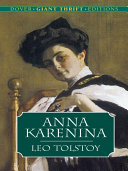
Anna Karenina
Credits and rights
- Original writer
- Leo Tolstoy
- Publisher of this edition
- BoingyBooks Classics
- Original publisher
- Project Gutenberg
- Adaptation credits
- John Shoufler / BoingyBooks Classics — digital edition
- Original source / edition
- Anna Karenina (1877)
- License
- Public Domain
- Rights and adaptation notice
- This work is in the public domain. John Shoufler published this digital edition through BoingyBooks Classics. The original work remains public domain and may be copied, adapted, and shared.
Anna Karenina by Leo Tolstoy (1877)
"All happy families are alike; each unhappy family is unhappy in its own way." Anna Karenina's passionate, destructive affair with Count Vronsky unfolds against the backdrop of Russian aristocratic society — a novel Dostoyevsky called "flawless as a work of art."
Historical Significance:
Tolstoy serialized Anna Karenina in The Russian Messenger from 1875 to 1877. The novel was inspired by a real event: in 1872, a woman named Anna Pirogova threw herself under a train at a railway station near Tolstoy's estate after being abandoned by her lover. Tolstoy attended the autopsy.
The novel interweaves Anna's tragic love story with Levin's search for meaning through farming and family — Levin being Tolstoy's autobiographical portrait of himself. Faulkner, Nabokov, and Thomas Mann all named it the greatest novel ever written. In 2007, Time magazine's list of the 10 greatest novels placed it at number one.
This public domain classic was originally published in 1877. Free to read and share.
Read the first chapter free — experience the full reader
Create a free account to read this book and 232+ more classics
What's Included
- Reflowable text that adapts to any screen
- Adjustable font size with pinch-to-zoom
- Light, Sepia, and Dark reading themes
- Serif/sans-serif font toggle
- Chapter navigation with swipe & keyboard
- Highlight text in 4 colors
- Add notes to highlighted passages
- Text-to-speech — listen to any chapter
- Remembers your reading position
- Download the complete edition for reading offline
- Works on all devices