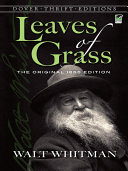
Leaves of Grass
Credits and rights
- Original writer
- Walt Whitman
- Publisher of this edition
- BoingyBooks Classics
- Original publisher
- Project Gutenberg
- Adaptation credits
- John Shoufler / BoingyBooks Classics — digital edition
- Original source / edition
- Leaves of Grass
- License
- Public Domain
- Rights and adaptation notice
- This work is in the public domain. John Shoufler published this digital edition through BoingyBooks Classics. The original work remains public domain and may be copied, adapted, and shared.
Leaves of Grass by Walt Whitman (1855-1891)
"I celebrate myself, and sing myself." The most revolutionary collection of poetry in American literature. Whitman reinvented poetry with his free verse, sensual imagery, and democratic vision that embraced all of America.
Historical Significance:
Whitman self-published the first edition of Leaves of Grass in 1855 — just 12 poems, including "Song of Myself." He spent the rest of his life revising and expanding it through nine editions, the final "deathbed edition" appearing in 1891-92 with nearly 400 poems. Ralph Waldo Emerson greeted the first edition with a famous letter: "I greet you at the beginning of a great career." The book scandalized America with its frank sexuality and was banned in Boston. Whitman's free verse — no rhyme, no meter, just the rhythm of speech — broke open English-language poetry and made possible everything from Allen Ginsberg to hip-hop.
This public domain classic was originally published in 1855. Free to read and share.
Read the first chapter free — experience the full reader
Create a free account to read this book and 232+ more classics
What's Included
- Reflowable text that adapts to any screen
- Adjustable font size with pinch-to-zoom
- Light, Sepia, and Dark reading themes
- Serif/sans-serif font toggle
- Chapter navigation with swipe & keyboard
- Highlight text in 4 colors
- Add notes to highlighted passages
- Text-to-speech — listen to any chapter
- Remembers your reading position
- Download the complete edition for reading offline
- Works on all devices