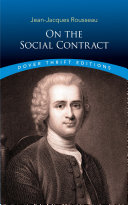
The Social Contract
Credits and rights
- Original writer
- Jean-Jacques Rousseau
- Publisher of this edition
- BoingyBooks Classics
- Original publisher
- Project Gutenberg
- Adaptation credits
- John Shoufler / BoingyBooks Classics — digital edition
- Original source / edition
- The Social Contract (1762)
- License
- Public Domain
- Rights and adaptation notice
- This work is in the public domain. John Shoufler published this digital edition through BoingyBooks Classics. The original work remains public domain and may be copied, adapted, and shared.
The Social Contract by Jean-Jacques Rousseau (1762)
"Man is born free, and everywhere he is in chains." Rousseau's radical argument that legitimate political authority must rest on the "general will" of the people — the philosophical dynamite that helped ignite the French Revolution.
Historical Significance:
Published in 1762, The Social Contract was immediately banned in France and Geneva. Rousseau argued that sovereignty belongs to the people, not to kings — a revolutionary idea that influenced the French Revolution's Declaration of the Rights of Man (1789) and the American Constitution. Robespierre carried a copy; Napoleon claimed to have read it. The book's concept of the "general will" has been both celebrated as the foundation of democracy and criticized as a justification for totalitarianism. It remains one of the most debated texts in political philosophy.
This public domain classic was originally published in 1762. Free to read and share.
Read the first chapter free — experience the full reader
Create a free account to read this book and 232+ more classics
What's Included
- Reflowable text that adapts to any screen
- Adjustable font size with pinch-to-zoom
- Light, Sepia, and Dark reading themes
- Serif/sans-serif font toggle
- Chapter navigation with swipe & keyboard
- Highlight text in 4 colors
- Add notes to highlighted passages
- Text-to-speech — listen to any chapter
- Remembers your reading position
- Download the complete edition for reading offline
- Works on all devices