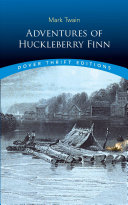
Adventures of Huckleberry Finn
Credits and rights
- Original writer
- Mark Twain
- Publisher of this edition
- BoingyBooks Classics
- Original publisher
- Project Gutenberg
- Adaptation credits
- John Shoufler / BoingyBooks Classics — digital edition
- Original source / edition
- Adventures of Huckleberry Finn (1884)
- License
- Public Domain
- Rights and adaptation notice
- This work is in the public domain. John Shoufler published this digital edition through BoingyBooks Classics. The original work remains public domain and may be copied, adapted, and shared.
Adventures of Huckleberry Finn by Mark Twain (1884)
"All modern American literature comes from one book by Mark Twain called Huckleberry Finn." — Ernest Hemingway. The story of a boy and a runaway slave rafting down the Mississippi River is America's most important — and most controversial — novel.
Historical Significance:
Mark Twain (Samuel Clemens) began writing Huckleberry Finn in 1876 as a sequel to Tom Sawyer, but set it aside for years. He returned to it intermittently, finally publishing it in the United Kingdom in December 1884 and in the United States in February 1885.
The novel was immediately banned by the Concord Public Library as "trash and suitable only for the slums." Twain responded: "That will sell 25,000 copies for us, sure." It has been banned, challenged, and debated continuously ever since — primarily for its use of racial language, which Twain employed deliberately to satirize racism, not to endorse it.
Written in Huck's own vernacular voice — uneducated, funny, and profoundly moral — the novel was revolutionary in its use of American dialect as a literary language. Twain's depiction of the friendship between Huck and Jim remains one of literature's most powerful arguments against racism.
Cultural Impact:
Huckleberry Finn is widely considered the Great American Novel alongside Moby-Dick. It influenced every major American writer who followed, from Hemingway to Faulkner to Toni Morrison. The novel continues to generate controversy and classroom discussion, which is precisely what Twain intended. It remains one of the most-read, most-taught, and most-debated books in history.
This public domain classic was originally published in 1884. Free to read and share.
Read the first chapter free — experience the full reader
Create a free account to read this book and 232+ more classics
What's Included
- Reflowable text that adapts to any screen
- Adjustable font size with pinch-to-zoom
- Light, Sepia, and Dark reading themes
- Serif/sans-serif font toggle
- Chapter navigation with swipe & keyboard
- Highlight text in 4 colors
- Add notes to highlighted passages
- Text-to-speech — listen to any chapter
- Remembers your reading position
- Download the complete edition for reading offline
- Works on all devices