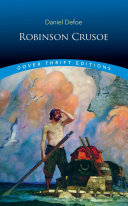
Robinson Crusoe
Credits and rights
- Original writer
- Daniel Defoe
- Publisher of this edition
- BoingyBooks Classics
- Original publisher
- Project Gutenberg
- Adaptation credits
- John Shoufler / BoingyBooks Classics — digital edition
- Original source / edition
- Robinson Crusoe (1719)
- License
- Public Domain
- Rights and adaptation notice
- This work is in the public domain. John Shoufler published this digital edition through BoingyBooks Classics. The original work remains public domain and may be copied, adapted, and shared.
Robinson Crusoe by Daniel Defoe (1719)
Shipwrecked and alone on a deserted island for 28 years, Robinson Crusoe must build shelter, grow food, and survive — until he discovers he is not alone. The novel that invented the survival genre and is often called the first English novel.
Historical Significance:
Daniel Defoe published Robinson Crusoe on April 25, 1719, when he was nearly 60 years old. The novel was partly inspired by the real story of Alexander Selkirk, a Scottish sailor marooned on a Pacific island for four years (1704-1709). The book was an immediate and enormous success, spawning countless imitations — the genre became known as "Robinsonades." Rousseau called it "the most felicitous treatise on natural education." Marx used Crusoe as a model for economic theory. The novel invented the desert island story, the survival narrative, and arguably the realistic novel itself. It has never been out of print in over 300 years.
This public domain classic was originally published in 1719. Free to read and share.
Read the first chapter free — experience the full reader
Create a free account to read this book and 232+ more classics
What's Included
- Reflowable text that adapts to any screen
- Adjustable font size with pinch-to-zoom
- Light, Sepia, and Dark reading themes
- Serif/sans-serif font toggle
- Chapter navigation with swipe & keyboard
- Highlight text in 4 colors
- Add notes to highlighted passages
- Text-to-speech — listen to any chapter
- Remembers your reading position
- Download the complete edition for reading offline
- Works on all devices