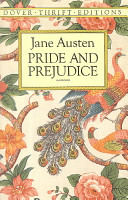
Pride and Prejudice
Credits and rights
- Original writer
- Jane Austen
- Publisher of this edition
- BoingyBooks Classics
- Original publisher
- Project Gutenberg
- Adaptation credits
- John Shoufler / BoingyBooks Classics — digital edition
- Original source / edition
- Pride and Prejudice (1813)
- License
- Public Domain
- Rights and adaptation notice
- This work is in the public domain. John Shoufler published this digital edition through BoingyBooks Classics. The original work remains public domain and may be copied, adapted, and shared.
Pride and Prejudice by Jane Austen (1813)
"It is a truth universally acknowledged, that a single man in possession of a good fortune, must be in want of a wife." — one of the most famous opening lines in all of literature.
Historical Significance:
Jane Austen completed this novel in 1797 under the title "First Impressions," but it was rejected by the publisher Thomas Cadell. She revised it extensively before it was finally published by Thomas Egerton on January 28, 1813. Austen sold the copyright for just £110 (roughly £10,000 today).
The novel was an immediate success, with its first edition selling out within months. It offers a razor-sharp social commentary on class, marriage, and morality in Regency-era England, wrapped in one of literature's greatest love stories between Elizabeth Bennet and Fitzwilliam Darcy.
Austen wrote during the Napoleonic Wars, yet her novels deliberately focus on the domestic world — "the little bit (two Inches wide) of Ivory on which I work," as she described it. This deliberate narrowing of scope allowed her to examine human nature with microscopic precision.
Cultural Impact:
Pride and Prejudice has never gone out of print in over 200 years. It has been translated into every major language, adapted into dozens of films and TV series (the 1995 BBC adaptation with Colin Firth being perhaps the most beloved), and inspired countless modern retellings including Bridget Jones's Diary. It consistently appears on "greatest novels ever written" lists and sells over 800,000 copies annually.
This public domain classic was originally published in 1813. Free to read and share.
Read the first chapter free — experience the full reader
Create a free account to read this book and 232+ more classics
What's Included
- Reflowable text that adapts to any screen
- Adjustable font size with pinch-to-zoom
- Light, Sepia, and Dark reading themes
- Serif/sans-serif font toggle
- Chapter navigation with swipe & keyboard
- Highlight text in 4 colors
- Add notes to highlighted passages
- Text-to-speech — listen to any chapter
- Remembers your reading position
- Download the complete edition for reading offline
- Works on all devices