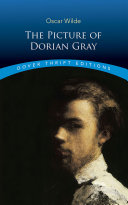
The Picture of Dorian Gray
Credits and rights
- Original writer
- Oscar Wilde
- Publisher of this edition
- BoingyBooks Classics
- Original publisher
- Project Gutenberg
- Adaptation credits
- John Shoufler / BoingyBooks Classics — digital edition
- Original source / edition
- The Picture of Dorian Gray (1890)
- License
- Public Domain
- Rights and adaptation notice
- This work is in the public domain. John Shoufler published this digital edition through BoingyBooks Classics. The original work remains public domain and may be copied, adapted, and shared.
The Picture of Dorian Gray by Oscar Wilde (1890)
Oscar Wilde's only novel — a Gothic masterpiece about beauty, corruption, and the price of eternal youth. A young man's portrait ages while he remains forever beautiful.
Historical Significance:
First published in the July 1890 issue of Lippincott's Monthly Magazine, the story caused immediate scandal. Critics called it "poisonous," "unclean," and "corrupt." The Daily Chronicle declared it would suit "none but outlawed noblemen and perverted telegraph boys" — a coded reference to homosexuality.
Wilde revised and expanded the novel for book publication in 1891, adding a preface containing his famous artistic manifesto: "All art is quite useless" and "There is no such thing as a moral or an immoral book. Books are well written, or badly written. That is all."
The novel's themes of hidden sin, the mask of respectability, and the gap between appearance and reality were deeply personal to Wilde, who was living a double life as a married father with secret homosexual relationships. Five years after publication, his own life would mirror the novel's themes when his relationship with Lord Alfred Douglas led to his criminal trial, imprisonment, and ruin.
Cultural Impact:
The novel has never gone out of print and has been adapted into over 30 films. The concept of a "Dorian Gray" — someone who appears youthful while hiding corruption — has entered the cultural lexicon. The story influenced countless works exploring vanity and moral decay, from The Twilight Zone to modern social media commentary. Wilde's epigrammatic prose style ("I can resist everything except temptation") remains endlessly quotable.
This public domain classic was originally published in 1890. Free to read and share.
Read the first chapter free — experience the full reader
Create a free account to read this book and 232+ more classics
What's Included
- Reflowable text that adapts to any screen
- Adjustable font size with pinch-to-zoom
- Light, Sepia, and Dark reading themes
- Serif/sans-serif font toggle
- Chapter navigation with swipe & keyboard
- Highlight text in 4 colors
- Add notes to highlighted passages
- Text-to-speech — listen to any chapter
- Remembers your reading position
- Download the complete edition for reading offline
- Works on all devices