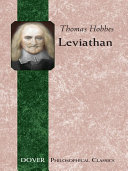
Leviathan
Credits and rights
- Original writer
- Thomas Hobbes
- Publisher of this edition
- BoingyBooks Classics
- Original publisher
- Project Gutenberg
- Adaptation credits
- John Shoufler / BoingyBooks Classics — digital edition
- Original source / edition
- Leviathan (1651)
- License
- Public Domain
- Rights and adaptation notice
- This work is in the public domain. John Shoufler published this digital edition through BoingyBooks Classics. The original work remains public domain and may be copied, adapted, and shared.
Leviathan by Thomas Hobbes (1651)
"The life of man: solitary, poor, nasty, brutish, and short." Hobbes' argument that only a powerful sovereign can prevent the war of "all against all" — the most influential work of political philosophy in the English language.
Historical Significance:
Thomas Hobbes published Leviathan in 1651 during the English Civil War, arguing that peace requires surrendering individual freedoms to an absolute sovereign (the "Leviathan"). Writing from exile in Paris, Hobbes created the concept of the social contract — the idea that government derives its authority from the consent of the governed, even if that consent is motivated by fear. Locke, Rousseau, and every subsequent political philosopher responded to Hobbes. The book remains essential reading in political science, philosophy, and law programs worldwide.
This public domain classic was originally published in 1651. Free to read and share.
Read the first chapter free — experience the full reader
Create a free account to read this book and 232+ more classics
What's Included
- Reflowable text that adapts to any screen
- Adjustable font size with pinch-to-zoom
- Light, Sepia, and Dark reading themes
- Serif/sans-serif font toggle
- Chapter navigation with swipe & keyboard
- Highlight text in 4 colors
- Add notes to highlighted passages
- Text-to-speech — listen to any chapter
- Remembers your reading position
- Download the complete edition for reading offline
- Works on all devices