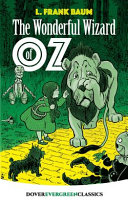
The Wonderful Wizard of Oz
Credits and rights
- Original writer
- L. Frank Baum
- Publisher of this edition
- BoingyBooks Classics
- Original publisher
- Project Gutenberg
- Adaptation credits
- John Shoufler / BoingyBooks Classics — digital edition
- Original source / edition
- The Wonderful Wizard of Oz (1900)
- License
- Public Domain
- Rights and adaptation notice
- This work is in the public domain. John Shoufler published this digital edition through BoingyBooks Classics. The original work remains public domain and may be copied, adapted, and shared.
The Wonderful Wizard of Oz by L. Frank Baum (1900)
Dorothy, Toto, the Scarecrow, the Tin Woodman, the Cowardly Lion, and the Emerald City — the first great American fairy tale, written to be distinctly American rather than European in spirit.
Historical Significance:
L. Frank Baum published The Wonderful Wizard of Oz on May 17, 1900, with illustrations by W.W. Denslow. In his introduction, Baum declared his intention to create "a modernized fairy tale, in which the wonderment and joy are retained and the heartaches and nightmares are left out." He wanted an American fairy tale, free from the darkness of Grimm and Andersen.
The book was an enormous success, becoming the bestselling children's book of 1900 and 1901. Baum went on to write 13 more Oz books, creating one of literature's richest fictional worlds. Some scholars interpret the story as a political allegory of 1890s populism — the Yellow Brick Road representing the gold standard, the silver slippers (ruby in the film) representing silver currency, and the Emerald City representing the deceptive greenback dollar.
Baum was a fascinating figure: a failed chicken farmer, newspaper editor, traveling salesman, and window dresser before becoming an author at age 44.
Cultural Impact:
The 1939 MGM film starring Judy Garland is the most-watched film in history. "There's no place like home," "We're not in Kansas anymore," and "Follow the Yellow Brick Road" are among the most quoted lines in cinema. The Wicked Witch of the West is one of fiction's greatest villains. Gregory Maguire's Wicked (1995) and its Broadway musical reimagined the story from the witch's perspective, becoming a cultural phenomenon.
This public domain classic was originally published in 1900. Free to read and share.
Read the first chapter free — experience the full reader
Create a free account to read this book and 232+ more classics
What's Included
- Reflowable text that adapts to any screen
- Adjustable font size with pinch-to-zoom
- Light, Sepia, and Dark reading themes
- Serif/sans-serif font toggle
- Chapter navigation with swipe & keyboard
- Highlight text in 4 colors
- Add notes to highlighted passages
- Text-to-speech — listen to any chapter
- Remembers your reading position
- Download the complete edition for reading offline
- Works on all devices