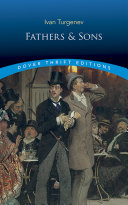
Fathers and Sons
Credits and rights
- Original writer
- Ivan Turgenev
- Publisher of this edition
- BoingyBooks Classics
- Original publisher
- Project Gutenberg
- Adaptation credits
- John Shoufler / BoingyBooks Classics — digital edition
- Original source / edition
- Fathers and Sons (1862)
- License
- Public Domain
- Rights and adaptation notice
- This work is in the public domain. John Shoufler published this digital edition through BoingyBooks Classics. The original work remains public domain and may be copied, adapted, and shared.
Fathers and Sons by Ivan Turgenev (1862)
Bazarov, a young nihilist who rejects all authority, tradition, and sentiment, clashes with the older generation — until love makes a mockery of his philosophy. The novel that introduced the word "nihilism" to the world.
Historical Significance:
Published in 1862, Fathers and Sons captured the generational conflict tearing Russian society apart in the 1860s. Turgenev coined the term "nihilist" to describe Bazarov's rejection of all established values — and the word immediately entered every European language. Both radicals and conservatives attacked the novel: radicals felt Bazarov was a caricature, conservatives felt he was glorified. Turgenev, devastated by the backlash, spent most of his remaining years in Western Europe. The novel's exploration of how each generation rebels against its parents, only to be betrayed by its own contradictions, remains timeless.
This public domain classic was originally published in 1862. Free to read and share.
Read the first chapter free — experience the full reader
Create a free account to read this book and 232+ more classics
What's Included
- Reflowable text that adapts to any screen
- Adjustable font size with pinch-to-zoom
- Light, Sepia, and Dark reading themes
- Serif/sans-serif font toggle
- Chapter navigation with swipe & keyboard
- Highlight text in 4 colors
- Add notes to highlighted passages
- Text-to-speech — listen to any chapter
- Remembers your reading position
- Download the complete edition for reading offline
- Works on all devices