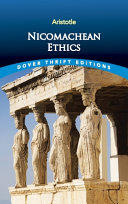
Nicomachean Ethics
Credits and rights
- Original writer
- Aristotle (c
- Publisher of this edition
- BoingyBooks Classics
- Original publisher
- Project Gutenberg
- Adaptation credits
- John Shoufler / BoingyBooks Classics — digital edition
- Original source / edition
- Nicomachean Ethics
- License
- Public Domain
- Rights and adaptation notice
- This work is in the public domain. John Shoufler published this digital edition through BoingyBooks Classics. The original work remains public domain and may be copied, adapted, and shared.
Nicomachean Ethics by Aristotle (c. 340 BC)
Aristotle's investigation into the nature of the good life. What is happiness? What is virtue? How should we live? The foundational text of Western ethical philosophy, still studied in every philosophy department on Earth.
Historical Significance:
Named for Aristotle's son Nicomachus, the Ethics was likely compiled from Aristotle's lecture notes at the Lyceum in Athens around 340 BC. Aristotle's central concept — eudaimonia, often translated as "happiness" but better understood as "human flourishing" — remains the basis of virtue ethics. His idea that virtue is a "golden mean" between extremes (courage is the mean between cowardice and recklessness) has influenced moral philosophy for 2,300 years. Thomas Aquinas built Catholic moral theology on Aristotle's framework. The Ethics remains the most widely assigned philosophy text in universities worldwide.
This public domain classic was originally composed c. 340 BC. Free to read and share.
Read the first chapter free — experience the full reader
Create a free account to read this book and 232+ more classics
What's Included
- Reflowable text that adapts to any screen
- Adjustable font size with pinch-to-zoom
- Light, Sepia, and Dark reading themes
- Serif/sans-serif font toggle
- Chapter navigation with swipe & keyboard
- Highlight text in 4 colors
- Add notes to highlighted passages
- Text-to-speech — listen to any chapter
- Remembers your reading position
- Download the complete edition for reading offline
- Works on all devices