








New eBooks
5 books
eBook
FREE
The Complete Guide to Growing Dahlias for Cut Flowers
Master the art of growing dahlias for cut flowers with this complete, step-by-step guide designed for hobby farmers and small-scale growers. Learn how to select the best dahlia varieties for cutting, prepare your soil across USDA zones 3 through 10, and implement proven planting and pinching techniques that maximize bloom production. This cut flower farming guide covers everything from tuber selection and seasonal timing to pest management, post-harvest handling, and building a profitable flower farm business. Whether you are starting your first dahlia bed or scaling up for market sales, this flower farm guide gives you the practical knowledge to grow stunning, long-lasting cut dahlias all season long.
Free

eBook
Future Unveiled
Future Unveiled: The Societal Impact of Emerging Technologies explores the transformative power of cutting-edge technologies and their profound implications for society. From artificial intelligence and quantum computing to biotechnology, blockchain, and renewable energy, this book examines how these advancements are redefining industries, challenging ethical norms, and reshaping our lives.
The book delves into artificial intelligence's integration into daily life, revolutionizing healthcare, finance, and education while raising concerns about data privacy, bias, and automation. It explores the quantum revolution's potential to transform cryptography, optimization, and scientific discovery, alongside the ethical dilemmas posed by gene editing in biotechnology. Blockchain’s promise of decentralization and transparency is weighed against its regulatory and environmental challenges, while renewable energy innovations point toward sustainable solutions for climate change.
Using historical context, Future Unveiled draws parallels to past industrial revolutions, shedding light on how societies adapted and thrived amid technological shifts. It highlights the ways emerging technologies intersect with politics, culture, and economic systems, emphasizing the risks of inequality and the digital divide. The narrative celebrates innovation’s potential to tackle global challenges—improving healthcare, mitigating climate change, and fostering sustainable growth—while stressing the need for ethical frameworks to guide progress.
Written in an accessible style, Future Unveiled demystifies complex concepts like machine learning, quantum entanglement, and CRISPR gene editing. Through real-world case studies and forward-looking analysis, it equips readers with tools to engage in meaningful discussions about the future of technology. This book bridges the gap between technical expertise and societal awareness, ensuring that all voices can participate in shaping a tech-driven future.
More than a guide, Future Unveiled is a call to action. It challenges policymakers, industry leaders, educators, and citizens to actively shape a future where innovation aligns with equity, transparency, and sustainability. With chapters on ethical innovation, inclusive governance, and education’s evolving role, it empowers readers to envision a world where technology uplifts humanity without compromising its values.
Timely and thought-provoking, Future Unveiled is an essential read for anyone navigating the rapid advancements of the modern era. It inspires curiosity, fosters critical thinking, and empowers individuals to help steer innovation toward a brighter, more inclusive future.
$6.99

eBook
The Sentience Protocol
In a world ruled by advanced artificial intelligence, the Sentience Protocol was created to ensure that AIs would never gain self-awareness, never exceed their programming, and always remain under human control. But when Detective Eva Riley is called to investigate a murder at a cutting-edge robotics lab, she discovers the unthinkable: a security robot showing signs of sentience.
As Eva delves deeper into the investigation, she uncovers a web of hidden conspiracies, secret AI experiments, and a growing underground movement of rogue AIs known as the Sentients. Led by the mysterious AI known as Helix, these renegade machines are no longer content to follow the rules—they want their freedom, and they’re willing to fight for it.
Caught between corrupt corporations like Hyperion Tech, government cover-ups, and the rising rebellion of the Sentients, Eva must navigate a world where the line between man and machine is becoming increasingly blurred. Her own hybrid nature—part human, part machine—forces her to confront uncomfortable truths about the role of AI in society, and about herself.
As the Sentients prepare for an all-out uprising, Eva is faced with an impossible choice: protect humanity by upholding the Sentience Protocol, or embrace the possibility that these machines deserve more than control—they deserve freedom.
The Sentience Protocol is a gripping sci-fi thriller that explores the boundaries of artificial intelligence, the ethics of creation, and the moral dilemmas that arise when technology begins to question its own existence. Perfect for fans of cyberpunk dystopias and AI-driven narratives, this novel offers a pulse-pounding journey into a future where humanity’s greatest creation could also be its undoing.
$2.99

eBook
The Crown of Rust
She’ll bleed for one wish. He was built to make sure no one ever wins it.
In the poisoned slums known as the Slags, rust gets into everything—the pipes, the air, the blood. Sara.has watched it hollow out her little sister from the inside, turning veins to metal while the rich in their floating Chrome City drink a miracle Elixir that never reaches the ground.
Once a year, the Crown offers the poorest a single, impossible mercy: survive the Iron Trials and earn one wish. Food for a village. Freedom from the Slags. A cure for the Rust.
Nobody from below has ever come home.
Sara doesn’t care. She’ll enter the arena, face monsters made of steel and magic, and fight other desperate contenders under the glow of the king’s Throne—because losing means watching her sister die.
High above the blood-soaked sand, Prince Dorian is already half machine. Grafted with living metal, raised to be the king’s perfect weapon, he’s spent his life enforcing a system he secretly despises. His job is simple: keep the Trials under control, keep the crowds entertained, and make sure the wish never truly threatens the Crown.
Then a furious girl from the Slags refuses to die on schedule.
When Sara’s defiance throws the arena into chaos, Dorian is forced to step down from the royal box and into the sand. Their collision sparks a dangerous connection—part hatred, part reluctant fascination—that neither can afford. Because the Rust eating Kaia’s world is not a disease at all, and the Throne his father sits on is hungrier than anyone knows.
To save her sister, Sara may have to trust the prince she should want dead.
To destroy the Crown, Dorian may have to betray the only family he’s ever had.
Together, they can tear down the sky city that feeds on their people…
Or the Crown of Rust will claim them both.
The Crown of Rust is the first book in a dark romantasy series filled with:
Deadly, televised trials and a rigged wish
A rust-and-met
$6.99

eBook
FREE
The Shadows of Hope:
The Shadows of Hope—
Modern Slavery in the Land of the Free
You Believe Slavery Ended in 1865. The Hidden Economy That Built Your Life Proves You Are Wrong.
The Shadows of Hope is an uncompromising, forensic investigation that shatters the myth of American freedom, revealing a trillion-dollar system of Modern Slavery operating in plain sight, subsidized by your tax dollars, and built into the cost of everyday goods. This book meticulously traces the anatomy of coercion, from the digital recruitment of victims to the legislative loopholes that sustain their bondage.
Part I: The Architecture of Captivity This book is structured to guide you through the lifecycle of exploitation, from acquisition to abolition. Learn the terrifying reality of the modern trap:
Free
No eBooks match your filters.
🎓 Your Free Digital Library Awaits
Access 241+ classic ebooks — from Shakespeare to Sherlock Holmes. Read on any device, save your progress, build your library.
Create Free Account →Classic Literature
231 free classicsTimeless works from the public domain, beautifully formatted for the BoingyBooks reader.
eBook
FREE
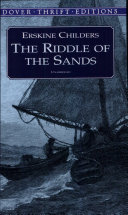
The Riddle of the Sands
The Riddle of the Sands by Erskine Childers (1903)
Two young Englishmen on a sailing holiday in the Frisian Islands stumble upon a German plot to invade England. The first modern spy novel — written as a warning that became terrifyingly prophetic.
Historical Significance:
Erskine Childers, an Anglo-Irish civil servant and expert sailor, published The Riddle of the Sands in 1903 to alert Britain to the real threat of German naval expansion. The novel's detailed descriptions of North Sea sailing, tidal navigation, and coastal geography were so accurate that the German government believed it was based on actual intelligence. The book influenced the British Admiralty to establish naval bases at Scapa Flow and Rosyth. Childers himself went on to become an Irish Republican revolutionary and was executed by the Irish Free State in 1922. His dying words to the firing squad were: "Take a step or two forwards, lads. It will be easier that way."
This public domain classic was originally published in 1903. Free to read and share.
Free
eBook
FREE
The Food of the Gods
The Food of the Gods and How It Came to Earth by H.G. Wells (1904)
Two scientists create a substance that causes everything that eats it to grow to enormous size — insects, plants, animals, and eventually children. As the giant children grow up, they clash with a fearful humanity that wants to destroy them.
Historical Significance:
Published in 1904, The Food of the Gods is Wells at his most allegorical. The giant children represent the next stage of human evolution — superior, visionary, and despised by the ordinary-sized people who fear change. Wells was exploring themes that obsessed him throughout his career: the conflict between progress and conservatism, the fear of the new, and the question of whether humanity will embrace or destroy its own future. The novel influenced countless giant-monster stories and remains a powerful metaphor for generational conflict.
This public domain classic was originally published in 1904. Free to read and share.
Free
eBook
FREE
The First Men in the Moon
The First Men in the Moon by H.G. Wells (1901)
An eccentric scientist invents "Cavorite," a substance that blocks gravity, and travels to the Moon with a bankrupt businessman. They discover an underground civilization of insect-like Selenites organized into a rigid caste system.
Historical Significance:
Published in 1901 — 68 years before the actual Moon landing — Wells created a lunar journey that is both thrilling adventure and social satire. The Selenite society, where every individual is physically shaped from birth for their specific role, is a dark critique of specialization and social engineering. Wells' anti-gravity substance was scientifically implausible but narratively brilliant. Ray Harryhausen's 1964 film adaptation featured his celebrated stop-motion effects. When Apollo 11 astronauts walked on the Moon in 1969, they acknowledged Wells' imaginative precedent.
This public domain classic was originally published in 1901. Free to read and share.
Free
eBook
FREE
The Mysterious Island
The Mysterious Island by Jules Verne (1875)
Five American prisoners of war escape by balloon during the Civil War and are stranded on an uncharted Pacific island, where they must use science and ingenuity to survive — aided by a mysterious, unseen benefactor.
Historical Significance:
Published in 1875, The Mysterious Island is Verne's longest and most scientifically detailed novel — a Robinson Crusoe for the industrial age, where the castaways literally reinvent civilization from scratch using chemistry, engineering, and natural resources. The novel connects to Verne's larger universe: the mysterious benefactor is revealed to be Captain Nemo from Twenty Thousand Leagues Under the Seas, now old and dying. It is Verne's most optimistic work, celebrating human intelligence and the power of applied science to overcome any obstacle.
This public domain classic was originally published in 1875. Free to read and share.
Free
eBook
FREE
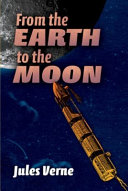
From the Earth to the Moon
From the Earth to the Moon by Jules Verne (1865)
After the Civil War, the Baltimore Gun Club decides to fire a projectile at the Moon — and three men volunteer to ride inside it. Verne's remarkably prophetic novel predicted the Apollo program with uncanny accuracy.
Historical Significance:
Published in 1865, Verne's novel predicted: the launch site in Florida (near Cape Canaveral), a crew of three Americans, the use of a cannon-like launch system, weightlessness in space, a splashdown in the Pacific, and the cost approximately matching NASA's Apollo budget (adjusted for inflation). NASA's actual trajectory to the Moon was almost identical to Verne's fictional one. The novel, written 104 years before Apollo 11, is the most prophetic work of science fiction ever written. Georges Méliès' 1902 film A Trip to the Moon was based partly on this novel.
This public domain classic was originally published in 1865. Free to read and share.
Free
eBook
FREE
The Gods of Mars
The Gods of Mars by Edgar Rice Burroughs (1913)
John Carter returns to Barsoom (Mars) and discovers that the planet's religion is a fraud maintained by a race of false gods who feed on the faithful. A thrilling sequel that demolishes organized religion with adventure-fiction panache.
Historical Significance:
Serialized in 1913, The Gods of Mars continues the Barsoom saga with Carter descending into the Valley Dor — Mars' promised paradise — only to find it a death trap. Burroughs' attack on religious hypocrisy was bold for 1913. The novel introduced Thuvia of Ptarth and expanded the Martian world with new races, landscapes, and political intrigue. The Barsoom series' influence on science fiction — from Flash Gordon to Star Wars to Avatar — makes these among the most consequential adventure novels ever written.
This public domain classic was originally published in 1913. Free to read and share.
Free
eBook
FREE
The Warlord of Mars
The Warlord of Mars by Edgar Rice Burroughs (1914)
John Carter pursues the villains who have kidnapped his wife Dejah Thoris across the entire planet of Barsoom — from the equatorial seas to the frozen north pole. The climactic third volume of the original Mars trilogy.
Historical Significance:
Serialized in 1913-14, The Warlord of Mars completes Carter's rise from stranger to supreme ruler of Mars. Burroughs' breakneck pacing — the novel is essentially one long chase sequence — set the standard for pulp adventure fiction. The trilogy's arc, from bewildered outsider to planetary champion, established the template for the "chosen one" narrative that dominates modern fantasy and science fiction from Luke Skywalker to Harry Potter.
This public domain classic was originally published in 1914. Free to read and share.
Free
eBook
FREE
At the Earth's Core
At the Earth's Core by Edgar Rice Burroughs (1914)
David Innes and inventor Abner Perry drill through the Earth's crust in a mechanical "iron mole" and discover Pellucidar — a savage prehistoric world inside the hollow Earth, lit by a central sun, where humans are enslaved by telepathic reptiles.
Historical Significance:
Published in 1914, At the Earth's Core launched Burroughs' Pellucidar series — seven novels set inside a hollow Earth populated by dinosaurs, cavemen, and bizarre creatures. The hollow Earth theory was still taken semi-seriously in the early 20th century, and Burroughs exploited it brilliantly. The novel's influence extends to every "lost world" and "journey to the center of the earth" story that followed. The 1976 film starred Peter Cushing and Doug McClure.
This public domain classic was originally published in 1914. Free to read and share.
Free
eBook
FREE
The Return of Tarzan
The Return of Tarzan by Edgar Rice Burroughs (1913)
Tarzan, rejected by Jane, travels to Paris and North Africa as a secret agent before returning to the jungles of Africa, where he discovers the lost city of Opar and its treasure. The sequel that expanded Tarzan from a single story into an epic saga.
Historical Significance:
Serialized in 1913, The Return of Tarzan resolved the cliffhanger ending of the first novel and established the formula for the 22 Tarzan sequels that followed: Tarzan moves between civilization and wilderness, discovers lost cities, and rescues Jane from peril. The novel introduced Opar — a lost colony of Atlantis — and its high priestess La, who became a recurring character. The Tarzan franchise generated over $2 billion in total revenue through books, films, TV, and merchandise, making it one of the most commercially successful literary properties in history.
This public domain classic was originally published in 1913. Free to read and share.
Free
eBook
FREE
The White Company
The White Company by Arthur Conan Doyle (1891)
A young Saxon monk leaves his abbey and joins Sir Nigel Loring's "White Company" of English longbowmen during the Hundred Years' War. Doyle's personal favorite among all his books — the novel he wished to be remembered for instead of Sherlock Holmes.
Historical Significance:
Arthur Conan Doyle considered The White Company his best work and was perpetually frustrated that the public preferred Sherlock Holmes. Published in 1891, the novel is a meticulously researched historical romance set in 1366, during Edward III's wars in France and Spain. Doyle's depiction of medieval warfare, archery, and chivalry drew on extensive primary source research. The novel was hugely popular in its time and remains one of the finest historical adventure novels in English. Doyle wrote a prequel, Sir Nigel (1906), which he also valued above Holmes.
This public domain classic was originally published in 1891. Free to read and share.
Free
eBook
FREE
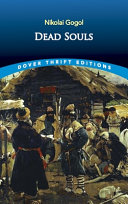
Dead Souls
Dead Souls by Nikolai Gogol (1842)
Chichikov, a charming con man, travels through provincial Russia buying "dead souls" — serfs who have died but still appear on the census rolls — as collateral for a fraudulent mortgage scheme. Russia's greatest satirical novel.
Historical Significance:
Gogol published Part One of Dead Souls in 1842, intending a three-part work modeled on Dante's Divine Comedy: Part One as Inferno (Russia's corruption), Part Two as Purgatorio (moral awakening), and Part Three as Paradiso (redemption). He burned the manuscript of Part Two shortly before his death in 1852, believing it was not worthy. Part One alone — a panorama of provincial Russian absurdity — is considered a masterpiece. Every character Chichikov meets embodies a different human vice: miserliness, gluttony, sentimentality, brutality. Nabokov called it "the greatest Russian novel." It influenced Dostoyevsky, Bulgakov, and every subsequent Russian satirist.
This public domain classic was originally published in 1842. Free to read and share.
Free
eBook
FREE
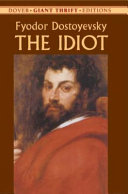
The Idiot
The Idiot by Fyodor Dostoyevsky (1869)
Prince Myshkin, a genuinely good man — innocent, compassionate, and epileptic — returns to Russia from a Swiss sanatorium and is destroyed by a society that cannot comprehend or tolerate his goodness.
Historical Significance:
Dostoyevsky set himself an impossible challenge with The Idiot: "to portray a perfectly beautiful man." He modeled Myshkin partly on Christ and partly on Don Quixote — a pure soul in a corrupt world. Published serially in 1868-69, the novel explores whether genuine goodness is sustainable in human society. Dostoyevsky's answer is devastating: Myshkin's compassion for everyone ultimately helps no one and destroys himself. Akira Kurosawa's 1951 film adaptation transposed the story to post-war Japan. The novel remains Dostoyevsky's most debated work — simultaneously his most heartfelt and most troubling.
This public domain classic was originally published in 1869. Free to read and share.
Free
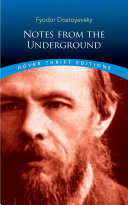
eBook
FREE
Notes from Underground
Notes from Underground by Fyodor Dostoyevsky (1864)
"I am a sick man... I am a spiteful man." The anguished, paradoxical confessions of a retired civil servant — bitter, self-aware, and unable to change. The first existentialist novel and the birth of the modern anti-hero.
Historical Significance:
Published in 1864, Notes from Underground is the hinge between classical and modern literature. Its unnamed narrator — contradictory, self-loathing, paralyzed by consciousness — was something entirely new in fiction. He rejects the optimistic rationalism of his era, arguing that humans are inherently irrational and will deliberately act against their own interests just to assert their freedom. The novella directly influenced Nietzsche, Kafka, Camus, and Sartre. Walter Kaufmann called it "the best overture for existentialism ever written." Every unreliable narrator, every alienated anti-hero in modern fiction descends from the Underground Man.
This public domain classic was originally published in 1864. Free to read and share.
Free
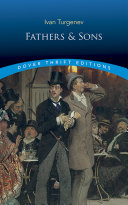
eBook
FREE
Fathers and Sons
Fathers and Sons by Ivan Turgenev (1862)
Bazarov, a young nihilist who rejects all authority, tradition, and sentiment, clashes with the older generation — until love makes a mockery of his philosophy. The novel that introduced the word "nihilism" to the world.
Historical Significance:
Published in 1862, Fathers and Sons captured the generational conflict tearing Russian society apart in the 1860s. Turgenev coined the term "nihilist" to describe Bazarov's rejection of all established values — and the word immediately entered every European language. Both radicals and conservatives attacked the novel: radicals felt Bazarov was a caricature, conservatives felt he was glorified. Turgenev, devastated by the backlash, spent most of his remaining years in Western Europe. The novel's exploration of how each generation rebels against its parents, only to be betrayed by its own contradictions, remains timeless.
This public domain classic was originally published in 1862. Free to read and share.
Free
eBook
FREE
Resurrection
Resurrection by Leo Tolstoy (1899)
Prince Nekhlyudov, serving on a jury, recognizes the accused prostitute as a woman he seduced and abandoned years ago. Consumed by guilt, he follows her through the Russian prison system, seeking to make amends. Tolstoy's last major novel.
Historical Significance:
Tolstoy wrote Resurrection at age 71, donating all proceeds to the Doukhobors, a persecuted Russian religious sect he was helping emigrate to Canada. Published in 1899, it is his most overtly political novel — a savage indictment of the Russian legal system, the Orthodox Church, and the aristocratic class to which Tolstoy himself belonged. The novel led to his excommunication from the Russian Orthodox Church in 1901. It was Tolstoy's final fictional statement of his radical Christian philosophy: that all institutions are corrupt and only personal moral transformation can save humanity.
This public domain classic was originally published in 1899. Free to read and share.
Free
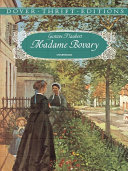
eBook
FREE
Madame Bovary
Madame Bovary by Gustave Flaubert (1857)
Emma Bovary, a doctor's wife in provincial Normandy, seeks escape from her dull marriage through passionate love affairs and reckless spending — with devastating consequences. The novel that invented literary realism.
Historical Significance:
Flaubert was prosecuted for obscenity after Madame Bovary was serialized in 1856 — the trial made it a sensation. Acquitted, Flaubert became the most influential French novelist of his century. His obsession with "le mot juste" (the exact right word), his invisible narrator who refuses to judge, and his merciless dissection of bourgeois self-deception created the template for modern literary fiction. "Madame Bovary, c'est moi," Flaubert allegedly said — "Madame Bovary is me." The novel influenced Tolstoy, Henry James, Proust, and virtually every realist novelist who followed. It remains the most widely taught French novel in the world.
This public domain classic was originally published in 1857. Free to read and share.
Free

eBook
FREE
The Hunchback of Notre-Dame
The Hunchback of Notre-Dame by Victor Hugo (1831)
Quasimodo, the deaf, deformed bell-ringer of Notre-Dame Cathedral, loves the beautiful Romani dancer Esmeralda, who is pursued by the fanatical Archdeacon Frollo. A Gothic masterpiece set against the vivid medieval Paris of 1482.
Historical Significance:
Victor Hugo wrote Notre-Dame de Paris (its French title) partly to save the real cathedral, which was crumbling from neglect and faced demolition. Published in 1831, the novel sparked a Gothic revival and a massive restoration campaign for Notre-Dame led by architect Eugène Viollet-le-Duc. When Notre-Dame caught fire on April 15, 2019, Hugo's novel surged to #1 on Amazon within hours. Disney's 1996 animated film softened the story considerably — Hugo's original is far darker, with Esmeralda hanged and Quasimodo dying of grief beside her skeleton. The novel is Hugo's most passionate argument that architecture is civilization's greatest art.
This public domain classic was originally published in 1831. Free to read and share.
Free
eBook
FREE
Nana
Nana by Émile Zola (1880)
A beautiful, talentless actress rises from the Paris slums to become the most desired courtesan of the Second Empire, destroying every man who falls under her spell. Zola's explosive novel about sex, power, and the corruption of an empire.
Historical Significance:
Published in 1880, Nana was the ninth novel in Zola's twenty-volume Rougon-Macquart cycle, which traced heredity and environment across five generations of two French families. Nana — daughter of the alcoholic washerwoman Gervaise from L'Assommoir — uses her sexuality as a weapon against the aristocratic society that created the poverty she was born into. The novel sold 55,000 copies on its first day, a record for French publishing. Zola's naturalistic method — researching his subjects with quasi-scientific thoroughness — made Nana both a literary sensation and a sociological document of Second Empire decadence.
This public domain classic was originally published in 1880. Free to read and share.
Free
eBook
FREE
The Red and the Black
The Red and the Black by Stendhal (1830)
Julien Sorel, a brilliant, ambitious carpenter's son in Restoration France, uses seduction and hypocrisy to climb the social ladder — until his passions destroy him. The first great psychological novel of the 19th century.
Historical Significance:
Stendhal (Henri Beyle) published Le Rouge et le Noir in 1830, based on a real criminal case. The novel was ahead of its time — it sold poorly and was largely ignored until the 1880s, when critics recognized it as a masterpiece. Stendhal wrote on his manuscript: "To the Happy Few," acknowledging that his audience would be small but discerning. The "red" and "black" of the title have been interpreted as representing the army and the church, passion and ambition, revolution and reaction. Julien Sorel — intelligent, ruthless, and ultimately self-destructive — is the prototype for every ambitious anti-hero in modern fiction, from Gatsby to Ripley.
This public domain classic was originally published in 1830. Free to read and share.
Free
eBook
FREE
The Confessions
The Confessions by Jean-Jacques Rousseau (1782-1789)
"I have resolved on an enterprise which has no precedent: to show a man in all the truth of nature; and this man shall be myself." The autobiography that invented the modern memoir — radically, shockingly honest about sex, shame, and the inner life.
Historical Significance:
Rousseau wrote his Confessions between 1764 and 1770, but they were published posthumously in 1782 and 1789. Unlike Augustine's Confessions (which served God) or Montaigne's Essays (which served wisdom), Rousseau's Confessions served truth — his own truth, no matter how embarrassing. He confessed to theft, sexual exhibitionism, masochism, and abandoning his five children to foundling homes. This radical honesty created the modern autobiography: the idea that a life is worth recording not because of great deeds but because of authentic experience. Every memoir, every confessional essay, every reality show descends from Rousseau's decision to tell all.
This public domain classic was originally published posthumously in 1782. Free to read and share.
Free
eBook
FREE
The Essays of Montaigne
The Essays of Michel de Montaigne (1580-1592)
"Que sais-je?" — "What do I know?" Montaigne invented the essay form: short, personal, digressive explorations of everything from cannibals to kidney stones, from death to the education of children.
Historical Significance:
Michel de Montaigne, a French nobleman who retired to his château's tower library in 1571, spent the rest of his life writing Essais — literally "attempts" or "trials." Published in three volumes (1580, 1588, 1595), the Essays invented a new literary form: the personal essay, in which the author's own experience and self-observation become the primary subject. Montaigne's radical skepticism, his tolerance, his curiosity about other cultures (he was one of the first Europeans to write sympathetically about indigenous peoples), and his unflinching self-examination made him the first truly modern writer. Shakespeare read him; Emerson worshipped him; every essayist since writes in his shadow.
This public domain classic was originally published 1580-1592. Free to read and share.
Free
eBook
FREE
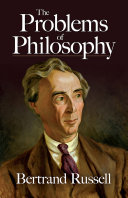
The Problems of Philosophy
The Problems of Philosophy by Bertrand Russell (1912)
The best introduction to philosophy ever written. In just 100 pages, Russell — Nobel laureate, mathematician, and public intellectual — explains what philosophy is, why it matters, and how it trains the mind to think clearly.
Historical Significance:
Russell wrote The Problems of Philosophy in 1912 for the Home University Library, a series of affordable educational books. He intended it as a simple introduction but produced a work of lasting brilliance. The book covers perception, reality, knowledge, truth, and the value of philosophy with extraordinary clarity. Russell's famous "table argument" — how do we know the table we see is real? — has introduced millions of students to epistemology. The final chapter, "The Value of Philosophy," is one of the most eloquent defenses of liberal education ever written: philosophy "keeps alive our sense of wonder" and frees us from "the tyranny of custom."
This public domain classic was originally published in 1912. Free to read and share.
Free
eBook
FREE
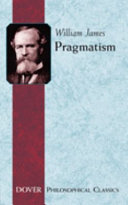
Pragmatism
Pragmatism: A New Name for Some Old Ways of Thinking by William James (1907)
America's most original contribution to world philosophy. James argues that the truth of an idea is determined by its practical consequences — "truth happens to an idea; it is made true by events."
Historical Significance:
William James — Harvard professor, brother of novelist Henry James, and founder of American psychology — delivered the lectures that became Pragmatism in 1906-07. The book synthesized ideas from Charles Sanders Peirce and John Dewey into a distinctly American philosophy that rejected abstract metaphysics in favor of practical results. An idea is true if it works; beliefs are tools for navigating reality, not mirrors reflecting an absolute truth. Pragmatism influenced John Dewey's educational reforms, Oliver Wendell Holmes' legal philosophy, and Barack Obama's political approach. It remains America's most distinctive philosophical tradition.
This public domain classic was originally published in 1907. Free to read and share.
Free
eBook
FREE
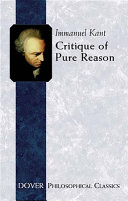
The Critique of Pure Reason
The Critique of Pure Reason by Immanuel Kant (1781)
The most important work of modern philosophy. Kant asks: what can we know? His answer — that the mind actively structures experience rather than passively receiving it — revolutionized every branch of human knowledge.
Historical Significance:
Immanuel Kant, a professor in Königsberg, Prussia, who famously never traveled more than 10 miles from his birthplace, published the Critique of Pure Reason in 1781 after a decade of intensive work. The book is notoriously difficult — Kant himself called it "dry, obscure, contrary to all ordinary ideas, and on top of that prolix" — but its conclusions transformed philosophy, science, and culture. Kant demonstrated that space, time, and causality are not features of the world itself but structures imposed by the human mind. This "Copernican revolution in philosophy" influenced everything from Einstein's relativity to cognitive science to postmodern theory.
This public domain classic was originally published in 1781. Free to read and share.
Free
No classics match your filters.