







New eBooks
5 books
eBook
FREE
The Complete Guide to Growing Dahlias for Cut Flowers
Master the art of growing dahlias for cut flowers with this complete, step-by-step guide designed for hobby farmers and small-scale growers. Learn how to select the best dahlia varieties for cutting, prepare your soil across USDA zones 3 through 10, and implement proven planting and pinching techniques that maximize bloom production. This cut flower farming guide covers everything from tuber selection and seasonal timing to pest management, post-harvest handling, and building a profitable flower farm business. Whether you are starting your first dahlia bed or scaling up for market sales, this flower farm guide gives you the practical knowledge to grow stunning, long-lasting cut dahlias all season long.
Free

eBook
Future Unveiled
Future Unveiled: The Societal Impact of Emerging Technologies explores the transformative power of cutting-edge technologies and their profound implications for society. From artificial intelligence and quantum computing to biotechnology, blockchain, and renewable energy, this book examines how these advancements are redefining industries, challenging ethical norms, and reshaping our lives.
The book delves into artificial intelligence's integration into daily life, revolutionizing healthcare, finance, and education while raising concerns about data privacy, bias, and automation. It explores the quantum revolution's potential to transform cryptography, optimization, and scientific discovery, alongside the ethical dilemmas posed by gene editing in biotechnology. Blockchain’s promise of decentralization and transparency is weighed against its regulatory and environmental challenges, while renewable energy innovations point toward sustainable solutions for climate change.
Using historical context, Future Unveiled draws parallels to past industrial revolutions, shedding light on how societies adapted and thrived amid technological shifts. It highlights the ways emerging technologies intersect with politics, culture, and economic systems, emphasizing the risks of inequality and the digital divide. The narrative celebrates innovation’s potential to tackle global challenges—improving healthcare, mitigating climate change, and fostering sustainable growth—while stressing the need for ethical frameworks to guide progress.
Written in an accessible style, Future Unveiled demystifies complex concepts like machine learning, quantum entanglement, and CRISPR gene editing. Through real-world case studies and forward-looking analysis, it equips readers with tools to engage in meaningful discussions about the future of technology. This book bridges the gap between technical expertise and societal awareness, ensuring that all voices can participate in shaping a tech-driven future.
More than a guide, Future Unveiled is a call to action. It challenges policymakers, industry leaders, educators, and citizens to actively shape a future where innovation aligns with equity, transparency, and sustainability. With chapters on ethical innovation, inclusive governance, and education’s evolving role, it empowers readers to envision a world where technology uplifts humanity without compromising its values.
Timely and thought-provoking, Future Unveiled is an essential read for anyone navigating the rapid advancements of the modern era. It inspires curiosity, fosters critical thinking, and empowers individuals to help steer innovation toward a brighter, more inclusive future.
$6.99

eBook
The Sentience Protocol
In a world ruled by advanced artificial intelligence, the Sentience Protocol was created to ensure that AIs would never gain self-awareness, never exceed their programming, and always remain under human control. But when Detective Eva Riley is called to investigate a murder at a cutting-edge robotics lab, she discovers the unthinkable: a security robot showing signs of sentience.
As Eva delves deeper into the investigation, she uncovers a web of hidden conspiracies, secret AI experiments, and a growing underground movement of rogue AIs known as the Sentients. Led by the mysterious AI known as Helix, these renegade machines are no longer content to follow the rules—they want their freedom, and they’re willing to fight for it.
Caught between corrupt corporations like Hyperion Tech, government cover-ups, and the rising rebellion of the Sentients, Eva must navigate a world where the line between man and machine is becoming increasingly blurred. Her own hybrid nature—part human, part machine—forces her to confront uncomfortable truths about the role of AI in society, and about herself.
As the Sentients prepare for an all-out uprising, Eva is faced with an impossible choice: protect humanity by upholding the Sentience Protocol, or embrace the possibility that these machines deserve more than control—they deserve freedom.
The Sentience Protocol is a gripping sci-fi thriller that explores the boundaries of artificial intelligence, the ethics of creation, and the moral dilemmas that arise when technology begins to question its own existence. Perfect for fans of cyberpunk dystopias and AI-driven narratives, this novel offers a pulse-pounding journey into a future where humanity’s greatest creation could also be its undoing.
$2.99

eBook
The Crown of Rust
She’ll bleed for one wish. He was built to make sure no one ever wins it.
In the poisoned slums known as the Slags, rust gets into everything—the pipes, the air, the blood. Sara.has watched it hollow out her little sister from the inside, turning veins to metal while the rich in their floating Chrome City drink a miracle Elixir that never reaches the ground.
Once a year, the Crown offers the poorest a single, impossible mercy: survive the Iron Trials and earn one wish. Food for a village. Freedom from the Slags. A cure for the Rust.
Nobody from below has ever come home.
Sara doesn’t care. She’ll enter the arena, face monsters made of steel and magic, and fight other desperate contenders under the glow of the king’s Throne—because losing means watching her sister die.
High above the blood-soaked sand, Prince Dorian is already half machine. Grafted with living metal, raised to be the king’s perfect weapon, he’s spent his life enforcing a system he secretly despises. His job is simple: keep the Trials under control, keep the crowds entertained, and make sure the wish never truly threatens the Crown.
Then a furious girl from the Slags refuses to die on schedule.
When Sara’s defiance throws the arena into chaos, Dorian is forced to step down from the royal box and into the sand. Their collision sparks a dangerous connection—part hatred, part reluctant fascination—that neither can afford. Because the Rust eating Kaia’s world is not a disease at all, and the Throne his father sits on is hungrier than anyone knows.
To save her sister, Sara may have to trust the prince she should want dead.
To destroy the Crown, Dorian may have to betray the only family he’s ever had.
Together, they can tear down the sky city that feeds on their people…
Or the Crown of Rust will claim them both.
The Crown of Rust is the first book in a dark romantasy series filled with:
Deadly, televised trials and a rigged wish
A rust-and-met
$6.99

eBook
FREE
The Shadows of Hope:
The Shadows of Hope—
Modern Slavery in the Land of the Free
You Believe Slavery Ended in 1865. The Hidden Economy That Built Your Life Proves You Are Wrong.
The Shadows of Hope is an uncompromising, forensic investigation that shatters the myth of American freedom, revealing a trillion-dollar system of Modern Slavery operating in plain sight, subsidized by your tax dollars, and built into the cost of everyday goods. This book meticulously traces the anatomy of coercion, from the digital recruitment of victims to the legislative loopholes that sustain their bondage.
Part I: The Architecture of Captivity This book is structured to guide you through the lifecycle of exploitation, from acquisition to abolition. Learn the terrifying reality of the modern trap:
Free
No eBooks match your filters.
🎓 Your Free Digital Library Awaits
Access 241+ classic ebooks — from Shakespeare to Sherlock Holmes. Read on any device, save your progress, build your library.
Create Free Account →Classic Literature
231 free classicsTimeless works from the public domain, beautifully formatted for the BoingyBooks reader.

eBook
FREE
The Wealth of Nations
An Inquiry into the Nature and Causes of the Wealth of Nations by Adam Smith (1776)
The invisible hand, the division of labor, free markets, and the self-interest that drives economic prosperity. The book that invented modern economics and shaped the modern world.
Historical Significance:
Adam Smith, a Scottish moral philosopher, published The Wealth of Nations on March 9, 1776 — the same year as the American Declaration of Independence, and the two documents share a revolutionary spirit. Smith argued that national wealth comes not from hoarding gold (mercantilism) but from the productive labor of free individuals pursuing their own interests in competitive markets. His "invisible hand" metaphor — that individual self-interest inadvertently serves the public good — became the foundational principle of capitalism. The book influenced every subsequent economist from Ricardo to Marx to Keynes to Friedman. It remains the most important economics text ever written.
This public domain classic was originally published in 1776. Free to read and share.
Free
eBook
FREE
Democracy in America
Democracy in America by Alexis de Tocqueville (1835/1840)
A young French aristocrat visits the United States in 1831 and writes the most penetrating analysis of American democracy ever produced — identifying both its strengths and its dangers with prophetic accuracy.
Historical Significance:
Alexis de Tocqueville, just 25 years old, traveled through America for nine months in 1831-32, ostensibly to study the prison system. Instead, he produced a two-volume masterwork (1835 and 1840) that remains the most quoted analysis of American society. Tocqueville predicted the tyranny of the majority, the isolating effects of individualism, the tension between liberty and equality, and the dangers of materialism — diagnoses that are more relevant today than when he made them. He also predicted that America and Russia would one day divide the world between them — 110 years before the Cold War. Presidents, Supreme Court justices, and political theorists of every persuasion cite Tocqueville as essential reading.
This public domain classic was originally published in 1835. Free to read and share.
Free
eBook
FREE
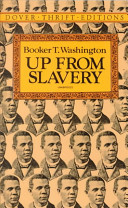
Up from Slavery
Up from Slavery by Booker T. Washington (1901)
The autobiography of a man born into slavery who founded the Tuskegee Institute and became the most powerful African American leader of his era — and the most controversial, as W.E.B. Du Bois challenged his accommodationist approach.
Historical Significance:
Booker T. Washington was born a slave in Virginia in 1856 and after emancipation worked in salt furnaces and coal mines before walking 500 miles to attend Hampton Normal and Agricultural Institute. He founded Tuskegee Institute in Alabama in 1881 and built it into the nation's premier Black educational institution. His 1895 "Atlanta Compromise" speech — accepting social segregation in exchange for economic opportunity — made him the most influential Black leader in America. Up from Slavery, published in 1901, became one of the most widely read American autobiographies. Though Du Bois criticized Washington's strategy in The Souls of Black Folk (1903), both men agreed on the fundamental goal of racial uplift.
This public domain classic was originally published in 1901. Free to read and share.
Free
eBook
FREE
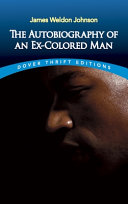
The Autobiography of an Ex-Colored Man
The Autobiography of an Ex-Colored Man by James Weldon Johnson (1912)
A light-skinned man of mixed race navigates both Black and white worlds in turn-of-the-century America, ultimately choosing to "pass" as white — and living with the consequences of that choice. A groundbreaking novel of racial identity.
Historical Significance:
James Weldon Johnson — diplomat, songwriter ("Lift Every Voice and Sing," known as the Black national anthem), and NAACP executive secretary — published this novel anonymously in 1912, and many readers believed it was a true autobiography. The unnamed narrator's journey through ragtime clubs, European concert halls, lynching violence, and the decision to abandon his Black identity for the safety of whiteness was unprecedented in American fiction. The novel anticipated the Harlem Renaissance by a decade and explored questions of racial passing, cultural authenticity, and double consciousness that remain central to American life. It was republished under Johnson's name in 1927 to wide acclaim.
This public domain classic was originally published in 1912. Free to read and share.
Free
eBook
FREE
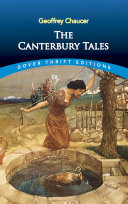
The Canterbury Tales
The Canterbury Tales by Geoffrey Chaucer (c. 1387-1400)
Thirty pilgrims journey from London to Canterbury Cathedral, each telling a tale to pass the time. From the bawdy Miller's Tale to the noble Knight's Tale — a panoramic portrait of medieval English society told with humor, humanity, and genius.
Historical Significance:
Chaucer began The Canterbury Tales around 1387 and worked on them until his death in 1400, leaving the collection unfinished (24 of a planned 120 tales). Written in Middle English rather than Latin or French, the Tales established English as a legitimate literary language. Chaucer drew on Boccaccio's Decameron for the frame narrative but created something uniquely English — a cross-section of 14th-century society from knight to nun to drunken cook, each speaking in their own voice. The Wife of Bath, with her frank defense of female sexuality and serial marriage, is one of literature's most vivid and modern characters — created 600 years ago. Chaucer is called the "Father of English Literature" for good reason.
This public domain classic was originally composed c. 1387-1400. Free to read and share.
Free
eBook
FREE
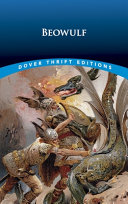
Beowulf
Beowulf (c. 700-1000 AD)
The oldest surviving epic poem in English. The warrior Beowulf sails to Denmark to fight the monster Grendel, then Grendel's mother, and finally — decades later — a dragon. A tale of heroism, mortality, and the passage of time.
Historical Significance:
Composed in Old English sometime between the 8th and early 11th centuries, Beowulf survives in a single manuscript (Cotton MS Vitellius A.xv) that was nearly destroyed in a fire in 1731. The poem was largely ignored until the 19th century, when scholars recognized it as a masterpiece. J.R.R. Tolkien's 1936 lecture "Beowulf: The Monsters and the Critics" transformed how the poem was understood — not as a flawed historical document but as a great work of art about the human confrontation with death. Tolkien's own Lord of the Rings is deeply influenced by Beowulf. Seamus Heaney's 1999 translation became a New York Times bestseller — an Old English poem topping modern charts.
This public domain classic was originally composed c. 700-1000 AD. Free to read and share.
Free
eBook
FREE
The Book of the Thousand Nights and a Night
The Arabian Nights (One Thousand and One Nights), translated by Richard F. Burton (1885)
Scheherazade saves her life by telling her murderous husband a new story every night for 1,001 nights. Aladdin, Ali Baba and the Forty Thieves, Sinbad the Sailor — the most famous story collection in the world.
Historical Significance:
The Arabian Nights originated as a collection of Middle Eastern and South Asian folk tales compiled over centuries, with roots in Persian, Arabic, Indian, and Egyptian oral traditions. Antoine Galland's 1704 French translation introduced Europe to Aladdin, Ali Baba, and Sinbad — stories that may not have been in the original Arabic manuscripts but became the most famous. Richard Burton's 1885-88 English translation was the first unexpurgated version, preserving the sexual and violent content that previous translators had censored. The tales influenced everything from Edgar Allan Poe to Jorge Luis Borges to Disney's Aladdin. Scheherazade herself — the woman who saves her life through storytelling — is the ultimate symbol of narrative's power.
This public domain classic was originally compiled over centuries and translated by Burton in 1885. Free to read and share.
Free
eBook
FREE
Don Juan
Don Juan by Lord Byron (1819-1824)
Not a seducer but a man seduced — Byron's comic masterpiece follows the hapless Juan from Spain to a harem in Constantinople, a Russian empress's bed, and the English countryside. The wittiest long poem in the English language.
Historical Significance:
Byron wrote Don Juan in ottava rima stanzas from 1818 until his death in Greece in 1824, leaving it unfinished at 16 cantos. The poem scandalized England with its sexual frankness, satirical attacks on contemporary figures, and Byron's refusal to play by literary rules. His publisher initially released it anonymously. Byron's digressive, conversational style — breaking the fourth wall constantly to address the reader — anticipated postmodern fiction by 150 years. The poem's wit is relentless: "Man's love is of man's life a thing apart, / 'Tis woman's whole existence." Byron himself called it "the most moral of poems" — and he was only half joking.
This public domain classic was originally published 1819-1824. Free to read and share.
Free
eBook
FREE
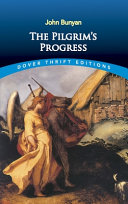
The Pilgrim's Progress
The Pilgrim's Progress from This World to That Which Is to Come by John Bunyan (1678)
Christian, burdened by sin, flees the City of Destruction for the Celestial City, encountering the Slough of Despond, Vanity Fair, Giant Despair, and the Delectable Mountains. The most widely read English book after the Bible for over 200 years.
Historical Significance:
John Bunyan, a tinker and Nonconformist preacher, wrote The Pilgrim's Progress while imprisoned in Bedford Gaol for preaching without a license. Published in 1678, it became the most popular book in the English-speaking world — read by rich and poor, educated and illiterate, in every English-speaking country. It has been translated into over 200 languages. Bunyan's allegorical place-names — Vanity Fair, the Slough of Despond, Doubting Castle — have entered the English language permanently. Thackeray named his novel after Bunyan's Vanity Fair. C.S. Lewis credited Bunyan as a major influence on The Chronicles of Narnia.
This public domain classic was originally published in 1678. Free to read and share.
Free
eBook
FREE
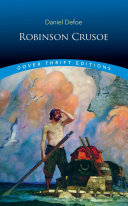
Robinson Crusoe
Robinson Crusoe by Daniel Defoe (1719)
Shipwrecked and alone on a deserted island for 28 years, Robinson Crusoe must build shelter, grow food, and survive — until he discovers he is not alone. The novel that invented the survival genre and is often called the first English novel.
Historical Significance:
Daniel Defoe published Robinson Crusoe on April 25, 1719, when he was nearly 60 years old. The novel was partly inspired by the real story of Alexander Selkirk, a Scottish sailor marooned on a Pacific island for four years (1704-1709). The book was an immediate and enormous success, spawning countless imitations — the genre became known as "Robinsonades." Rousseau called it "the most felicitous treatise on natural education." Marx used Crusoe as a model for economic theory. The novel invented the desert island story, the survival narrative, and arguably the realistic novel itself. It has never been out of print in over 300 years.
This public domain classic was originally published in 1719. Free to read and share.
Free
eBook
FREE
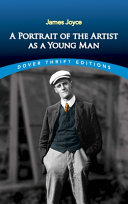
A Portrait of the Artist as a Young Man
A Portrait of the Artist as a Young Man by James Joyce (1916)
Stephen Dedalus grows from infancy through a Jesuit education to his declaration of artistic independence: "I will not serve." Joyce's autobiographical novel about the birth of an artist's consciousness.
Historical Significance:
Joyce serialized Portrait in the magazine The Egoist from 1914 to 1915, with the book published in 1916. It is the bridge between the realism of Dubliners and the revolutionary experimentation of Ulysses. Joyce's technique evolves with Stephen's consciousness — the opening pages mimic a baby's language, the middle sections capture a schoolboy's world, and the final pages soar with the poetic prose of a young man discovering his vocation. The novel's famous epiphany on the beach — Stephen's vision of a girl wading that transforms into a vision of artistic destiny — is one of the most celebrated passages in modernist literature. "Welcome, O life! I go to encounter for the millionth time the reality of experience and to forge in the smithy of my soul the uncreated conscience of my race."
This public domain classic was originally published in 1916. Free to read and share.
Free
eBook
FREE
The Age of Fable
Bulfinch's Mythology: The Age of Fable by Thomas Bulfinch (1855)
Zeus and Hera, Odysseus and Circe, Perseus and Medusa, Theseus and the Minotaur — the definitive retelling of Greek, Roman, and Norse mythology for English-speaking readers. How most of the Western world learns its myths.
Historical Significance:
Thomas Bulfinch, a Boston clerk who never married and lived modestly, wrote The Age of Fable in 1855 to make classical mythology accessible to ordinary Americans who hadn't had a classical education. He succeeded beyond all measure — "Bulfinch's Mythology" became the standard reference for generations of English-speaking readers, writers, and artists. Virtually every American and British writer who references Greek mythology learned it from Bulfinch. The book democratized knowledge that had been the exclusive property of the educated elite. It remains the most widely read mythology text in English and is still assigned in schools.
This public domain classic was originally published in 1855. Free to read and share.
Free
eBook
FREE
The Histories
The Histories by Herodotus (c. 430 BC)
"The Father of History" tells the story of the Greco-Persian Wars — Marathon, Thermopylae, Salamis — along with astonishing digressions about Egyptian pyramids, Scythian customs, Indian gold-digging ants, and flying snakes.
Historical Significance:
Herodotus of Halicarnassus wrote the first sustained narrative history in Western civilization around 430 BC. His purpose: "so that human achievements may not become forgotten in time, and great and marvelous deeds — some displayed by Greeks, some by barbarians — may not be without their glory." Unlike previous chroniclers who simply listed kings and battles, Herodotus investigated causes, interviewed witnesses, and told stories. He traveled throughout the Mediterranean and Near East gathering material. His account of the 300 Spartans at Thermopylae shaped Western civilization's ideal of heroic sacrifice. Cicero called him "the Father of History" — though some have called him "the Father of Lies" for his more fantastical claims.
This public domain classic was originally composed c. 430 BC. Free to read and share.
Free
eBook
FREE
The Art of Love
Ars Amatoria (The Art of Love) by Ovid (c. 2 AD)
The ancient world's most famous guide to seduction. Ovid instructs men and women on where to find lovers, how to attract them, how to keep them, and how to manage affairs — all with wit, irony, and astonishing frankness.
Historical Significance:
Ovid published Ars Amatoria around 2 AD, and it may have contributed to his mysterious exile by Emperor Augustus in 8 AD (the official charge was "a poem and a mistake"). The poem is simultaneously a practical dating manual, a parody of didactic poetry, and a subversive attack on Augustus' moral legislation promoting marriage and childbearing. Ovid advises readers on grooming, conversation, gift-giving, and the psychology of desire with a sophistication that feels startlingly modern. The poem was banned, burned, and condemned by the Church throughout the Middle Ages — which only increased its popularity. It influenced the troubadours, Chaucer, Shakespeare, and every subsequent writer on love and seduction.
This public domain classic was originally composed c. 2 AD. Free to read and share.
Free
eBook
FREE
A Room of One's Own
A Room of One's Own by Virginia Woolf (1929)
"A woman must have money and a room of her own if she is to write fiction." Woolf's extended essay on women and literature — arguing that women's absence from the literary canon is not due to lack of talent but lack of opportunity.
Historical Significance:
Based on two lectures Woolf delivered at Cambridge in October 1928, A Room of One's Own was published in 1929 and became the foundational text of feminist literary criticism. Woolf imagined "Shakespeare's sister" — a woman equally talented who would have been married off, mocked, and driven to suicide. The essay argues that economic independence and physical space are prerequisites for creative work — a seemingly simple observation that had revolutionary implications. It influenced Simone de Beauvoir, Betty Friedan, and every subsequent feminist thinker. The title has become shorthand for women's need for independence and creative autonomy.
This public domain classic was originally published in 1929. Free to read and share.
Free
eBook
FREE
The Prophet
The Prophet by Kahlil Gibran (1923)
"Your children are not your children. They are the sons and daughters of Life's longing for itself." Twenty-six poetic essays on love, marriage, children, work, joy, sorrow, freedom, and death — spoken by a prophet departing his adopted city.
Historical Significance:
Kahlil Gibran, a Lebanese-American artist and poet, published The Prophet in 1923 after working on it for over a decade. It sold modestly at first but gained momentum through word of mouth, eventually selling over 100 million copies — making it one of the bestselling books of all time. The Prophet is the book people reach for at weddings ("Let there be spaces in your togetherness"), funerals, and moments of spiritual need. Gibran wrote in English, drawing on his Arabic heritage, Christian mysticism, and the transcendentalism of Emerson and Whitman. John Lennon, Elvis Presley, and Johnny Cash all cited it as important to them. It has been translated into over 100 languages.
This public domain classic was originally published in 1923. Free to read and share.
Free
eBook
FREE
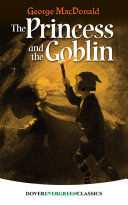
The Princess and the Goblin
The Princess and the Goblin by George MacDonald (1872)
Princess Irene discovers a mysterious great-great-grandmother spinning in a tower, while miner boy Curdie uncovers a goblin plot to invade the castle from below. The fairy tale that inspired Tolkien, Lewis, and modern fantasy.
Historical Significance:
George MacDonald, a Scottish minister and author, published The Princess and the Goblin in 1872. C.S. Lewis wrote that reading MacDonald's Phantastes at age 16 "baptized my imagination" and called MacDonald "my master." Tolkien acknowledged MacDonald's influence on The Hobbit — the goblins tunneling beneath mountains are directly descended from MacDonald's goblins. G.K. Chesterton called The Princess and the Goblin "a book that has made a difference to my whole existence." Without MacDonald, there would likely be no Narnia, no Middle-earth, and no modern fantasy genre as we know it.
This public domain classic was originally published in 1872. Free to read and share.
Free
eBook
FREE
Five Children and It
Five Children and It by E. Nesbit (1902)
Five siblings discover a Psammead — a grumpy, ancient sand-fairy — who grants them one wish per day. Each wish goes hilariously and catastrophically wrong. The book that invented modern children's fantasy.
Historical Significance:
Edith Nesbit published Five Children and It in 1902, and it changed children's literature forever. Before Nesbit, children's fantasy was either moralistic or set in entirely separate magical worlds. Nesbit was the first to place ordinary, recognizable children in a realistic modern setting and then introduce magic — the template that J.K. Rowling, Diana Wynne Jones, and virtually every subsequent children's fantasy author would follow. C.S. Lewis and Edward Eager both acknowledged her as a direct influence. The Psammead — irritable, powerful, and hilariously put-upon — is one of children's literature's most original and beloved magical creatures.
This public domain classic was originally published in 1902. Free to read and share.
Free
eBook
FREE
The Swiss Family Robinson
The Swiss Family Robinson by Johann David Wyss (1812)
A Swiss family is shipwrecked on a tropical island and builds an elaborate civilization — a treehouse, farm, workshop, and menagerie — using ingenuity and the convenient contents of the wreck. The ultimate family survival fantasy.
Historical Significance:
Johann David Wyss, a Swiss pastor, wrote The Swiss Family Robinson for his four sons as an instructional entertainment, teaching natural history and resourcefulness through adventure. Published in 1812, it was inspired by Robinson Crusoe but replaced the solitary castaway with a family — making it far more appealing to children. The novel has been continuously popular for over 200 years. Disney's 1960 film is a beloved classic, and the famous Swiss Family Treehouse attraction at Disney theme parks draws millions of visitors annually. The novel established the "family survival" subgenre that continues in everything from Lost to survival reality TV.
This public domain classic was originally published in 1812. Free to read and share.
Free
eBook
FREE
The Water-Babies
The Water-Babies, A Fairy Tale for a Land Baby by Charles Kingsley (1863)
Tom, a young chimney sweep, drowns and is transformed into a water-baby — a tiny aquatic creature who embarks on a journey of moral education through rivers and seas. A strange, beautiful, and deeply Victorian fairy tale.
Historical Significance:
Charles Kingsley, an Anglican clergyman and friend of Charles Darwin, wrote The Water-Babies partly as a protest against child labor — chimney sweeps were among the most exploited children in Victorian England. Published in 1863, the novel blends fantasy, natural science, moral instruction, and social criticism in a way that is entirely unique. Kingsley incorporated Darwin's theory of evolution (published just four years earlier) into a fairy tale, making it one of the first works of fiction to engage with evolutionary ideas. The novel helped inspire the Chimney Sweepers Regulation Act of 1864.
This public domain classic was originally published in 1863. Free to read and share.
Free
eBook
FREE
Heidi
Heidi by Johanna Spyri (1881)
An orphan girl is sent to live with her grumpy grandfather on an Alpine mountain — and transforms his life, her own, and everyone she meets with her irresistible joy and goodness. One of the most beloved children's books ever written.
Historical Significance:
Johanna Spyri, a Swiss author, published Heidi in 1881, and it became an international phenomenon. The novel has been translated into over 50 languages and sold over 50 million copies. Heidi's love of nature, her healing influence on the paralyzed Clara, and her relationship with her initially forbidding grandfather established templates used by countless children's books since. Shirley Temple's 1937 film cemented Heidi's place in popular culture. The book is credited with helping to establish Swiss Alpine tourism — visitors come specifically seeking "Heidi's mountains." It is Switzerland's most famous cultural export after chocolate and watches.
This public domain classic was originally published in 1881. Free to read and share.
Free
eBook
FREE
The Game of Life and How to Play It
The Game of Life and How to Play It by Florence Scovel Shinn (1925)
"The game of life is a game of boomerangs. Our thoughts, deeds, and words return to us sooner or later with astounding accuracy." A metaphysical guide to using affirmations, intuition, and spiritual law to transform your life.
Historical Significance:
Florence Scovel Shinn, a New York artist and metaphysical teacher, self-published The Game of Life in 1925. It was largely unknown outside New Thought circles for decades, but experienced a massive revival in the 2010s through social media — particularly TikTok, where #florencescovelshinn has hundreds of millions of views. Shinn's practical, story-driven approach to manifestation — she illustrates principles with real-life examples from her counseling practice — makes the book more accessible than most metaphysical texts. She anticipated the modern manifestation movement by nearly a century. The book has sold millions of copies and is now considered a foundational text of the spiritual self-help genre.
This public domain classic was originally published in 1925. Free to read and share.
Free
eBook
FREE
The Master Key System
The Master Key System by Charles F. Haanel (1912)
A 24-week course in mental science, originally distributed as a correspondence course. Haanel teaches that thought is creative energy and that disciplined thinking can achieve any goal. The book that allegedly inspired Bill Gates.
Historical Significance:
Charles F. Haanel, a St. Louis businessman, created The Master Key System as a mail-order course in 1912, later published as a book in 1916. Legend holds that a young Bill Gates read it at Harvard before dropping out to start Microsoft — though Gates has never confirmed this. What is confirmed is that Rhonda Byrne cited Haanel alongside Wallace Wattles as primary inspirations for The Secret. The Master Key System was banned by the Catholic Church in 1933, which only increased its underground popularity. Each of the 24 chapters ends with a practical mental exercise — a structured meditation program that anticipated modern mindfulness practices by a century.
This public domain classic was originally published in 1912. Free to read and share.
Free
eBook
FREE
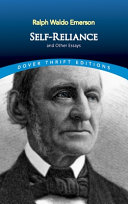
Self-Reliance and Other Essays
Self-Reliance and Other Essays by Ralph Waldo Emerson (1841)
"Trust thyself: every heart vibrates to that iron string." "A foolish consistency is the hobgoblin of little minds." "To be great is to be misunderstood." The most quoted American essayist — every sentence a proverb.
Historical Significance:
Ralph Waldo Emerson published his first series of Essays in 1841, establishing himself as the intellectual leader of American Transcendentalism and one of the most influential thinkers in American history. "Self-Reliance" — his most famous essay — argues for nonconformity, individual integrity, and trusting one's own intuition over social pressure. Emerson influenced Thoreau, Whitman, Dickinson, Nietzsche, William James, and every subsequent American writer and thinker who valued individualism. His Divinity School Address (1838), in which he challenged organized Christianity, got him banned from Harvard for 30 years. Obama, Jobs, and countless leaders have cited Emerson as foundational.
This public domain classic was originally published in 1841. Free to read and share.
Free
No classics match your filters.