New eBooks
0 booksNo eBooks Yet
Be the first to publish an eBook on BoingyBooks!
🎓 Your Free Digital Library Awaits
Access 232+ classic ebooks — from Shakespeare to Sherlock Holmes. Read on any device, save your progress, build your library.
Create Free Account →Classic Literature
11 free classicsTimeless works from the public domain, beautifully formatted for the BoingyBooks reader.

eBook
FREE
The Waste Land
The Waste Land by T.S. Eliot (1922)
"April is the cruelest month." The most important poem of the 20th century — a fragmented, allusive, devastating portrait of post-World War I civilization in ruins. 434 lines that changed literature forever.
Historical Significance:
T.S. Eliot, a 33-year-old American expatriate working as a bank clerk in London, published The Waste Land in October 1922 — the same year as Joyce's Ulysses and Woolf's Jacob's Room, making 1922 the annus mirabilis of modernism. Eliot's original manuscript was twice as long; Ezra Pound edited it down with ruthless brilliance, earning Eliot's dedication: "il miglior fabbro" (the better craftsman).
The poem draws on the Grail legend, Dante, Shakespeare, the Upanishads, music hall songs, and overheard pub conversations, weaving them into a tapestry of cultural collapse. Its famous opening — "April is the cruelest month, breeding / Lilacs out of the dead land" — inverts Chaucer's joyful spring opening in The Canterbury Tales, signaling that the old literary certainties are dead.
Eliot won the Nobel Prize for Literature in 1948, with the committee specifically citing The Waste Land. The poem has generated more scholarly commentary than any other 20th-century literary work. It made difficulty itself a literary value and established the template for modernist poetry. Every subsequent poet has had to reckon with it.
This public domain classic was originally published in 1922. Free to read and share.
Free

eBook
FREE
The Prophet
The Prophet by Kahlil Gibran (1923)
"Your children are not your children. They are the sons and daughters of Life's longing for itself." Twenty-six poetic essays on love, marriage, children, work, joy, sorrow, freedom, and death — spoken by a prophet departing his adopted city.
Historical Significance:
Kahlil Gibran, a Lebanese-American artist and poet, published The Prophet in 1923 after working on it for over a decade. It sold modestly at first but gained momentum through word of mouth, eventually selling over 100 million copies — making it one of the bestselling books of all time. The Prophet is the book people reach for at weddings ("Let there be spaces in your togetherness"), funerals, and moments of spiritual need. Gibran wrote in English, drawing on his Arabic heritage, Christian mysticism, and the transcendentalism of Emerson and Whitman. John Lennon, Elvis Presley, and Johnny Cash all cited it as important to them. It has been translated into over 100 languages.
This public domain classic was originally published in 1923. Free to read and share.
Free
eBook
FREE
The Art of Love
Ars Amatoria (The Art of Love) by Ovid (c. 2 AD)
The ancient world's most famous guide to seduction. Ovid instructs men and women on where to find lovers, how to attract them, how to keep them, and how to manage affairs — all with wit, irony, and astonishing frankness.
Historical Significance:
Ovid published Ars Amatoria around 2 AD, and it may have contributed to his mysterious exile by Emperor Augustus in 8 AD (the official charge was "a poem and a mistake"). The poem is simultaneously a practical dating manual, a parody of didactic poetry, and a subversive attack on Augustus' moral legislation promoting marriage and childbearing. Ovid advises readers on grooming, conversation, gift-giving, and the psychology of desire with a sophistication that feels startlingly modern. The poem was banned, burned, and condemned by the Church throughout the Middle Ages — which only increased its popularity. It influenced the troubadours, Chaucer, Shakespeare, and every subsequent writer on love and seduction.
This public domain classic was originally composed c. 2 AD. Free to read and share.
Free
eBook
FREE
Don Juan
Don Juan by Lord Byron (1819-1824)
Not a seducer but a man seduced — Byron's comic masterpiece follows the hapless Juan from Spain to a harem in Constantinople, a Russian empress's bed, and the English countryside. The wittiest long poem in the English language.
Historical Significance:
Byron wrote Don Juan in ottava rima stanzas from 1818 until his death in Greece in 1824, leaving it unfinished at 16 cantos. The poem scandalized England with its sexual frankness, satirical attacks on contemporary figures, and Byron's refusal to play by literary rules. His publisher initially released it anonymously. Byron's digressive, conversational style — breaking the fourth wall constantly to address the reader — anticipated postmodern fiction by 150 years. The poem's wit is relentless: "Man's love is of man's life a thing apart, / 'Tis woman's whole existence." Byron himself called it "the most moral of poems" — and he was only half joking.
This public domain classic was originally published 1819-1824. Free to read and share.
Free
eBook
FREE
The Canterbury Tales
The Canterbury Tales by Geoffrey Chaucer (c. 1387-1400)
Thirty pilgrims journey from London to Canterbury Cathedral, each telling a tale to pass the time. From the bawdy Miller's Tale to the noble Knight's Tale — a panoramic portrait of medieval English society told with humor, humanity, and genius.
Historical Significance:
Chaucer began The Canterbury Tales around 1387 and worked on them until his death in 1400, leaving the collection unfinished (24 of a planned 120 tales). Written in Middle English rather than Latin or French, the Tales established English as a legitimate literary language. Chaucer drew on Boccaccio's Decameron for the frame narrative but created something uniquely English — a cross-section of 14th-century society from knight to nun to drunken cook, each speaking in their own voice. The Wife of Bath, with her frank defense of female sexuality and serial marriage, is one of literature's most vivid and modern characters — created 600 years ago. Chaucer is called the "Father of English Literature" for good reason.
This public domain classic was originally composed c. 1387-1400. Free to read and share.
Free

eBook
FREE
Sonnets from the Portuguese
Sonnets from the Portuguese by Elizabeth Barrett Browning (1850)
"How do I love thee? Let me count the ways." Forty-four love sonnets written secretly during Elizabeth Barrett's courtship with Robert Browning — the most famous love poems in the English language.
Historical Significance:
Elizabeth Barrett was a famous poet and semi-invalid when Robert Browning wrote her a fan letter in 1845: "I love your verses with all my heart, dear Miss Barrett." Their courtship, conducted largely through letters, was one of the great love stories of the 19th century. Elizabeth wrote these sonnets during the courtship but showed them to Robert only after their secret marriage and elopement to Italy in 1846. He insisted she publish them, disguised as translations "from the Portuguese." Sonnet 43 ("How Do I Love Thee?") is the most famous love poem in English. The Brownings' love story has been the subject of plays, films, and the musical Robert and Elizabeth.
This public domain classic was originally published in 1850. Free to read and share.
Free

eBook
FREE
Songs of Innocence and of Experience
Songs of Innocence and of Experience by William Blake (1789/1794)
"Tyger Tyger, burning bright, / In the forests of the night." Blake's paired collections contrast the innocent wonder of childhood with the dark experience of the adult world. Each poem in Innocence has a shadowy counterpart in Experience.
Historical Significance:
William Blake published Songs of Innocence in 1789 and Songs of Experience in 1794, combining them with the subtitle "Shewing the Two Contrary States of the Human Soul." Blake hand-printed and hand-colored each copy using a technique he called "illuminated printing," making every copy unique. During his lifetime, he was considered eccentric at best, mad at worst. Today he is recognized as one of the greatest poets and artists in English history. "The Tyger," "The Lamb," "London," and "The Sick Rose" are among the most anthologized poems in the English language.
This public domain classic was originally published in 1789/1794. Free to read and share.
Free
eBook
FREE
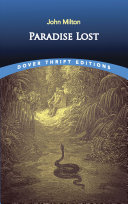
Paradise Lost
Paradise Lost by John Milton (1667)
"Better to reign in Hell than serve in Heaven." Satan's rebellion against God, the Fall of Man, and the expulsion from Eden — told in the most majestic English verse ever written. Milton's blind dictation of this epic is one of literature's great feats.
Historical Significance:
John Milton, blind and politically disgraced after the Restoration of Charles II, dictated Paradise Lost to his daughters between 1658 and 1663. Published in 1667, it is the last great epic poem in the English language. Milton's Satan — charismatic, eloquent, defiant — is literature's most complex villain and arguably its most compelling character. William Blake said Milton was "of the Devil's party without knowing it." The poem's influence on English literature is second only to Shakespeare — it shaped the language, the narrative of the Fall, and the very concept of literary ambition.
This public domain classic was originally published in 1667. Free to read and share.
Free
eBook
FREE
The Divine Comedy
The Divine Comedy by Dante Alighieri (c. 1308-1320)
"Abandon all hope, ye who enter here." Dante's journey through Hell, Purgatory, and Paradise — guided by the Roman poet Virgil and his beloved Beatrice. The supreme achievement of medieval literature and one of the greatest poems ever written.
Historical Significance:
Dante Alighieri wrote the Commedia (the "Divine" was added later by Boccaccio) between 1308 and his death in 1321, while in political exile from Florence. Written in Italian rather than Latin — a radical choice — it established the Tuscan dialect as the standard Italian language. The Inferno, with its nine circles of Hell and inventive punishments for sinners, is the most read and adapted section. Dante populated Hell with real people, including popes and political enemies, making the poem both a theological vision and a savage political satire. The structure — 100 cantos, 14,233 lines, all in terza rima — is a mathematical masterpiece.
This public domain classic was originally completed c. 1320. Free to read and share.
Free
eBook
FREE
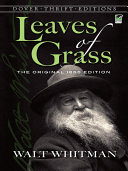
Leaves of Grass
Leaves of Grass by Walt Whitman (1855-1891)
"I celebrate myself, and sing myself." The most revolutionary collection of poetry in American literature. Whitman reinvented poetry with his free verse, sensual imagery, and democratic vision that embraced all of America.
Historical Significance:
Whitman self-published the first edition of Leaves of Grass in 1855 — just 12 poems, including "Song of Myself." He spent the rest of his life revising and expanding it through nine editions, the final "deathbed edition" appearing in 1891-92 with nearly 400 poems. Ralph Waldo Emerson greeted the first edition with a famous letter: "I greet you at the beginning of a great career." The book scandalized America with its frank sexuality and was banned in Boston. Whitman's free verse — no rhyme, no meter, just the rhythm of speech — broke open English-language poetry and made possible everything from Allen Ginsberg to hip-hop.
This public domain classic was originally published in 1855. Free to read and share.
Free

eBook
FREE
The Raven
The Raven by Edgar Allan Poe
A grieving speaker receives a midnight visit from a raven whose repeated answer deepens his sorrow.
This edition contains the complete single poem The Raven. It is not The Raven and Other Poems and does not include Annabel Lee, The Bells, Lenore, To Helen or other poems.
Retained text source: Project Gutenberg ebook 1065.
Free
No classics match your filters.