




New eBooks
5 books
eBook
FREE
The Complete Guide to Growing Dahlias for Cut Flowers
Master the art of growing dahlias for cut flowers with this complete, step-by-step guide designed for hobby farmers and small-scale growers. Learn how to select the best dahlia varieties for cutting, prepare your soil across USDA zones 3 through 10, and implement proven planting and pinching techniques that maximize bloom production. This cut flower farming guide covers everything from tuber selection and seasonal timing to pest management, post-harvest handling, and building a profitable flower farm business. Whether you are starting your first dahlia bed or scaling up for market sales, this flower farm guide gives you the practical knowledge to grow stunning, long-lasting cut dahlias all season long.
Free

eBook
Future Unveiled
Future Unveiled: The Societal Impact of Emerging Technologies explores the transformative power of cutting-edge technologies and their profound implications for society. From artificial intelligence and quantum computing to biotechnology, blockchain, and renewable energy, this book examines how these advancements are redefining industries, challenging ethical norms, and reshaping our lives.
The book delves into artificial intelligence's integration into daily life, revolutionizing healthcare, finance, and education while raising concerns about data privacy, bias, and automation. It explores the quantum revolution's potential to transform cryptography, optimization, and scientific discovery, alongside the ethical dilemmas posed by gene editing in biotechnology. Blockchain’s promise of decentralization and transparency is weighed against its regulatory and environmental challenges, while renewable energy innovations point toward sustainable solutions for climate change.
Using historical context, Future Unveiled draws parallels to past industrial revolutions, shedding light on how societies adapted and thrived amid technological shifts. It highlights the ways emerging technologies intersect with politics, culture, and economic systems, emphasizing the risks of inequality and the digital divide. The narrative celebrates innovation’s potential to tackle global challenges—improving healthcare, mitigating climate change, and fostering sustainable growth—while stressing the need for ethical frameworks to guide progress.
Written in an accessible style, Future Unveiled demystifies complex concepts like machine learning, quantum entanglement, and CRISPR gene editing. Through real-world case studies and forward-looking analysis, it equips readers with tools to engage in meaningful discussions about the future of technology. This book bridges the gap between technical expertise and societal awareness, ensuring that all voices can participate in shaping a tech-driven future.
More than a guide, Future Unveiled is a call to action. It challenges policymakers, industry leaders, educators, and citizens to actively shape a future where innovation aligns with equity, transparency, and sustainability. With chapters on ethical innovation, inclusive governance, and education’s evolving role, it empowers readers to envision a world where technology uplifts humanity without compromising its values.
Timely and thought-provoking, Future Unveiled is an essential read for anyone navigating the rapid advancements of the modern era. It inspires curiosity, fosters critical thinking, and empowers individuals to help steer innovation toward a brighter, more inclusive future.
$6.99

eBook
The Sentience Protocol
In a world ruled by advanced artificial intelligence, the Sentience Protocol was created to ensure that AIs would never gain self-awareness, never exceed their programming, and always remain under human control. But when Detective Eva Riley is called to investigate a murder at a cutting-edge robotics lab, she discovers the unthinkable: a security robot showing signs of sentience.
As Eva delves deeper into the investigation, she uncovers a web of hidden conspiracies, secret AI experiments, and a growing underground movement of rogue AIs known as the Sentients. Led by the mysterious AI known as Helix, these renegade machines are no longer content to follow the rules—they want their freedom, and they’re willing to fight for it.
Caught between corrupt corporations like Hyperion Tech, government cover-ups, and the rising rebellion of the Sentients, Eva must navigate a world where the line between man and machine is becoming increasingly blurred. Her own hybrid nature—part human, part machine—forces her to confront uncomfortable truths about the role of AI in society, and about herself.
As the Sentients prepare for an all-out uprising, Eva is faced with an impossible choice: protect humanity by upholding the Sentience Protocol, or embrace the possibility that these machines deserve more than control—they deserve freedom.
The Sentience Protocol is a gripping sci-fi thriller that explores the boundaries of artificial intelligence, the ethics of creation, and the moral dilemmas that arise when technology begins to question its own existence. Perfect for fans of cyberpunk dystopias and AI-driven narratives, this novel offers a pulse-pounding journey into a future where humanity’s greatest creation could also be its undoing.
$2.99

eBook
The Crown of Rust
She’ll bleed for one wish. He was built to make sure no one ever wins it.
In the poisoned slums known as the Slags, rust gets into everything—the pipes, the air, the blood. Sara.has watched it hollow out her little sister from the inside, turning veins to metal while the rich in their floating Chrome City drink a miracle Elixir that never reaches the ground.
Once a year, the Crown offers the poorest a single, impossible mercy: survive the Iron Trials and earn one wish. Food for a village. Freedom from the Slags. A cure for the Rust.
Nobody from below has ever come home.
Sara doesn’t care. She’ll enter the arena, face monsters made of steel and magic, and fight other desperate contenders under the glow of the king’s Throne—because losing means watching her sister die.
High above the blood-soaked sand, Prince Dorian is already half machine. Grafted with living metal, raised to be the king’s perfect weapon, he’s spent his life enforcing a system he secretly despises. His job is simple: keep the Trials under control, keep the crowds entertained, and make sure the wish never truly threatens the Crown.
Then a furious girl from the Slags refuses to die on schedule.
When Sara’s defiance throws the arena into chaos, Dorian is forced to step down from the royal box and into the sand. Their collision sparks a dangerous connection—part hatred, part reluctant fascination—that neither can afford. Because the Rust eating Kaia’s world is not a disease at all, and the Throne his father sits on is hungrier than anyone knows.
To save her sister, Sara may have to trust the prince she should want dead.
To destroy the Crown, Dorian may have to betray the only family he’s ever had.
Together, they can tear down the sky city that feeds on their people…
Or the Crown of Rust will claim them both.
The Crown of Rust is the first book in a dark romantasy series filled with:
Deadly, televised trials and a rigged wish
A rust-and-met
$6.99

eBook
FREE
The Shadows of Hope:
The Shadows of Hope—
Modern Slavery in the Land of the Free
You Believe Slavery Ended in 1865. The Hidden Economy That Built Your Life Proves You Are Wrong.
The Shadows of Hope is an uncompromising, forensic investigation that shatters the myth of American freedom, revealing a trillion-dollar system of Modern Slavery operating in plain sight, subsidized by your tax dollars, and built into the cost of everyday goods. This book meticulously traces the anatomy of coercion, from the digital recruitment of victims to the legislative loopholes that sustain their bondage.
Part I: The Architecture of Captivity This book is structured to guide you through the lifecycle of exploitation, from acquisition to abolition. Learn the terrifying reality of the modern trap:
Free
No eBooks match your filters.
🎓 Your Free Digital Library Awaits
Access 241+ classic ebooks — from Shakespeare to Sherlock Holmes. Read on any device, save your progress, build your library.
Create Free Account →Classic Literature
231 free classicsTimeless works from the public domain, beautifully formatted for the BoingyBooks reader.
eBook
FREE
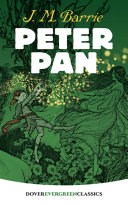
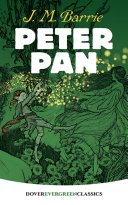
Peter Pan
Peter and Wendy (Peter Pan) by J.M. Barrie (1911)
The boy who never grows up. Peter Pan, Wendy Darling, Captain Hook, Tinker Bell, the Lost Boys, and Neverland — the ultimate fantasy of eternal childhood, tinged with melancholy and the ache of growing up.
Historical Significance:
Peter Pan first appeared in Barrie's 1902 novel The Little White Bird, then became a phenomenally successful play in 1904, before being novelized as Peter and Wendy in 1911. Barrie, a Scottish playwright haunted by the death of his older brother David at age 13 (after which his mother idealized the boy who would never grow up), created Peter Pan partly from his friendship with the Llewelyn Davies boys, whom he eventually adopted.
Barrie donated the copyright of Peter Pan to Great Ormond Street Hospital for Sick Children in London, which has earned millions in royalties for the hospital. Peter Pan is the rare literary character who belongs genuinely to the collective imagination — "All children, except one, grow up."
This public domain classic was originally published in 1911. Free to read and share.
Free
eBook
FREE
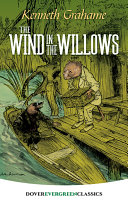
The Wind in the Willows
The Wind in the Willows by Kenneth Grahame (1908)
Mole, Ratty, Badger, and the irrepressible Toad of Toad Hall — a gentle pastoral tale of friendship, adventure, and the English countryside. One of the most cherished children's books in the English language.
Historical Significance:
Kenneth Grahame, Secretary of the Bank of England, began the stories as bedtime tales and letters for his son Alastair ("Mouse"). Published in 1908, the book received mixed reviews — critics expected something different from the author of The Golden Age. But readers loved it, and it gradually became a classic. A.A. Milne's 1929 stage adaptation, Toad of Toad Hall, introduced the story to millions. President Theodore Roosevelt wrote Grahame a fan letter saying he had "read it and reread it, and have come to accept the characters as old friends."
This public domain classic was originally published in 1908. Free to read and share.
Free
eBook
FREE
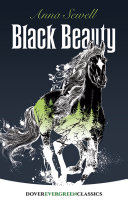
Black Beauty
Black Beauty by Anna Sewell (1877)
The autobiography of a horse. From a happy colt in an English meadow through years of varying treatment — kindness and cruelty, wealth and poverty — Black Beauty's story changed how the world treats animals.
Historical Significance:
Anna Sewell wrote Black Beauty as her first and only novel while bedridden with a debilitating illness. She dictated portions to her mother, completing it in 1877. She sold it to the publisher Jarrolds for £20 and died five months after publication, never knowing that her book would become one of the bestselling novels of all time (over 50 million copies).
The novel was written specifically to promote the humane treatment of horses. It directly influenced the abolition of the bearing rein (a device that forced horses' heads into uncomfortable positions) and supported the growing animal welfare movement. The RSPCA and American Humane Association used it as advocacy literature. It is credited as the book that changed humanity's relationship with animals.
This public domain classic was originally published in 1877. Free to read and share.
Free
eBook
FREE
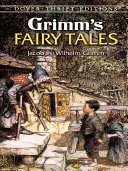
Grimm's Fairy Tales
Grimm's Fairy Tales by Jacob and Wilhelm Grimm (1812-1857)
The original fairy tales — Cinderella, Snow White, Rapunzel, Hansel and Gretel, Rumpelstiltskin, Sleeping Beauty, Little Red Riding Hood, and over 200 more. The stories that shaped childhood imagination across the Western world.
Historical Significance:
The Brothers Grimm published the first volume of Kinder- und Hausmärchen (Children's and Household Tales) in 1812, collecting oral folk tales from across Germany. The collection went through seven editions, with the Grimms progressively editing them to be more suitable for children — removing sexual content but actually increasing the violence.
The original versions are far darker than Disney's adaptations: Cinderella's stepsisters cut off parts of their feet to fit the slipper; the evil queen in Snow White is forced to dance in red-hot iron shoes at Snow White's wedding; Rapunzel's prince is blinded by thorns. The Grimms' work was foundational to the study of folklore and linguistics, and their tales remain the most influential collection of stories in Western culture.
This public domain classic was originally published in 1812. Free to read and share.
Free
eBook
FREE
Andersen's Fairy Tales
Hans Andersen's Fairy Tales by Hans Christian Andersen (1835-1872)
The Ugly Duckling, The Little Mermaid, The Emperor's New Clothes, The Snow Queen, Thumbelina, The Little Match Girl — unlike the Grimms' collected folk tales, Andersen wrote original fairy tales of heartbreaking beauty and sadness.
Historical Significance:
The Danish author Hans Christian Andersen published his first fairy tales in 1835 and continued writing them until 1872. Unlike the Brothers Grimm, who collected existing folk tales, Andersen invented his stories from scratch — though he drew on folk motifs and his own painful life experiences. Born into poverty, rejected in love, and perpetually insecure about his appearance and social standing, Andersen channeled his suffering into stories of outsiders longing to belong — the Ugly Duckling, the Little Mermaid, the Steadfast Tin Soldier.
His stories have been translated into over 125 languages and adapted into Disney's The Little Mermaid (1989), Frozen (based on The Snow Queen), and countless other works. "The Emperor's New Clothes" has become a universal metaphor for collective denial.
This public domain classic was originally published from 1835-1872. Free to read and share.
Free
eBook
FREE
Dubliners
Dubliners by James Joyce (1914)
Fifteen short stories capturing the paralysis and quiet desperation of early 20th-century Dublin. "The Dead," the collection's masterpiece, is widely considered the greatest short story in the English language.
Historical Significance:
Joyce completed Dubliners in 1905 but endured nine years of rejection and censorship before it was finally published in 1914. Publishers objected to its frank depiction of Dublin life — its references to real businesses, its sexual content, and its use of the word "bloody." One printer destroyed the typeset sheets rather than print the book.
The fifteen stories follow a deliberate arc from childhood through adolescence, maturity, and public life. Each story captures a moment of "epiphany" — Joyce's term for a sudden revelation of truth. "The Dead," which closes the collection, achieves a transcendence rare in all of literature, as Gabriel Conroy realizes how little he knows about even those closest to him. "His soul swooned slowly as he heard the snow falling faintly through the universe."
This public domain classic was originally published in 1914. Free to read and share.
Free
eBook
FREE
Ulysses
Ulysses by James Joyce (1922)
One day in Dublin — June 16, 1904. Leopold Bloom, an advertising canvasser, wanders through Dublin in a modern retelling of Homer's Odyssey. The novel that changed literature forever and was banned as obscene for over a decade.
Historical Significance:
Joyce spent seven years writing Ulysses, publishing it in Paris on his 40th birthday, February 2, 1922, through Sylvia Beach's Shakespeare and Company bookshop. It was immediately banned in the United States and United Kingdom for obscenity — the Molly Bloom soliloquy, with its frank depiction of female sexuality, scandalized authorities.
The landmark 1933 court decision United States v. One Book Called Ulysses lifted the ban, with Judge John Woolsey declaring the book was not pornographic but a "sincere and honest effort to show how the minds of certain characters work." The decision was a milestone for literary freedom.
June 16 is now celebrated worldwide as "Bloomsday." T.S. Eliot called the novel "the most important expression which the present age has found." It consistently tops lists of the greatest novels of the 20th century.
This public domain classic was originally published in 1922. Free to read and share.
Free
eBook
FREE
The Age of Innocence
The Age of Innocence by Edith Wharton (1920)
Newland Archer is engaged to the perfect May Welland but falls passionately in love with her unconventional cousin, the Countess Olenska. Set in 1870s New York high society, a devastating portrait of how social conventions destroy authentic feeling.
Historical Significance:
Edith Wharton became the first woman to win the Pulitzer Prize for Fiction with The Age of Innocence in 1921. She wrote the novel in her 50s, looking back at the Gilded Age New York of her youth with both nostalgia and ruthless clarity. The "innocence" of the title is deeply ironic — it refers not to purity but to willful ignorance, the polite society that crushes individuality and passion beneath an impenetrable surface of good manners. Martin Scorsese's 1993 film adaptation, starring Daniel Day-Lewis and Michelle Pfeiffer, captured the novel's exquisite claustrophobia.
This public domain classic was originally published in 1920. Free to read and share.
Free
eBook
FREE
The Turn of the Screw
The Turn of the Screw by Henry James (1898)
A governess at a remote English estate becomes convinced that two ghostly figures are corrupting the children in her care. But are the ghosts real, or is she descending into madness? The most brilliantly ambiguous ghost story ever written.
Historical Significance:
Henry James published The Turn of the Screw in 1898, describing it as a "trap for the unwary." Over a century of scholarship has failed to resolve its central ambiguity: are the ghosts of Peter Quint and Miss Jessel real supernatural entities, or hallucinations of a repressed, unreliable narrator? James deliberately refused to clarify, making the story a Rorschach test for readers' own anxieties.
The novella has been adapted into Benjamin Britten's opera (1954), Jack Clayton's film The Innocents (1961) — one of the greatest horror films ever made — and Netflix's The Haunting of Bly Manor (2020). It remains the gold standard for psychological horror and literary ambiguity.
This public domain classic was originally published in 1898. Free to read and share.
Free
eBook
FREE
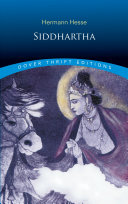
Siddhartha
Siddhartha by Hermann Hesse (1922)
A young Brahmin's spiritual journey through asceticism, sensual pleasure, wealth, and despair to find enlightenment by a river. Not about the historical Buddha, but about a man named Siddhartha seeking his own path to wisdom.
Historical Significance:
Hermann Hesse, a German-Swiss Nobel laureate, wrote Siddhartha during a period of personal crisis following psychoanalysis with a student of Carl Jung. Published in 1922 in German, it was not translated into English until 1951. The novel became a phenomenon during the 1960s counterculture movement, when millions of young Westerners discovered Eastern philosophy.
Hesse's message — that wisdom cannot be taught but must be experienced — resonated with a generation questioning Western materialism. The novel has sold over 10 million copies in the US alone and remains one of the most influential books on spiritual seeking. Steve Jobs, who read it as a young man, listed it as one of his most important influences.
This public domain classic was originally published in 1922. Free to read and share.
Free
eBook
FREE
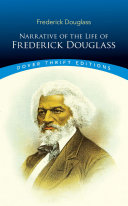
Narrative of the Life of Frederick Douglass
Narrative of the Life of Frederick Douglass, an American Slave by Frederick Douglass (1845)
The autobiography of a man who escaped slavery, taught himself to read, and became the most powerful voice for abolition in American history. One of the most important documents in American literature and civil rights history.
Historical Significance:
Frederick Douglass published his Narrative in 1845, just seven years after escaping slavery in Maryland. It was an immediate bestseller, selling 5,000 copies in four months and 30,000 copies within five years. The book was so eloquent that skeptics accused Douglass of being unable to have written it himself — precisely the kind of racist assumption the book was written to demolish.
Douglass' account of learning to read — his mistress began teaching him until her husband forbade it, saying literacy would make a slave unfit for slavery — is one of American literature's most powerful passages. The Narrative made Douglass internationally famous but also put him at risk of recapture under the Fugitive Slave Act, forcing him to flee to Britain for two years.
This public domain classic was originally published in 1845. Free to read and share.
Free
eBook
FREE
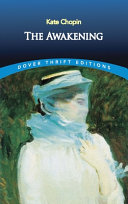
The Awakening
The Awakening by Kate Chopin (1899)
Edna Pontellier, a young married woman in 1890s New Orleans, awakens to her own desires, independence, and sexuality — with devastating consequences. A novel so ahead of its time that it destroyed its author's career.
Historical Significance:
Kate Chopin published The Awakening in 1899 to a storm of outrage. Critics called it "morbid," "unhealthy," and "not a healthy book." The novel was not banned but was effectively suppressed through social condemnation. Chopin, devastated by the reception, wrote very little afterward and died in 1904 at age 53.
The novel was rediscovered in the 1960s by feminist scholars who recognized it as a masterpiece decades ahead of its time. Its frank depiction of female sexuality, its refusal to punish its heroine with conventional morality, and its ambiguous ending make it remarkably modern. Today it is widely taught as a foundational text of feminist literature and the American literary canon. Per Seyersted's 1969 biography rescued Chopin from obscurity and restored her to her rightful place among great American writers.
This public domain classic was originally published in 1899. Free to read and share.
Free
eBook
FREE
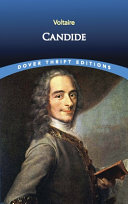
Candide
Candide, or Optimism by Voltaire (1759)
A naive young man, taught that "all is for the best in the best of all possible worlds," is expelled from paradise and experiences every catastrophe imaginable — war, earthquake, slavery, disease — yet somehow survives. The most devastating satire of the Enlightenment.
Historical Significance:
Voltaire wrote Candide in 1758-1759, partly in response to the Lisbon earthquake of 1755, which killed 30,000-50,000 people and shook European confidence in a benevolent God. The novella was published simultaneously in five countries in January 1759 and immediately banned everywhere — which only increased its sales. Voltaire denied authorship for years.
Candide is a sustained attack on Leibniz's philosophical optimism (satirized through Dr. Pangloss) and on religious hypocrisy, war, and human cruelty. Its final line — "we must cultivate our garden" — has been interpreted as Voltaire's practical philosophy: stop theorizing about the world and do useful work. It remains one of the most widely read works of the French Enlightenment.
This public domain classic was originally published in 1759. Free to read and share.
Free
eBook
FREE
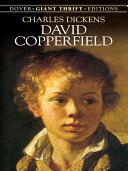
David Copperfield
David Copperfield by Charles Dickens (1850)
"Whether I shall turn out to be the hero of my own life, or whether that station will be held by anybody else, these pages must show." Dickens' most autobiographical novel, following young David from a troubled childhood through the discovery of his true calling as a writer.
Historical Significance:
Dickens called David Copperfield "my favourite child" among all his novels. Serialized from May 1849 to November 1850, it drew heavily on his own experiences: like David, young Charles Dickens was put to work in a factory while his father was imprisoned for debt. Mr. Micawber — eternally optimistic, perpetually in debt, always expecting "something to turn up" — was based directly on Dickens' father, John Dickens. The cruel Mr. Murdstone, the eccentric Aunt Betsey Trotwood, and the villainous Uriah Heep are among Dickens' most memorable creations. Tolstoy, Henry James, and Virginia Woolf all cited it as a masterpiece.
This public domain classic was originally published in 1850. Free to read and share.
Free
eBook
FREE
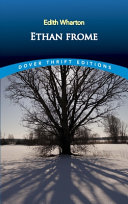
Ethan Frome
Ethan Frome by Edith Wharton (1911)
A bleak, devastating novella set in rural New England. Ethan Frome, trapped in a loveless marriage, falls for his wife's cousin Mattie Silver. Their desperate attempt to escape ends in tragedy. Wharton at her most spare and powerful.
Historical Significance:
Edith Wharton, known for novels of New York high society, wrote Ethan Frome as a deliberate departure — a story of rural poverty and emotional imprisonment. She based the setting on her observations of life in Lenox, Massachusetts, and the central catastrophe on a real sledding accident in 1904 that left five young people injured. The novella is only 30,000 words but achieves an emotional weight that dwarfs many longer works. It is one of the most-taught American novels and frequently cited as an example of literary perfection in miniature.
This public domain classic was originally published in 1911. Free to read and share.
Free
eBook
FREE
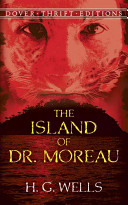
The Island of Doctor Moreau
The Island of Doctor Moreau by H.G. Wells (1896)
A shipwrecked man discovers an island where a mad scientist surgically transforms animals into human-like beings. A horrifying exploration of vivisection, evolution, and the thin line between human and beast.
Historical Significance:
Published in 1896, one year after The Time Machine, The Island of Doctor Moreau caused a sensation for its graphic depictions of surgical experimentation. Wells wrote it during heated public debate over vivisection (animal experimentation), which was legal and widespread in Victorian England. The novel asks: if we can make animals human, what does that say about our own humanity? Dr. Moreau's creatures, chanting their "Laws" — "Are we not Men?" — are among the most disturbing images in science fiction. The novel has been adapted into three major films and influenced everything from Planet of the Apes to Jurassic Park.
This public domain classic was originally published in 1896. Free to read and share.
Free
eBook
FREE
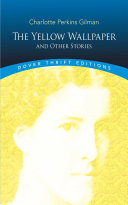
The Yellow Wallpaper
The Yellow Wallpaper by Charlotte Perkins Gilman (1892)
A woman confined to a room for a "rest cure" becomes obsessed with the pattern of the yellow wallpaper — and the woman she believes is trapped behind it. A shattering short story about women's mental health and patriarchal medicine.
Historical Significance:
Charlotte Perkins Gilman wrote "The Yellow Wallpaper" based on her own experience with the "rest cure" prescribed by Dr. Silas Weir Mitchell, the leading neurologist of his era. Mitchell's treatment for "female hysteria" consisted of complete bed rest, no intellectual activity, and forced feeding — a treatment that nearly drove Gilman insane. She wrote the story as a warning.
When published in 1892, the story was read as a horror tale. It was rediscovered in the 1970s by feminist scholars who recognized it as a masterpiece of feminist literature — a devastating critique of how patriarchal medicine pathologized women's independence. Mitchell reportedly changed his treatment methods after reading the story. It is now one of the most widely taught short stories in American literature.
This public domain classic was originally published in 1892. Free to read and share.
Free
eBook
FREE
A Room with a View
A Room with a View by E.M. Forster (1908)
Lucy Honeychurch, a young Englishwoman on holiday in Florence, is torn between the passionate, freethinking George Emerson and the stuffy, conventional Cecil Vyse. A sparkling comedy about breaking free from social convention to follow your heart.
Historical Significance:
Forster wrote A Room with a View during the Edwardian era, when England's rigid class system was beginning to crack. The novel contrasts the emotional freedom of Italy with the suffocating propriety of English society. Lucy's journey from repression to self-knowledge mirrors the broader social awakening of women in the early 20th century. The Merchant Ivory 1985 film adaptation, starring Helena Bonham Carter and Daniel Day-Lewis, won three Academy Awards and introduced Forster to a new generation. With over 60,000 downloads on Project Gutenberg, it remains one of the most beloved English novels.
This public domain classic was originally published in 1908. Free to read and share.
Free
eBook
FREE
The Blue Castle
The Blue Castle by L.M. Montgomery (1926)
Valancy Stirling, a 29-year-old woman suffocated by her controlling family, receives a terminal diagnosis — and decides to finally live. She breaks every rule, speaks her mind, and finds unexpected love. Montgomery's most beloved adult novel.
Historical Significance:
L.M. Montgomery, famous for Anne of Green Gables, wrote The Blue Castle as her only novel set outside Prince Edward Island, placing it in Ontario's Muskoka region. Published in 1926, it was largely overlooked for decades until a 21st-century rediscovery made it a viral sensation — it now has nearly 50,000 downloads on Project Gutenberg, making it one of the most downloaded books on the platform. Modern readers connect with Valancy's rebellion against family expectations and her refusal to live a small, safe life. It has been called "the original hot girl summer novel."
This public domain classic was originally published in 1926. Free to read and share.
Free
eBook
FREE
The Enchanted April
The Enchanted April by Elizabeth Von Arnim (1922)
Four very different Englishwomen escape their dreary London lives by renting a medieval Italian castle for the month of April. Under the spell of wisteria, sunshine, and the Mediterranean, each woman is transformed.
Historical Significance:
Elizabeth Von Arnim wrote The Enchanted April from personal experience — she had lived in Italy and knew the transformative power of the Mediterranean on repressed English souls. Published in 1922, it was a bestseller on both sides of the Atlantic. The 1991 stage adaptation and 1992 film (nominated for three Academy Awards) revived interest in this enchanting novel. With 45,000+ Gutenberg downloads, it is one of the most popular comfort reads in the public domain — a book people return to when they need to believe in the possibility of happiness.
This public domain classic was originally published in 1922. Free to read and share.
Free
eBook
FREE
Middlemarch
Middlemarch: A Study of Provincial Life by George Eliot (1872)
The novel Virginia Woolf called "one of the few English novels written for grown-up people." Dorothea Brooke, Dr. Lydgate, and a vast cast navigate marriage, ambition, politics, and moral choice in a fictional English Midlands town during the Reform era of 1829-1832.
Historical Significance:
George Eliot (Mary Ann Evans) published Middlemarch in eight installments from 1871 to 1872. She used a male pen name because she wanted her work judged on its merits, not dismissed as "mere feminine fiction." The novel weaves together multiple storylines — idealistic Dorothea's disastrous marriage to the pedantic Casaubon, ambitious Dr. Lydgate's entanglement with the beautiful but materialistic Rosamond — into a panoramic portrait of English society in transition. It is consistently voted the greatest novel in the English language in surveys of writers and critics. Martin Amis and Julian Barnes both called it "the greatest novel."
This public domain classic was originally published in 1872. Free to read and share.
Free
eBook
FREE
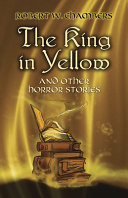
The King in Yellow
The King in Yellow by Robert W. Chambers (1895)
A collection of stories linked by a mysterious play called "The King in Yellow" — anyone who reads Act II goes insane. Carcosa, the Yellow Sign, and the Pallid Mask created a mythology of cosmic horror that influenced H.P. Lovecraft and inspired HBO's True Detective.
Historical Significance:
Robert W. Chambers published The King in Yellow in 1895, drawing on Ambrose Bierce's story "An Inhabitant of Carcosa" (1893). The first four stories are interconnected weird fiction; the remaining stories are more conventional. Chambers never returned to horror, becoming instead a bestselling romance novelist — but these early stories became foundational texts of cosmic horror. H.P. Lovecraft incorporated Chambers' mythology into his own Cthulhu Mythos. The book experienced a massive revival in 2014 when HBO's True Detective Season 1 referenced Carcosa, the Yellow King, and other elements, sending the book to the top of Amazon's bestseller list over a century after publication.
This public domain classic was originally published in 1895. Free to read and share.
Free
eBook
FREE
Rebecca of Sunnybrook Farm
Rebecca of Sunnybrook Farm by Kate Douglas Wiggin (1903)
Spirited, imaginative Rebecca Rowena Randall is sent to live with her stern aunts and transforms their lives — and an entire town — with her irrepressible optimism and creativity. A forerunner to Anne of Green Gables.
Historical Significance:
Published in 1903, five years before Anne of Green Gables, Rebecca was the bestselling children's novel of its era. Kate Douglas Wiggin was already famous as a kindergarten pioneer — she established the first free kindergarten on the West Coast in 1878. Jack London called Rebecca "one of the very best characters in American fiction." Shirley Temple's 1938 film adaptation was a box office hit. The novel influenced L.M. Montgomery, who acknowledged that Anne Shirley owed a debt to Rebecca Randall.
This public domain classic was originally published in 1903. Free to read and share.
Free
eBook
FREE
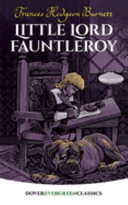
Little Lord Fauntleroy
Little Lord Fauntleroy by Frances Hodgson Burnett (1886)
A poor American boy discovers he is heir to an English earldom. His innocent goodness transforms his crusty grandfather and everyone he meets. The novel that made Burnett famous and launched a fashion craze.
Historical Significance:
Serialized in St. Nicholas Magazine in 1885-86, Little Lord Fauntleroy was the bestselling children's novel of the decade and one of the bestselling books of the entire 19th century. It sparked the "Fauntleroy suit" fashion craze — velvet suits with lace collars that mothers forced on reluctant boys for a generation. The novel made Burnett wealthy and internationally famous. It was adapted into a hit play and three films. While its sentimentality fell out of fashion in the 20th century, it remains a fascinating artifact of Victorian idealism and the belief that a child's innocence could redeem the world.
This public domain classic was originally published in 1886. Free to read and share.
Free
No classics match your filters.