




New eBooks
5 books
eBook
FREE
The Complete Guide to Growing Dahlias for Cut Flowers
Master the art of growing dahlias for cut flowers with this complete, step-by-step guide designed for hobby farmers and small-scale growers. Learn how to select the best dahlia varieties for cutting, prepare your soil across USDA zones 3 through 10, and implement proven planting and pinching techniques that maximize bloom production. This cut flower farming guide covers everything from tuber selection and seasonal timing to pest management, post-harvest handling, and building a profitable flower farm business. Whether you are starting your first dahlia bed or scaling up for market sales, this flower farm guide gives you the practical knowledge to grow stunning, long-lasting cut dahlias all season long.
Free

eBook
Future Unveiled
Future Unveiled: The Societal Impact of Emerging Technologies explores the transformative power of cutting-edge technologies and their profound implications for society. From artificial intelligence and quantum computing to biotechnology, blockchain, and renewable energy, this book examines how these advancements are redefining industries, challenging ethical norms, and reshaping our lives.
The book delves into artificial intelligence's integration into daily life, revolutionizing healthcare, finance, and education while raising concerns about data privacy, bias, and automation. It explores the quantum revolution's potential to transform cryptography, optimization, and scientific discovery, alongside the ethical dilemmas posed by gene editing in biotechnology. Blockchain’s promise of decentralization and transparency is weighed against its regulatory and environmental challenges, while renewable energy innovations point toward sustainable solutions for climate change.
Using historical context, Future Unveiled draws parallels to past industrial revolutions, shedding light on how societies adapted and thrived amid technological shifts. It highlights the ways emerging technologies intersect with politics, culture, and economic systems, emphasizing the risks of inequality and the digital divide. The narrative celebrates innovation’s potential to tackle global challenges—improving healthcare, mitigating climate change, and fostering sustainable growth—while stressing the need for ethical frameworks to guide progress.
Written in an accessible style, Future Unveiled demystifies complex concepts like machine learning, quantum entanglement, and CRISPR gene editing. Through real-world case studies and forward-looking analysis, it equips readers with tools to engage in meaningful discussions about the future of technology. This book bridges the gap between technical expertise and societal awareness, ensuring that all voices can participate in shaping a tech-driven future.
More than a guide, Future Unveiled is a call to action. It challenges policymakers, industry leaders, educators, and citizens to actively shape a future where innovation aligns with equity, transparency, and sustainability. With chapters on ethical innovation, inclusive governance, and education’s evolving role, it empowers readers to envision a world where technology uplifts humanity without compromising its values.
Timely and thought-provoking, Future Unveiled is an essential read for anyone navigating the rapid advancements of the modern era. It inspires curiosity, fosters critical thinking, and empowers individuals to help steer innovation toward a brighter, more inclusive future.
$6.99

eBook
The Sentience Protocol
In a world ruled by advanced artificial intelligence, the Sentience Protocol was created to ensure that AIs would never gain self-awareness, never exceed their programming, and always remain under human control. But when Detective Eva Riley is called to investigate a murder at a cutting-edge robotics lab, she discovers the unthinkable: a security robot showing signs of sentience.
As Eva delves deeper into the investigation, she uncovers a web of hidden conspiracies, secret AI experiments, and a growing underground movement of rogue AIs known as the Sentients. Led by the mysterious AI known as Helix, these renegade machines are no longer content to follow the rules—they want their freedom, and they’re willing to fight for it.
Caught between corrupt corporations like Hyperion Tech, government cover-ups, and the rising rebellion of the Sentients, Eva must navigate a world where the line between man and machine is becoming increasingly blurred. Her own hybrid nature—part human, part machine—forces her to confront uncomfortable truths about the role of AI in society, and about herself.
As the Sentients prepare for an all-out uprising, Eva is faced with an impossible choice: protect humanity by upholding the Sentience Protocol, or embrace the possibility that these machines deserve more than control—they deserve freedom.
The Sentience Protocol is a gripping sci-fi thriller that explores the boundaries of artificial intelligence, the ethics of creation, and the moral dilemmas that arise when technology begins to question its own existence. Perfect for fans of cyberpunk dystopias and AI-driven narratives, this novel offers a pulse-pounding journey into a future where humanity’s greatest creation could also be its undoing.
$2.99

eBook
The Crown of Rust
She’ll bleed for one wish. He was built to make sure no one ever wins it.
In the poisoned slums known as the Slags, rust gets into everything—the pipes, the air, the blood. Sara.has watched it hollow out her little sister from the inside, turning veins to metal while the rich in their floating Chrome City drink a miracle Elixir that never reaches the ground.
Once a year, the Crown offers the poorest a single, impossible mercy: survive the Iron Trials and earn one wish. Food for a village. Freedom from the Slags. A cure for the Rust.
Nobody from below has ever come home.
Sara doesn’t care. She’ll enter the arena, face monsters made of steel and magic, and fight other desperate contenders under the glow of the king’s Throne—because losing means watching her sister die.
High above the blood-soaked sand, Prince Dorian is already half machine. Grafted with living metal, raised to be the king’s perfect weapon, he’s spent his life enforcing a system he secretly despises. His job is simple: keep the Trials under control, keep the crowds entertained, and make sure the wish never truly threatens the Crown.
Then a furious girl from the Slags refuses to die on schedule.
When Sara’s defiance throws the arena into chaos, Dorian is forced to step down from the royal box and into the sand. Their collision sparks a dangerous connection—part hatred, part reluctant fascination—that neither can afford. Because the Rust eating Kaia’s world is not a disease at all, and the Throne his father sits on is hungrier than anyone knows.
To save her sister, Sara may have to trust the prince she should want dead.
To destroy the Crown, Dorian may have to betray the only family he’s ever had.
Together, they can tear down the sky city that feeds on their people…
Or the Crown of Rust will claim them both.
The Crown of Rust is the first book in a dark romantasy series filled with:
Deadly, televised trials and a rigged wish
A rust-and-met
$6.99

eBook
FREE
The Shadows of Hope:
The Shadows of Hope—
Modern Slavery in the Land of the Free
You Believe Slavery Ended in 1865. The Hidden Economy That Built Your Life Proves You Are Wrong.
The Shadows of Hope is an uncompromising, forensic investigation that shatters the myth of American freedom, revealing a trillion-dollar system of Modern Slavery operating in plain sight, subsidized by your tax dollars, and built into the cost of everyday goods. This book meticulously traces the anatomy of coercion, from the digital recruitment of victims to the legislative loopholes that sustain their bondage.
Part I: The Architecture of Captivity This book is structured to guide you through the lifecycle of exploitation, from acquisition to abolition. Learn the terrifying reality of the modern trap:
Free
No eBooks match your filters.
🎓 Your Free Digital Library Awaits
Access 241+ classic ebooks — from Shakespeare to Sherlock Holmes. Read on any device, save your progress, build your library.
Create Free Account →Classic Literature
231 free classicsTimeless works from the public domain, beautifully formatted for the BoingyBooks reader.
eBook
FREE
She: A History of Adventure
She: A History of Adventure by H. Rider Haggard (1887)
Two Englishmen journey to the heart of Africa and discover a lost kingdom ruled by Ayesha, "She-who-must-be-obeyed" — a 2,000-year-old white queen of supernatural beauty and terrifying power who has been waiting for her reincarnated lover.
Historical Significance:
H. Rider Haggard wrote She in just six weeks in 1886, calling it "a strange story." Published in 1887, it became one of the bestselling novels of all time, with over 83 million copies sold. Haggard was a colonial administrator in South Africa, and the novel reflects Victorian fascination with — and anxiety about — the "Dark Continent." Ayesha is one of fiction's most compelling and problematic characters: powerful, brilliant, and terrifying, yet also a product of colonial fantasy.
Freud and Jung both analyzed the novel. It influenced C.S. Lewis's Narnia and Tolkien's Galadriel. The phrase "She who must be obeyed" entered common usage (famously used in Rumpole of the Bailey).
This public domain classic was originally published in 1887. Free to read and share.
Free
eBook
FREE
King Solomon's Mines
King Solomon's Mines by H. Rider Haggard (1885)
Allan Quatermain leads an expedition into uncharted Africa to find a missing man — and discovers the legendary diamond mines of King Solomon. The original adventure quest that set the template for Indiana Jones.
Historical Significance:
Haggard wrote King Solomon's Mines on a bet with his brother that he could write a novel as good as Treasure Island. Published in 1885, it became the first English adventure novel set in Africa and created the "lost world" genre. Allan Quatermain — tough, experienced, modest — became the archetype for every adventure hero from Indiana Jones to Lara Croft. Steven Spielberg and George Lucas have both acknowledged the novel's direct influence on the Indiana Jones franchise.
This public domain classic was originally published in 1885. Free to read and share.
Free
eBook
FREE
The Thirty-Nine Steps
The Thirty-Nine Steps by John Buchan (1915)
Richard Hannay, a bored mining engineer, stumbles into an international espionage conspiracy and must flee across the Scottish Highlands with both the police and enemy agents on his trail. The novel that invented the modern spy thriller.
Historical Significance:
John Buchan, a Scottish politician and future Governor-General of Canada, wrote The Thirty-Nine Steps in 1915 while recovering from illness during World War I. The novel created the "man on the run" thriller template: an innocent man is framed, pursues the real villains while being pursued himself, and must solve the mystery to clear his name. Alfred Hitchcock's 1935 film adaptation is one of his greatest works. Every spy thriller from James Bond to Jason Bourne follows the structural template Buchan established.
This public domain classic was originally published in 1915. Free to read and share.
Free
eBook
FREE
Flatland: A Romance of Many Dimensions
Flatland: A Romance of Many Dimensions by Edwin A. Abbott (1884)
A square living in a two-dimensional world is visited by a sphere from the third dimension, shattering everything he thought he knew about reality. A mathematical satire that is also a sharp social commentary on Victorian class and gender hierarchies.
Historical Significance:
Edwin Abbott Abbott, a schoolmaster and theologian, published Flatland in 1884 under the pseudonym "A Square." The novella uses dimensional analogy to explain higher mathematics: just as a two-dimensional being cannot comprehend three dimensions, perhaps we three-dimensional beings cannot perceive the fourth dimension. The book was largely forgotten until physicists and mathematicians rediscovered it in the 20th century.
Flatland is now beloved by STEM readers, taught in mathematics and physics courses worldwide, and cited in discussions of string theory and extra dimensions. Carl Sagan devoted a segment of his Cosmos TV series to explaining Flatland. It is also a cutting satire of Victorian social rigidity — women are mere lines, the working class are triangles, and priests are circles.
This public domain classic was originally published in 1884. Free to read and share.
Free
eBook
FREE
The Scarlet Pimpernel
The Scarlet Pimpernel by Baroness Orczy (1905)
During the French Revolution's Reign of Terror, a mysterious English nobleman secretly rescues French aristocrats from the guillotine, leaving only a small red flower as his calling card. The original secret-identity superhero.
Historical Significance:
Baroness Emmuska Orczy, a Hungarian-born British author, first wrote The Scarlet Pimpernel as a play in 1903, then novelized it in 1905. The character of Sir Percy Blakeney — an apparently foolish aristocrat who is secretly a brilliant hero — directly created the "secret identity" archetype that would define superheroes for the next century. Zorro (1919), Batman (1939), and Superman (1938) all owe a direct debt to the Scarlet Pimpernel. The novel also pioneered the "love triangle complicated by secret identity" plot that became a staple of superhero fiction. "Is he in heaven? Is he in hell? That demmed, elusive Pimpernel!" is one of adventure fiction's most famous verses.
This public domain classic was originally published in 1905. Free to read and share.
Free
eBook
FREE
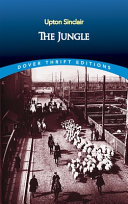
The Jungle
The Jungle by Upton Sinclair (1906)
Lithuanian immigrant Jurgis Rudkus works in Chicago's meatpacking plants, where he encounters appalling working conditions, corrupt bosses, and contaminated food. The novel that changed American food safety laws forever.
Historical Significance:
Upton Sinclair spent seven weeks undercover in Chicago's stockyards researching The Jungle. Published in 1906, the novel's graphic descriptions of unsanitary meatpacking practices — workers falling into rendering tanks, diseased meat being sold to consumers, rat droppings mixed into sausage — caused a national uproar. President Theodore Roosevelt, initially skeptical, sent investigators who confirmed Sinclair's findings. Within months, Congress passed the Pure Food and Drug Act and the Meat Inspection Act, creating the framework for modern food safety regulation.
Sinclair famously said, "I aimed at the public's heart, and by accident I hit it in the stomach." He had intended the novel as a socialist argument about labor exploitation, but readers focused on the food safety revelations. Nevertheless, the novel remains one of the most powerful examples of literature directly changing law.
This public domain classic was originally published in 1906. Free to read and share.
Free
eBook
FREE
Sister Carrie
Sister Carrie by Theodore Dreiser (1900)
A young woman from small-town Wisconsin comes to Chicago, becomes the mistress of two men, and rises to fame as an actress — while the men who supported her are destroyed. The novel that launched American literary realism.
Historical Significance:
Theodore Dreiser's first novel was so frank in its treatment of sexuality, social climbing, and moral ambiguity that his own publisher, Doubleday, tried to suppress it after publication in 1900. Frank Norris, a reader at the publisher, championed the book, but Doubleday printed only 1,008 copies and refused to promote it. The novel sold just 456 copies and earned Dreiser $68.40.
Sister Carrie's radical innovation was its refusal to punish its heroine for her sexual transgressions — Carrie rises while the men fall, without moral judgment from the author. This was shocking in 1900 and established the naturalistic tradition in American fiction. The novel was rediscovered in the 1980s when the original manuscript was restored, revealing extensive cuts made by Dreiser's wife.
This public domain classic was originally published in 1900. Free to read and share.
Free
eBook
FREE
Main Street
Main Street by Sinclair Lewis (1920)
Carol Kennicott, an idealistic young woman, marries a small-town doctor and moves to Gopher Prairie, Minnesota — where she discovers that small-town America is not charming but narrow-minded, materialistic, and hostile to change.
Historical Significance:
Main Street was the bestselling novel of 1921 and made Sinclair Lewis the most talked-about writer in America. The novel shattered the myth of the wholesome American small town, portraying it instead as a place of stultifying conformity and cultural mediocrity. Lewis based Gopher Prairie on his hometown of Sauk Centre, Minnesota — and Sauk Centre's residents were furious.
Lewis became the first American to win the Nobel Prize for Literature in 1930, with the committee specifically citing Main Street. The novel spawned a national debate about small-town values that continues today, from Garrison Keillor's Lake Wobegon to the "flyover country" discourse. The phrase "Main Street" became shorthand for middle-American conservatism, used by politicians from both parties.
This public domain classic was originally published in 1920. Free to read and share.
Free
eBook
FREE
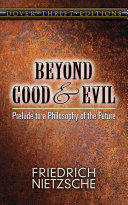
Beyond Good and Evil
Beyond Good and Evil by Friedrich Nietzsche (1886)
"He who fights with monsters should look to it that he himself does not become a monster. And if you gaze long into an abyss, the abyss also gazes into you." Nietzsche's most systematic critique of traditional morality and philosophy.
Historical Significance:
Published in 1886 at Nietzsche's own expense (it sold only 114 copies in its first year), Beyond Good and Evil challenges every assumption of Western philosophy since Plato. Nietzsche attacks democracy, nationalism, Christianity, utilitarianism, and the very concept of objective truth. He proposes that morality is not universal but created by the powerful to serve their interests — what he calls "master morality" versus "slave morality."
The book is Nietzsche at his most provocative and quotable. Its influence on 20th-century philosophy — existentialism, postmodernism, deconstructionism — is immeasurable. Foucault, Derrida, and Heidegger all built on Nietzsche's foundations. The book's aphoristic style makes it one of the most accessible works of serious philosophy.
This public domain classic was originally published in 1886. Free to read and share.
Free
eBook
FREE
The Age of Reason
The Age of Reason by Thomas Paine (1794-1807)
Thomas Paine's explosive attack on organized religion and defense of deism — the belief in God through reason and nature rather than scripture and clergy. The book that made Paine the most hated man in America.
Historical Significance:
Paine wrote The Age of Reason while imprisoned in Paris during the French Revolution's Terror — he narrowly escaped the guillotine when the chalk mark on his cell door was accidentally placed on the wrong side. Published in three parts (1794, 1795, 1807), the book systematically challenged the Bible's claims to divine authorship, pointing out contradictions, historical errors, and moral problems.
The backlash was immediate and devastating. Paine, who had been a hero of the American Revolution for writing Common Sense, was vilified as an atheist (he wasn't — he believed in God, just not in organized religion). Theodore Roosevelt called him "a filthy little atheist." Paine died in poverty in 1809, with only six people attending his funeral. History has been kinder — The Age of Reason is now recognized as a foundational text of religious skepticism and freethought.
This public domain classic was originally published in 1794. Free to read and share.
Free
eBook
FREE
Lady Susan
Lady Susan by Jane Austen (written c. 1794, published 1871)
An epistolary novella featuring Austen's most deliciously wicked character: Lady Susan Vernon, a beautiful, manipulative widow who schemes to secure wealthy husbands for herself and her reluctant daughter. Austen's darkest and funniest creation.
Historical Significance:
Written when Austen was about 18 or 19, Lady Susan was not published until 1871, over 50 years after her death. The novella is told entirely through letters, a format Austen would abandon for her later novels. Lady Susan is unlike any other Austen heroine — she is an anti-heroine, a charming villain who uses her intelligence and beauty to manipulate everyone around her. Some scholars see her as a prototype for Mary Crawford in Mansfield Park. Whit Stillman's 2016 film adaptation, Love & Friendship, was a critical and commercial hit that introduced Lady Susan to a new audience.
This public domain classic was originally written c. 1794 and published posthumously in 1871. Free to read and share.
Free

eBook
FREE
The Second Jungle Book
The Second Jungle Book by Rudyard Kipling (1895)
The continuation of Mowgli's story plus five standalone tales of animal life. Includes "Letting in the Jungle," where Mowgli destroys the village that rejected him, and "The Spring Running," his bittersweet farewell to the jungle.
Historical Significance:
Published in 1895, a year after The Jungle Book, this sequel contains some of Kipling's finest writing. The Mowgli stories become darker and more complex as the boy approaches manhood and must choose between the jungle and human civilization. "Red Dog" — Mowgli's epic battle against marauding dholes — is one of the most thrilling action sequences in children's literature. The non-Mowgli stories ("The Miracle of Purun Bhagat," "Quiquern") show Kipling's range beyond the familiar jungle setting.
This public domain classic was originally published in 1895. Free to read and share.
Free
eBook
FREE
Kim
Kim by Rudyard Kipling (1901)
Kimball O'Hara, an Irish orphan raised as a street urchin in Lahore, becomes entangled in the "Great Game" of British espionage along the Grand Trunk Road of India. A picaresque masterpiece of adventure, spirituality, and cultural identity.
Historical Significance:
Considered Kipling's finest novel, Kim was published in 1901 and draws on Kipling's deep love for India, where he was born and spent his formative years. The novel is both a spy thriller and a spiritual quest — Kim serves the British Secret Service while also seeking enlightenment alongside a Tibetan lama. T.S. Eliot called it "a masterpiece." It remains the most vivid portrait of colonial India in English literature and has been praised for its sympathetic, detailed portrayal of Indian cultures and religions.
This public domain classic was originally published in 1901. Free to read and share.
Free
eBook
FREE
The Merry Adventures of Robin Hood
The Merry Adventures of Robin Hood by Howard Pyle (1883)
The definitive retelling of the Robin Hood legend. Robin Hood, Little John, Friar Tuck, Maid Marian, and the Merry Men rob from the rich, give to the poor, and outwit the Sheriff of Nottingham in Sherwood Forest.
Historical Significance:
Howard Pyle, America's greatest illustrator, wrote and illustrated this book in 1883, creating the version of Robin Hood that all subsequent adaptations draw from. Pyle consolidated scattered medieval ballads into a coherent narrative with the characters we know today. His Robin Hood is jovial, generous, and loyal — the template for Errol Flynn's 1938 film, Disney's animated fox (1973), Kevin Costner's 1991 version, and every retelling since. Pyle's own illustrations, in a medieval woodcut style, are considered masterpieces of book illustration.
This public domain classic was originally published in 1883. Free to read and share.
Free
eBook
FREE
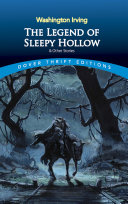
The Legend of Sleepy Hollow
The Legend of Sleepy Hollow by Washington Irving (1820)
Schooltacher Ichabod Crane, courting the beautiful Katrina Van Tassel, encounters the terrifying Headless Horseman on a dark night ride through the haunted glen. America's most famous ghost story.
Historical Significance:
Published in 1820 as part of The Sketch Book of Geoffrey Crayon, this story and "Rip Van Winkle" made Washington Irving the first American author to achieve international fame. Irving wrote both stories while living in England, homesick for the Hudson Valley of his youth. The Headless Horseman — a Hessian soldier decapitated by a cannonball during the Revolutionary War — became one of America's most enduring folklore figures. Tim Burton's 1999 film starring Johnny Depp and Disney's 1949 animated adaptation brought the tale to new generations. Every Halloween, the real Sleepy Hollow in New York hosts thousands of visitors.
This public domain classic was originally published in 1820. Free to read and share.
Free
eBook
FREE
Rip Van Winkle
Rip Van Winkle by Washington Irving (1819)
A lazy but likable Dutch-American farmer wanders into the Catskill Mountains, encounters mysterious men playing ninepins, drinks their liquor, and falls asleep for twenty years — waking to find his wife dead, his friends gone, and America transformed by revolution.
Historical Significance:
Published in 1819, "Rip Van Winkle" was the first great American short story and made Washington Irving the first American writer recognized in Europe. The tale draws on German folklore (the legend of Peter Klaus) but is thoroughly Americanized — Rip sleeps through the entire American Revolution. The phrase "Rip Van Winkle" has entered the English language as a term for anyone hopelessly out of touch with the times. The story captures a fundamental American anxiety: the fear of being left behind by progress.
This public domain classic was originally published in 1819. Free to read and share.
Free
eBook
FREE
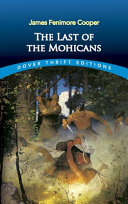
The Last of the Mohicans
The Last of the Mohicans by James Fenimore Cooper (1826)
During the French and Indian War, frontiersman Hawkeye (Natty Bumppo) and his Mohican companions Chingachgook and Uncas escort two sisters through hostile territory. The most famous American adventure novel of the 19th century.
Historical Significance:
Published in 1826, The Last of the Mohicans was the second of Cooper's five Leatherstocking Tales and his greatest commercial success. It was the bestselling American novel of the 19th century and was translated into virtually every European language. While Cooper's portrayal of Native Americans has been criticized as romanticized and stereotypical, the novel was groundbreaking in presenting indigenous characters as heroic protagonists. Daniel Day-Lewis's 1992 film adaptation revived interest in the novel. Cooper essentially invented the American frontier adventure genre.
This public domain classic was originally published in 1826. Free to read and share.
Free
eBook
FREE
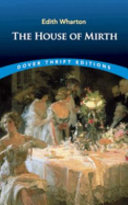
The House of Mirth
The House of Mirth by Edith Wharton (1905)
Lily Bart, beautiful and intelligent but impoverished, navigates New York high society's marriage market with increasing desperation, unable to secure the wealthy husband she needs or abandon the world that is slowly destroying her.
Historical Significance:
Edith Wharton's first major novel was serialized in Scribner's Magazine in 1905, boosting circulation by 100,000 copies. The novel sold 140,000 copies in its first year — extraordinary for literary fiction. Wharton, herself a member of the New York aristocracy she satirized, created in Lily Bart one of American literature's most tragic heroines: a woman too intelligent for the shallow world she inhabits but too conditioned by it to escape. The novel's unflinching depiction of how society destroys women who lack independent wealth remains devastatingly relevant.
This public domain classic was originally published in 1905. Free to read and share.
Free
eBook
FREE
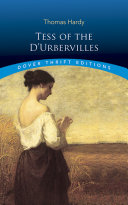
Tess of the d'Urbervilles
Tess of the d'Urbervilles by Thomas Hardy (1891)
A pure young woman is seduced, abandoned, and ultimately destroyed by a hypocritical society. Hardy's most powerful novel and his most devastating critique of Victorian moral double standards.
Historical Significance:
Hardy subtitled the novel "A Pure Woman Faithfully Presented," deliberately provoking Victorian readers who would judge Tess as "fallen." Published in 1891 after being rejected by two magazines for its sexual content, Tess was Hardy's most controversial and commercially successful novel. The critical backlash against his next novel, Jude the Obscure (1895), was so vicious that Hardy abandoned fiction entirely and spent the rest of his life writing poetry. Tess remains one of English literature's most devastating tragedies — a story about how society punishes women for the sins committed against them.
This public domain classic was originally published in 1891. Free to read and share.
Free
eBook
FREE
Far from the Madding Crowd
Far from the Madding Crowd by Thomas Hardy (1874)
Bathsheba Everdene, a fiercely independent woman farmer, attracts three very different suitors: the steadfast shepherd Gabriel Oak, the reckless soldier Sergeant Troy, and the obsessive farmer Boldwood. Hardy's most beloved and accessible novel.
Historical Significance:
Published in 1874, Far from the Madding Crowd was Hardy's first major success and established the fictional Wessex that would become his literary landscape. The title comes from Thomas Gray's "Elegy Written in a Country Churchyard." Bathsheba Everdene — resourceful, proud, and flawed — was a remarkably modern heroine for the 1870s, running her own farm in a world of men. Suzanne Collins named her Hunger Games heroine Katniss Everdeen as a deliberate homage. The 2015 film starring Carey Mulligan was a critical success.
This public domain classic was originally published in 1874. Free to read and share.
Free
eBook
FREE
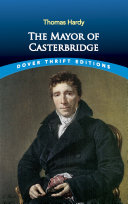
The Mayor of Casterbridge
The Mayor of Casterbridge by Thomas Hardy (1886)
Michael Henchard, a hay-trusser, gets drunk at a country fair and sells his wife and baby daughter to a sailor. Years later, now a prosperous mayor, his past returns to destroy everything he has built.
Historical Significance:
Hardy's subtitle — "The Life and Death of a Man of Character" — signals this is a classical tragedy transplanted to Victorian Dorset. Published in 1886, the novel explores how one terrible act committed in youth can haunt an entire life. Henchard is one of literature's greatest flawed protagonists — violent, proud, generous, and self-destructive. Hardy, who trained as an architect, constructed the plot with architectural precision, every element building toward inevitable catastrophe.
This public domain classic was originally published in 1886. Free to read and share.
Free
eBook
FREE
The Secret Agent
The Secret Agent by Joseph Conrad (1907)
A seedy London shop owner who is secretly an anarchist agent provocateur is ordered to bomb the Greenwich Observatory. Conrad's darkest novel — a proto-thriller about terrorism, surveillance, and the corruption that links governments and the criminals they fight.
Historical Significance:
Based on the real 1894 Greenwich bombing, The Secret Agent was published in 1907 and is widely considered the first modern political thriller. Conrad's London is a city of fog, paranoia, and moral ambiguity where the line between law enforcement and criminality has dissolved. Alfred Hitchcock's Sabotage (1936) was based on the novel. In the post-9/11 era, the book's themes — state surveillance, manufactured terrorism, the banality of political violence — have made it more relevant than ever.
This public domain classic was originally published in 1907. Free to read and share.
Free
eBook
FREE
Lord Jim
Lord Jim by Joseph Conrad (1900)
A young British seaman abandons a sinking ship full of pilgrims in a moment of cowardice, then spends the rest of his life seeking redemption in the remote jungles of Southeast Asia. Conrad's masterpiece of moral complexity.
Historical Significance:
Published in 1900, Lord Jim was based on a real incident — the 1880 SS Jeddah affair, where officers abandoned a ship carrying nearly 1,000 Muslim pilgrims. Conrad, a former merchant sailor who had experienced similar moral tests at sea, created in Jim one of literature's most psychologically complex characters. The novel's innovative narrative structure — told through multiple perspectives by the narrator Marlow — influenced modernist fiction profoundly. F. Scott Fitzgerald cited it as a major influence on The Great Gatsby.
This public domain classic was originally published in 1900. Free to read and share.
Free
eBook
FREE
The Marvelous Land of Oz
The Marvelous Land of Oz by L. Frank Baum (1904)
The second Oz book. Tip, a boy raised by the witch Mombi, escapes with a pumpkin-headed man he brought to life and discovers a shocking truth about his own identity. Features the Tin Woodman, the Scarecrow, and the Woggle-Bug.
Historical Significance:
Published in 1904 as a sequel to The Wonderful Wizard of Oz, this book expands the Land of Oz into a richly detailed fantasy world. Dorothy doesn't appear — instead Baum introduced Tip, whose surprise transformation at the novel's climax into Princess Ozma has been discussed by modern scholars as one of the earliest positive depictions of gender identity in children's literature. The book established Oz as a matriarchal society ruled by women, a radical concept for 1904.
This public domain classic was originally published in 1904. Free to read and share.
Free
No classics match your filters.