






New eBooks
5 books
eBook
FREE
The Complete Guide to Growing Dahlias for Cut Flowers
Master the art of growing dahlias for cut flowers with this complete, step-by-step guide designed for hobby farmers and small-scale growers. Learn how to select the best dahlia varieties for cutting, prepare your soil across USDA zones 3 through 10, and implement proven planting and pinching techniques that maximize bloom production. This cut flower farming guide covers everything from tuber selection and seasonal timing to pest management, post-harvest handling, and building a profitable flower farm business. Whether you are starting your first dahlia bed or scaling up for market sales, this flower farm guide gives you the practical knowledge to grow stunning, long-lasting cut dahlias all season long.
Free

eBook
Future Unveiled
Future Unveiled: The Societal Impact of Emerging Technologies explores the transformative power of cutting-edge technologies and their profound implications for society. From artificial intelligence and quantum computing to biotechnology, blockchain, and renewable energy, this book examines how these advancements are redefining industries, challenging ethical norms, and reshaping our lives.
The book delves into artificial intelligence's integration into daily life, revolutionizing healthcare, finance, and education while raising concerns about data privacy, bias, and automation. It explores the quantum revolution's potential to transform cryptography, optimization, and scientific discovery, alongside the ethical dilemmas posed by gene editing in biotechnology. Blockchain’s promise of decentralization and transparency is weighed against its regulatory and environmental challenges, while renewable energy innovations point toward sustainable solutions for climate change.
Using historical context, Future Unveiled draws parallels to past industrial revolutions, shedding light on how societies adapted and thrived amid technological shifts. It highlights the ways emerging technologies intersect with politics, culture, and economic systems, emphasizing the risks of inequality and the digital divide. The narrative celebrates innovation’s potential to tackle global challenges—improving healthcare, mitigating climate change, and fostering sustainable growth—while stressing the need for ethical frameworks to guide progress.
Written in an accessible style, Future Unveiled demystifies complex concepts like machine learning, quantum entanglement, and CRISPR gene editing. Through real-world case studies and forward-looking analysis, it equips readers with tools to engage in meaningful discussions about the future of technology. This book bridges the gap between technical expertise and societal awareness, ensuring that all voices can participate in shaping a tech-driven future.
More than a guide, Future Unveiled is a call to action. It challenges policymakers, industry leaders, educators, and citizens to actively shape a future where innovation aligns with equity, transparency, and sustainability. With chapters on ethical innovation, inclusive governance, and education’s evolving role, it empowers readers to envision a world where technology uplifts humanity without compromising its values.
Timely and thought-provoking, Future Unveiled is an essential read for anyone navigating the rapid advancements of the modern era. It inspires curiosity, fosters critical thinking, and empowers individuals to help steer innovation toward a brighter, more inclusive future.
$6.99

eBook
The Sentience Protocol
In a world ruled by advanced artificial intelligence, the Sentience Protocol was created to ensure that AIs would never gain self-awareness, never exceed their programming, and always remain under human control. But when Detective Eva Riley is called to investigate a murder at a cutting-edge robotics lab, she discovers the unthinkable: a security robot showing signs of sentience.
As Eva delves deeper into the investigation, she uncovers a web of hidden conspiracies, secret AI experiments, and a growing underground movement of rogue AIs known as the Sentients. Led by the mysterious AI known as Helix, these renegade machines are no longer content to follow the rules—they want their freedom, and they’re willing to fight for it.
Caught between corrupt corporations like Hyperion Tech, government cover-ups, and the rising rebellion of the Sentients, Eva must navigate a world where the line between man and machine is becoming increasingly blurred. Her own hybrid nature—part human, part machine—forces her to confront uncomfortable truths about the role of AI in society, and about herself.
As the Sentients prepare for an all-out uprising, Eva is faced with an impossible choice: protect humanity by upholding the Sentience Protocol, or embrace the possibility that these machines deserve more than control—they deserve freedom.
The Sentience Protocol is a gripping sci-fi thriller that explores the boundaries of artificial intelligence, the ethics of creation, and the moral dilemmas that arise when technology begins to question its own existence. Perfect for fans of cyberpunk dystopias and AI-driven narratives, this novel offers a pulse-pounding journey into a future where humanity’s greatest creation could also be its undoing.
$2.99

eBook
The Crown of Rust
She’ll bleed for one wish. He was built to make sure no one ever wins it.
In the poisoned slums known as the Slags, rust gets into everything—the pipes, the air, the blood. Sara.has watched it hollow out her little sister from the inside, turning veins to metal while the rich in their floating Chrome City drink a miracle Elixir that never reaches the ground.
Once a year, the Crown offers the poorest a single, impossible mercy: survive the Iron Trials and earn one wish. Food for a village. Freedom from the Slags. A cure for the Rust.
Nobody from below has ever come home.
Sara doesn’t care. She’ll enter the arena, face monsters made of steel and magic, and fight other desperate contenders under the glow of the king’s Throne—because losing means watching her sister die.
High above the blood-soaked sand, Prince Dorian is already half machine. Grafted with living metal, raised to be the king’s perfect weapon, he’s spent his life enforcing a system he secretly despises. His job is simple: keep the Trials under control, keep the crowds entertained, and make sure the wish never truly threatens the Crown.
Then a furious girl from the Slags refuses to die on schedule.
When Sara’s defiance throws the arena into chaos, Dorian is forced to step down from the royal box and into the sand. Their collision sparks a dangerous connection—part hatred, part reluctant fascination—that neither can afford. Because the Rust eating Kaia’s world is not a disease at all, and the Throne his father sits on is hungrier than anyone knows.
To save her sister, Sara may have to trust the prince she should want dead.
To destroy the Crown, Dorian may have to betray the only family he’s ever had.
Together, they can tear down the sky city that feeds on their people…
Or the Crown of Rust will claim them both.
The Crown of Rust is the first book in a dark romantasy series filled with:
Deadly, televised trials and a rigged wish
A rust-and-met
$6.99

eBook
FREE
The Shadows of Hope:
The Shadows of Hope—
Modern Slavery in the Land of the Free
You Believe Slavery Ended in 1865. The Hidden Economy That Built Your Life Proves You Are Wrong.
The Shadows of Hope is an uncompromising, forensic investigation that shatters the myth of American freedom, revealing a trillion-dollar system of Modern Slavery operating in plain sight, subsidized by your tax dollars, and built into the cost of everyday goods. This book meticulously traces the anatomy of coercion, from the digital recruitment of victims to the legislative loopholes that sustain their bondage.
Part I: The Architecture of Captivity This book is structured to guide you through the lifecycle of exploitation, from acquisition to abolition. Learn the terrifying reality of the modern trap:
Free
No eBooks match your filters.
🎓 Your Free Digital Library Awaits
Access 241+ classic ebooks — from Shakespeare to Sherlock Holmes. Read on any device, save your progress, build your library.
Create Free Account →Classic Literature
231 free classicsTimeless works from the public domain, beautifully formatted for the BoingyBooks reader.
eBook
FREE
The Prisoner of Zenda
The Prisoner of Zenda by Anthony Hope (1894)
An English gentleman on holiday in the fictional kingdom of Ruritania discovers he is the exact double of the king — and must impersonate him to save the throne. The original swashbuckling adventure romance.
Historical Significance:
Anthony Hope wrote The Prisoner of Zenda in just 30 days in 1894. It created the "Ruritanian romance" genre — adventure stories set in small fictional European kingdoms — that influenced everything from The Scarlet Pimpernel to Star Wars' Princess Leia storyline. The novel has been adapted into over a dozen films and inspired countless imitators. "Ruritania" entered the English language as a word for any small, romantically unstable European kingdom.
This public domain classic was originally published in 1894. Free to read and share.
Free
eBook
FREE
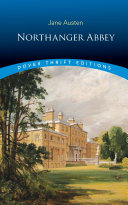
Northanger Abbey
Northanger Abbey by Jane Austen (1817)
Catherine Morland, an avid reader of Gothic novels, visits the ancient Northanger Abbey and lets her imagination run wild, suspecting her host of terrible crimes. Austen's delightful satire of Gothic fiction and the dangers of confusing novels with reality.
Historical Significance:
Austen wrote Northanger Abbey around 1798-99 (originally titled "Susan"), making it one of her earliest completed works, though it was published posthumously in December 1817 alongside Persuasion. The novel is both a loving parody of Gothic novels like Ann Radcliffe's The Mysteries of Udolpho and a sharp commentary on the expectations placed on young women. Catherine Morland is Austen's most naive heroine — her education through disillusionment is both comic and touching. The novel's defense of the novel as an art form ("only a novel!") remains one of the most important early statements of fiction's literary value.
This public domain classic was originally published posthumously in 1817. Free to read and share.
Free

eBook
FREE
Mansfield Park
Mansfield Park by Jane Austen (1814)
Fanny Price, a poor relation taken in by wealthy relatives, quietly observes their moral failures while struggling with her own feelings for her cousin Edmund. Austen's most morally complex and controversial novel.
Historical Significance:
Published in 1814, Mansfield Park divided readers from the start — and still does. Its heroine Fanny Price is passive, pious, and judgmental where Elizabeth Bennet is witty and bold. But Austen was doing something radical: showing that moral clarity and quiet strength are their own form of heroism. The novel addresses slavery (Sir Thomas Bertram's wealth comes from a plantation in Antigua), theatricality versus sincerity, and the corruption of London versus the stability of the countryside. Modern scholars consider it Austen's most sophisticated work, even if it is her least immediately lovable.
This public domain classic was originally published in 1814. Free to read and share.
Free

eBook
FREE
The Return of Sherlock Holmes
The Return of Sherlock Holmes by Arthur Conan Doyle (1905)
Holmes is alive! Thirteen stories marking the detective's triumphant return from the dead after "The Final Problem." Including "The Adventure of the Empty House," "The Adventure of the Dancing Men," and "The Adventure of the Six Napoleons."
Historical Significance:
After killing Holmes at Reichenbach Falls in 1893, Doyle resisted enormous pressure to revive him for ten years. The American magazine Collier's finally offered such a staggering sum ($45,000 for 13 stories — over $1.5 million today) that Doyle relented. "The Adventure of the Empty House," published in October 1903, caused a sensation — queues formed at newsstands, and The Strand Magazine's print run sold out immediately. Holmes' explanation of his survival (a fictional martial art called "baritsu") is one of the great hand-waving moments in literature.
This public domain classic was originally published in 1905. Free to read and share.
Free

eBook
FREE
The Memoirs of Sherlock Holmes
The Memoirs of Sherlock Holmes by Arthur Conan Doyle (1894)
Eleven stories including Holmes' apparent death at Reichenbach Falls in "The Final Problem" — the story that shocked the world and made 20,000 Strand Magazine subscribers cancel in protest.
Historical Significance:
Published in 1894, the Memoirs include some of the most celebrated Holmes stories: "Silver Blaze" (featuring the "curious incident of the dog in the night-time"), "The Musgrave Ritual," "The Greek Interpreter" (introducing Mycroft Holmes), and the devastating "Final Problem" where Holmes and Moriarty plunge together over the Reichenbach Falls. Doyle, tired of Holmes overshadowing his "serious" historical fiction, intended to kill the character permanently. London readers wore black mourning bands. The public outcry was so intense that Doyle eventually resurrected Holmes a decade later.
This public domain classic was originally published in 1894. Free to read and share.
Free

eBook
FREE
The Sign of the Four
The Sign of the Four by Arthur Conan Doyle (1890)
The second Sherlock Holmes novel. A young woman seeks Holmes' help after receiving mysterious pearls annually for six years following her father's disappearance. The case leads to a stolen Indian treasure, a one-legged convict, and a dramatic Thames river chase.
Historical Significance:
Commissioned at a dinner party where Doyle met Oscar Wilde (who was simultaneously commissioned to write The Picture of Dorian Gray), The Sign of the Four was published in Lippincott's Monthly Magazine in February 1890. It introduced Holmes' cocaine habit ("a seven-per-cent solution"), deepened his character with his famous observation that his brain "rebels at stagnation," and provided Watson with a wife — Mary Morstan. The novel's depiction of British colonialism in India and the theft of treasure reflects Victorian anxieties about empire.
This public domain classic was originally published in 1890. Free to read and share.
Free
eBook
FREE
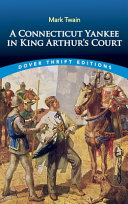
A Connecticut Yankee in King Arthur's Court
A Connecticut Yankee in King Arthur's Court by Mark Twain (1889)
A 19th-century American factory superintendent is knocked unconscious and wakes up in 6th-century Camelot, where he uses his modern knowledge to become "The Boss" — industrializing medieval England with guns, telephones, and democracy.
Historical Significance:
Twain's novel is simultaneously one of the earliest time travel stories, a savage satire of monarchy and aristocracy, and a prescient warning about the destructive power of technology. Published in 1889, it attacked the romanticization of the Middle Ages popularized by Tennyson's Idylls of the King. The novel's ending — where the Yankee's modern weapons massacre thousands of knights — is one of the darkest conclusions in American fiction, foreshadowing the industrialized slaughter of World War I by 25 years. Bing Crosby's 1949 musical film softened the story considerably.
This public domain classic was originally published in 1889. Free to read and share.
Free
eBook
FREE
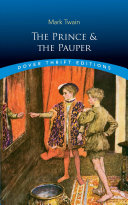
The Prince and the Pauper
The Prince and the Pauper by Mark Twain (1881)
Young Prince Edward VI and pauper Tom Canty, identical in appearance, swap places — the prince discovers the cruelty of poverty while the pauper struggles with the burden of power. Twain's first historical novel.
Historical Significance:
Set in 1547 England, The Prince and the Pauper was Twain's attempt to prove he could write "serious" literature beyond his humor. Published in 1881, it was his first novel set in England and his first attempt at historical fiction. The "switched identities" plot device, while not invented by Twain, was perfected here and has been imitated in hundreds of subsequent works from Disney's The Parent Trap to countless films. Twain's daughter Susy called it his best book. The novel's exploration of how circumstance shapes identity remains powerful.
This public domain classic was originally published in 1881. Free to read and share.
Free
eBook
FREE
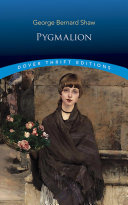
Pygmalion
Pygmalion by George Bernard Shaw (1913)
Professor Henry Higgins bets he can transform Cockney flower girl Eliza Doolittle into a duchess through elocution lessons. But Eliza has more to teach Higgins than he realizes. The play that became My Fair Lady.
Historical Significance:
Shaw wrote Pygmalion in 1912 and it premiered in Vienna in 1913, with its London premiere in 1914 starring Mrs. Patrick Campbell as Eliza. Shaw was furious when audiences wanted a romantic ending — he insisted the play was about class and language, not love. Despite his protests, the 1938 film added romantic elements, and the 1956 Lerner and Loewe musical My Fair Lady became one of the most successful musicals in history, winning eight Academy Awards in its 1964 film version. Shaw won the Nobel Prize for Literature in 1925, partly on the strength of Pygmalion.
This public domain classic was originally written in 1913. Free to read and share.
Free
eBook
FREE
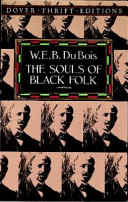
The Souls of Black Folk
The Souls of Black Folk by W.E.B. Du Bois (1903)
"The problem of the twentieth century is the problem of the color-line." A groundbreaking collection of essays on race, identity, and the African American experience that changed the course of American history.
Historical Significance:
W.E.B. Du Bois — the first African American to earn a Ph.D. from Harvard — published The Souls of Black Folk in 1903, directly challenging Booker T. Washington's accommodationist approach to racial progress. Du Bois introduced the concept of "double consciousness" — the psychological tension of being both Black and American — that remains central to understanding racial identity. The book's chapter on the death of his infant son is one of the most heartbreaking passages in American literature. The Souls of Black Folk helped inspire the Niagara Movement and the founding of the NAACP. Martin Luther King Jr., James Baldwin, and Ta-Nehisi Coates all cited it as a foundational influence.
This public domain classic was originally published in 1903. Free to read and share.
Free

eBook
FREE
Walden
Walden; or, Life in the Woods by Henry David Thoreau (1854)
"I went to the woods because I wished to live deliberately." Thoreau's account of two years spent in a cabin at Walden Pond, Massachusetts — the foundational text of simple living, self-reliance, and environmental consciousness.
Historical Significance:
Henry David Thoreau built a small cabin on land owned by his friend Ralph Waldo Emerson near Walden Pond in Concord, Massachusetts, living there from July 1845 to September 1847. The book, published in 1854, sold poorly during Thoreau's lifetime — only 2,000 copies in five years. Thoreau died in 1862 at age 44, largely forgotten.
Walden's influence grew steadily through the 20th century as environmental movements, counterculture, and minimalism embraced Thoreau's vision. It inspired Gandhi's philosophy of simple living, the back-to-the-land movement of the 1960s, and modern minimalism. "Simplify, simplify" and "the mass of men lead lives of quiet desperation" are among the most quoted lines in American literature.
This public domain classic was originally published in 1854. Free to read and share.
Free
eBook
FREE
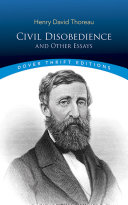
Civil Disobedience
Civil Disobedience by Henry David Thoreau (1849)
"That government is best which governs least." Thoreau's essay on the moral duty to resist unjust government — written after spending a night in jail for refusing to pay a poll tax in protest of slavery and the Mexican-American War.
Historical Significance:
Originally published as "Resistance to Civil Government" in 1849, this short essay became one of the most influential political texts in world history. Thoreau argued that individuals have a moral obligation to disobey unjust laws, even at personal cost. Mahatma Gandhi read it in a South African prison and credited it as a major inspiration for his campaign of nonviolent resistance. Martin Luther King Jr. read it as a student at Morehouse College and later wrote that it was his "first intellectual contact with the theory of nonviolent resistance." The essay has influenced every major civil rights and protest movement since.
This public domain classic was originally published in 1849. Free to read and share.
Free
eBook
FREE
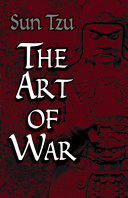
The Art of War
The Art of War by Sun Tzu (c. 5th century BC)
The oldest and most influential military strategy text ever written. "All warfare is based on deception." Thirteen chapters of strategic wisdom that transcend military application and are now studied in business schools, sports coaching, and leadership programs worldwide.
Historical Significance:
Attributed to Sun Tzu, a Chinese military general and strategist who may have lived around 544-496 BC during the Spring and Autumn period, The Art of War was compiled over centuries of military thought. The text was first translated into a European language (French) by Jesuit missionary Jean Joseph Marie Amiot in 1772. Napoleon reportedly studied it; the book was required reading for KGB agents during the Cold War.
In the late 20th century, The Art of War crossed over from military to business strategy. CEOs, athletes, lawyers, and politicians adopted its principles: "Know your enemy and know yourself," "Appear weak when you are strong," "The supreme art of war is to subdue the enemy without fighting." It remains one of the bestselling nonfiction books in the world.
This public domain classic was originally composed c. 5th century BC. Free to read and share.
Free
eBook
FREE
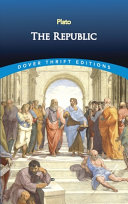
The Republic
The Republic by Plato (c. 380 BC)
The foundational text of Western philosophy. Socrates and his companions debate justice, the ideal state, the nature of the soul, and the famous Allegory of the Cave — where prisoners mistake shadows for reality.
Historical Significance:
Written around 380 BC as a Socratic dialogue, The Republic addresses the most fundamental question of political philosophy: what is justice? Plato's vision of the ideal state — ruled by philosopher-kings, with citizens divided into classes based on their nature — has been debated, admired, and condemned for 2,400 years. The Allegory of the Cave, in which prisoners chained in darkness mistake flickering shadows for reality, remains the most powerful metaphor for ignorance and enlightenment ever conceived. Every subsequent work of political philosophy, from Aristotle to Rawls, is in some way a response to The Republic.
This public domain classic was originally composed c. 380 BC. Free to read and share.
Free
eBook
FREE
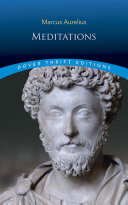
Meditations
Meditations by Marcus Aurelius (c. 161-180 AD)
The private journal of a Roman Emperor — never intended for publication. Marcus Aurelius' reflections on duty, mortality, self-discipline, and finding peace amid chaos. The most accessible and beloved work of Stoic philosophy.
Historical Significance:
Marcus Aurelius wrote the Meditations in Greek during his military campaigns on the Germanic frontier, between 170 and 180 AD. He was the last of the "Five Good Emperors" and the most powerful man in the world, yet his private writings reveal a man struggling with the same anxieties as anyone: anger, distraction, fear of death, and the search for meaning.
The Meditations were never meant to be read by anyone else — they are literally a man talking to himself. This intimacy is what makes them so powerful 1,800 years later. Bill Clinton, Tim Ferriss, and countless Silicon Valley executives cite Meditations as their most important book. The Stoic philosophy it contains — focus on what you can control, accept what you cannot — has become a cornerstone of modern self-help and cognitive behavioral therapy.
This public domain classic was originally written c. 170-180 AD. Free to read and share.
Free
eBook
FREE
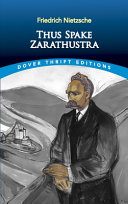
Thus Spoke Zarathustra
Thus Spoke Zarathustra by Friedrich Nietzsche (1883-1885)
"God is dead." The prophet Zarathustra descends from his mountain to teach humanity about the Übermensch (Superman), the eternal recurrence, and the will to power. Nietzsche's most ambitious and poetic work — part philosophy, part prophecy, part prose poem.
Historical Significance:
Nietzsche wrote Zarathustra in intense bursts of inspiration between 1883 and 1885, while wandering through Italy and Switzerland in near-poverty and failing health. He described Part One as having been written in just ten days. The book sold almost nothing during his lifetime — his sister later claimed he printed 40 copies of Part Four at his own expense.
Zarathustra's influence after Nietzsche's death in 1900 was enormous — and often disastrously misinterpreted. The Nazis appropriated the concept of the Übermensch for their racial ideology, which Nietzsche would have despised (he broke with Wagner over anti-Semitism). Properly understood, the Übermensch is an individual who creates their own values rather than following inherited morality. Richard Strauss' tone poem (1896) and Stanley Kubrick's use of it in 2001: A Space Odyssey made the opening bars among the most recognizable music in the world.
This public domain classic was originally published in 1883-1885. Free to read and share.
Free
eBook
FREE
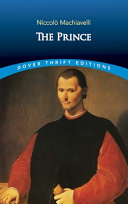
The Prince
The Prince by Niccolò Machiavelli (1532)
"It is better to be feared than loved, if you cannot be both." The most notorious political treatise ever written. Machiavelli's cold-eyed manual for acquiring and maintaining political power shocked the world and made his name a synonym for cunning.
Historical Significance:
Niccolò Machiavelli, a Florentine diplomat who had served the Republic of Florence, wrote The Prince in 1513 after being exiled, imprisoned, and tortured by the returning Medici family. He dedicated the book to Lorenzo de' Medici, hoping to regain political favor — it didn't work. Published posthumously in 1532, the book was condemned by the Pope and placed on the Index of Forbidden Books.
What made The Prince revolutionary was its rejection of idealism. Where previous political writers described how rulers should behave, Machiavelli described how they actually behave — and how to win. "Machiavellian" became an adjective meaning deviously cunning, though scholars argue Machiavelli was simply being honest about power. The Prince is required reading in political science programs worldwide.
This public domain classic was originally published in 1532. Free to read and share.
Free
eBook
FREE
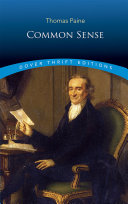
Common Sense
Common Sense by Thomas Paine (1776)
The pamphlet that started a revolution. In just 47 pages, Paine demolished the case for British rule, argued for American independence, and convinced a nation of colonists to become revolutionaries. The bestselling work of the 18th century.
Historical Significance:
Thomas Paine, an English immigrant who had arrived in America just 14 months earlier, published Common Sense anonymously on January 10, 1776. It sold 500,000 copies in its first year — in a country of 2.5 million people. Proportionally, it remains the bestselling American publication of all time.
Paine wrote in plain, direct language that ordinary people could understand, deliberately rejecting the learned style of political philosophy. "These are the times that try men's souls" (from his later Crisis papers) became a rallying cry. George Washington had Common Sense read aloud to his troops. John Adams said, "Without the pen of the author of Common Sense, the sword of Washington would have been raised in vain." The pamphlet directly precipitated the Declaration of Independence six months later.
This public domain classic was originally published in 1776. Free to read and share.
Free
eBook
FREE
The Communist Manifesto
The Communist Manifesto by Karl Marx and Friedrich Engels (1848)
"A spectre is haunting Europe — the spectre of communism." The most influential political pamphlet of the modern era. In just 12,000 words, Marx and Engels laid out a theory of history, class struggle, and revolution that would reshape the 20th century.
Historical Significance:
Commissioned by the Communist League and published in London on February 21, 1848, the Manifesto appeared just as revolutions erupted across Europe in the Spring of Nations. Marx was 29 years old. The text argues that all history is the history of class struggles, that capitalism contains the seeds of its own destruction, and that the working class will inevitably overthrow the bourgeoisie.
Whatever one thinks of communism as a political system, the Manifesto's influence on world history is undeniable. It inspired revolutions in Russia, China, Cuba, and Vietnam; shaped labor movements, social democratic parties, and welfare states worldwide; and fundamentally changed how we think about economics, class, and power. It remains one of the most assigned texts in university courses and one of the most debated documents in human history.
This public domain classic was originally published in 1848. Free to read and share.
Free
eBook
FREE
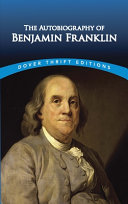
Autobiography of Benjamin Franklin
The Autobiography of Benjamin Franklin by Benjamin Franklin (written 1771-1790, published 1791)
America's first self-help book. Franklin's account of his rise from a runaway printer's apprentice to the most famous American of his age — scientist, inventor, diplomat, and Founding Father.
Historical Significance:
Franklin began writing his autobiography in 1771 at age 65 and worked on it intermittently until shortly before his death in 1790. It was first published in French translation in 1791. The book pioneered the rags-to-riches narrative that became central to the American Dream. Franklin's "13 Virtues" self-improvement program — temperance, silence, order, resolution, frugality, industry, sincerity, justice, moderation, cleanliness, tranquility, chastity, humility — is the direct ancestor of every self-help system from Dale Carnegie to Stephen Covey. The book has been continuously in print for over 230 years and remains one of the most widely read American autobiographies.
This public domain classic was originally published in 1791. Free to read and share.
Free
eBook
FREE
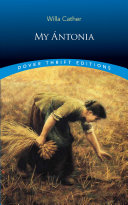
My Ántonia
My Ántonia by Willa Cather (1918)
The story of Ántonia Shimerda, a Bohemian immigrant girl on the Nebraska prairie, told through the memories of her childhood friend Jim Burden. A luminous, heartbreaking portrait of the American pioneer experience.
Historical Significance:
Willa Cather based Ántonia on Annie Sadilek Pavelka, a real Bohemian immigrant she knew growing up in Red Cloud, Nebraska. Published in 1918, the novel captured a vanishing world — the first generation of European immigrants who broke the Great Plains — with extraordinary beauty and empathy. Cather wrote, "the best thing I've done is My Ántonia. I feel I've made a contribution to American letters with that book."
The novel's celebration of immigrant resilience and its unflinching portrait of prairie hardship make it one of the great American novels. Cather won the Pulitzer Prize for One of Ours in 1923, but My Ántonia is considered her masterpiece.
This public domain classic was originally published in 1918. Free to read and share.
Free
eBook
FREE
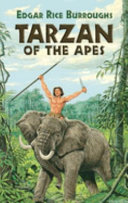
Tarzan of the Apes
Tarzan of the Apes by Edgar Rice Burroughs (1912)
An English nobleman's infant son, orphaned in the African jungle, is raised by great apes and becomes the Lord of the Jungle. Tarzan — one of fiction's most enduring characters, spawning the most successful franchise of the early 20th century.
Historical Significance:
Edgar Rice Burroughs, a 36-year-old failed businessman, wrote Tarzan of the Apes in 1911 while working as a pencil sharpener wholesaler. Published in All-Story Magazine in October 1912, it was an immediate sensation. Burroughs went on to write 24 Tarzan novels, but the character's cultural footprint extends far beyond the books — over 200 films, TV series, radio shows, comics, and merchandise made Tarzan one of the most recognized fictional characters in the world. The famous Tarzan yell (created for Johnny Weissmuller's 1932 film) is one of the most iconic sounds in cinema history. Tarzan has been translated into more than 60 languages.
This public domain classic was originally published in 1912. Free to read and share.
Free
eBook
FREE
A Princess of Mars
A Princess of Mars by Edgar Rice Burroughs (1912)
Civil War veteran John Carter is mysteriously transported to Mars (Barsoom), where he discovers a dying planet of warring alien races, four-armed green warriors, and the beautiful princess Dejah Thoris. The novel that inspired Star Wars, Avatar, and modern science fiction.
Historical Significance:
Serialized as "Under the Moons of Mars" in All-Story Magazine in 1912 (the same year as Tarzan), A Princess of Mars created the "planetary romance" genre. George Lucas has cited it as a major influence on Star Wars — the desert planet, the warrior princess, the fish-out-of-water hero transplanted to an alien world. James Cameron's Avatar drew heavily on Barsoom's ecology and warrior cultures. Ray Bradbury, Arthur C. Clarke, and Carl Sagan all acknowledged Burroughs' influence on their love of space exploration. Disney's 2012 film adaptation John Carter, while a box office disappointment, introduced a new generation to Burroughs' imaginative world.
This public domain classic was originally published in 1912. Free to read and share.
Free
eBook
FREE
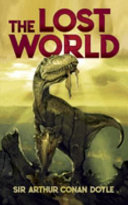
The Lost World
The Lost World by Arthur Conan Doyle (1912)
Professor Challenger leads an expedition to a South American plateau where dinosaurs still live. The original "lost world" adventure — the book that put dinosaurs into popular culture and directly inspired Jurassic Park.
Historical Significance:
Arthur Conan Doyle, seeking an escape from Sherlock Holmes, created the bombastic, brilliant Professor Challenger as a new hero. Published in 1912, The Lost World tapped into real excitement about paleontology — major dinosaur discoveries were being made in the American West and Argentina. Doyle promoted the book with an elaborate hoax, presenting doctored photographs of himself in "prehistoric" settings.
The novel established the template that Michael Crichton would follow 78 years later with Jurassic Park: scientists discover living dinosaurs in a remote location, with terrifying consequences. Every "lost world" story since — from King Kong to Jurassic World — follows the path Doyle blazed.
This public domain classic was originally published in 1912. Free to read and share.
Free
No classics match your filters.