New eBooks
0 booksNo eBooks Yet
Be the first to publish an eBook on BoingyBooks!
🎓 Your Free Digital Library Awaits
Access 232+ classic ebooks — from Shakespeare to Sherlock Holmes. Read on any device, save your progress, build your library.
Create Free Account →Classic Literature
2 free classicsTimeless works from the public domain, beautifully formatted for the BoingyBooks reader.

eBook
FREE
The Wealth of Nations
An Inquiry into the Nature and Causes of the Wealth of Nations by Adam Smith (1776)
The invisible hand, the division of labor, free markets, and the self-interest that drives economic prosperity. The book that invented modern economics and shaped the modern world.
Historical Significance:
Adam Smith, a Scottish moral philosopher, published The Wealth of Nations on March 9, 1776 — the same year as the American Declaration of Independence, and the two documents share a revolutionary spirit. Smith argued that national wealth comes not from hoarding gold (mercantilism) but from the productive labor of free individuals pursuing their own interests in competitive markets. His "invisible hand" metaphor — that individual self-interest inadvertently serves the public good — became the foundational principle of capitalism. The book influenced every subsequent economist from Ricardo to Marx to Keynes to Friedman. It remains the most important economics text ever written.
This public domain classic was originally published in 1776. Free to read and share.
Free
eBook
FREE
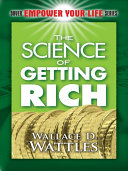
The Science of Getting Rich
The Science of Getting Rich by Wallace D. Wattles (1910)
A practical guide to wealth creation through "thinking in a Certain Way." Wattles argues that getting rich is an exact science governed by natural laws, and that anyone can learn to apply these laws.
Historical Significance:
Wallace Wattles, a socialist and New Thought writer from Indiana, published The Science of Getting Rich in 1910, three years before his death. The book languished in obscurity for nearly a century until Rhonda Byrne credited it as the primary inspiration for The Secret (2006), which sold over 30 million copies. Byrne said she discovered Wattles' book "at one of the darkest times in my life" and it transformed her thinking. The Science of Getting Rich is now one of the most downloaded self-help books on the internet. Its blend of practical advice and metaphysical philosophy anticipated the entire modern manifestation/abundance movement.
This public domain classic was originally published in 1910. Free to read and share.
Free
No classics match your filters.