New eBooks
0 booksNo eBooks Yet
Be the first to publish an eBook on BoingyBooks!
🎓 Your Free Digital Library Awaits
Access 232+ classic ebooks — from Shakespeare to Sherlock Holmes. Read on any device, save your progress, build your library.
Create Free Account →Classic Literature
155 free classicsTimeless works from the public domain, beautifully formatted for the BoingyBooks reader.
eBook
FREE
The Enchanted April
The Enchanted April by Elizabeth Von Arnim (1922)
Four very different Englishwomen escape their dreary London lives by renting a medieval Italian castle for the month of April. Under the spell of wisteria, sunshine, and the Mediterranean, each woman is transformed.
Historical Significance:
Elizabeth Von Arnim wrote The Enchanted April from personal experience — she had lived in Italy and knew the transformative power of the Mediterranean on repressed English souls. Published in 1922, it was a bestseller on both sides of the Atlantic. The 1991 stage adaptation and 1992 film (nominated for three Academy Awards) revived interest in this enchanting novel. With 45,000+ Gutenberg downloads, it is one of the most popular comfort reads in the public domain — a book people return to when they need to believe in the possibility of happiness.
This public domain classic was originally published in 1922. Free to read and share.
Free
eBook
FREE
The Blue Castle
The Blue Castle by L.M. Montgomery (1926)
Valancy Stirling, a 29-year-old woman suffocated by her controlling family, receives a terminal diagnosis — and decides to finally live. She breaks every rule, speaks her mind, and finds unexpected love. Montgomery's most beloved adult novel.
Historical Significance:
L.M. Montgomery, famous for Anne of Green Gables, wrote The Blue Castle as her only novel set outside Prince Edward Island, placing it in Ontario's Muskoka region. Published in 1926, it was largely overlooked for decades until a 21st-century rediscovery made it a viral sensation — it now has nearly 50,000 downloads on Project Gutenberg, making it one of the most downloaded books on the platform. Modern readers connect with Valancy's rebellion against family expectations and her refusal to live a small, safe life. It has been called "the original hot girl summer novel."
This public domain classic was originally published in 1926. Free to read and share.
Free
eBook
FREE
A Room with a View
A Room with a View by E.M. Forster (1908)
Lucy Honeychurch, a young Englishwoman on holiday in Florence, is torn between the passionate, freethinking George Emerson and the stuffy, conventional Cecil Vyse. A sparkling comedy about breaking free from social convention to follow your heart.
Historical Significance:
Forster wrote A Room with a View during the Edwardian era, when England's rigid class system was beginning to crack. The novel contrasts the emotional freedom of Italy with the suffocating propriety of English society. Lucy's journey from repression to self-knowledge mirrors the broader social awakening of women in the early 20th century. The Merchant Ivory 1985 film adaptation, starring Helena Bonham Carter and Daniel Day-Lewis, won three Academy Awards and introduced Forster to a new generation. With over 60,000 downloads on Project Gutenberg, it remains one of the most beloved English novels.
This public domain classic was originally published in 1908. Free to read and share.
Free

eBook
FREE
The Yellow Wallpaper
The Yellow Wallpaper by Charlotte Perkins Gilman (1892)
A woman confined to a room for a "rest cure" becomes obsessed with the pattern of the yellow wallpaper — and the woman she believes is trapped behind it. A shattering short story about women's mental health and patriarchal medicine.
Historical Significance:
Charlotte Perkins Gilman wrote "The Yellow Wallpaper" based on her own experience with the "rest cure" prescribed by Dr. Silas Weir Mitchell, the leading neurologist of his era. Mitchell's treatment for "female hysteria" consisted of complete bed rest, no intellectual activity, and forced feeding — a treatment that nearly drove Gilman insane. She wrote the story as a warning.
When published in 1892, the story was read as a horror tale. It was rediscovered in the 1970s by feminist scholars who recognized it as a masterpiece of feminist literature — a devastating critique of how patriarchal medicine pathologized women's independence. Mitchell reportedly changed his treatment methods after reading the story. It is now one of the most widely taught short stories in American literature.
This public domain classic was originally published in 1892. Free to read and share.
Free

eBook
FREE
The Island of Doctor Moreau
The Island of Doctor Moreau by H.G. Wells (1896)
A shipwrecked man discovers an island where a mad scientist surgically transforms animals into human-like beings. A horrifying exploration of vivisection, evolution, and the thin line between human and beast.
Historical Significance:
Published in 1896, one year after The Time Machine, The Island of Doctor Moreau caused a sensation for its graphic depictions of surgical experimentation. Wells wrote it during heated public debate over vivisection (animal experimentation), which was legal and widespread in Victorian England. The novel asks: if we can make animals human, what does that say about our own humanity? Dr. Moreau's creatures, chanting their "Laws" — "Are we not Men?" — are among the most disturbing images in science fiction. The novel has been adapted into three major films and influenced everything from Planet of the Apes to Jurassic Park.
This public domain classic was originally published in 1896. Free to read and share.
Free

eBook
FREE
Ethan Frome
Ethan Frome by Edith Wharton (1911)
A bleak, devastating novella set in rural New England. Ethan Frome, trapped in a loveless marriage, falls for his wife's cousin Mattie Silver. Their desperate attempt to escape ends in tragedy. Wharton at her most spare and powerful.
Historical Significance:
Edith Wharton, known for novels of New York high society, wrote Ethan Frome as a deliberate departure — a story of rural poverty and emotional imprisonment. She based the setting on her observations of life in Lenox, Massachusetts, and the central catastrophe on a real sledding accident in 1904 that left five young people injured. The novella is only 30,000 words but achieves an emotional weight that dwarfs many longer works. It is one of the most-taught American novels and frequently cited as an example of literary perfection in miniature.
This public domain classic was originally published in 1911. Free to read and share.
Free
eBook
FREE
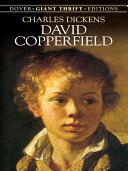
David Copperfield
David Copperfield by Charles Dickens (1850)
"Whether I shall turn out to be the hero of my own life, or whether that station will be held by anybody else, these pages must show." Dickens' most autobiographical novel, following young David from a troubled childhood through the discovery of his true calling as a writer.
Historical Significance:
Dickens called David Copperfield "my favourite child" among all his novels. Serialized from May 1849 to November 1850, it drew heavily on his own experiences: like David, young Charles Dickens was put to work in a factory while his father was imprisoned for debt. Mr. Micawber — eternally optimistic, perpetually in debt, always expecting "something to turn up" — was based directly on Dickens' father, John Dickens. The cruel Mr. Murdstone, the eccentric Aunt Betsey Trotwood, and the villainous Uriah Heep are among Dickens' most memorable creations. Tolstoy, Henry James, and Virginia Woolf all cited it as a masterpiece.
This public domain classic was originally published in 1850. Free to read and share.
Free

eBook
FREE
Candide
Candide, or Optimism by Voltaire (1759)
A naive young man, taught that "all is for the best in the best of all possible worlds," is expelled from paradise and experiences every catastrophe imaginable — war, earthquake, slavery, disease — yet somehow survives. The most devastating satire of the Enlightenment.
Historical Significance:
Voltaire wrote Candide in 1758-1759, partly in response to the Lisbon earthquake of 1755, which killed 30,000-50,000 people and shook European confidence in a benevolent God. The novella was published simultaneously in five countries in January 1759 and immediately banned everywhere — which only increased its sales. Voltaire denied authorship for years.
Candide is a sustained attack on Leibniz's philosophical optimism (satirized through Dr. Pangloss) and on religious hypocrisy, war, and human cruelty. Its final line — "we must cultivate our garden" — has been interpreted as Voltaire's practical philosophy: stop theorizing about the world and do useful work. It remains one of the most widely read works of the French Enlightenment.
This public domain classic was originally published in 1759. Free to read and share.
Free

eBook
FREE
The Awakening and Selected Short Stories
The Awakening and Selected Short Stories by Kate Chopin
The Awakening follows Edna Pontellier as she questions the expectations placed on her as a wife and mother in Louisiana. This edition contains the novel together with eight additional short stories by Chopin.
The stories are Beyond the Bayou, Ma'ame Pelagie, Desiree's Baby, A Respectable Woman, The Kiss, A Pair of Silk Stockings, The Locket and A Reflection. They follow the novel as separate works.
Retained text source: Project Gutenberg ebook 160.
Free

eBook
FREE
Siddhartha
Siddhartha by Hermann Hesse (1922)
A young Brahmin's spiritual journey through asceticism, sensual pleasure, wealth, and despair to find enlightenment by a river. Not about the historical Buddha, but about a man named Siddhartha seeking his own path to wisdom.
Historical Significance:
Hermann Hesse, a German-Swiss Nobel laureate, wrote Siddhartha during a period of personal crisis following psychoanalysis with a student of Carl Jung. Published in 1922 in German, it was not translated into English until 1951. The novel became a phenomenon during the 1960s counterculture movement, when millions of young Westerners discovered Eastern philosophy.
Hesse's message — that wisdom cannot be taught but must be experienced — resonated with a generation questioning Western materialism. The novel has sold over 10 million copies in the US alone and remains one of the most influential books on spiritual seeking. Steve Jobs, who read it as a young man, listed it as one of his most important influences.
This public domain classic was originally published in 1922. Free to read and share.
Free

eBook
FREE
The Turn of the Screw
The Turn of the Screw by Henry James (1898)
A governess at a remote English estate becomes convinced that two ghostly figures are corrupting the children in her care. But are the ghosts real, or is she descending into madness? The most brilliantly ambiguous ghost story ever written.
Historical Significance:
Henry James published The Turn of the Screw in 1898, describing it as a "trap for the unwary." Over a century of scholarship has failed to resolve its central ambiguity: are the ghosts of Peter Quint and Miss Jessel real supernatural entities, or hallucinations of a repressed, unreliable narrator? James deliberately refused to clarify, making the story a Rorschach test for readers' own anxieties.
The novella has been adapted into Benjamin Britten's opera (1954), Jack Clayton's film The Innocents (1961) — one of the greatest horror films ever made — and Netflix's The Haunting of Bly Manor (2020). It remains the gold standard for psychological horror and literary ambiguity.
This public domain classic was originally published in 1898. Free to read and share.
Free

eBook
FREE
The Age of Innocence
The Age of Innocence by Edith Wharton (1920)
Newland Archer is engaged to the perfect May Welland but falls passionately in love with her unconventional cousin, the Countess Olenska. Set in 1870s New York high society, a devastating portrait of how social conventions destroy authentic feeling.
Historical Significance:
Edith Wharton became the first woman to win the Pulitzer Prize for Fiction with The Age of Innocence in 1921. She wrote the novel in her 50s, looking back at the Gilded Age New York of her youth with both nostalgia and ruthless clarity. The "innocence" of the title is deeply ironic — it refers not to purity but to willful ignorance, the polite society that crushes individuality and passion beneath an impenetrable surface of good manners. Martin Scorsese's 1993 film adaptation, starring Daniel Day-Lewis and Michelle Pfeiffer, captured the novel's exquisite claustrophobia.
This public domain classic was originally published in 1920. Free to read and share.
Free

eBook
FREE
Ulysses
Ulysses by James Joyce (1922)
One day in Dublin — June 16, 1904. Leopold Bloom, an advertising canvasser, wanders through Dublin in a modern retelling of Homer's Odyssey. The novel that changed literature forever and was banned as obscene for over a decade.
Historical Significance:
Joyce spent seven years writing Ulysses, publishing it in Paris on his 40th birthday, February 2, 1922, through Sylvia Beach's Shakespeare and Company bookshop. It was immediately banned in the United States and United Kingdom for obscenity — the Molly Bloom soliloquy, with its frank depiction of female sexuality, scandalized authorities.
The landmark 1933 court decision United States v. One Book Called Ulysses lifted the ban, with Judge John Woolsey declaring the book was not pornographic but a "sincere and honest effort to show how the minds of certain characters work." The decision was a milestone for literary freedom.
June 16 is now celebrated worldwide as "Bloomsday." T.S. Eliot called the novel "the most important expression which the present age has found." It consistently tops lists of the greatest novels of the 20th century.
This public domain classic was originally published in 1922. Free to read and share.
Free

eBook
FREE
Dubliners
Dubliners by James Joyce (1914)
Fifteen short stories capturing the paralysis and quiet desperation of early 20th-century Dublin. "The Dead," the collection's masterpiece, is widely considered the greatest short story in the English language.
Historical Significance:
Joyce completed Dubliners in 1905 but endured nine years of rejection and censorship before it was finally published in 1914. Publishers objected to its frank depiction of Dublin life — its references to real businesses, its sexual content, and its use of the word "bloody." One printer destroyed the typeset sheets rather than print the book.
The fifteen stories follow a deliberate arc from childhood through adolescence, maturity, and public life. Each story captures a moment of "epiphany" — Joyce's term for a sudden revelation of truth. "The Dead," which closes the collection, achieves a transcendence rare in all of literature, as Gabriel Conroy realizes how little he knows about even those closest to him. "His soul swooned slowly as he heard the snow falling faintly through the universe."
This public domain classic was originally published in 1914. Free to read and share.
Free
eBook
FREE
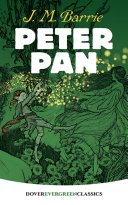
Peter Pan
Peter and Wendy (Peter Pan) by J.M. Barrie (1911)
The boy who never grows up. Peter Pan, Wendy Darling, Captain Hook, Tinker Bell, the Lost Boys, and Neverland — the ultimate fantasy of eternal childhood, tinged with melancholy and the ache of growing up.
Historical Significance:
Peter Pan first appeared in Barrie's 1902 novel The Little White Bird, then became a phenomenally successful play in 1904, before being novelized as Peter and Wendy in 1911. Barrie, a Scottish playwright haunted by the death of his older brother David at age 13 (after which his mother idealized the boy who would never grow up), created Peter Pan partly from his friendship with the Llewelyn Davies boys, whom he eventually adopted.
Barrie donated the copyright of Peter Pan to Great Ormond Street Hospital for Sick Children in London, which has earned millions in royalties for the hospital. Peter Pan is the rare literary character who belongs genuinely to the collective imagination — "All children, except one, grow up."
This public domain classic was originally published in 1911. Free to read and share.
Free

eBook
FREE
A Little Princess
A Little Princess by Frances Hodgson Burnett (1905)
Sara Crewe, a wealthy boarding school student, loses everything when her father dies penniless — yet maintains her dignity, imagination, and kindness through poverty and cruelty. A story about the true meaning of being a princess.
Historical Significance:
Originally a short story called "Sara Crewe" (1888), Burnett expanded it into a play (1902) and then this novel (1905). The story was partly autobiographical — Burnett herself experienced dramatic reversals of fortune, going from poverty to wealth to poverty again. Sara's philosophy — "Whatever comes cannot alter one thing. If I am a princess in rags and tatters, I can be a princess inside" — has inspired children for over a century. The 1995 Alfonso Cuarón film is considered one of the finest children's films ever made.
This public domain classic was originally published in 1905. Free to read and share.
Free
eBook
FREE
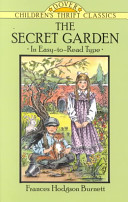
The Secret Garden
The Secret Garden by Frances Hodgson Burnett (1911)
Spoiled, unloved Mary Lennox is sent to live at her uncle's gloomy Yorkshire manor, where she discovers a hidden, neglected garden — and in nurturing it back to life, heals herself and everyone around her. One of the most beloved children's novels ever written.
Historical Significance:
Frances Hodgson Burnett, already famous for Little Lord Fauntleroy, wrote The Secret Garden while living at Great Maytham Hall in Kent, which had its own walled garden. Serialized in The American Magazine from November 1910 to August 1911, the novel was not initially considered her best work. It was only after her death in 1924 that it gradually surpassed her other books in popularity, becoming one of the most treasured children's classics of the 20th century.
The novel's themes of healing through nature, the power of positive thinking, and the resilience of children were ahead of their time. Modern horticultural therapy programs cite it as an early articulation of their principles.
This public domain classic was originally published in 1911. Free to read and share.
Free
eBook
FREE
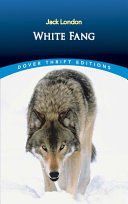
White Fang
White Fang by Jack London (1906)
The companion novel to The Call of the Wild, told in reverse: a wild wolf-dog hybrid is gradually domesticated. Where Buck journeys from civilization to wilderness, White Fang journeys from wilderness to civilization. London's meditation on nature versus nurture.
Historical Significance:
London intended White Fang as "a companion book to The Call of the Wild — the reverse process, the evolution and domestication of an animal." Serialized in the magazine Outing from May to October 1906, it explored whether love and kindness could overcome a lifetime of brutality — a question London, who had survived a desperate childhood of poverty and abuse, knew intimately. The novel has been adapted into multiple films and remains one of the most popular animal stories ever written.
This public domain classic was originally published in 1906. Free to read and share.
Free
eBook
FREE
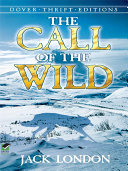
The Call of the Wild
The Call of the Wild by Jack London (1903)
Buck, a domesticated dog stolen from a California estate and sold into the Yukon gold rush as a sled dog, gradually sheds civilization and answers the primal call of the wild. A brutal, beautiful novella about survival and the animal nature within us all.
Historical Significance:
Jack London wrote The Call of the Wild in just 30 days in 1903, drawing on his own experience in the Klondike Gold Rush of 1897-98. Published first in the Saturday Evening Post, it was an immediate sensation. London sold the book rights for just $2,000 — he later called it the worst business decision of his life, as the novel became one of the bestselling American books of the 20th century. At age 27, London became the highest-paid author in America. The novel is credited with helping establish the Yukon as a mythic landscape in American imagination.
This public domain classic was originally published in 1903. Free to read and share.
Free
eBook
FREE
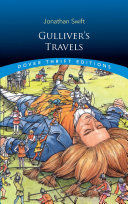
Gulliver's Travels
Gulliver's Travels by Jonathan Swift (1726)
Lemuel Gulliver voyages to Lilliput (tiny people), Brobdingnag (giants), Laputa (flying island of mad scientists), and the land of the Houyhnhnms (intelligent horses). Often read as a children's adventure, it is actually the most savage satire in the English language.
Historical Significance:
Jonathan Swift, the Anglo-Irish Dean of St Patrick's Cathedral in Dublin, published Gulliver's Travels anonymously in 1726. The book was an immediate bestseller — the first edition sold out in a week. Swift used each voyage to satirize different aspects of human folly: Lilliput mocks petty politics, Brobdingnag exposes human cruelty, Laputa ridicules impractical intellectualism, and the Houyhnhnms question whether humans are rational at all. The novel coined the words "Lilliputian" and "yahoo" (the degraded human-like creatures). It remains the greatest satire in English and a devastating critique of human nature.
This public domain classic was originally published in 1726. Free to read and share.
Free
eBook
FREE
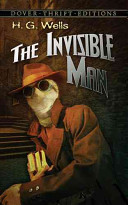
The Invisible Man
The Invisible Man by H.G. Wells (1897)
A scientist discovers the secret of invisibility — then discovers that being unseen drives him to madness and murder. A chilling exploration of power without accountability.
Historical Significance:
Published in 1897, the same year as The War of the Worlds, The Invisible Man cemented Wells' reputation as a master of scientific horror. Griffin, the invisible scientist, begins as a sympathetic figure — a brilliant man driven to extreme measures — but invisibility corrupts him absolutely. Wells was exploring a theme that would define the 20th century: what happens when technology outpaces morality? The 1933 Universal film starring Claude Rains was a landmark in special effects. The concept has been adapted into dozens of films, most recently Leigh Whannell's 2020 horror thriller.
This public domain classic was originally published in 1897. Free to read and share.
Free
eBook
FREE
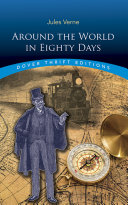
Around the World in Eighty Days
Around the World in Eighty Days by Jules Verne (1873)
Phileas Fogg wagers £20,000 that he can circumnavigate the globe in just 80 days. With his loyal valet Passepartout, he races across continents by steamer, train, and elephant — with a detective in pursuit who suspects him of bank robbery.
Historical Significance:
Serialized in Le Temps in 1872, the novel was inspired by real advances in transportation: the completion of the Suez Canal (1869) and the First Transcontinental Railroad (1869) had dramatically shortened global travel times. Journalist Nellie Bly famously recreated Fogg's journey in 1889, completing it in 72 days. The novel was Verne's biggest commercial success, adapted into the 1956 Best Picture-winning film starring David Niven. It established the "race against time" narrative template used by countless adventure stories since.
This public domain classic was originally published in 1873. Free to read and share.
Free
eBook
FREE
Twenty Thousand Leagues Under the Seas
Twenty Thousand Leagues Under the Seas by Jules Verne (1870)
Captain Nemo and the submarine Nautilus — a visionary adventure beneath the world's oceans, written 90 years before nuclear submarines made Verne's fiction reality.
Historical Significance:
Verne published Vingt mille lieues sous les mers in 1870, predicting submarines, scuba diving, electric propulsion, and underwater exploration with remarkable accuracy. Captain Nemo — whose name means "No One" in Latin — is a complex anti-hero: a brilliant scientist waging war against imperialism from beneath the waves. Verne based some of Nemo's characteristics on real engineers and rebels of his era. The novel established Verne as the "Father of Science Fiction" alongside H.G. Wells. Disney's 1954 film starring James Mason as Nemo won two Academy Awards and remains a classic.
This public domain classic was originally published in 1870. Free to read and share.
Free
eBook
FREE
A Study in Scarlet
A Study in Scarlet by Arthur Conan Doyle (1887)
The very first Sherlock Holmes story. Dr. Watson meets the eccentric detective at 221B Baker Street, and together they investigate a mysterious murder in an empty London house. The beginning of the world's greatest literary partnership.
Historical Significance:
Doyle wrote A Study in Scarlet at age 27 while waiting for patients in his struggling medical practice in Southsea. He modeled Holmes on Dr. Joseph Bell of Edinburgh, who could diagnose patients' occupations by their appearance. The story was rejected by several publishers before Ward, Lock & Co. bought it for £25 — about £3,000 today. Doyle never received another penny for it. The phrase "the game is afoot," Watson's narrative voice, and Holmes' methods of deduction were all established here and would captivate readers for the next 40 years across 4 novels and 56 short stories.
This public domain classic was originally published in 1887. Free to read and share.
Free
No classics match your filters.