New eBooks
0 booksNo eBooks Yet
Be the first to publish an eBook on BoingyBooks!
🎓 Your Free Digital Library Awaits
Access 232+ classic ebooks — from Shakespeare to Sherlock Holmes. Read on any device, save your progress, build your library.
Create Free Account →Classic Literature
155 free classicsTimeless works from the public domain, beautifully formatted for the BoingyBooks reader.
eBook
FREE
The Wings of the Dove
The Wings of the Dove by Henry James (1902)
Kate Croy plots to have her impoverished lover Merton Densher court Milly Theale, a wealthy American heiress who is dying, so they can inherit her fortune. But genuine love complicates the scheme.
Historical Significance:
Published in 1902 as part of James' late "major phase," The Wings of the Dove is considered one of his three supreme achievements alongside The Ambassadors and The Golden Bowl. James' prose style had become extraordinarily complex — sentences that circle and qualify and reveal through indirection. The novel explores how the innocent generosity of a dying woman redeems those who sought to exploit her. Helena Bonham Carter starred in the 1997 film adaptation. The novel's moral complexity — where sympathy for the schemers coexists with admiration for their victim — is quintessentially Jamesian.
This public domain classic was originally published in 1902. Free to read and share.
Free
eBook
FREE
The Portrait of a Lady
The Portrait of a Lady by Henry James (1881)
Isabel Archer, a spirited young American woman, inherits a fortune and travels to Europe, where her independence and idealism are tested by the manipulations of the sinister Gilbert Osmond. James' masterpiece of psychological realism.
Historical Significance:
Serialized in The Atlantic Monthly and Macmillan's Magazine in 1880-81, The Portrait of a Lady established Henry James as the foremost American novelist of his generation. The novel's "international theme" — innocent Americans confronting the sophisticated corruption of European society — became James' signature. Isabel Archer's refusal to flee her terrible marriage, choosing moral duty over personal happiness, has been debated by readers for 140 years. T.S. Eliot called it "the most perfect of all James' novels." The 1996 Jane Campion film starred Nicole Kidman.
This public domain classic was originally published in 1881. Free to read and share.
Free
eBook
FREE
Cranford
Cranford by Elizabeth Gaskell (1853)
A charming, gently comic portrait of life in a small English town dominated by genteel elderly ladies who navigate social crises — a lost letter, a surprise visit, a financial disaster — with dignity, kindness, and considerable eccentricity.
Historical Significance:
Elizabeth Gaskell serialized Cranford in Charles Dickens' magazine Household Words from 1851 to 1853. Based on her childhood memories of Knutsford, Cheshire, the novel captures a vanishing world of pre-industrial English village life with warmth and wit. Unlike Dickens' sweeping social novels, Cranford focuses on the small dramas of ordinary women's lives — and finds in them quiet heroism and deep humanity. The BBC's 2007-09 adaptation starring Judi Dench was a beloved hit. The novel is considered a masterpiece of social comedy and a forerunner of the "cozy" literary tradition.
This public domain classic was originally published in 1853. Free to read and share.
Free

eBook
FREE
Utopia
Utopia by Thomas More (1516)
The book that gave us the word "utopia" — literally "no place." More describes an ideal island society with communal property, religious tolerance, and a six-hour workday. But is he serious, or is it all an elaborate joke?
Historical Significance:
Sir Thomas More, Lord Chancellor of England (later beheaded by Henry VIII for refusing to acknowledge the king's supremacy over the Church), wrote Utopia in Latin in 1516. The work invented a genre: the utopian novel. More's imaginary island has no private property, no lawyers, and universal education — radical ideas for the 16th century that influenced socialist thought for centuries. The deliberate ambiguity of whether More endorsed or satirized his fictional society has generated 500 years of debate. The word "utopia" — a pun on the Greek "eu-topos" (good place) and "ou-topos" (no place) — perfectly captures this ambiguity.
This public domain classic was originally published in 1516. Free to read and share.
Free
eBook
FREE
The Castle of Otranto
The Castle of Otranto by Horace Walpole (1764)
The very first Gothic novel. A giant helmet falls from the sky and crushes the heir of Otranto on his wedding day. Supernatural terrors, secret passages, and prophetic curses follow in this wildly imaginative tale that launched an entire literary genre.
Historical Significance:
Horace Walpole published The Castle of Otranto in 1764, initially pretending it was a medieval manuscript he had merely "translated." When its popularity encouraged him to reveal his authorship, he subtitled the second edition "A Gothic Story" — coining the genre name. The novel created the template for all Gothic fiction: the gloomy castle, the tyrannical patriarch, the imprisoned maiden, the supernatural revenge, the hidden identity revealed. Without Otranto, there would be no Frankenstein, no Dracula, no Jane Eyre, no Wuthering Heights, no Edgar Allan Poe.
This public domain classic was originally published in 1764. Free to read and share.
Free
eBook
FREE
Carmilla
Carmilla by Sheridan Le Fanu (1872)
A young woman in an isolated Austrian castle is visited by a mysterious, beautiful girl who is drawn to her with disturbing intensity. The original vampire novella — predating Dracula by 25 years and introducing the female vampire to literature.
Historical Significance:
Published in 1872, Carmilla directly influenced Bram Stoker's Dracula (1897) — Stoker acknowledged Le Fanu's story as inspiration. The novella's homoerotic subtext between Carmilla and the narrator Laura was groundbreaking for Victorian literature and has made it a touchstone of LGBTQ+ literary studies. The story established many vampire tropes that Stoker would later adopt: the aristocratic vampire, the slow seduction, the weakness to sunlight, the connection between vampirism and sexuality. It has been adapted into over 20 films and the popular YouTube web series "Carmilla" (2014-16).
This public domain classic was originally published in 1872. Free to read and share.
Free

eBook
FREE
The Works of Edgar Allan Poe, Volume 1
The Works of Edgar Allan Poe, Volume 1 — Tales of Mystery and Imagination
The complete tales of the master of horror: "The Fall of the House of Usher," "The Masque of the Red Death," "The Pit and the Pendulum," "The Tell-Tale Heart," "The Cask of Amontillado," "The Black Cat," and more.
Historical Significance:
Edgar Allan Poe (1809-1849) invented the detective story ("The Murders in the Rue Morgue"), pioneered science fiction, and perfected the horror tale — all while living in poverty, battling alcoholism, and mourning his young wife Virginia who died of tuberculosis. Poe's influence is immeasurable: Arthur Conan Doyle modeled Sherlock Holmes on Poe's C. Auguste Dupin; H.P. Lovecraft called him the patriarch of cosmic horror; Alfred Hitchcock acknowledged Poe as his primary inspiration. Baudelaire, who translated Poe into French, said "Poe was the literature of the United States." His tales remain the gold standard for atmospheric horror.
This public domain classic collects works published before 1849. Free to read and share.
Free
eBook
FREE
The Tenant of Wildfell Hall
The Tenant of Wildfell Hall by Anne Brontë (1848)
A mysterious young woman arrives at a ruined mansion with her small son, sparking gossip. Her diary reveals a harrowing story of marriage to a dissolute husband and her daring escape. The most radical of the Brontë novels.
Historical Significance:
Published in 1848, The Tenant of Wildfell Hall was Anne Brontë's second and final novel — she died of tuberculosis the following year at age 29. It is widely considered the first sustained feminist novel in English: Helen's decision to leave her abusive, alcoholic husband and support herself through her art was revolutionary in an era when married women had no legal rights to property, custody, or independence. Charlotte Brontë suppressed the novel after Anne's death, calling it "an entire mistake." Modern scholars have restored it to its rightful place as a masterpiece. May Sinclair called it "the most astonishing work of female genius in any country or any age."
This public domain classic was originally published in 1848. Free to read and share.
Free
eBook
FREE
Anne of the Island
Anne of the Island by L.M. Montgomery (1915)
Anne attends Redmond College, navigates multiple proposals of marriage, and finally recognizes her love for Gilbert Blythe. Many fans consider this the most romantic of the Anne books.
Historical Significance:
Published in 1915, Anne of the Island follows Anne through college — one of the first major children's novels to depict a female character pursuing higher education. Anne's rejection of the handsome, wealthy Roy Gardner in favor of the steadfast Gilbert Blythe is one of the most satisfying romantic resolutions in fiction. Montgomery drew on her own college years at Dalhousie University. The novel's portrayal of female friendship, intellectual ambition, and romantic awakening continues to resonate with readers worldwide.
This public domain classic was originally published in 1915. Free to read and share.
Free
eBook
FREE
Anne of Avonlea
Anne of Avonlea by L.M. Montgomery (1909)
Anne Shirley, now 16, becomes the teacher at Avonlea school and continues to get into scrapes while helping establish a village improvement society. The beloved sequel to Anne of Green Gables.
Historical Significance:
Published in 1909, Anne of Avonlea was written in response to overwhelming demand from readers who wanted more of Anne. Montgomery wrote in her journal that she didn't enjoy writing it as much as the first book, feeling pressured to replicate its success. Nevertheless, it was another bestseller and deepened Anne's character as she matured from a girl into a young woman. The novel's themes of community building and finding purpose through teaching remain deeply appealing.
This public domain classic was originally published in 1909. Free to read and share.
Free

eBook
FREE
Ozma of Oz
Ozma of Oz by L. Frank Baum (1907)
Dorothy returns to Oz via a shipwreck, accompanied by a talking yellow hen named Billina. Together they face the terrifying Nome King and rescue the Royal Family of Ev. Often considered the best of the Oz sequels.
Historical Significance:
Published in 1907, Ozma of Oz introduced Tik-Tok (one of the earliest robots in fiction), the Hungry Tiger, and the horrifying Princess Langwidere who changes heads the way others change hats. The Nome King's throne room — where prisoners are transformed into ornaments — influenced Disney's Return to Oz (1985) and countless fantasy works. Baum was a remarkably inventive world-builder, and this third Oz book shows him at his most imaginative and darkly creative.
This public domain classic was originally published in 1907. Free to read and share.
Free

eBook
FREE
The Marvelous Land of Oz
The Marvelous Land of Oz by L. Frank Baum (1904)
The second Oz book. Tip, a boy raised by the witch Mombi, escapes with a pumpkin-headed man he brought to life and discovers a shocking truth about his own identity. Features the Tin Woodman, the Scarecrow, and the Woggle-Bug.
Historical Significance:
Published in 1904 as a sequel to The Wonderful Wizard of Oz, this book expands the Land of Oz into a richly detailed fantasy world. Dorothy doesn't appear — instead Baum introduced Tip, whose surprise transformation at the novel's climax into Princess Ozma has been discussed by modern scholars as one of the earliest positive depictions of gender identity in children's literature. The book established Oz as a matriarchal society ruled by women, a radical concept for 1904.
This public domain classic was originally published in 1904. Free to read and share.
Free
eBook
FREE
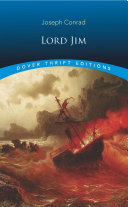
Lord Jim
Lord Jim by Joseph Conrad (1900)
A young British seaman abandons a sinking ship full of pilgrims in a moment of cowardice, then spends the rest of his life seeking redemption in the remote jungles of Southeast Asia. Conrad's masterpiece of moral complexity.
Historical Significance:
Published in 1900, Lord Jim was based on a real incident — the 1880 SS Jeddah affair, where officers abandoned a ship carrying nearly 1,000 Muslim pilgrims. Conrad, a former merchant sailor who had experienced similar moral tests at sea, created in Jim one of literature's most psychologically complex characters. The novel's innovative narrative structure — told through multiple perspectives by the narrator Marlow — influenced modernist fiction profoundly. F. Scott Fitzgerald cited it as a major influence on The Great Gatsby.
This public domain classic was originally published in 1900. Free to read and share.
Free
eBook
FREE
The Secret Agent
The Secret Agent by Joseph Conrad (1907)
A seedy London shop owner who is secretly an anarchist agent provocateur is ordered to bomb the Greenwich Observatory. Conrad's darkest novel — a proto-thriller about terrorism, surveillance, and the corruption that links governments and the criminals they fight.
Historical Significance:
Based on the real 1894 Greenwich bombing, The Secret Agent was published in 1907 and is widely considered the first modern political thriller. Conrad's London is a city of fog, paranoia, and moral ambiguity where the line between law enforcement and criminality has dissolved. Alfred Hitchcock's Sabotage (1936) was based on the novel. In the post-9/11 era, the book's themes — state surveillance, manufactured terrorism, the banality of political violence — have made it more relevant than ever.
This public domain classic was originally published in 1907. Free to read and share.
Free

eBook
FREE
The Mayor of Casterbridge
The Mayor of Casterbridge by Thomas Hardy (1886)
Michael Henchard, a hay-trusser, gets drunk at a country fair and sells his wife and baby daughter to a sailor. Years later, now a prosperous mayor, his past returns to destroy everything he has built.
Historical Significance:
Hardy's subtitle — "The Life and Death of a Man of Character" — signals this is a classical tragedy transplanted to Victorian Dorset. Published in 1886, the novel explores how one terrible act committed in youth can haunt an entire life. Henchard is one of literature's greatest flawed protagonists — violent, proud, generous, and self-destructive. Hardy, who trained as an architect, constructed the plot with architectural precision, every element building toward inevitable catastrophe.
This public domain classic was originally published in 1886. Free to read and share.
Free

eBook
FREE
Far from the Madding Crowd
Far from the Madding Crowd by Thomas Hardy (1874)
Bathsheba Everdene, a fiercely independent woman farmer, attracts three very different suitors: the steadfast shepherd Gabriel Oak, the reckless soldier Sergeant Troy, and the obsessive farmer Boldwood. Hardy's most beloved and accessible novel.
Historical Significance:
Published in 1874, Far from the Madding Crowd was Hardy's first major success and established the fictional Wessex that would become his literary landscape. The title comes from Thomas Gray's "Elegy Written in a Country Churchyard." Bathsheba Everdene — resourceful, proud, and flawed — was a remarkably modern heroine for the 1870s, running her own farm in a world of men. Suzanne Collins named her Hunger Games heroine Katniss Everdeen as a deliberate homage. The 2015 film starring Carey Mulligan was a critical success.
This public domain classic was originally published in 1874. Free to read and share.
Free
eBook
FREE
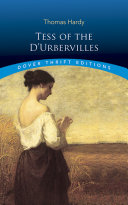
Tess of the d'Urbervilles
Tess of the d'Urbervilles by Thomas Hardy (1891)
A pure young woman is seduced, abandoned, and ultimately destroyed by a hypocritical society. Hardy's most powerful novel and his most devastating critique of Victorian moral double standards.
Historical Significance:
Hardy subtitled the novel "A Pure Woman Faithfully Presented," deliberately provoking Victorian readers who would judge Tess as "fallen." Published in 1891 after being rejected by two magazines for its sexual content, Tess was Hardy's most controversial and commercially successful novel. The critical backlash against his next novel, Jude the Obscure (1895), was so vicious that Hardy abandoned fiction entirely and spent the rest of his life writing poetry. Tess remains one of English literature's most devastating tragedies — a story about how society punishes women for the sins committed against them.
This public domain classic was originally published in 1891. Free to read and share.
Free
eBook
FREE
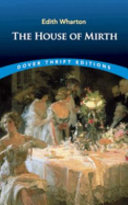
The House of Mirth
The House of Mirth by Edith Wharton (1905)
Lily Bart, beautiful and intelligent but impoverished, navigates New York high society's marriage market with increasing desperation, unable to secure the wealthy husband she needs or abandon the world that is slowly destroying her.
Historical Significance:
Edith Wharton's first major novel was serialized in Scribner's Magazine in 1905, boosting circulation by 100,000 copies. The novel sold 140,000 copies in its first year — extraordinary for literary fiction. Wharton, herself a member of the New York aristocracy she satirized, created in Lily Bart one of American literature's most tragic heroines: a woman too intelligent for the shallow world she inhabits but too conditioned by it to escape. The novel's unflinching depiction of how society destroys women who lack independent wealth remains devastatingly relevant.
This public domain classic was originally published in 1905. Free to read and share.
Free
eBook
FREE
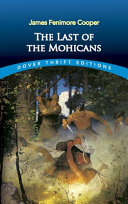
The Last of the Mohicans
The Last of the Mohicans by James Fenimore Cooper (1826)
During the French and Indian War, frontiersman Hawkeye (Natty Bumppo) and his Mohican companions Chingachgook and Uncas escort two sisters through hostile territory. The most famous American adventure novel of the 19th century.
Historical Significance:
Published in 1826, The Last of the Mohicans was the second of Cooper's five Leatherstocking Tales and his greatest commercial success. It was the bestselling American novel of the 19th century and was translated into virtually every European language. While Cooper's portrayal of Native Americans has been criticized as romanticized and stereotypical, the novel was groundbreaking in presenting indigenous characters as heroic protagonists. Daniel Day-Lewis's 1992 film adaptation revived interest in the novel. Cooper essentially invented the American frontier adventure genre.
This public domain classic was originally published in 1826. Free to read and share.
Free

eBook
FREE
Rip Van Winkle
Rip Van Winkle by Washington Irving (1819)
A lazy but likable Dutch-American farmer wanders into the Catskill Mountains, encounters mysterious men playing ninepins, drinks their liquor, and falls asleep for twenty years — waking to find his wife dead, his friends gone, and America transformed by revolution.
Historical Significance:
Published in 1819, "Rip Van Winkle" was the first great American short story and made Washington Irving the first American writer recognized in Europe. The tale draws on German folklore (the legend of Peter Klaus) but is thoroughly Americanized — Rip sleeps through the entire American Revolution. The phrase "Rip Van Winkle" has entered the English language as a term for anyone hopelessly out of touch with the times. The story captures a fundamental American anxiety: the fear of being left behind by progress.
This public domain classic was originally published in 1819. Free to read and share.
Free

eBook
FREE
The Legend of Sleepy Hollow
The Legend of Sleepy Hollow by Washington Irving (1820)
Schooltacher Ichabod Crane, courting the beautiful Katrina Van Tassel, encounters the terrifying Headless Horseman on a dark night ride through the haunted glen. America's most famous ghost story.
Historical Significance:
Published in 1820 as part of The Sketch Book of Geoffrey Crayon, this story and "Rip Van Winkle" made Washington Irving the first American author to achieve international fame. Irving wrote both stories while living in England, homesick for the Hudson Valley of his youth. The Headless Horseman — a Hessian soldier decapitated by a cannonball during the Revolutionary War — became one of America's most enduring folklore figures. Tim Burton's 1999 film starring Johnny Depp and Disney's 1949 animated adaptation brought the tale to new generations. Every Halloween, the real Sleepy Hollow in New York hosts thousands of visitors.
This public domain classic was originally published in 1820. Free to read and share.
Free
eBook
FREE
Kim
Kim by Rudyard Kipling (1901)
Kimball O'Hara, an Irish orphan raised as a street urchin in Lahore, becomes entangled in the "Great Game" of British espionage along the Grand Trunk Road of India. A picaresque masterpiece of adventure, spirituality, and cultural identity.
Historical Significance:
Considered Kipling's finest novel, Kim was published in 1901 and draws on Kipling's deep love for India, where he was born and spent his formative years. The novel is both a spy thriller and a spiritual quest — Kim serves the British Secret Service while also seeking enlightenment alongside a Tibetan lama. T.S. Eliot called it "a masterpiece." It remains the most vivid portrait of colonial India in English literature and has been praised for its sympathetic, detailed portrayal of Indian cultures and religions.
This public domain classic was originally published in 1901. Free to read and share.
Free

eBook
FREE
The Second Jungle Book
The Second Jungle Book by Rudyard Kipling
Five Mowgli stories continue his life in the jungle: How Fear Came, Letting in the Jungle, The King's Ankus, Red Dog and The Spring Running.
Three other stories complete the collection: The Miracle of Purun Bhagat, The Undertakers and Quiquern. Each story is accompanied by poetry.
This is the eight-story sequel to The Jungle Book, not a collection containing five additional non-Mowgli tales.
Retained text source: Project Gutenberg ebook 1937.
Free

eBook
FREE
Lady Susan
Lady Susan by Jane Austen (written c. 1794, published 1871)
An epistolary novella featuring Austen's most deliciously wicked character: Lady Susan Vernon, a beautiful, manipulative widow who schemes to secure wealthy husbands for herself and her reluctant daughter. Austen's darkest and funniest creation.
Historical Significance:
Written when Austen was about 18 or 19, Lady Susan was not published until 1871, over 50 years after her death. The novella is told entirely through letters, a format Austen would abandon for her later novels. Lady Susan is unlike any other Austen heroine — she is an anti-heroine, a charming villain who uses her intelligence and beauty to manipulate everyone around her. Some scholars see her as a prototype for Mary Crawford in Mansfield Park. Whit Stillman's 2016 film adaptation, Love & Friendship, was a critical and commercial hit that introduced Lady Susan to a new audience.
This public domain classic was originally written c. 1794 and published posthumously in 1871. Free to read and share.
Free
No classics match your filters.