New eBooks
0 booksNo eBooks Yet
Be the first to publish an eBook on BoingyBooks!
🎓 Your Free Digital Library Awaits
Access 232+ classic ebooks — from Shakespeare to Sherlock Holmes. Read on any device, save your progress, build your library.
Create Free Account →Classic Literature
81 free classicsTimeless works from the public domain, beautifully formatted for the BoingyBooks reader.
eBook
FREE
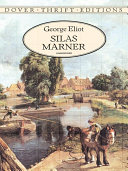
Silas Marner
Silas Marner: The Weaver of Raveloe by George Eliot (1861)
A lonely, miserly weaver, falsely accused of theft and betrayed by his best friend, withdraws from humanity — until a golden-haired orphan child appears at his hearth and redeems his life. Eliot's most compact and beloved novel.
Historical Significance:
George Eliot wrote Silas Marner in just four months in 1861, calling it a story that "thrust itself between me and the other book I was meditating." At just 70,000 words, it is her shortest and most accessible novel — a fairy tale for adults about how love and community can heal even the deepest wounds. The parallel between Silas's stolen gold and the golden-haired child who replaces it gives the novel a symbolic richness beneath its simple surface. It remains one of the most widely assigned novels in English schools.
This public domain classic was originally published in 1861. Free to read and share.
Free
eBook
FREE
The Mill on the Floss
The Mill on the Floss by George Eliot (1860)
Maggie Tulliver, passionate, intelligent, and trapped by the narrow expectations of provincial English life, struggles between duty to her family and her own desires. Eliot's most autobiographical and emotionally powerful novel.
Historical Significance:
Published in 1860, The Mill on the Floss drew heavily on George Eliot's (Mary Ann Evans') own childhood in rural Warwickshire and her painful estrangement from her brother Isaac after she began living with the married George Henry Lewes. Maggie Tulliver's hunger for knowledge in a world that sees education as wasted on women, and her tormented relationship with her beloved brother Tom, mirror Eliot's own experiences. The novel's devastating flood ending remains one of the most debated conclusions in English fiction.
This public domain classic was originally published in 1860. Free to read and share.
Free
eBook
FREE
Vanity Fair
Vanity Fair: A Novel Without a Hero by William Makepeace Thackeray (1848)
The contrasting fortunes of sweet, passive Amelia Sedley and brilliant, ruthless Becky Sharp as they navigate Regency-era English society. Thackeray's satirical masterpiece — "a novel without a hero" because everyone is flawed.
Historical Significance:
Serialized in 20 monthly parts from January 1847 to July 1848, Vanity Fair was Thackeray's bid to rival Dickens as England's greatest novelist. Where Dickens created lovable heroes and hissable villains, Thackeray created morally ambiguous characters in a corrupt world. Becky Sharp — witty, amoral, irresistibly charming — is one of literature's great anti-heroines. The title comes from John Bunyan's Pilgrim's Progress, where Vanity Fair is a marketplace of worldly temptations. The novel has been adapted numerous times, including a 2004 film starring Reese Witherspoon.
This public domain classic was originally published in 1848. Free to read and share.
Free
eBook
FREE
The Wings of the Dove
The Wings of the Dove by Henry James (1902)
Kate Croy plots to have her impoverished lover Merton Densher court Milly Theale, a wealthy American heiress who is dying, so they can inherit her fortune. But genuine love complicates the scheme.
Historical Significance:
Published in 1902 as part of James' late "major phase," The Wings of the Dove is considered one of his three supreme achievements alongside The Ambassadors and The Golden Bowl. James' prose style had become extraordinarily complex — sentences that circle and qualify and reveal through indirection. The novel explores how the innocent generosity of a dying woman redeems those who sought to exploit her. Helena Bonham Carter starred in the 1997 film adaptation. The novel's moral complexity — where sympathy for the schemers coexists with admiration for their victim — is quintessentially Jamesian.
This public domain classic was originally published in 1902. Free to read and share.
Free
eBook
FREE
The Portrait of a Lady
The Portrait of a Lady by Henry James (1881)
Isabel Archer, a spirited young American woman, inherits a fortune and travels to Europe, where her independence and idealism are tested by the manipulations of the sinister Gilbert Osmond. James' masterpiece of psychological realism.
Historical Significance:
Serialized in The Atlantic Monthly and Macmillan's Magazine in 1880-81, The Portrait of a Lady established Henry James as the foremost American novelist of his generation. The novel's "international theme" — innocent Americans confronting the sophisticated corruption of European society — became James' signature. Isabel Archer's refusal to flee her terrible marriage, choosing moral duty over personal happiness, has been debated by readers for 140 years. T.S. Eliot called it "the most perfect of all James' novels." The 1996 Jane Campion film starred Nicole Kidman.
This public domain classic was originally published in 1881. Free to read and share.
Free
eBook
FREE
Cranford
Cranford by Elizabeth Gaskell (1853)
A charming, gently comic portrait of life in a small English town dominated by genteel elderly ladies who navigate social crises — a lost letter, a surprise visit, a financial disaster — with dignity, kindness, and considerable eccentricity.
Historical Significance:
Elizabeth Gaskell serialized Cranford in Charles Dickens' magazine Household Words from 1851 to 1853. Based on her childhood memories of Knutsford, Cheshire, the novel captures a vanishing world of pre-industrial English village life with warmth and wit. Unlike Dickens' sweeping social novels, Cranford focuses on the small dramas of ordinary women's lives — and finds in them quiet heroism and deep humanity. The BBC's 2007-09 adaptation starring Judi Dench was a beloved hit. The novel is considered a masterpiece of social comedy and a forerunner of the "cozy" literary tradition.
This public domain classic was originally published in 1853. Free to read and share.
Free
eBook
FREE
The Tenant of Wildfell Hall
The Tenant of Wildfell Hall by Anne Brontë (1848)
A mysterious young woman arrives at a ruined mansion with her small son, sparking gossip. Her diary reveals a harrowing story of marriage to a dissolute husband and her daring escape. The most radical of the Brontë novels.
Historical Significance:
Published in 1848, The Tenant of Wildfell Hall was Anne Brontë's second and final novel — she died of tuberculosis the following year at age 29. It is widely considered the first sustained feminist novel in English: Helen's decision to leave her abusive, alcoholic husband and support herself through her art was revolutionary in an era when married women had no legal rights to property, custody, or independence. Charlotte Brontë suppressed the novel after Anne's death, calling it "an entire mistake." Modern scholars have restored it to its rightful place as a masterpiece. May Sinclair called it "the most astonishing work of female genius in any country or any age."
This public domain classic was originally published in 1848. Free to read and share.
Free
eBook
FREE
Lord Jim
Lord Jim by Joseph Conrad (1900)
A young British seaman abandons a sinking ship full of pilgrims in a moment of cowardice, then spends the rest of his life seeking redemption in the remote jungles of Southeast Asia. Conrad's masterpiece of moral complexity.
Historical Significance:
Published in 1900, Lord Jim was based on a real incident — the 1880 SS Jeddah affair, where officers abandoned a ship carrying nearly 1,000 Muslim pilgrims. Conrad, a former merchant sailor who had experienced similar moral tests at sea, created in Jim one of literature's most psychologically complex characters. The novel's innovative narrative structure — told through multiple perspectives by the narrator Marlow — influenced modernist fiction profoundly. F. Scott Fitzgerald cited it as a major influence on The Great Gatsby.
This public domain classic was originally published in 1900. Free to read and share.
Free
eBook
FREE
The Secret Agent
The Secret Agent by Joseph Conrad (1907)
A seedy London shop owner who is secretly an anarchist agent provocateur is ordered to bomb the Greenwich Observatory. Conrad's darkest novel — a proto-thriller about terrorism, surveillance, and the corruption that links governments and the criminals they fight.
Historical Significance:
Based on the real 1894 Greenwich bombing, The Secret Agent was published in 1907 and is widely considered the first modern political thriller. Conrad's London is a city of fog, paranoia, and moral ambiguity where the line between law enforcement and criminality has dissolved. Alfred Hitchcock's Sabotage (1936) was based on the novel. In the post-9/11 era, the book's themes — state surveillance, manufactured terrorism, the banality of political violence — have made it more relevant than ever.
This public domain classic was originally published in 1907. Free to read and share.
Free

eBook
FREE
The Mayor of Casterbridge
The Mayor of Casterbridge by Thomas Hardy (1886)
Michael Henchard, a hay-trusser, gets drunk at a country fair and sells his wife and baby daughter to a sailor. Years later, now a prosperous mayor, his past returns to destroy everything he has built.
Historical Significance:
Hardy's subtitle — "The Life and Death of a Man of Character" — signals this is a classical tragedy transplanted to Victorian Dorset. Published in 1886, the novel explores how one terrible act committed in youth can haunt an entire life. Henchard is one of literature's greatest flawed protagonists — violent, proud, generous, and self-destructive. Hardy, who trained as an architect, constructed the plot with architectural precision, every element building toward inevitable catastrophe.
This public domain classic was originally published in 1886. Free to read and share.
Free

eBook
FREE
Far from the Madding Crowd
Far from the Madding Crowd by Thomas Hardy (1874)
Bathsheba Everdene, a fiercely independent woman farmer, attracts three very different suitors: the steadfast shepherd Gabriel Oak, the reckless soldier Sergeant Troy, and the obsessive farmer Boldwood. Hardy's most beloved and accessible novel.
Historical Significance:
Published in 1874, Far from the Madding Crowd was Hardy's first major success and established the fictional Wessex that would become his literary landscape. The title comes from Thomas Gray's "Elegy Written in a Country Churchyard." Bathsheba Everdene — resourceful, proud, and flawed — was a remarkably modern heroine for the 1870s, running her own farm in a world of men. Suzanne Collins named her Hunger Games heroine Katniss Everdeen as a deliberate homage. The 2015 film starring Carey Mulligan was a critical success.
This public domain classic was originally published in 1874. Free to read and share.
Free
eBook
FREE
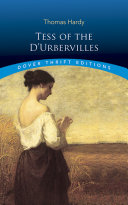
Tess of the d'Urbervilles
Tess of the d'Urbervilles by Thomas Hardy (1891)
A pure young woman is seduced, abandoned, and ultimately destroyed by a hypocritical society. Hardy's most powerful novel and his most devastating critique of Victorian moral double standards.
Historical Significance:
Hardy subtitled the novel "A Pure Woman Faithfully Presented," deliberately provoking Victorian readers who would judge Tess as "fallen." Published in 1891 after being rejected by two magazines for its sexual content, Tess was Hardy's most controversial and commercially successful novel. The critical backlash against his next novel, Jude the Obscure (1895), was so vicious that Hardy abandoned fiction entirely and spent the rest of his life writing poetry. Tess remains one of English literature's most devastating tragedies — a story about how society punishes women for the sins committed against them.
This public domain classic was originally published in 1891. Free to read and share.
Free
eBook
FREE
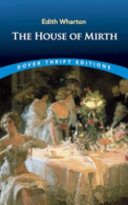
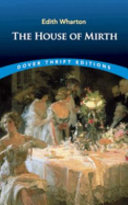
The House of Mirth
The House of Mirth by Edith Wharton (1905)
Lily Bart, beautiful and intelligent but impoverished, navigates New York high society's marriage market with increasing desperation, unable to secure the wealthy husband she needs or abandon the world that is slowly destroying her.
Historical Significance:
Edith Wharton's first major novel was serialized in Scribner's Magazine in 1905, boosting circulation by 100,000 copies. The novel sold 140,000 copies in its first year — extraordinary for literary fiction. Wharton, herself a member of the New York aristocracy she satirized, created in Lily Bart one of American literature's most tragic heroines: a woman too intelligent for the shallow world she inhabits but too conditioned by it to escape. The novel's unflinching depiction of how society destroys women who lack independent wealth remains devastatingly relevant.
This public domain classic was originally published in 1905. Free to read and share.
Free

eBook
FREE
The Second Jungle Book
The Second Jungle Book by Rudyard Kipling
Five Mowgli stories continue his life in the jungle: How Fear Came, Letting in the Jungle, The King's Ankus, Red Dog and The Spring Running.
Three other stories complete the collection: The Miracle of Purun Bhagat, The Undertakers and Quiquern. Each story is accompanied by poetry.
This is the eight-story sequel to The Jungle Book, not a collection containing five additional non-Mowgli tales.
Retained text source: Project Gutenberg ebook 1937.
Free

eBook
FREE
Lady Susan
Lady Susan by Jane Austen (written c. 1794, published 1871)
An epistolary novella featuring Austen's most deliciously wicked character: Lady Susan Vernon, a beautiful, manipulative widow who schemes to secure wealthy husbands for herself and her reluctant daughter. Austen's darkest and funniest creation.
Historical Significance:
Written when Austen was about 18 or 19, Lady Susan was not published until 1871, over 50 years after her death. The novella is told entirely through letters, a format Austen would abandon for her later novels. Lady Susan is unlike any other Austen heroine — she is an anti-heroine, a charming villain who uses her intelligence and beauty to manipulate everyone around her. Some scholars see her as a prototype for Mary Crawford in Mansfield Park. Whit Stillman's 2016 film adaptation, Love & Friendship, was a critical and commercial hit that introduced Lady Susan to a new audience.
This public domain classic was originally written c. 1794 and published posthumously in 1871. Free to read and share.
Free
eBook
FREE
Main Street
Main Street by Sinclair Lewis (1920)
Carol Kennicott, an idealistic young woman, marries a small-town doctor and moves to Gopher Prairie, Minnesota — where she discovers that small-town America is not charming but narrow-minded, materialistic, and hostile to change.
Historical Significance:
Main Street was the bestselling novel of 1921 and made Sinclair Lewis the most talked-about writer in America. The novel shattered the myth of the wholesome American small town, portraying it instead as a place of stultifying conformity and cultural mediocrity. Lewis based Gopher Prairie on his hometown of Sauk Centre, Minnesota — and Sauk Centre's residents were furious.
Lewis became the first American to win the Nobel Prize for Literature in 1930, with the committee specifically citing Main Street. The novel spawned a national debate about small-town values that continues today, from Garrison Keillor's Lake Wobegon to the "flyover country" discourse. The phrase "Main Street" became shorthand for middle-American conservatism, used by politicians from both parties.
This public domain classic was originally published in 1920. Free to read and share.
Free
eBook
FREE
Sister Carrie
Sister Carrie by Theodore Dreiser (1900)
A young woman from small-town Wisconsin comes to Chicago, becomes the mistress of two men, and rises to fame as an actress — while the men who supported her are destroyed. The novel that launched American literary realism.
Historical Significance:
Theodore Dreiser's first novel was so frank in its treatment of sexuality, social climbing, and moral ambiguity that his own publisher, Doubleday, tried to suppress it after publication in 1900. Frank Norris, a reader at the publisher, championed the book, but Doubleday printed only 1,008 copies and refused to promote it. The novel sold just 456 copies and earned Dreiser $68.40.
Sister Carrie's radical innovation was its refusal to punish its heroine for her sexual transgressions — Carrie rises while the men fall, without moral judgment from the author. This was shocking in 1900 and established the naturalistic tradition in American fiction. The novel was rediscovered in the 1980s when the original manuscript was restored, revealing extensive cuts made by Dreiser's wife.
This public domain classic was originally published in 1900. Free to read and share.
Free
eBook
FREE
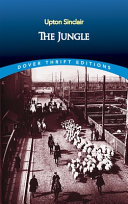
The Jungle
The Jungle by Upton Sinclair (1906)
Lithuanian immigrant Jurgis Rudkus works in Chicago's meatpacking plants, where he encounters appalling working conditions, corrupt bosses, and contaminated food. The novel that changed American food safety laws forever.
Historical Significance:
Upton Sinclair spent seven weeks undercover in Chicago's stockyards researching The Jungle. Published in 1906, the novel's graphic descriptions of unsanitary meatpacking practices — workers falling into rendering tanks, diseased meat being sold to consumers, rat droppings mixed into sausage — caused a national uproar. President Theodore Roosevelt, initially skeptical, sent investigators who confirmed Sinclair's findings. Within months, Congress passed the Pure Food and Drug Act and the Meat Inspection Act, creating the framework for modern food safety regulation.
Sinclair famously said, "I aimed at the public's heart, and by accident I hit it in the stomach." He had intended the novel as a socialist argument about labor exploitation, but readers focused on the food safety revelations. Nevertheless, the novel remains one of the most powerful examples of literature directly changing law.
This public domain classic was originally published in 1906. Free to read and share.
Free
eBook
FREE
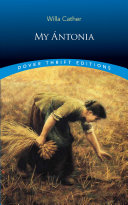
My Ántonia
My Ántonia by Willa Cather (1918)
The story of Ántonia Shimerda, a Bohemian immigrant girl on the Nebraska prairie, told through the memories of her childhood friend Jim Burden. A luminous, heartbreaking portrait of the American pioneer experience.
Historical Significance:
Willa Cather based Ántonia on Annie Sadilek Pavelka, a real Bohemian immigrant she knew growing up in Red Cloud, Nebraska. Published in 1918, the novel captured a vanishing world — the first generation of European immigrants who broke the Great Plains — with extraordinary beauty and empathy. Cather wrote, "the best thing I've done is My Ántonia. I feel I've made a contribution to American letters with that book."
The novel's celebration of immigrant resilience and its unflinching portrait of prairie hardship make it one of the great American novels. Cather won the Pulitzer Prize for One of Ours in 1923, but My Ántonia is considered her masterpiece.
This public domain classic was originally published in 1918. Free to read and share.
Free

eBook
FREE
Mansfield Park
Mansfield Park by Jane Austen (1814)
Fanny Price, a poor relation taken in by wealthy relatives, quietly observes their moral failures while struggling with her own feelings for her cousin Edmund. Austen's most morally complex and controversial novel.
Historical Significance:
Published in 1814, Mansfield Park divided readers from the start — and still does. Its heroine Fanny Price is passive, pious, and judgmental where Elizabeth Bennet is witty and bold. But Austen was doing something radical: showing that moral clarity and quiet strength are their own form of heroism. The novel addresses slavery (Sir Thomas Bertram's wealth comes from a plantation in Antigua), theatricality versus sincerity, and the corruption of London versus the stability of the countryside. Modern scholars consider it Austen's most sophisticated work, even if it is her least immediately lovable.
This public domain classic was originally published in 1814. Free to read and share.
Free
eBook
FREE
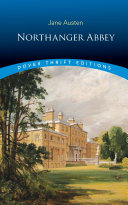
Northanger Abbey
Northanger Abbey by Jane Austen (1817)
Catherine Morland, an avid reader of Gothic novels, visits the ancient Northanger Abbey and lets her imagination run wild, suspecting her host of terrible crimes. Austen's delightful satire of Gothic fiction and the dangers of confusing novels with reality.
Historical Significance:
Austen wrote Northanger Abbey around 1798-99 (originally titled "Susan"), making it one of her earliest completed works, though it was published posthumously in December 1817 alongside Persuasion. The novel is both a loving parody of Gothic novels like Ann Radcliffe's The Mysteries of Udolpho and a sharp commentary on the expectations placed on young women. Catherine Morland is Austen's most naive heroine — her education through disillusionment is both comic and touching. The novel's defense of the novel as an art form ("only a novel!") remains one of the most important early statements of fiction's literary value.
This public domain classic was originally published posthumously in 1817. Free to read and share.
Free
eBook
FREE
Middlemarch
Middlemarch: A Study of Provincial Life by George Eliot (1872)
The novel Virginia Woolf called "one of the few English novels written for grown-up people." Dorothea Brooke, Dr. Lydgate, and a vast cast navigate marriage, ambition, politics, and moral choice in a fictional English Midlands town during the Reform era of 1829-1832.
Historical Significance:
George Eliot (Mary Ann Evans) published Middlemarch in eight installments from 1871 to 1872. She used a male pen name because she wanted her work judged on its merits, not dismissed as "mere feminine fiction." The novel weaves together multiple storylines — idealistic Dorothea's disastrous marriage to the pedantic Casaubon, ambitious Dr. Lydgate's entanglement with the beautiful but materialistic Rosamond — into a panoramic portrait of English society in transition. It is consistently voted the greatest novel in the English language in surveys of writers and critics. Martin Amis and Julian Barnes both called it "the greatest novel."
This public domain classic was originally published in 1872. Free to read and share.
Free
eBook
FREE
The Enchanted April
The Enchanted April by Elizabeth Von Arnim (1922)
Four very different Englishwomen escape their dreary London lives by renting a medieval Italian castle for the month of April. Under the spell of wisteria, sunshine, and the Mediterranean, each woman is transformed.
Historical Significance:
Elizabeth Von Arnim wrote The Enchanted April from personal experience — she had lived in Italy and knew the transformative power of the Mediterranean on repressed English souls. Published in 1922, it was a bestseller on both sides of the Atlantic. The 1991 stage adaptation and 1992 film (nominated for three Academy Awards) revived interest in this enchanting novel. With 45,000+ Gutenberg downloads, it is one of the most popular comfort reads in the public domain — a book people return to when they need to believe in the possibility of happiness.
This public domain classic was originally published in 1922. Free to read and share.
Free
eBook
FREE
A Room with a View
A Room with a View by E.M. Forster (1908)
Lucy Honeychurch, a young Englishwoman on holiday in Florence, is torn between the passionate, freethinking George Emerson and the stuffy, conventional Cecil Vyse. A sparkling comedy about breaking free from social convention to follow your heart.
Historical Significance:
Forster wrote A Room with a View during the Edwardian era, when England's rigid class system was beginning to crack. The novel contrasts the emotional freedom of Italy with the suffocating propriety of English society. Lucy's journey from repression to self-knowledge mirrors the broader social awakening of women in the early 20th century. The Merchant Ivory 1985 film adaptation, starring Helena Bonham Carter and Daniel Day-Lewis, won three Academy Awards and introduced Forster to a new generation. With over 60,000 downloads on Project Gutenberg, it remains one of the most beloved English novels.
This public domain classic was originally published in 1908. Free to read and share.
Free
No classics match your filters.