New eBooks
0 booksNo eBooks Yet
Be the first to publish an eBook on BoingyBooks!
🎓 Your Free Digital Library Awaits
Access 232+ classic ebooks — from Shakespeare to Sherlock Holmes. Read on any device, save your progress, build your library.
Create Free Account →Classic Literature
5 free classicsTimeless works from the public domain, beautifully formatted for the BoingyBooks reader.
eBook
FREE
The Tempest
The Tempest by William Shakespeare (c. 1611)
"We are such stuff as dreams are made on, and our little life is rounded with a sleep." Prospero, the exiled Duke of Milan, uses magic to shipwreck his enemies on his enchanted island, where the spirit Ariel and the monster Caliban serve him.
Historical Significance:
Widely believed to be Shakespeare's last solo play (c. 1611), The Tempest reads as his farewell to the theater. Prospero's final speech — "Now my charms are all o'erthrown" — is often interpreted as Shakespeare himself laying down his pen. The play has been reinterpreted through every lens imaginable: as a colonialism allegory (Prospero as European colonizer, Caliban as indigenous victim), a meditation on art and power, and a father's love letter to his daughter. Aimé Césaire's Une Tempête (1969) reimagined it as an anti-colonial work. It remains Shakespeare's most debated and reinterpreted play.
This public domain classic was originally written c. 1611. Free to read and share.
Free
eBook
FREE
A Midsummer Night's Dream
A Midsummer Night's Dream by William Shakespeare (c. 1595)
"Lord, what fools these mortals be!" Four young lovers flee Athens into an enchanted forest, where fairy king Oberon and the mischievous Puck use a magical flower to create romantic chaos — and Bottom the weaver gets a donkey's head.
Historical Significance:
Written around 1595-96, A Midsummer Night's Dream is Shakespeare's most magical and joyous play — a celebration of love, imagination, and theater itself. The fairy world of Oberon, Titania, and Puck drew on English folklore and classical mythology. The "play within a play" — the hilariously bad "Pyramus and Thisbe" performed by Bottom and his friends — is both a parody of bad theater and a defense of theater's transformative power. Mendelssohn's incidental music (1842), Britten's opera (1960), and countless film adaptations have kept the play in popular culture. It remains the most frequently performed Shakespeare comedy.
This public domain classic was originally written c. 1595. Free to read and share.
Free
eBook
FREE
Macbeth
Macbeth by William Shakespeare (c. 1606)
"Is this a dagger which I see before me?" Three witches prophesy that Macbeth will become King of Scotland. Spurred by his wife's relentless ambition, he murders his way to the throne — and is consumed by guilt and paranoia.
Historical Significance:
Shakespeare wrote Macbeth around 1606, shortly after the Gunpowder Plot — an attempted assassination of King James I. The play was likely written partly to flatter James, who was fascinated by witchcraft. At just 2,100 lines, Macbeth is Shakespeare's shortest tragedy but his most intense — a compression of ambition, guilt, and supernatural horror into a white-hot narrative. Lady Macbeth's sleepwalking scene ("Out, damned spot!") and Macbeth's "Tomorrow, and tomorrow, and tomorrow" soliloquy are among the most psychologically penetrating moments in all drama. Theater tradition holds that the play is cursed — actors refer to it as "The Scottish Play" to avoid saying the name aloud.
This public domain classic was originally written c. 1606. Free to read and share.
Free
eBook
FREE
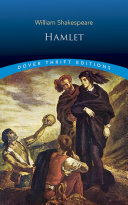
Hamlet
Hamlet, Prince of Denmark by William Shakespeare (c. 1600)
"To be, or not to be, that is the question." The greatest play ever written. Prince Hamlet, commanded by his father's ghost to avenge his murder by his uncle Claudius, descends into madness — real or feigned — in literature's most profound exploration of death, conscience, and the human condition.
Historical Significance:
Shakespeare wrote Hamlet around 1600-1601, and it was first published in quarto form in 1603. It is the most performed, most studied, and most quoted play in the English language. Every generation finds new meaning in it: Romantic critics saw Hamlet as a sensitive intellectual; Freudians saw an Oedipus complex; existentialists saw the absurdity of action in a meaningless universe. The role of Hamlet is considered the ultimate test for an actor — virtually every great stage actor has played it. The play contains more famous quotations than any other single work of literature.
This public domain classic was originally written c. 1600. Free to read and share.
Free

eBook
FREE
Romeo and Juliet
Romeo and Juliet by William Shakespeare (c. 1595)
The most famous love story ever written. Shakespeare's tragedy of "star-cross'd lovers" has defined romantic love in Western culture for over four centuries.
Historical Significance:
Shakespeare wrote Romeo and Juliet around 1594-1596, early in his career. It was first published in a quarto edition in 1597. The story was not entirely original — Shakespeare adapted it from Arthur Brooke's narrative poem "The Tragical History of Romeus and Juliet" (1562), which itself derived from Italian sources going back to Masuccio Salernitano (1476).
What Shakespeare added was genius: the balcony scene, the Nurse's comic warmth, Mercutio's brilliant wordplay ("A plague on both your houses!"), and above all, the poetry. "But soft, what light through yonder window breaks?" and "What's in a name? That which we call a rose by any other name would smell as sweet" are among the most quoted lines in English.
The play was enormously popular in Shakespeare's lifetime and was performed by his company, the Lord Chamberlain's Men, at The Theatre and later the Globe. It was one of the first plays revived after the Restoration in 1660.
Cultural Impact:
Romeo and Juliet has been adapted into every art form: Prokofiev's ballet (1935), Bernstein's West Side Story (1957), Zeffirelli's film (1968), Baz Luhrmann's modern retelling (1996), and thousands more. "Romeo" has become a synonym for a romantic young man in multiple languages. The play is performed more often than any other Shakespeare work and is typically the first Shakespeare students encounter.
This public domain classic was originally written c. 1595. Free to read and share.
Free
No classics match your filters.