New eBooks
0 booksNo eBooks Yet
Be the first to publish an eBook on BoingyBooks!
🎓 Your Free Digital Library Awaits
Access 232+ classic ebooks — from Shakespeare to Sherlock Holmes. Read on any device, save your progress, build your library.
Create Free Account →Classic Literature
142 free classicsTimeless works from the public domain, beautifully formatted for the BoingyBooks reader.
eBook
FREE
The Portrait of a Lady
The Portrait of a Lady by Henry James (1881)
Isabel Archer, a spirited young American woman, inherits a fortune and travels to Europe, where her independence and idealism are tested by the manipulations of the sinister Gilbert Osmond. James' masterpiece of psychological realism.
Historical Significance:
Serialized in The Atlantic Monthly and Macmillan's Magazine in 1880-81, The Portrait of a Lady established Henry James as the foremost American novelist of his generation. The novel's "international theme" — innocent Americans confronting the sophisticated corruption of European society — became James' signature. Isabel Archer's refusal to flee her terrible marriage, choosing moral duty over personal happiness, has been debated by readers for 140 years. T.S. Eliot called it "the most perfect of all James' novels." The 1996 Jane Campion film starred Nicole Kidman.
This public domain classic was originally published in 1881. Free to read and share.
Free

eBook
FREE
The Genealogy of Morals
The Genealogy of Morals by Friedrich Nietzsche
Three essays examine the development of moral concepts, guilt and ascetic ideals. This edition contains the main work together with the separate supplementary fragment Peoples and Countries.
The Genealogy of Morals is translated by Horace Barnett Samuel. Peoples and Countries is translated by J. M. Kennedy. The edition is volume thirteen of The Complete Works of Friedrich Nietzsche, edited by Oscar Levy. The fragment label applies to the supplement, not to the three Genealogy essays.
Retained English text source: Project Gutenberg ebook 52319.
Free
eBook
FREE
Nicomachean Ethics
Nicomachean Ethics by Aristotle (c. 340 BC)
Aristotle's investigation into the nature of the good life. What is happiness? What is virtue? How should we live? The foundational text of Western ethical philosophy, still studied in every philosophy department on Earth.
Historical Significance:
Named for Aristotle's son Nicomachus, the Ethics was likely compiled from Aristotle's lecture notes at the Lyceum in Athens around 340 BC. Aristotle's central concept — eudaimonia, often translated as "happiness" but better understood as "human flourishing" — remains the basis of virtue ethics. His idea that virtue is a "golden mean" between extremes (courage is the mean between cowardice and recklessness) has influenced moral philosophy for 2,300 years. Thomas Aquinas built Catholic moral theology on Aristotle's framework. The Ethics remains the most widely assigned philosophy text in universities worldwide.
This public domain classic was originally composed c. 340 BC. Free to read and share.
Free

eBook
FREE
Sonnets from the Portuguese
Sonnets from the Portuguese by Elizabeth Barrett Browning (1850)
"How do I love thee? Let me count the ways." Forty-four love sonnets written secretly during Elizabeth Barrett's courtship with Robert Browning — the most famous love poems in the English language.
Historical Significance:
Elizabeth Barrett was a famous poet and semi-invalid when Robert Browning wrote her a fan letter in 1845: "I love your verses with all my heart, dear Miss Barrett." Their courtship, conducted largely through letters, was one of the great love stories of the 19th century. Elizabeth wrote these sonnets during the courtship but showed them to Robert only after their secret marriage and elopement to Italy in 1846. He insisted she publish them, disguised as translations "from the Portuguese." Sonnet 43 ("How Do I Love Thee?") is the most famous love poem in English. The Brownings' love story has been the subject of plays, films, and the musical Robert and Elizabeth.
This public domain classic was originally published in 1850. Free to read and share.
Free

eBook
FREE
Songs of Innocence and of Experience
Songs of Innocence and of Experience by William Blake (1789/1794)
"Tyger Tyger, burning bright, / In the forests of the night." Blake's paired collections contrast the innocent wonder of childhood with the dark experience of the adult world. Each poem in Innocence has a shadowy counterpart in Experience.
Historical Significance:
William Blake published Songs of Innocence in 1789 and Songs of Experience in 1794, combining them with the subtitle "Shewing the Two Contrary States of the Human Soul." Blake hand-printed and hand-colored each copy using a technique he called "illuminated printing," making every copy unique. During his lifetime, he was considered eccentric at best, mad at worst. Today he is recognized as one of the greatest poets and artists in English history. "The Tyger," "The Lamb," "London," and "The Sick Rose" are among the most anthologized poems in the English language.
This public domain classic was originally published in 1789/1794. Free to read and share.
Free
eBook
FREE
Paradise Lost
Paradise Lost by John Milton (1667)
"Better to reign in Hell than serve in Heaven." Satan's rebellion against God, the Fall of Man, and the expulsion from Eden — told in the most majestic English verse ever written. Milton's blind dictation of this epic is one of literature's great feats.
Historical Significance:
John Milton, blind and politically disgraced after the Restoration of Charles II, dictated Paradise Lost to his daughters between 1658 and 1663. Published in 1667, it is the last great epic poem in the English language. Milton's Satan — charismatic, eloquent, defiant — is literature's most complex villain and arguably its most compelling character. William Blake said Milton was "of the Devil's party without knowing it." The poem's influence on English literature is second only to Shakespeare — it shaped the language, the narrative of the Fall, and the very concept of literary ambition.
This public domain classic was originally published in 1667. Free to read and share.
Free
eBook
FREE
The Divine Comedy
The Divine Comedy by Dante Alighieri (c. 1308-1320)
"Abandon all hope, ye who enter here." Dante's journey through Hell, Purgatory, and Paradise — guided by the Roman poet Virgil and his beloved Beatrice. The supreme achievement of medieval literature and one of the greatest poems ever written.
Historical Significance:
Dante Alighieri wrote the Commedia (the "Divine" was added later by Boccaccio) between 1308 and his death in 1321, while in political exile from Florence. Written in Italian rather than Latin — a radical choice — it established the Tuscan dialect as the standard Italian language. The Inferno, with its nine circles of Hell and inventive punishments for sinners, is the most read and adapted section. Dante populated Hell with real people, including popes and political enemies, making the poem both a theological vision and a savage political satire. The structure — 100 cantos, 14,233 lines, all in terza rima — is a mathematical masterpiece.
This public domain classic was originally completed c. 1320. Free to read and share.
Free
eBook
FREE
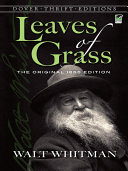
Leaves of Grass
Leaves of Grass by Walt Whitman (1855-1891)
"I celebrate myself, and sing myself." The most revolutionary collection of poetry in American literature. Whitman reinvented poetry with his free verse, sensual imagery, and democratic vision that embraced all of America.
Historical Significance:
Whitman self-published the first edition of Leaves of Grass in 1855 — just 12 poems, including "Song of Myself." He spent the rest of his life revising and expanding it through nine editions, the final "deathbed edition" appearing in 1891-92 with nearly 400 poems. Ralph Waldo Emerson greeted the first edition with a famous letter: "I greet you at the beginning of a great career." The book scandalized America with its frank sexuality and was banned in Boston. Whitman's free verse — no rhyme, no meter, just the rhythm of speech — broke open English-language poetry and made possible everything from Allen Ginsberg to hip-hop.
This public domain classic was originally published in 1855. Free to read and share.
Free
eBook
FREE
The Tempest
The Tempest by William Shakespeare (c. 1611)
"We are such stuff as dreams are made on, and our little life is rounded with a sleep." Prospero, the exiled Duke of Milan, uses magic to shipwreck his enemies on his enchanted island, where the spirit Ariel and the monster Caliban serve him.
Historical Significance:
Widely believed to be Shakespeare's last solo play (c. 1611), The Tempest reads as his farewell to the theater. Prospero's final speech — "Now my charms are all o'erthrown" — is often interpreted as Shakespeare himself laying down his pen. The play has been reinterpreted through every lens imaginable: as a colonialism allegory (Prospero as European colonizer, Caliban as indigenous victim), a meditation on art and power, and a father's love letter to his daughter. Aimé Césaire's Une Tempête (1969) reimagined it as an anti-colonial work. It remains Shakespeare's most debated and reinterpreted play.
This public domain classic was originally written c. 1611. Free to read and share.
Free
eBook
FREE
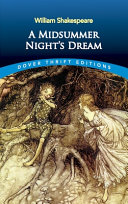
A Midsummer Night's Dream
A Midsummer Night's Dream by William Shakespeare (c. 1595)
"Lord, what fools these mortals be!" Four young lovers flee Athens into an enchanted forest, where fairy king Oberon and the mischievous Puck use a magical flower to create romantic chaos — and Bottom the weaver gets a donkey's head.
Historical Significance:
Written around 1595-96, A Midsummer Night's Dream is Shakespeare's most magical and joyous play — a celebration of love, imagination, and theater itself. The fairy world of Oberon, Titania, and Puck drew on English folklore and classical mythology. The "play within a play" — the hilariously bad "Pyramus and Thisbe" performed by Bottom and his friends — is both a parody of bad theater and a defense of theater's transformative power. Mendelssohn's incidental music (1842), Britten's opera (1960), and countless film adaptations have kept the play in popular culture. It remains the most frequently performed Shakespeare comedy.
This public domain classic was originally written c. 1595. Free to read and share.
Free
eBook
FREE
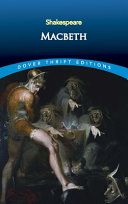
Macbeth
Macbeth by William Shakespeare (c. 1606)
"Is this a dagger which I see before me?" Three witches prophesy that Macbeth will become King of Scotland. Spurred by his wife's relentless ambition, he murders his way to the throne — and is consumed by guilt and paranoia.
Historical Significance:
Shakespeare wrote Macbeth around 1606, shortly after the Gunpowder Plot — an attempted assassination of King James I. The play was likely written partly to flatter James, who was fascinated by witchcraft. At just 2,100 lines, Macbeth is Shakespeare's shortest tragedy but his most intense — a compression of ambition, guilt, and supernatural horror into a white-hot narrative. Lady Macbeth's sleepwalking scene ("Out, damned spot!") and Macbeth's "Tomorrow, and tomorrow, and tomorrow" soliloquy are among the most psychologically penetrating moments in all drama. Theater tradition holds that the play is cursed — actors refer to it as "The Scottish Play" to avoid saying the name aloud.
This public domain classic was originally written c. 1606. Free to read and share.
Free
eBook
FREE
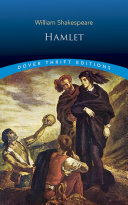
Hamlet
Hamlet, Prince of Denmark by William Shakespeare (c. 1600)
"To be, or not to be, that is the question." The greatest play ever written. Prince Hamlet, commanded by his father's ghost to avenge his murder by his uncle Claudius, descends into madness — real or feigned — in literature's most profound exploration of death, conscience, and the human condition.
Historical Significance:
Shakespeare wrote Hamlet around 1600-1601, and it was first published in quarto form in 1603. It is the most performed, most studied, and most quoted play in the English language. Every generation finds new meaning in it: Romantic critics saw Hamlet as a sensitive intellectual; Freudians saw an Oedipus complex; existentialists saw the absurdity of action in a meaningless universe. The role of Hamlet is considered the ultimate test for an actor — virtually every great stage actor has played it. The play contains more famous quotations than any other single work of literature.
This public domain classic was originally written c. 1600. Free to read and share.
Free

eBook
FREE
Utopia
Utopia by Thomas More (1516)
The book that gave us the word "utopia" — literally "no place." More describes an ideal island society with communal property, religious tolerance, and a six-hour workday. But is he serious, or is it all an elaborate joke?
Historical Significance:
Sir Thomas More, Lord Chancellor of England (later beheaded by Henry VIII for refusing to acknowledge the king's supremacy over the Church), wrote Utopia in Latin in 1516. The work invented a genre: the utopian novel. More's imaginary island has no private property, no lawyers, and universal education — radical ideas for the 16th century that influenced socialist thought for centuries. The deliberate ambiguity of whether More endorsed or satirized his fictional society has generated 500 years of debate. The word "utopia" — a pun on the Greek "eu-topos" (good place) and "ou-topos" (no place) — perfectly captures this ambiguity.
This public domain classic was originally published in 1516. Free to read and share.
Free

eBook
FREE
On the Origin of Species
On the Origin of Species by Charles Darwin (1859)
The book that changed everything. Darwin's theory of evolution by natural selection overturned centuries of belief about the natural world and humanity's place in it. The most important scientific book ever published.
Historical Significance:
Charles Darwin spent 20 years developing his theory before publishing On the Origin of Species on November 24, 1859. The first edition of 1,250 copies sold out on the first day. Darwin had delayed publication for years, fearing the religious and social backlash — which duly came. Bishop Wilberforce debated Thomas Huxley ("Darwin's Bulldog") at Oxford in 1860 in one of the most famous confrontations in intellectual history. The book did not use the word "evolution" (it appeared only in later editions) and mentioned human evolution only once, obliquely: "Light will be thrown on the origin of man." Despite — or because of — continued controversy, it remains the foundational text of modern biology.
This public domain classic was originally published in 1859. Free to read and share.
Free

eBook
FREE
Faust, Part One
Faust, Part One by Johann Wolfgang von Goethe
English translation by Bayard Taylor
Dissatisfied scholar Faust encounters Mephistopheles and enters a bargain that leads him into the life of Gretchen. Goethe's drama moves between verse, dialogue and changing scenes.
This edition contains Part One only, ending with the prison scene. It does not include Faust, Part Two. Taylor's translation presents the work in English in the original metres.
Retained text source: Project Gutenberg ebook 14591.
Free
eBook
FREE
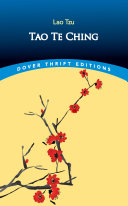
Tao Te Ching
Tao Te Ching by Lao Tzu (c. 4th century BC)
"The Tao that can be told is not the eternal Tao." Eighty-one short, enigmatic verses on the nature of existence, leadership, and living in harmony with the universe. The foundational text of Taoism and one of the most translated books in human history.
Historical Significance:
Attributed to Lao Tzu ("Old Master"), a semi-legendary Chinese philosopher who may have lived in the 6th or 4th century BC, the Tao Te Ching is the second most translated book in the world after the Bible. In just 5,000 Chinese characters, it outlines a philosophy of effortless action (wu wei), humility, and alignment with nature that has influenced everything from martial arts to management theory to environmental ethics. The text's paradoxical style — "The softest thing in the universe overcomes the hardest" — continues to generate new interpretations after 2,500 years. Silicon Valley leaders, military strategists, and therapists all draw on its wisdom.
This public domain classic was originally composed c. 4th century BC. Free to read and share.
Free
eBook
FREE
The Castle of Otranto
The Castle of Otranto by Horace Walpole (1764)
The very first Gothic novel. A giant helmet falls from the sky and crushes the heir of Otranto on his wedding day. Supernatural terrors, secret passages, and prophetic curses follow in this wildly imaginative tale that launched an entire literary genre.
Historical Significance:
Horace Walpole published The Castle of Otranto in 1764, initially pretending it was a medieval manuscript he had merely "translated." When its popularity encouraged him to reveal his authorship, he subtitled the second edition "A Gothic Story" — coining the genre name. The novel created the template for all Gothic fiction: the gloomy castle, the tyrannical patriarch, the imprisoned maiden, the supernatural revenge, the hidden identity revealed. Without Otranto, there would be no Frankenstein, no Dracula, no Jane Eyre, no Wuthering Heights, no Edgar Allan Poe.
This public domain classic was originally published in 1764. Free to read and share.
Free
eBook
FREE
Carmilla
Carmilla by Sheridan Le Fanu (1872)
A young woman in an isolated Austrian castle is visited by a mysterious, beautiful girl who is drawn to her with disturbing intensity. The original vampire novella — predating Dracula by 25 years and introducing the female vampire to literature.
Historical Significance:
Published in 1872, Carmilla directly influenced Bram Stoker's Dracula (1897) — Stoker acknowledged Le Fanu's story as inspiration. The novella's homoerotic subtext between Carmilla and the narrator Laura was groundbreaking for Victorian literature and has made it a touchstone of LGBTQ+ literary studies. The story established many vampire tropes that Stoker would later adopt: the aristocratic vampire, the slow seduction, the weakness to sunlight, the connection between vampirism and sexuality. It has been adapted into over 20 films and the popular YouTube web series "Carmilla" (2014-16).
This public domain classic was originally published in 1872. Free to read and share.
Free

eBook
FREE
The Raven
The Raven by Edgar Allan Poe
A grieving speaker receives a midnight visit from a raven whose repeated answer deepens his sorrow.
This edition contains the complete single poem The Raven. It is not The Raven and Other Poems and does not include Annabel Lee, The Bells, Lenore, To Helen or other poems.
Retained text source: Project Gutenberg ebook 1065.
Free
eBook
FREE
The Tenant of Wildfell Hall
The Tenant of Wildfell Hall by Anne Brontë (1848)
A mysterious young woman arrives at a ruined mansion with her small son, sparking gossip. Her diary reveals a harrowing story of marriage to a dissolute husband and her daring escape. The most radical of the Brontë novels.
Historical Significance:
Published in 1848, The Tenant of Wildfell Hall was Anne Brontë's second and final novel — she died of tuberculosis the following year at age 29. It is widely considered the first sustained feminist novel in English: Helen's decision to leave her abusive, alcoholic husband and support herself through her art was revolutionary in an era when married women had no legal rights to property, custody, or independence. Charlotte Brontë suppressed the novel after Anne's death, calling it "an entire mistake." Modern scholars have restored it to its rightful place as a masterpiece. May Sinclair called it "the most astonishing work of female genius in any country or any age."
This public domain classic was originally published in 1848. Free to read and share.
Free
eBook
FREE
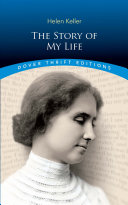
The Story of My Life
The Story of My Life by Helen Keller (1903)
The autobiography of the deaf-blind woman who learned to communicate, graduated from Radcliffe College, and became one of the most inspirational figures in American history. Written when Keller was just 22 years old.
Historical Significance:
Helen Keller lost her sight and hearing at 19 months due to illness (likely scarlet fever or meningitis). Her breakthrough moment — when teacher Anne Sullivan spelled W-A-T-E-R into her hand while water flowed over the other — is one of the most famous scenes in American autobiography. Published in 1903 while Keller was still a student at Radcliffe, the book became an international sensation. Keller went on to become a political activist, suffragist, and advocate for disability rights. She met every U.S. president from Grover Cleveland to Lyndon Johnson. Mark Twain, who befriended her, called her "the most marvelous person of her sex that has existed on this earth since Joan of Arc."
This public domain classic was originally published in 1903. Free to read and share.
Free

eBook
FREE
The Mayor of Casterbridge
The Mayor of Casterbridge by Thomas Hardy (1886)
Michael Henchard, a hay-trusser, gets drunk at a country fair and sells his wife and baby daughter to a sailor. Years later, now a prosperous mayor, his past returns to destroy everything he has built.
Historical Significance:
Hardy's subtitle — "The Life and Death of a Man of Character" — signals this is a classical tragedy transplanted to Victorian Dorset. Published in 1886, the novel explores how one terrible act committed in youth can haunt an entire life. Henchard is one of literature's greatest flawed protagonists — violent, proud, generous, and self-destructive. Hardy, who trained as an architect, constructed the plot with architectural precision, every element building toward inevitable catastrophe.
This public domain classic was originally published in 1886. Free to read and share.
Free

eBook
FREE
Far from the Madding Crowd
Far from the Madding Crowd by Thomas Hardy (1874)
Bathsheba Everdene, a fiercely independent woman farmer, attracts three very different suitors: the steadfast shepherd Gabriel Oak, the reckless soldier Sergeant Troy, and the obsessive farmer Boldwood. Hardy's most beloved and accessible novel.
Historical Significance:
Published in 1874, Far from the Madding Crowd was Hardy's first major success and established the fictional Wessex that would become his literary landscape. The title comes from Thomas Gray's "Elegy Written in a Country Churchyard." Bathsheba Everdene — resourceful, proud, and flawed — was a remarkably modern heroine for the 1870s, running her own farm in a world of men. Suzanne Collins named her Hunger Games heroine Katniss Everdeen as a deliberate homage. The 2015 film starring Carey Mulligan was a critical success.
This public domain classic was originally published in 1874. Free to read and share.
Free
eBook
FREE
Tess of the d'Urbervilles
Tess of the d'Urbervilles by Thomas Hardy (1891)
A pure young woman is seduced, abandoned, and ultimately destroyed by a hypocritical society. Hardy's most powerful novel and his most devastating critique of Victorian moral double standards.
Historical Significance:
Hardy subtitled the novel "A Pure Woman Faithfully Presented," deliberately provoking Victorian readers who would judge Tess as "fallen." Published in 1891 after being rejected by two magazines for its sexual content, Tess was Hardy's most controversial and commercially successful novel. The critical backlash against his next novel, Jude the Obscure (1895), was so vicious that Hardy abandoned fiction entirely and spent the rest of his life writing poetry. Tess remains one of English literature's most devastating tragedies — a story about how society punishes women for the sins committed against them.
This public domain classic was originally published in 1891. Free to read and share.
Free
No classics match your filters.