New eBooks
0 booksNo eBooks Yet
Be the first to publish an eBook on BoingyBooks!
🎓 Your Free Digital Library Awaits
Access 232+ classic ebooks — from Shakespeare to Sherlock Holmes. Read on any device, save your progress, build your library.
Create Free Account →Classic Literature
38 free classicsTimeless works from the public domain, beautifully formatted for the BoingyBooks reader.
eBook
FREE
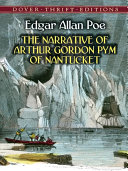
The Narrative of Arthur Gordon Pym of Nantucket
The Narrative of Arthur Gordon Pym of Nantucket by Edgar Allan Poe (1838)
Poe's only complete novel. A young man stows away on a whaling ship and encounters mutiny, shipwreck, cannibalism, and increasingly bizarre discoveries as the voyage presses deeper into the Antarctic — culminating in one of literature's most mysterious and debated endings.
Historical Significance:
Published in 1838, Arthur Gordon Pym was Poe's attempt to write a longer work that would bring him the financial success his short stories had not. The novel failed commercially, and Poe dismissed it as "a very silly book." But its influence has been extraordinary: Jules Verne wrote a sequel (An Antarctic Mystery, 1897), Herman Melville drew on it for Moby-Dick, H.P. Lovecraft incorporated its Antarctic imagery into At the Mountains of Madness, and Jorge Luis Borges was obsessed with its enigmatic final pages. The novel's abrupt, hallucinatory ending — a vast white figure rises from the Antarctic sea — has generated 180 years of interpretation and remains one of literature's great unsolved mysteries.
This public domain classic was originally published in 1838. Free to read and share.
Free
eBook
FREE
The Swiss Family Robinson
The Swiss Family Robinson by Johann David Wyss (1812)
A Swiss family is shipwrecked on a tropical island and builds an elaborate civilization — a treehouse, farm, workshop, and menagerie — using ingenuity and the convenient contents of the wreck. The ultimate family survival fantasy.
Historical Significance:
Johann David Wyss, a Swiss pastor, wrote The Swiss Family Robinson for his four sons as an instructional entertainment, teaching natural history and resourcefulness through adventure. Published in 1812, it was inspired by Robinson Crusoe but replaced the solitary castaway with a family — making it far more appealing to children. The novel has been continuously popular for over 200 years. Disney's 1960 film is a beloved classic, and the famous Swiss Family Treehouse attraction at Disney theme parks draws millions of visitors annually. The novel established the "family survival" subgenre that continues in everything from Lost to survival reality TV.
This public domain classic was originally published in 1812. Free to read and share.
Free
eBook
FREE
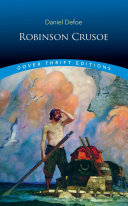
Robinson Crusoe
Robinson Crusoe by Daniel Defoe (1719)
Shipwrecked and alone on a deserted island for 28 years, Robinson Crusoe must build shelter, grow food, and survive — until he discovers he is not alone. The novel that invented the survival genre and is often called the first English novel.
Historical Significance:
Daniel Defoe published Robinson Crusoe on April 25, 1719, when he was nearly 60 years old. The novel was partly inspired by the real story of Alexander Selkirk, a Scottish sailor marooned on a Pacific island for four years (1704-1709). The book was an immediate and enormous success, spawning countless imitations — the genre became known as "Robinsonades." Rousseau called it "the most felicitous treatise on natural education." Marx used Crusoe as a model for economic theory. The novel invented the desert island story, the survival narrative, and arguably the realistic novel itself. It has never been out of print in over 300 years.
This public domain classic was originally published in 1719. Free to read and share.
Free
eBook
FREE
The Book of the Thousand Nights and a Night
The Arabian Nights (One Thousand and One Nights), translated by Richard F. Burton (1885)
Scheherazade saves her life by telling her murderous husband a new story every night for 1,001 nights. Aladdin, Ali Baba and the Forty Thieves, Sinbad the Sailor — the most famous story collection in the world.
Historical Significance:
The Arabian Nights originated as a collection of Middle Eastern and South Asian folk tales compiled over centuries, with roots in Persian, Arabic, Indian, and Egyptian oral traditions. Antoine Galland's 1704 French translation introduced Europe to Aladdin, Ali Baba, and Sinbad — stories that may not have been in the original Arabic manuscripts but became the most famous. Richard Burton's 1885-88 English translation was the first unexpurgated version, preserving the sexual and violent content that previous translators had censored. The tales influenced everything from Edgar Allan Poe to Jorge Luis Borges to Disney's Aladdin. Scheherazade herself — the woman who saves her life through storytelling — is the ultimate symbol of narrative's power.
This public domain classic was originally compiled over centuries and translated by Burton in 1885. Free to read and share.
Free
eBook
FREE
The White Company
The White Company by Arthur Conan Doyle (1891)
A young Saxon monk leaves his abbey and joins Sir Nigel Loring's "White Company" of English longbowmen during the Hundred Years' War. Doyle's personal favorite among all his books — the novel he wished to be remembered for instead of Sherlock Holmes.
Historical Significance:
Arthur Conan Doyle considered The White Company his best work and was perpetually frustrated that the public preferred Sherlock Holmes. Published in 1891, the novel is a meticulously researched historical romance set in 1366, during Edward III's wars in France and Spain. Doyle's depiction of medieval warfare, archery, and chivalry drew on extensive primary source research. The novel was hugely popular in its time and remains one of the finest historical adventure novels in English. Doyle wrote a prequel, Sir Nigel (1906), which he also valued above Holmes.
This public domain classic was originally published in 1891. Free to read and share.
Free
eBook
FREE
The Return of Tarzan
The Return of Tarzan by Edgar Rice Burroughs (1913)
Tarzan, rejected by Jane, travels to Paris and North Africa as a secret agent before returning to the jungles of Africa, where he discovers the lost city of Opar and its treasure. The sequel that expanded Tarzan from a single story into an epic saga.
Historical Significance:
Serialized in 1913, The Return of Tarzan resolved the cliffhanger ending of the first novel and established the formula for the 22 Tarzan sequels that followed: Tarzan moves between civilization and wilderness, discovers lost cities, and rescues Jane from peril. The novel introduced Opar — a lost colony of Atlantis — and its high priestess La, who became a recurring character. The Tarzan franchise generated over $2 billion in total revenue through books, films, TV, and merchandise, making it one of the most commercially successful literary properties in history.
This public domain classic was originally published in 1913. Free to read and share.
Free

eBook
FREE
At the Earth's Core
At the Earth's Core by Edgar Rice Burroughs (1914)
David Innes and inventor Abner Perry drill through the Earth's crust in a mechanical "iron mole" and discover Pellucidar — a savage prehistoric world inside the hollow Earth, lit by a central sun, where humans are enslaved by telepathic reptiles.
Historical Significance:
Published in 1914, At the Earth's Core launched Burroughs' Pellucidar series — seven novels set inside a hollow Earth populated by dinosaurs, cavemen, and bizarre creatures. The hollow Earth theory was still taken semi-seriously in the early 20th century, and Burroughs exploited it brilliantly. The novel's influence extends to every "lost world" and "journey to the center of the earth" story that followed. The 1976 film starred Peter Cushing and Doug McClure.
This public domain classic was originally published in 1914. Free to read and share.
Free

eBook
FREE
The Warlord of Mars
The Warlord of Mars by Edgar Rice Burroughs (1914)
John Carter pursues the villains who have kidnapped his wife Dejah Thoris across the entire planet of Barsoom — from the equatorial seas to the frozen north pole. The climactic third volume of the original Mars trilogy.
Historical Significance:
Serialized in 1913-14, The Warlord of Mars completes Carter's rise from stranger to supreme ruler of Mars. Burroughs' breakneck pacing — the novel is essentially one long chase sequence — set the standard for pulp adventure fiction. The trilogy's arc, from bewildered outsider to planetary champion, established the template for the "chosen one" narrative that dominates modern fantasy and science fiction from Luke Skywalker to Harry Potter.
This public domain classic was originally published in 1914. Free to read and share.
Free
eBook
FREE
The Gods of Mars
The Gods of Mars by Edgar Rice Burroughs (1913)
John Carter returns to Barsoom (Mars) and discovers that the planet's religion is a fraud maintained by a race of false gods who feed on the faithful. A thrilling sequel that demolishes organized religion with adventure-fiction panache.
Historical Significance:
Serialized in 1913, The Gods of Mars continues the Barsoom saga with Carter descending into the Valley Dor — Mars' promised paradise — only to find it a death trap. Burroughs' attack on religious hypocrisy was bold for 1913. The novel introduced Thuvia of Ptarth and expanded the Martian world with new races, landscapes, and political intrigue. The Barsoom series' influence on science fiction — from Flash Gordon to Star Wars to Avatar — makes these among the most consequential adventure novels ever written.
This public domain classic was originally published in 1913. Free to read and share.
Free
eBook
FREE
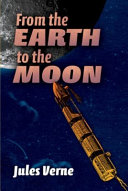
From the Earth to the Moon
From the Earth to the Moon by Jules Verne (1865)
After the Civil War, the Baltimore Gun Club decides to fire a projectile at the Moon — and three men volunteer to ride inside it. Verne's remarkably prophetic novel predicted the Apollo program with uncanny accuracy.
Historical Significance:
Published in 1865, Verne's novel predicted: the launch site in Florida (near Cape Canaveral), a crew of three Americans, the use of a cannon-like launch system, weightlessness in space, a splashdown in the Pacific, and the cost approximately matching NASA's Apollo budget (adjusted for inflation). NASA's actual trajectory to the Moon was almost identical to Verne's fictional one. The novel, written 104 years before Apollo 11, is the most prophetic work of science fiction ever written. Georges Méliès' 1902 film A Trip to the Moon was based partly on this novel.
This public domain classic was originally published in 1865. Free to read and share.
Free

eBook
FREE
The Mysterious Island
The Mysterious Island by Jules Verne (1875)
Five American prisoners of war escape by balloon during the Civil War and are stranded on an uncharted Pacific island, where they must use science and ingenuity to survive — aided by a mysterious, unseen benefactor.
Historical Significance:
Published in 1875, The Mysterious Island is Verne's longest and most scientifically detailed novel — a Robinson Crusoe for the industrial age, where the castaways literally reinvent civilization from scratch using chemistry, engineering, and natural resources. The novel connects to Verne's larger universe: the mysterious benefactor is revealed to be Captain Nemo from Twenty Thousand Leagues Under the Seas, now old and dying. It is Verne's most optimistic work, celebrating human intelligence and the power of applied science to overcome any obstacle.
This public domain classic was originally published in 1875. Free to read and share.
Free

eBook
FREE
The First Men in the Moon
The First Men in the Moon by H.G. Wells (1901)
An eccentric scientist invents "Cavorite," a substance that blocks gravity, and travels to the Moon with a bankrupt businessman. They discover an underground civilization of insect-like Selenites organized into a rigid caste system.
Historical Significance:
Published in 1901 — 68 years before the actual Moon landing — Wells created a lunar journey that is both thrilling adventure and social satire. The Selenite society, where every individual is physically shaped from birth for their specific role, is a dark critique of specialization and social engineering. Wells' anti-gravity substance was scientifically implausible but narratively brilliant. Ray Harryhausen's 1964 film adaptation featured his celebrated stop-motion effects. When Apollo 11 astronauts walked on the Moon in 1969, they acknowledged Wells' imaginative precedent.
This public domain classic was originally published in 1901. Free to read and share.
Free
eBook
FREE
Greenmantle
Greenmantle by John Buchan (1916)
Richard Hannay is sent behind enemy lines during World War I to investigate a German plot to use Islamic jihad to destabilize the British Empire. A thrilling spy adventure across wartime Europe to Constantinople.
Historical Significance:
The sequel to The Thirty-Nine Steps, published in 1916 during World War I, Greenmantle was remarkably prescient about the strategic importance of the Middle East and the potential weaponization of religious fervor. Buchan, who worked in British military intelligence, based the plot on real German attempts to foment an Islamic uprising against Britain. The novel introduced the villain Doktor von Doorn and the memorable American character John S. Blenkiron. It remains one of the finest World War I adventure novels and a landmark of the spy thriller genre.
This public domain classic was originally published in 1916. Free to read and share.
Free
eBook
FREE
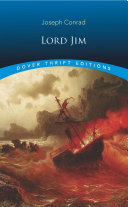
Lord Jim
Lord Jim by Joseph Conrad (1900)
A young British seaman abandons a sinking ship full of pilgrims in a moment of cowardice, then spends the rest of his life seeking redemption in the remote jungles of Southeast Asia. Conrad's masterpiece of moral complexity.
Historical Significance:
Published in 1900, Lord Jim was based on a real incident — the 1880 SS Jeddah affair, where officers abandoned a ship carrying nearly 1,000 Muslim pilgrims. Conrad, a former merchant sailor who had experienced similar moral tests at sea, created in Jim one of literature's most psychologically complex characters. The novel's innovative narrative structure — told through multiple perspectives by the narrator Marlow — influenced modernist fiction profoundly. F. Scott Fitzgerald cited it as a major influence on The Great Gatsby.
This public domain classic was originally published in 1900. Free to read and share.
Free
eBook
FREE
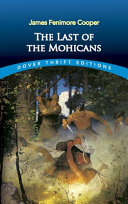
The Last of the Mohicans
The Last of the Mohicans by James Fenimore Cooper (1826)
During the French and Indian War, frontiersman Hawkeye (Natty Bumppo) and his Mohican companions Chingachgook and Uncas escort two sisters through hostile territory. The most famous American adventure novel of the 19th century.
Historical Significance:
Published in 1826, The Last of the Mohicans was the second of Cooper's five Leatherstocking Tales and his greatest commercial success. It was the bestselling American novel of the 19th century and was translated into virtually every European language. While Cooper's portrayal of Native Americans has been criticized as romanticized and stereotypical, the novel was groundbreaking in presenting indigenous characters as heroic protagonists. Daniel Day-Lewis's 1992 film adaptation revived interest in the novel. Cooper essentially invented the American frontier adventure genre.
This public domain classic was originally published in 1826. Free to read and share.
Free

eBook
FREE
The Merry Adventures of Robin Hood
The Merry Adventures of Robin Hood by Howard Pyle (1883)
The definitive retelling of the Robin Hood legend. Robin Hood, Little John, Friar Tuck, Maid Marian, and the Merry Men rob from the rich, give to the poor, and outwit the Sheriff of Nottingham in Sherwood Forest.
Historical Significance:
Howard Pyle, America's greatest illustrator, wrote and illustrated this book in 1883, creating the version of Robin Hood that all subsequent adaptations draw from. Pyle consolidated scattered medieval ballads into a coherent narrative with the characters we know today. His Robin Hood is jovial, generous, and loyal — the template for Errol Flynn's 1938 film, Disney's animated fox (1973), Kevin Costner's 1991 version, and every retelling since. Pyle's own illustrations, in a medieval woodcut style, are considered masterpieces of book illustration.
This public domain classic was originally published in 1883. Free to read and share.
Free
eBook
FREE
Kim
Kim by Rudyard Kipling (1901)
Kimball O'Hara, an Irish orphan raised as a street urchin in Lahore, becomes entangled in the "Great Game" of British espionage along the Grand Trunk Road of India. A picaresque masterpiece of adventure, spirituality, and cultural identity.
Historical Significance:
Considered Kipling's finest novel, Kim was published in 1901 and draws on Kipling's deep love for India, where he was born and spent his formative years. The novel is both a spy thriller and a spiritual quest — Kim serves the British Secret Service while also seeking enlightenment alongside a Tibetan lama. T.S. Eliot called it "a masterpiece." It remains the most vivid portrait of colonial India in English literature and has been praised for its sympathetic, detailed portrayal of Indian cultures and religions.
This public domain classic was originally published in 1901. Free to read and share.
Free

eBook
FREE
The Second Jungle Book
The Second Jungle Book by Rudyard Kipling
Five Mowgli stories continue his life in the jungle: How Fear Came, Letting in the Jungle, The King's Ankus, Red Dog and The Spring Running.
Three other stories complete the collection: The Miracle of Purun Bhagat, The Undertakers and Quiquern. Each story is accompanied by poetry.
This is the eight-story sequel to The Jungle Book, not a collection containing five additional non-Mowgli tales.
Retained text source: Project Gutenberg ebook 1937.
Free
eBook
FREE
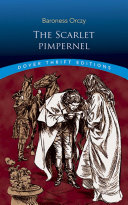
The Scarlet Pimpernel
The Scarlet Pimpernel by Baroness Orczy (1905)
During the French Revolution's Reign of Terror, a mysterious English nobleman secretly rescues French aristocrats from the guillotine, leaving only a small red flower as his calling card. The original secret-identity superhero.
Historical Significance:
Baroness Emmuska Orczy, a Hungarian-born British author, first wrote The Scarlet Pimpernel as a play in 1903, then novelized it in 1905. The character of Sir Percy Blakeney — an apparently foolish aristocrat who is secretly a brilliant hero — directly created the "secret identity" archetype that would define superheroes for the next century. Zorro (1919), Batman (1939), and Superman (1938) all owe a direct debt to the Scarlet Pimpernel. The novel also pioneered the "love triangle complicated by secret identity" plot that became a staple of superhero fiction. "Is he in heaven? Is he in hell? That demmed, elusive Pimpernel!" is one of adventure fiction's most famous verses.
This public domain classic was originally published in 1905. Free to read and share.
Free
eBook
FREE
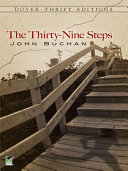
The Thirty-Nine Steps
The Thirty-Nine Steps by John Buchan (1915)
Richard Hannay, a bored mining engineer, stumbles into an international espionage conspiracy and must flee across the Scottish Highlands with both the police and enemy agents on his trail. The novel that invented the modern spy thriller.
Historical Significance:
John Buchan, a Scottish politician and future Governor-General of Canada, wrote The Thirty-Nine Steps in 1915 while recovering from illness during World War I. The novel created the "man on the run" thriller template: an innocent man is framed, pursues the real villains while being pursued himself, and must solve the mystery to clear his name. Alfred Hitchcock's 1935 film adaptation is one of his greatest works. Every spy thriller from James Bond to Jason Bourne follows the structural template Buchan established.
This public domain classic was originally published in 1915. Free to read and share.
Free
eBook
FREE
King Solomon's Mines
King Solomon's Mines by H. Rider Haggard (1885)
Allan Quatermain leads an expedition into uncharted Africa to find a missing man — and discovers the legendary diamond mines of King Solomon. The original adventure quest that set the template for Indiana Jones.
Historical Significance:
Haggard wrote King Solomon's Mines on a bet with his brother that he could write a novel as good as Treasure Island. Published in 1885, it became the first English adventure novel set in Africa and created the "lost world" genre. Allan Quatermain — tough, experienced, modest — became the archetype for every adventure hero from Indiana Jones to Lara Croft. Steven Spielberg and George Lucas have both acknowledged the novel's direct influence on the Indiana Jones franchise.
This public domain classic was originally published in 1885. Free to read and share.
Free

eBook
FREE
She: A History of Adventure
She: A History of Adventure by H. Rider Haggard (1887)
Two Englishmen journey to the heart of Africa and discover a lost kingdom ruled by Ayesha, "She-who-must-be-obeyed" — a 2,000-year-old white queen of supernatural beauty and terrifying power who has been waiting for her reincarnated lover.
Historical Significance:
H. Rider Haggard wrote She in just six weeks in 1886, calling it "a strange story." Published in 1887, it became one of the bestselling novels of all time, with over 83 million copies sold. Haggard was a colonial administrator in South Africa, and the novel reflects Victorian fascination with — and anxiety about — the "Dark Continent." Ayesha is one of fiction's most compelling and problematic characters: powerful, brilliant, and terrifying, yet also a product of colonial fantasy.
Freud and Jung both analyzed the novel. It influenced C.S. Lewis's Narnia and Tolkien's Galadriel. The phrase "She who must be obeyed" entered common usage (famously used in Rumpole of the Bailey).
This public domain classic was originally published in 1887. Free to read and share.
Free
eBook
FREE
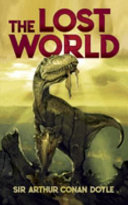
The Lost World
The Lost World by Arthur Conan Doyle (1912)
Professor Challenger leads an expedition to a South American plateau where dinosaurs still live. The original "lost world" adventure — the book that put dinosaurs into popular culture and directly inspired Jurassic Park.
Historical Significance:
Arthur Conan Doyle, seeking an escape from Sherlock Holmes, created the bombastic, brilliant Professor Challenger as a new hero. Published in 1912, The Lost World tapped into real excitement about paleontology — major dinosaur discoveries were being made in the American West and Argentina. Doyle promoted the book with an elaborate hoax, presenting doctored photographs of himself in "prehistoric" settings.
The novel established the template that Michael Crichton would follow 78 years later with Jurassic Park: scientists discover living dinosaurs in a remote location, with terrifying consequences. Every "lost world" story since — from King Kong to Jurassic World — follows the path Doyle blazed.
This public domain classic was originally published in 1912. Free to read and share.
Free
eBook
FREE
A Princess of Mars
A Princess of Mars by Edgar Rice Burroughs (1912)
Civil War veteran John Carter is mysteriously transported to Mars (Barsoom), where he discovers a dying planet of warring alien races, four-armed green warriors, and the beautiful princess Dejah Thoris. The novel that inspired Star Wars, Avatar, and modern science fiction.
Historical Significance:
Serialized as "Under the Moons of Mars" in All-Story Magazine in 1912 (the same year as Tarzan), A Princess of Mars created the "planetary romance" genre. George Lucas has cited it as a major influence on Star Wars — the desert planet, the warrior princess, the fish-out-of-water hero transplanted to an alien world. James Cameron's Avatar drew heavily on Barsoom's ecology and warrior cultures. Ray Bradbury, Arthur C. Clarke, and Carl Sagan all acknowledged Burroughs' influence on their love of space exploration. Disney's 2012 film adaptation John Carter, while a box office disappointment, introduced a new generation to Burroughs' imaginative world.
This public domain classic was originally published in 1912. Free to read and share.
Free
No classics match your filters.