New eBooks
0 booksNo eBooks Yet
Be the first to publish an eBook on BoingyBooks!
🎓 Your Free Digital Library Awaits
Access 232+ classic ebooks — from Shakespeare to Sherlock Holmes. Read on any device, save your progress, build your library.
Create Free Account →Classic Literature
9 free classicsTimeless works from the public domain, beautifully formatted for the BoingyBooks reader.

eBook
FREE
Resurrection
Resurrection by Leo Tolstoy (1899)
Prince Nekhlyudov, serving on a jury, recognizes the accused prostitute as a woman he seduced and abandoned years ago. Consumed by guilt, he follows her through the Russian prison system, seeking to make amends. Tolstoy's last major novel.
Historical Significance:
Tolstoy wrote Resurrection at age 71, donating all proceeds to the Doukhobors, a persecuted Russian religious sect he was helping emigrate to Canada. Published in 1899, it is his most overtly political novel — a savage indictment of the Russian legal system, the Orthodox Church, and the aristocratic class to which Tolstoy himself belonged. The novel led to his excommunication from the Russian Orthodox Church in 1901. It was Tolstoy's final fictional statement of his radical Christian philosophy: that all institutions are corrupt and only personal moral transformation can save humanity.
This public domain classic was originally published in 1899. Free to read and share.
Free
eBook
FREE
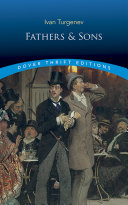
Fathers and Sons
Fathers and Sons by Ivan Turgenev (1862)
Bazarov, a young nihilist who rejects all authority, tradition, and sentiment, clashes with the older generation — until love makes a mockery of his philosophy. The novel that introduced the word "nihilism" to the world.
Historical Significance:
Published in 1862, Fathers and Sons captured the generational conflict tearing Russian society apart in the 1860s. Turgenev coined the term "nihilist" to describe Bazarov's rejection of all established values — and the word immediately entered every European language. Both radicals and conservatives attacked the novel: radicals felt Bazarov was a caricature, conservatives felt he was glorified. Turgenev, devastated by the backlash, spent most of his remaining years in Western Europe. The novel's exploration of how each generation rebels against its parents, only to be betrayed by its own contradictions, remains timeless.
This public domain classic was originally published in 1862. Free to read and share.
Free
eBook
FREE
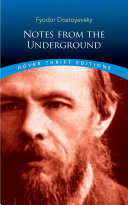
Notes from Underground
Notes from Underground by Fyodor Dostoyevsky (1864)
"I am a sick man... I am a spiteful man." The anguished, paradoxical confessions of a retired civil servant — bitter, self-aware, and unable to change. The first existentialist novel and the birth of the modern anti-hero.
Historical Significance:
Published in 1864, Notes from Underground is the hinge between classical and modern literature. Its unnamed narrator — contradictory, self-loathing, paralyzed by consciousness — was something entirely new in fiction. He rejects the optimistic rationalism of his era, arguing that humans are inherently irrational and will deliberately act against their own interests just to assert their freedom. The novella directly influenced Nietzsche, Kafka, Camus, and Sartre. Walter Kaufmann called it "the best overture for existentialism ever written." Every unreliable narrator, every alienated anti-hero in modern fiction descends from the Underground Man.
This public domain classic was originally published in 1864. Free to read and share.
Free
eBook
FREE
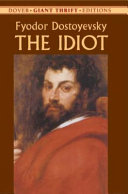
The Idiot
The Idiot by Fyodor Dostoyevsky (1869)
Prince Myshkin, a genuinely good man — innocent, compassionate, and epileptic — returns to Russia from a Swiss sanatorium and is destroyed by a society that cannot comprehend or tolerate his goodness.
Historical Significance:
Dostoyevsky set himself an impossible challenge with The Idiot: "to portray a perfectly beautiful man." He modeled Myshkin partly on Christ and partly on Don Quixote — a pure soul in a corrupt world. Published serially in 1868-69, the novel explores whether genuine goodness is sustainable in human society. Dostoyevsky's answer is devastating: Myshkin's compassion for everyone ultimately helps no one and destroys himself. Akira Kurosawa's 1951 film adaptation transposed the story to post-war Japan. The novel remains Dostoyevsky's most debated work — simultaneously his most heartfelt and most troubling.
This public domain classic was originally published in 1869. Free to read and share.
Free
eBook
FREE
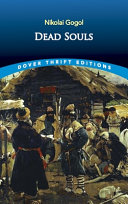
Dead Souls
Dead Souls by Nikolai Gogol (1842)
Chichikov, a charming con man, travels through provincial Russia buying "dead souls" — serfs who have died but still appear on the census rolls — as collateral for a fraudulent mortgage scheme. Russia's greatest satirical novel.
Historical Significance:
Gogol published Part One of Dead Souls in 1842, intending a three-part work modeled on Dante's Divine Comedy: Part One as Inferno (Russia's corruption), Part Two as Purgatorio (moral awakening), and Part Three as Paradiso (redemption). He burned the manuscript of Part Two shortly before his death in 1852, believing it was not worthy. Part One alone — a panorama of provincial Russian absurdity — is considered a masterpiece. Every character Chichikov meets embodies a different human vice: miserliness, gluttony, sentimentality, brutality. Nabokov called it "the greatest Russian novel." It influenced Dostoyevsky, Bulgakov, and every subsequent Russian satirist.
This public domain classic was originally published in 1842. Free to read and share.
Free
eBook
FREE
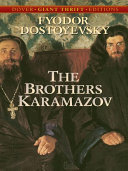
The Brothers Karamazov
The Brothers Karamazov by Fyodor Dostoyevsky (1880)
Dostoyevsky's final and greatest novel. Three brothers — the passionate Dmitri, the intellectual Ivan, and the saintly Alyosha — are drawn into the murder of their despicable father. A murder mystery that becomes the deepest exploration of faith, doubt, morality, and free will in all of literature.
Historical Significance:
Serialized in The Russian Messenger from 1879 to 1880, The Brothers Karamazov was completed just months before Dostoyevsky's death in January 1881. He had planned a sequel that was never written. The novel contains "The Grand Inquisitor," a parable within the story that is considered one of the most powerful pieces of philosophical writing ever composed.
Freud called it "the most magnificent novel ever written." Einstein said it taught him more about the world than any scientific paper. The novel asks the question that has haunted philosophy for millennia: if God does not exist, is everything permitted? Dostoyevsky's answer is complex, devastating, and ultimately hopeful.
This public domain classic was originally published in 1880. Free to read and share.
Free

eBook
FREE
War and Peace
War and Peace by Leo Tolstoy (1869)
The Russian epic. Five aristocratic families navigate love, loss, and destiny against Napoleon's 1812 invasion of Russia. At 587,287 words, it is one of the longest novels ever written — and many consider it the greatest.
Historical Significance:
Tolstoy published War and Peace in serial form from 1865 to 1869, then in book form. He began writing it after visiting the battlefield of Borodino, where 70,000 men died in a single day in 1812. Tolstoy's genius was to show history not through generals and emperors but through the daily lives of ordinary people caught in extraordinary events.
The novel required immense research — Tolstoy read every account of the Napoleonic Wars he could find, interviewed survivors, and visited every battlefield. He rewrote the opening sentence dozens of times. His wife Sophia copied the entire manuscript seven times by hand. The novel permanently changed what fiction could achieve — no longer just entertainment, but a philosophical investigation of free will, fate, and the forces that drive history.
This public domain classic was originally published in 1869. Free to read and share.
Free
eBook
FREE
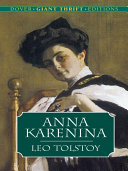
Anna Karenina
Anna Karenina by Leo Tolstoy (1877)
"All happy families are alike; each unhappy family is unhappy in its own way." Anna Karenina's passionate, destructive affair with Count Vronsky unfolds against the backdrop of Russian aristocratic society — a novel Dostoyevsky called "flawless as a work of art."
Historical Significance:
Tolstoy serialized Anna Karenina in The Russian Messenger from 1875 to 1877. The novel was inspired by a real event: in 1872, a woman named Anna Pirogova threw herself under a train at a railway station near Tolstoy's estate after being abandoned by her lover. Tolstoy attended the autopsy.
The novel interweaves Anna's tragic love story with Levin's search for meaning through farming and family — Levin being Tolstoy's autobiographical portrait of himself. Faulkner, Nabokov, and Thomas Mann all named it the greatest novel ever written. In 2007, Time magazine's list of the 10 greatest novels placed it at number one.
This public domain classic was originally published in 1877. Free to read and share.
Free
eBook
FREE
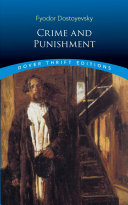
Crime and Punishment
Crime and Punishment by Fyodor Dostoyevsky (1866)
A destitute student murders a pawnbroker, believing himself to be an extraordinary man above moral law. What follows is one of literature's most intense psychological explorations of guilt, conscience, and redemption.
Historical Significance:
Dostoyevsky wrote Crime and Punishment while in severe financial distress, having lost his savings gambling in Wiesbaden. He serialized it in The Russian Messenger from January to December 1866. He was simultaneously writing another novel, The Gambler, to meet a crushing deadline — he dictated it to a young stenographer, Anna Snitkina, whom he married four months later.
The novel was partly inspired by the case of Pierre-François Lacenaire, a French murderer who justified his crimes through intellectual philosophy. Dostoyevsky, who had himself been sentenced to death (commuted at the last moment to hard labor in Siberia), understood the psychology of extreme situations better than perhaps any other novelist.
Raskolnikov's theory — that extraordinary people like Napoleon are above conventional morality — was Dostoyevsky's critique of the nihilism and utilitarianism spreading through Russian intellectual circles in the 1860s.
Cultural Impact:
Crime and Punishment is considered one of the greatest novels ever written and the founding text of psychological fiction. It influenced Nietzsche, Freud, Kafka, Camus, and virtually every crime novelist who followed. The "Raskolnikov complex" — intellectual justification for immoral acts — remains a concept in psychology and philosophy. The novel is required reading in universities worldwide.
This public domain classic was originally published in 1866. Free to read and share.
Free
No classics match your filters.