New eBooks
0 booksNo eBooks Yet
Be the first to publish an eBook on BoingyBooks!
🎓 Your Free Digital Library Awaits
Access 232+ classic ebooks — from Shakespeare to Sherlock Holmes. Read on any device, save your progress, build your library.
Create Free Account →Classic Literature
7 free classicsTimeless works from the public domain, beautifully formatted for the BoingyBooks reader.

eBook
FREE
The Works of Edgar Allan Poe, Volume 1
The Works of Edgar Allan Poe, Volume 1 — Tales of Mystery and Imagination
The complete tales of the master of horror: "The Fall of the House of Usher," "The Masque of the Red Death," "The Pit and the Pendulum," "The Tell-Tale Heart," "The Cask of Amontillado," "The Black Cat," and more.
Historical Significance:
Edgar Allan Poe (1809-1849) invented the detective story ("The Murders in the Rue Morgue"), pioneered science fiction, and perfected the horror tale — all while living in poverty, battling alcoholism, and mourning his young wife Virginia who died of tuberculosis. Poe's influence is immeasurable: Arthur Conan Doyle modeled Sherlock Holmes on Poe's C. Auguste Dupin; H.P. Lovecraft called him the patriarch of cosmic horror; Alfred Hitchcock acknowledged Poe as his primary inspiration. Baudelaire, who translated Poe into French, said "Poe was the literature of the United States." His tales remain the gold standard for atmospheric horror.
This public domain classic collects works published before 1849. Free to read and share.
Free

eBook
FREE
The Sign of the Four
The Sign of the Four by Arthur Conan Doyle (1890)
The second Sherlock Holmes novel. A young woman seeks Holmes' help after receiving mysterious pearls annually for six years following her father's disappearance. The case leads to a stolen Indian treasure, a one-legged convict, and a dramatic Thames river chase.
Historical Significance:
Commissioned at a dinner party where Doyle met Oscar Wilde (who was simultaneously commissioned to write The Picture of Dorian Gray), The Sign of the Four was published in Lippincott's Monthly Magazine in February 1890. It introduced Holmes' cocaine habit ("a seven-per-cent solution"), deepened his character with his famous observation that his brain "rebels at stagnation," and provided Watson with a wife — Mary Morstan. The novel's depiction of British colonialism in India and the theft of treasure reflects Victorian anxieties about empire.
This public domain classic was originally published in 1890. Free to read and share.
Free

eBook
FREE
The Memoirs of Sherlock Holmes
The Memoirs of Sherlock Holmes by Arthur Conan Doyle
Twelve Sherlock Holmes stories, from Silver Blaze to The Final Problem. This edition includes The Adventure of the Cardboard Box, which is omitted from some editions of the collection.
Other cases include The Musgrave Ritual, The Greek Interpreter and The Naval Treaty. In The Final Problem, Holmes confronts Professor Moriarty at the Reichenbach Falls.
Retained text source: Project Gutenberg ebook 834. The count follows the twelve numbered stories in this retained file.
Free

eBook
FREE
The Return of Sherlock Holmes
The Return of Sherlock Holmes by Arthur Conan Doyle (1905)
Holmes is alive! Thirteen stories marking the detective's triumphant return from the dead after "The Final Problem." Including "The Adventure of the Empty House," "The Adventure of the Dancing Men," and "The Adventure of the Six Napoleons."
Historical Significance:
After killing Holmes at Reichenbach Falls in 1893, Doyle resisted enormous pressure to revive him for ten years. The American magazine Collier's finally offered such a staggering sum ($45,000 for 13 stories — over $1.5 million today) that Doyle relented. "The Adventure of the Empty House," published in October 1903, caused a sensation — queues formed at newsstands, and The Strand Magazine's print run sold out immediately. Holmes' explanation of his survival (a fictional martial art called "baritsu") is one of the great hand-waving moments in literature.
This public domain classic was originally published in 1905. Free to read and share.
Free
eBook
FREE
A Study in Scarlet
A Study in Scarlet by Arthur Conan Doyle (1887)
The very first Sherlock Holmes story. Dr. Watson meets the eccentric detective at 221B Baker Street, and together they investigate a mysterious murder in an empty London house. The beginning of the world's greatest literary partnership.
Historical Significance:
Doyle wrote A Study in Scarlet at age 27 while waiting for patients in his struggling medical practice in Southsea. He modeled Holmes on Dr. Joseph Bell of Edinburgh, who could diagnose patients' occupations by their appearance. The story was rejected by several publishers before Ward, Lock & Co. bought it for £25 — about £3,000 today. Doyle never received another penny for it. The phrase "the game is afoot," Watson's narrative voice, and Holmes' methods of deduction were all established here and would captivate readers for the next 40 years across 4 novels and 56 short stories.
This public domain classic was originally published in 1887. Free to read and share.
Free
eBook
FREE
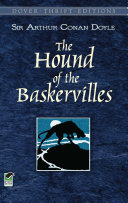
The Hound of the Baskervilles
The Hound of the Baskervilles by Arthur Conan Doyle (1902)
The greatest Sherlock Holmes novel. A spectral hound stalks the Baskerville family on the fog-shrouded moors of Devon. Is the curse supernatural, or is there a human villain? Holmes investigates the most atmospheric and terrifying case of his career.
Historical Significance:
Doyle wrote The Hound after a friend, journalist Bertram Fletcher Robinson, told him legends of ghostly hounds on Dartmoor. Published in The Strand Magazine from August 1901 to April 1902, it was technically set before Holmes' death at Reichenbach Falls (Doyle had killed him off in 1893), allowing Doyle to capitalize on Holmes' popularity without committing to reviving him — though he eventually did.
The Strand's circulation doubled during serialization. The novel perfectly blends Gothic horror with rational detection. The image of a glowing hound bounding across moonlit moors is one of the most vivid in all detective fiction.
This public domain classic was originally published in 1902. Free to read and share.
Free

eBook
FREE
The Adventures of Sherlock Holmes
The Adventures of Sherlock Holmes by Arthur Conan Doyle (1892)
Twelve brilliant short stories featuring the world's most famous detective. "Elementary, my dear Watson" — though Holmes never actually says this exact phrase in any of the original stories.
Historical Significance:
Arthur Conan Doyle, a struggling doctor in Southsea, created Sherlock Holmes in 1887 with "A Study in Scarlet." The character was inspired by Dr. Joseph Bell, Doyle's professor at the University of Edinburgh Medical School, who amazed students with his powers of observation and deduction.
The Adventures of Sherlock Holmes was published on October 14, 1892, collecting twelve stories that had appeared in The Strand Magazine between July 1891 and June 1892. The Strand's circulation skyrocketed from 300,000 to 500,000 during the Holmes stories' run. When Doyle killed Holmes off in "The Final Problem" (1893), 20,000 readers cancelled their subscriptions and people wore black mourning bands in the streets.
The twelve stories in this collection include some of the most famous mysteries ever written: "A Scandal in Bohemia" (introducing Irene Adler, "the woman"), "The Red-Headed League," "The Adventure of the Speckled Band" (which Doyle himself considered his best), and "The Adventure of the Blue Carbuncle."
Holmes' methods of deductive reasoning, forensic science, and logical analysis were revolutionary for the 1890s and influenced the development of real-world criminal investigation techniques.
Cultural Impact:
Sherlock Holmes is the most portrayed literary character in film and television history, with over 250 actors playing the role. The character has appeared in more than 25,000 stage, film, radio, and TV adaptations. 221B Baker Street receives mail from fans worldwide. Holmes' deerstalker cap, magnifying glass, and pipe are universally recognized symbols. Benedict Cumberbatch and Robert Downey Jr. brought Holmes to new generations.
This public domain classic was originally published in 1892. Free to read and share.
Free
No classics match your filters.