New eBooks
0 booksNo eBooks Yet
Be the first to publish an eBook on BoingyBooks!
🎓 Your Free Digital Library Awaits
Access 232+ classic ebooks — from Shakespeare to Sherlock Holmes. Read on any device, save your progress, build your library.
Create Free Account →Classic Literature
19 free classicsTimeless works from the public domain, beautifully formatted for the BoingyBooks reader.
eBook
FREE
The Phantom Rickshaw and Other Tales
The Phantom Rickshaw and Other Tales by Rudyard Kipling (1888)
Ghost stories set in British India — a dead woman's spectral rickshaw haunts her faithless lover through the streets of Simla, a man is driven mad by his doppelgänger, and a child builds a terrifying "city of the dead." Kipling's early masterpieces of supernatural horror.
Historical Significance:
Kipling published these stories in 1888 when he was just 22 years old, working as a journalist in Lahore and Allahabad. "The Phantom Rickshaw" is considered one of the finest ghost stories in English — the lover who cannot escape his dead mistress's accusing presence even in broad daylight on a crowded street. "The Strange Ride of Morrowbie Jukes" — about a man trapped in a colony of the living dead — prefigures Kafka and the Theater of the Absurd. These early Indian stories show Kipling at his most psychologically complex, before the imperial confidence of his later work. They demonstrate that the master of adventure fiction was equally a master of horror.
This public domain classic was originally published in 1888. Free to read and share.
Free
eBook
FREE
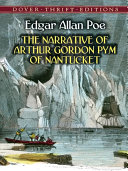
The Narrative of Arthur Gordon Pym of Nantucket
The Narrative of Arthur Gordon Pym of Nantucket by Edgar Allan Poe (1838)
Poe's only complete novel. A young man stows away on a whaling ship and encounters mutiny, shipwreck, cannibalism, and increasingly bizarre discoveries as the voyage presses deeper into the Antarctic — culminating in one of literature's most mysterious and debated endings.
Historical Significance:
Published in 1838, Arthur Gordon Pym was Poe's attempt to write a longer work that would bring him the financial success his short stories had not. The novel failed commercially, and Poe dismissed it as "a very silly book." But its influence has been extraordinary: Jules Verne wrote a sequel (An Antarctic Mystery, 1897), Herman Melville drew on it for Moby-Dick, H.P. Lovecraft incorporated its Antarctic imagery into At the Mountains of Madness, and Jorge Luis Borges was obsessed with its enigmatic final pages. The novel's abrupt, hallucinatory ending — a vast white figure rises from the Antarctic sea — has generated 180 years of interpretation and remains one of literature's great unsolved mysteries.
This public domain classic was originally published in 1838. Free to read and share.
Free
eBook
FREE
The Last Man
The Last Man by Mary Shelley (1826)
A devastating plague sweeps across the world in the late 21st century, reducing humanity to a single survivor who wanders the empty ruins of civilization. The first apocalyptic novel — by the author of Frankenstein.
Historical Significance:
Mary Shelley published The Last Man in 1826, eight years after Frankenstein and four years after her husband Percy Bysshe Shelley's death by drowning. The novel is deeply personal — its characters are thinly veiled portraits of Percy Shelley, Lord Byron, and their circle, and the plague that destroys the world mirrors the deaths that devastated Mary's own life (she lost her husband, three of her four children, and several close friends in quick succession).
The novel was savaged by critics and largely forgotten for 150 years. Its rediscovery in the 1960s revealed it as astonishingly prophetic — the first novel to imagine a global pandemic destroying civilization, predating every subsequent apocalyptic narrative from The Stand to The Road to Station Eleven. It is now recognized as Mary Shelley's second masterpiece and the founding text of apocalyptic fiction.
This public domain classic was originally published in 1826. Free to read and share.
Free
eBook
FREE
The Great God Pan
The Great God Pan by Arthur Machen (1894)
A scientist performs brain surgery on a young woman to allow her to "see" the god Pan — the primal force behind reality. The experiment unleashes something terrible into Victorian London. Stephen King called it "maybe the best horror story in the English language."
Historical Significance:
Arthur Machen, a Welsh journalist and mystic, published The Great God Pan in 1894 to mixed reviews — one critic called it "an incoherent nightmare of sex and the supernatural." But the novella's influence on horror fiction has been immeasurable. H.P. Lovecraft cited Machen as a primary inspiration for his cosmic horror — the idea that reality conceals something ancient, vast, and terrifying. The story's structure — told through fragments, documents, and multiple perspectives — anticipated Lovecraft's technique. Guillermo del Toro has called Machen one of his favorite authors. The novella experienced a major revival after Stephen King's endorsement and is now recognized as a foundational text of modern horror.
This public domain classic was originally published in 1894. Free to read and share.
Free
eBook
FREE
The Castle of Otranto
The Castle of Otranto by Horace Walpole (1764)
The very first Gothic novel. A giant helmet falls from the sky and crushes the heir of Otranto on his wedding day. Supernatural terrors, secret passages, and prophetic curses follow in this wildly imaginative tale that launched an entire literary genre.
Historical Significance:
Horace Walpole published The Castle of Otranto in 1764, initially pretending it was a medieval manuscript he had merely "translated." When its popularity encouraged him to reveal his authorship, he subtitled the second edition "A Gothic Story" — coining the genre name. The novel created the template for all Gothic fiction: the gloomy castle, the tyrannical patriarch, the imprisoned maiden, the supernatural revenge, the hidden identity revealed. Without Otranto, there would be no Frankenstein, no Dracula, no Jane Eyre, no Wuthering Heights, no Edgar Allan Poe.
This public domain classic was originally published in 1764. Free to read and share.
Free
eBook
FREE
Carmilla
Carmilla by Sheridan Le Fanu (1872)
A young woman in an isolated Austrian castle is visited by a mysterious, beautiful girl who is drawn to her with disturbing intensity. The original vampire novella — predating Dracula by 25 years and introducing the female vampire to literature.
Historical Significance:
Published in 1872, Carmilla directly influenced Bram Stoker's Dracula (1897) — Stoker acknowledged Le Fanu's story as inspiration. The novella's homoerotic subtext between Carmilla and the narrator Laura was groundbreaking for Victorian literature and has made it a touchstone of LGBTQ+ literary studies. The story established many vampire tropes that Stoker would later adopt: the aristocratic vampire, the slow seduction, the weakness to sunlight, the connection between vampirism and sexuality. It has been adapted into over 20 films and the popular YouTube web series "Carmilla" (2014-16).
This public domain classic was originally published in 1872. Free to read and share.
Free

eBook
FREE
The Raven
The Raven by Edgar Allan Poe
A grieving speaker receives a midnight visit from a raven whose repeated answer deepens his sorrow.
This edition contains the complete single poem The Raven. It is not The Raven and Other Poems and does not include Annabel Lee, The Bells, Lenore, To Helen or other poems.
Retained text source: Project Gutenberg ebook 1065.
Free

eBook
FREE
The Works of Edgar Allan Poe, Volume 1
The Works of Edgar Allan Poe, Volume 1 — Tales of Mystery and Imagination
The complete tales of the master of horror: "The Fall of the House of Usher," "The Masque of the Red Death," "The Pit and the Pendulum," "The Tell-Tale Heart," "The Cask of Amontillado," "The Black Cat," and more.
Historical Significance:
Edgar Allan Poe (1809-1849) invented the detective story ("The Murders in the Rue Morgue"), pioneered science fiction, and perfected the horror tale — all while living in poverty, battling alcoholism, and mourning his young wife Virginia who died of tuberculosis. Poe's influence is immeasurable: Arthur Conan Doyle modeled Sherlock Holmes on Poe's C. Auguste Dupin; H.P. Lovecraft called him the patriarch of cosmic horror; Alfred Hitchcock acknowledged Poe as his primary inspiration. Baudelaire, who translated Poe into French, said "Poe was the literature of the United States." His tales remain the gold standard for atmospheric horror.
This public domain classic collects works published before 1849. Free to read and share.
Free

eBook
FREE
The Legend of Sleepy Hollow
The Legend of Sleepy Hollow by Washington Irving (1820)
Schooltacher Ichabod Crane, courting the beautiful Katrina Van Tassel, encounters the terrifying Headless Horseman on a dark night ride through the haunted glen. America's most famous ghost story.
Historical Significance:
Published in 1820 as part of The Sketch Book of Geoffrey Crayon, this story and "Rip Van Winkle" made Washington Irving the first American author to achieve international fame. Irving wrote both stories while living in England, homesick for the Hudson Valley of his youth. The Headless Horseman — a Hessian soldier decapitated by a cannonball during the Revolutionary War — became one of America's most enduring folklore figures. Tim Burton's 1999 film starring Johnny Depp and Disney's 1949 animated adaptation brought the tale to new generations. Every Halloween, the real Sleepy Hollow in New York hosts thousands of visitors.
This public domain classic was originally published in 1820. Free to read and share.
Free

eBook
FREE
The King in Yellow
The King in Yellow by Robert W. Chambers (1895)
A collection of stories linked by a mysterious play called "The King in Yellow" — anyone who reads Act II goes insane. Carcosa, the Yellow Sign, and the Pallid Mask created a mythology of cosmic horror that influenced H.P. Lovecraft and inspired HBO's True Detective.
Historical Significance:
Robert W. Chambers published The King in Yellow in 1895, drawing on Ambrose Bierce's story "An Inhabitant of Carcosa" (1893). The first four stories are interconnected weird fiction; the remaining stories are more conventional. Chambers never returned to horror, becoming instead a bestselling romance novelist — but these early stories became foundational texts of cosmic horror. H.P. Lovecraft incorporated Chambers' mythology into his own Cthulhu Mythos. The book experienced a massive revival in 2014 when HBO's True Detective Season 1 referenced Carcosa, the Yellow King, and other elements, sending the book to the top of Amazon's bestseller list over a century after publication.
This public domain classic was originally published in 1895. Free to read and share.
Free

eBook
FREE
The Yellow Wallpaper
The Yellow Wallpaper by Charlotte Perkins Gilman (1892)
A woman confined to a room for a "rest cure" becomes obsessed with the pattern of the yellow wallpaper — and the woman she believes is trapped behind it. A shattering short story about women's mental health and patriarchal medicine.
Historical Significance:
Charlotte Perkins Gilman wrote "The Yellow Wallpaper" based on her own experience with the "rest cure" prescribed by Dr. Silas Weir Mitchell, the leading neurologist of his era. Mitchell's treatment for "female hysteria" consisted of complete bed rest, no intellectual activity, and forced feeding — a treatment that nearly drove Gilman insane. She wrote the story as a warning.
When published in 1892, the story was read as a horror tale. It was rediscovered in the 1970s by feminist scholars who recognized it as a masterpiece of feminist literature — a devastating critique of how patriarchal medicine pathologized women's independence. Mitchell reportedly changed his treatment methods after reading the story. It is now one of the most widely taught short stories in American literature.
This public domain classic was originally published in 1892. Free to read and share.
Free

eBook
FREE
The Island of Doctor Moreau
The Island of Doctor Moreau by H.G. Wells (1896)
A shipwrecked man discovers an island where a mad scientist surgically transforms animals into human-like beings. A horrifying exploration of vivisection, evolution, and the thin line between human and beast.
Historical Significance:
Published in 1896, one year after The Time Machine, The Island of Doctor Moreau caused a sensation for its graphic depictions of surgical experimentation. Wells wrote it during heated public debate over vivisection (animal experimentation), which was legal and widespread in Victorian England. The novel asks: if we can make animals human, what does that say about our own humanity? Dr. Moreau's creatures, chanting their "Laws" — "Are we not Men?" — are among the most disturbing images in science fiction. The novel has been adapted into three major films and influenced everything from Planet of the Apes to Jurassic Park.
This public domain classic was originally published in 1896. Free to read and share.
Free

eBook
FREE
The Turn of the Screw
The Turn of the Screw by Henry James (1898)
A governess at a remote English estate becomes convinced that two ghostly figures are corrupting the children in her care. But are the ghosts real, or is she descending into madness? The most brilliantly ambiguous ghost story ever written.
Historical Significance:
Henry James published The Turn of the Screw in 1898, describing it as a "trap for the unwary." Over a century of scholarship has failed to resolve its central ambiguity: are the ghosts of Peter Quint and Miss Jessel real supernatural entities, or hallucinations of a repressed, unreliable narrator? James deliberately refused to clarify, making the story a Rorschach test for readers' own anxieties.
The novella has been adapted into Benjamin Britten's opera (1954), Jack Clayton's film The Innocents (1961) — one of the greatest horror films ever made — and Netflix's The Haunting of Bly Manor (2020). It remains the gold standard for psychological horror and literary ambiguity.
This public domain classic was originally published in 1898. Free to read and share.
Free
eBook
FREE
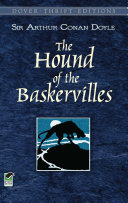
The Hound of the Baskervilles
The Hound of the Baskervilles by Arthur Conan Doyle (1902)
The greatest Sherlock Holmes novel. A spectral hound stalks the Baskerville family on the fog-shrouded moors of Devon. Is the curse supernatural, or is there a human villain? Holmes investigates the most atmospheric and terrifying case of his career.
Historical Significance:
Doyle wrote The Hound after a friend, journalist Bertram Fletcher Robinson, told him legends of ghostly hounds on Dartmoor. Published in The Strand Magazine from August 1901 to April 1902, it was technically set before Holmes' death at Reichenbach Falls (Doyle had killed him off in 1893), allowing Doyle to capitalize on Holmes' popularity without committing to reviving him — though he eventually did.
The Strand's circulation doubled during serialization. The novel perfectly blends Gothic horror with rational detection. The image of a glowing hound bounding across moonlit moors is one of the most vivid in all detective fiction.
This public domain classic was originally published in 1902. Free to read and share.
Free
eBook
FREE
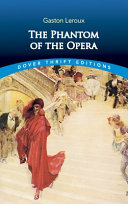
The Phantom of the Opera
The Phantom of the Opera by Gaston Leroux (1910)
The masked genius haunting the Paris Opera House, his obsessive love for the soprano Christine Daaé, the underground lake, the chandelier crash — the Gothic romance that spawned the longest-running Broadway musical in history.
Historical Significance:
Leroux, a French journalist and novelist, serialized Le Fantôme de l'Opéra in 1909-1910. He based the novel on real events at the Palais Garnier opera house: an underground lake does exist beneath the building, a counterweight from the chandelier did fall during a performance in 1896, and the opera house's labyrinthine basement passages fueled rumors of ghosts. Andrew Lloyd Webber's 1986 musical has grossed over $1.3 billion on Broadway alone, making it the highest-grossing entertainment event in history. Lon Chaney's 1925 silent film performance remains one of cinema's most iconic images.
This public domain classic was originally published in 1910. Free to read and share.
Free

eBook
FREE
Strange Case of Dr Jekyll and Mr Hyde
Strange Case of Dr Jekyll and Mr Hyde by Robert Louis Stevenson (1886)
A chilling novella about the duality of human nature that gave the English language a permanent metaphor for the battle between good and evil within every person.
Historical Significance:
Stevenson wrote the first draft in just three days during a feverish period in late September 1885 in Bournemouth, England. According to legend, his wife Fanny read the draft and criticized it, whereupon Stevenson burned the manuscript and rewrote it from scratch in another three days. The published version appeared on January 5, 1886.
The novella was an instant sensation, selling 40,000 copies in Britain in six months. In America, it sold over 250,000 copies, partly as a cheap pirated edition. The story tapped into Victorian anxieties about respectability, repression, and the fear that beneath every gentleman lurked a beast.
Stevenson, a Scottish author already famous for Treasure Island, claimed the central idea came to him in a dream — the "fine bogey tale" of a man who drinks a potion and transforms into his evil alter ego. The novella's power lies in its restraint: the actual transformation is barely described, forcing the reader's imagination to fill in the horror.
Cultural Impact:
"Jekyll and Hyde" is now a universal metaphor for split personality and moral duality, used in psychology, law, journalism, and everyday conversation in every English-speaking country. The story has been adapted into over 120 films and stage productions. It directly influenced Freud's theories of the id and ego, and remains one of the most powerful explorations of human psychology in all of fiction.
This public domain classic was originally published in 1886. Free to read and share.
Free
eBook
FREE
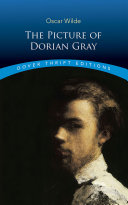
The Picture of Dorian Gray
The Picture of Dorian Gray by Oscar Wilde (1890)
Oscar Wilde's only novel — a Gothic masterpiece about beauty, corruption, and the price of eternal youth. A young man's portrait ages while he remains forever beautiful.
Historical Significance:
First published in the July 1890 issue of Lippincott's Monthly Magazine, the story caused immediate scandal. Critics called it "poisonous," "unclean," and "corrupt." The Daily Chronicle declared it would suit "none but outlawed noblemen and perverted telegraph boys" — a coded reference to homosexuality.
Wilde revised and expanded the novel for book publication in 1891, adding a preface containing his famous artistic manifesto: "All art is quite useless" and "There is no such thing as a moral or an immoral book. Books are well written, or badly written. That is all."
The novel's themes of hidden sin, the mask of respectability, and the gap between appearance and reality were deeply personal to Wilde, who was living a double life as a married father with secret homosexual relationships. Five years after publication, his own life would mirror the novel's themes when his relationship with Lord Alfred Douglas led to his criminal trial, imprisonment, and ruin.
Cultural Impact:
The novel has never gone out of print and has been adapted into over 30 films. The concept of a "Dorian Gray" — someone who appears youthful while hiding corruption — has entered the cultural lexicon. The story influenced countless works exploring vanity and moral decay, from The Twilight Zone to modern social media commentary. Wilde's epigrammatic prose style ("I can resist everything except temptation") remains endlessly quotable.
This public domain classic was originally published in 1890. Free to read and share.
Free
eBook
FREE
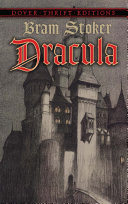
Dracula
Dracula by Bram Stoker (1897)
The novel that created the modern vampire myth and launched an entire genre of horror fiction. Count Dracula is one of the most recognizable characters in world literature.
Historical Significance:
Bram Stoker, an Irish author and theater manager, spent seven years researching and writing Dracula. He drew inspiration from Eastern European folklore, the historical Vlad the Impaler (Vlad III Dracula of Wallachia), and Emily Gerard's 1885 essay "Transylvanian Superstitions." Stoker never visited Transylvania — he researched it entirely through books at the British Museum.
Published on May 26, 1897, by Archibald Constable and Company, the novel was well-received but not an immediate bestseller. Its epistolary format (told through diary entries, letters, newspaper clippings, and ship logs) was innovative for the time and created an atmosphere of mounting dread.
The character of Count Dracula — aristocratic, seductive, ancient, and terrifying — was partly inspired by Stoker's employer, the actor Sir Henry Irving, whose commanding stage presence and domineering personality fascinated Stoker for decades.
Cultural Impact:
Dracula has been adapted into more films than any other novel in history — over 200 and counting. Bela Lugosi's 1931 portrayal established the cape-and-accent image. The novel created the template for virtually all vampire fiction that followed, from Anne Rice to Twilight to Castlevania. Transylvania tourism exists largely because of this book. The word "Dracula" is recognized in virtually every language on Earth.
This public domain classic was originally published in 1897. Free to read and share.
Free
eBook
FREE
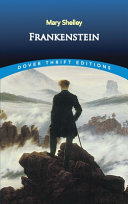
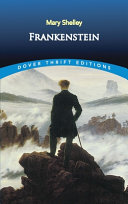
Frankenstein
Frankenstein; or, The Modern Prometheus by Mary Wollstonecraft Shelley (1818)
The most downloaded book on Project Gutenberg and one of the most influential novels ever written. Mary Shelley conceived this masterpiece at age 18 during the famous ghost story contest at the Villa Diodati on Lake Geneva in the summer of 1816, alongside Lord Byron and Percy Bysshe Shelley.
Historical Significance:
Frankenstein is widely considered the first true science fiction novel, predating the genre by decades. It was born from the "Year Without a Summer" (1816), when the eruption of Mount Tambora in Indonesia caused global climate disruption, trapping Shelley's literary circle indoors with nothing to do but tell ghost stories.
The novel explores themes that remain urgently relevant: the ethics of scientific creation, the responsibility of creators to their creations, the dangers of unchecked ambition, and the nature of humanity itself. Victor Frankenstein's unnamed creature — often mistakenly called "Frankenstein" — is one of literature's most tragic figures, rejected by his creator and society alike.
The 1818 first edition was published anonymously; many assumed Percy Shelley had written it. The 1831 revised edition, with Mary Shelley's name, is the version most commonly read today. This edition preserves the original 1818 text.
Cultural Impact:
The novel has been adapted into over 100 films, countless stage productions, and has become a cornerstone of Gothic literature. The word "Frankenstein" has entered everyday language as a metaphor for any creation that turns against its creator. It remains required reading in universities worldwide and consistently ranks among the top 10 most-read classic novels.
This public domain classic was originally published in 1818. Free to read and share.
Free
No classics match your filters.