New eBooks
0 booksNo eBooks Yet
Be the first to publish an eBook on BoingyBooks!
🎓 Your Free Digital Library Awaits
Access 232+ classic ebooks — from Shakespeare to Sherlock Holmes. Read on any device, save your progress, build your library.
Create Free Account →Classic Literature
38 free classicsTimeless works from the public domain, beautifully formatted for the BoingyBooks reader.
eBook
FREE
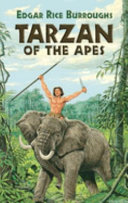
Tarzan of the Apes
Tarzan of the Apes by Edgar Rice Burroughs (1912)
An English nobleman's infant son, orphaned in the African jungle, is raised by great apes and becomes the Lord of the Jungle. Tarzan — one of fiction's most enduring characters, spawning the most successful franchise of the early 20th century.
Historical Significance:
Edgar Rice Burroughs, a 36-year-old failed businessman, wrote Tarzan of the Apes in 1911 while working as a pencil sharpener wholesaler. Published in All-Story Magazine in October 1912, it was an immediate sensation. Burroughs went on to write 24 Tarzan novels, but the character's cultural footprint extends far beyond the books — over 200 films, TV series, radio shows, comics, and merchandise made Tarzan one of the most recognized fictional characters in the world. The famous Tarzan yell (created for Johnny Weissmuller's 1932 film) is one of the most iconic sounds in cinema history. Tarzan has been translated into more than 60 languages.
This public domain classic was originally published in 1912. Free to read and share.
Free
eBook
FREE
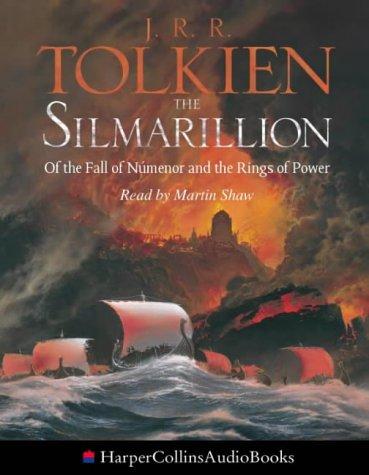
The Prisoner of Zenda
The Prisoner of Zenda by Anthony Hope (1894)
An English gentleman on holiday in the fictional kingdom of Ruritania discovers he is the exact double of the king — and must impersonate him to save the throne. The original swashbuckling adventure romance.
Historical Significance:
Anthony Hope wrote The Prisoner of Zenda in just 30 days in 1894. It created the "Ruritanian romance" genre — adventure stories set in small fictional European kingdoms — that influenced everything from The Scarlet Pimpernel to Star Wars' Princess Leia storyline. The novel has been adapted into over a dozen films and inspired countless imitators. "Ruritania" entered the English language as a word for any small, romantically unstable European kingdom.
This public domain classic was originally published in 1894. Free to read and share.
Free
eBook
FREE
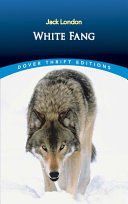
White Fang
White Fang by Jack London (1906)
The companion novel to The Call of the Wild, told in reverse: a wild wolf-dog hybrid is gradually domesticated. Where Buck journeys from civilization to wilderness, White Fang journeys from wilderness to civilization. London's meditation on nature versus nurture.
Historical Significance:
London intended White Fang as "a companion book to The Call of the Wild — the reverse process, the evolution and domestication of an animal." Serialized in the magazine Outing from May to October 1906, it explored whether love and kindness could overcome a lifetime of brutality — a question London, who had survived a desperate childhood of poverty and abuse, knew intimately. The novel has been adapted into multiple films and remains one of the most popular animal stories ever written.
This public domain classic was originally published in 1906. Free to read and share.
Free
eBook
FREE
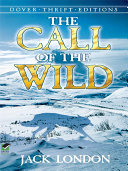
The Call of the Wild
The Call of the Wild by Jack London (1903)
Buck, a domesticated dog stolen from a California estate and sold into the Yukon gold rush as a sled dog, gradually sheds civilization and answers the primal call of the wild. A brutal, beautiful novella about survival and the animal nature within us all.
Historical Significance:
Jack London wrote The Call of the Wild in just 30 days in 1903, drawing on his own experience in the Klondike Gold Rush of 1897-98. Published first in the Saturday Evening Post, it was an immediate sensation. London sold the book rights for just $2,000 — he later called it the worst business decision of his life, as the novel became one of the bestselling American books of the 20th century. At age 27, London became the highest-paid author in America. The novel is credited with helping establish the Yukon as a mythic landscape in American imagination.
This public domain classic was originally published in 1903. Free to read and share.
Free
eBook
FREE
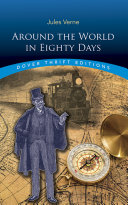
Around the World in Eighty Days
Around the World in Eighty Days by Jules Verne (1873)
Phileas Fogg wagers £20,000 that he can circumnavigate the globe in just 80 days. With his loyal valet Passepartout, he races across continents by steamer, train, and elephant — with a detective in pursuit who suspects him of bank robbery.
Historical Significance:
Serialized in Le Temps in 1872, the novel was inspired by real advances in transportation: the completion of the Suez Canal (1869) and the First Transcontinental Railroad (1869) had dramatically shortened global travel times. Journalist Nellie Bly famously recreated Fogg's journey in 1889, completing it in 72 days. The novel was Verne's biggest commercial success, adapted into the 1956 Best Picture-winning film starring David Niven. It established the "race against time" narrative template used by countless adventure stories since.
This public domain classic was originally published in 1873. Free to read and share.
Free
eBook
FREE
Twenty Thousand Leagues Under the Seas
Twenty Thousand Leagues Under the Seas by Jules Verne (1870)
Captain Nemo and the submarine Nautilus — a visionary adventure beneath the world's oceans, written 90 years before nuclear submarines made Verne's fiction reality.
Historical Significance:
Verne published Vingt mille lieues sous les mers in 1870, predicting submarines, scuba diving, electric propulsion, and underwater exploration with remarkable accuracy. Captain Nemo — whose name means "No One" in Latin — is a complex anti-hero: a brilliant scientist waging war against imperialism from beneath the waves. Verne based some of Nemo's characteristics on real engineers and rebels of his era. The novel established Verne as the "Father of Science Fiction" alongside H.G. Wells. Disney's 1954 film starring James Mason as Nemo won two Academy Awards and remains a classic.
This public domain classic was originally published in 1870. Free to read and share.
Free
eBook
FREE
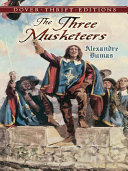
The Three Musketeers
The Three Musketeers by Alexandre Dumas (1844)
"All for one and one for all!" Young d'Artagnan travels to Paris to join the King's Musketeers and befriends Athos, Porthos, and Aramis in this swashbuckling adventure of swordplay, intrigue, and romance in 17th-century France.
Historical Significance:
Serialized in the newspaper Le Siècle from March to July 1844, The Three Musketeers made Dumas the most popular author in the world. The novel is loosely based on Mémoires de M. d'Artagnan by Gatien de Courtilz de Sandras (1700), which fictionalized a real musketeer named Charles de Batz-Castelmore d'Artagnan.
Dumas' genius was pacing — the novel reads like a modern thriller, with cliffhangers at every chapter break. Cardinal Richelieu, the scheming Milady de Winter, and the diamond studs plot create one of fiction's most intricate webs of intrigue. Dumas wrote with such speed (aided by collaborator Auguste Maquet) that he produced over 100,000 pages in his lifetime.
This public domain classic was originally published in 1844. Free to read and share.
Free
eBook
FREE
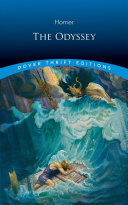
The Odyssey
The Odyssey by Homer (c. 8th century BC)
The original adventure story. Odysseus' ten-year journey home from the Trojan War — battling the Cyclops, resisting the Sirens, navigating between Scylla and Charybdis, and returning to faithful Penelope. The foundation of all Western literature.
Historical Significance:
Composed in ancient Greek around the 8th century BC, The Odyssey is one of the two oldest works of Western literature (alongside The Iliad). Whether "Homer" was a single poet or a tradition of oral storytellers remains one of the great scholarly debates. The poem was transmitted orally for centuries before being written down.
The Odyssey established virtually every storytelling convention: the hero's journey, the faithful spouse, the coming-of-age subplot (Telemachus), the disguised return, the final confrontation. Joseph Campbell's "monomyth" theory draws heavily from Odysseus' journey. James Joyce's Ulysses, the Coen Brothers' O Brother Where Art Thou, and countless other works are direct retellings.
Every adventure story, from Star Wars to The Lord of the Rings, follows the narrative template Homer established three thousand years ago.
This public domain classic was originally composed c. 8th century BC. Free to read and share.
Free
eBook
FREE
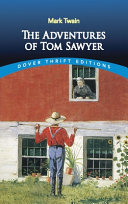
The Adventures of Tom Sawyer
The Adventures of Tom Sawyer by Mark Twain (1876)
The novel that captured American boyhood forever. Tom Sawyer, Huck Finn, Becky Thatcher, Injun Joe, and the whitewashed fence — set along the Mississippi River in the fictional town of St. Petersburg, Missouri.
Historical Significance:
Mark Twain drew directly from his own childhood in Hannibal, Missouri for this novel, published in 1876 — America's centennial year. Tom Sawyer was Twain's first solo novel and established him as more than a humorist: a literary artist capable of capturing the American experience. The famous fence-whitewashing scene, where Tom tricks his friends into doing his chore by pretending it's a privilege, has become a universal metaphor for persuasion and the psychology of desire.
Twain claimed "most of the adventures recorded in this book really occurred; one or two were experiences of my own, the rest those of boys who were schoolmates of mine." Tom was a composite of three real boys; Huck Finn was based on Tom Blankenship, the son of the town drunkard. The novel's cave scenes were inspired by the real Mark Twain Cave in Hannibal.
Cultural Impact:
Tom Sawyer has been translated into every major language, adapted into dozens of films, and remains one of the most-read American novels. "Tom Sawyer" has become shorthand for a mischievous but good-hearted boy. The novel spawned one of literature's greatest sequels — Adventures of Huckleberry Finn. The fence-whitewashing trick is studied in business schools as an example of reverse psychology marketing.
This public domain classic was originally published in 1876. Free to read and share.
Free

eBook
FREE
The Jungle Book
The Jungle Book by Rudyard Kipling (1894)
Mowgli, Baloo, Bagheera, Shere Khan, and Kaa — the timeless stories of a boy raised by wolves in the jungles of India, learning the Law of the Jungle and finding his place between two worlds.
Historical Significance:
Rudyard Kipling wrote The Jungle Book in 1893-1894 while living in Brattleboro, Vermont, with his American wife Carrie. He was already the most famous writer in the English-speaking world, and these stories cemented his reputation as a master storyteller.
Born in Bombay (now Mumbai) in 1865, Kipling spent his early childhood in India before being sent to England for education — an experience of abandonment and cruelty he never forgot. The Jungle Book reflects his deep love for India and his understanding of the complex relationship between civilization and nature.
The Mowgli stories are set in the Seoni hills of central India, and Kipling researched Indian wildlife extensively, consulting Robert Armitage Sterndale's "Natural History of the Mammalia of India." The non-Mowgli stories ("Rikki-Tikki-Tavi," "Toomai of the Elephants," "The White Seal") are equally beloved.
In 1907, Kipling became the first English-language writer to receive the Nobel Prize in Literature.
Cultural Impact:
Disney's animated adaptation (1967) with its beloved songs became one of the most popular animated films ever made. The 2016 live-action/CGI remake grossed nearly $1 billion worldwide. The Cub Scouts movement adopted Jungle Book terminology (Akela, den, pack). Kipling's "Law of the Jungle" — "the strength of the pack is the wolf, and the strength of the wolf is the pack" — is quoted in contexts from business to military.
This public domain classic was originally published in 1894. Free to read and share.
Free

eBook
FREE
Treasure Island
Treasure Island by Robert Louis Stevenson (1883)
The ultimate pirate adventure. Young Jim Hawkins, Long John Silver, buried treasure, the Black Spot, and "fifteen men on a dead man's chest" — Stevenson created every pirate trope we know.
Historical Significance:
Stevenson began the story in the summer of 1881 while on holiday in Braemar, Scotland, drawing a watercolor treasure map with his stepson Lloyd Osbourne. The map inspired the story, which was serialized as "The Sea Cook" in the children's magazine Young Folks from October 1881 to January 1882.
Published as a book in 1883, Treasure Island was the novel that made Stevenson famous. He drew on Daniel Defoe's Robinson Crusoe, Washington Irving's tales, and Edgar Allan Poe's "The Gold-Bug," but synthesized them into something entirely new — the modern adventure novel.
Long John Silver, the charming one-legged pirate cook, is one of literature's greatest morally ambiguous characters. Stevenson based him partly on his friend W.E. Henley (author of "Invictus"), who had lost a leg to tuberculosis.
Cultural Impact:
Treasure Island invented the popular image of pirates: buried treasure with X marks the spot, treasure maps, one-legged pirates with parrots, the Black Spot death curse, and the skull-and-crossbones flag. Before Stevenson, pirates in literature were straightforward villains. Every pirate film, book, and theme park attraction owes a debt to this novel. Disney's Pirates of the Caribbean franchise draws directly from Stevenson's template.
This public domain classic was originally published in 1883. Free to read and share.
Free
eBook
FREE
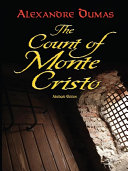
The Count of Monte Cristo
The Count of Monte Cristo by Alexandre Dumas (1844-1846)
The ultimate revenge story. A young sailor is wrongfully imprisoned for 14 years, escapes, discovers a vast treasure, and reinvents himself as the mysterious Count of Monte Cristo to exact elaborate vengeance on those who destroyed his life.
Historical Significance:
Alexandre Dumas published The Count of Monte Cristo as a serial in the Journal des Débats from August 1844 to January 1846. Serialization was the Netflix of the 19th century — readers waited eagerly for each installment, and Dumas was paid by the line, which partly explains the novel's epic length.
The story was inspired by a real case Dumas found in the police archives: François Picaud, a shoemaker who was falsely imprisoned for seven years by jealous friends, inherited a fortune from a fellow prisoner, and spent ten years pursuing revenge. Dumas transformed this into one of the most intricate and satisfying plots in all of fiction.
Dumas was the grandson of a Haitian slave — his father, General Thomas-Alexandre Dumas, was the highest-ranking person of color in any European army. The themes of injustice, identity, and the corrupting power of wealth in Monte Cristo may partly reflect Dumas' own experience of racial prejudice in French society.
Cultural Impact:
The Count of Monte Cristo has been adapted into over 40 films, TV series, and anime. It remains one of the most popular novels ever written, selling millions of copies annually. The phrase "Edmond Dantès" is a cultural shorthand for wrongful imprisonment. The novel's structure — patient, meticulous revenge served over years — has influenced everything from Batman to The Shawshank Redemption to Kill Bill.
This public domain classic was originally published in 1844. Free to read and share.
Free
eBook
FREE
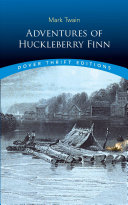
Adventures of Huckleberry Finn
Adventures of Huckleberry Finn by Mark Twain (1884)
"All modern American literature comes from one book by Mark Twain called Huckleberry Finn." — Ernest Hemingway. The story of a boy and a runaway slave rafting down the Mississippi River is America's most important — and most controversial — novel.
Historical Significance:
Mark Twain (Samuel Clemens) began writing Huckleberry Finn in 1876 as a sequel to Tom Sawyer, but set it aside for years. He returned to it intermittently, finally publishing it in the United Kingdom in December 1884 and in the United States in February 1885.
The novel was immediately banned by the Concord Public Library as "trash and suitable only for the slums." Twain responded: "That will sell 25,000 copies for us, sure." It has been banned, challenged, and debated continuously ever since — primarily for its use of racial language, which Twain employed deliberately to satirize racism, not to endorse it.
Written in Huck's own vernacular voice — uneducated, funny, and profoundly moral — the novel was revolutionary in its use of American dialect as a literary language. Twain's depiction of the friendship between Huck and Jim remains one of literature's most powerful arguments against racism.
Cultural Impact:
Huckleberry Finn is widely considered the Great American Novel alongside Moby-Dick. It influenced every major American writer who followed, from Hemingway to Faulkner to Toni Morrison. The novel continues to generate controversy and classroom discussion, which is precisely what Twain intended. It remains one of the most-read, most-taught, and most-debated books in history.
This public domain classic was originally published in 1884. Free to read and share.
Free
eBook
FREE
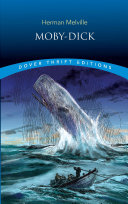
Moby Dick; Or, The Whale
Moby-Dick; or, The Whale by Herman Melville (1851)
"Call me Ishmael." — three words that open one of the greatest and most ambitious novels in the English language. Captain Ahab's obsessive hunt for the white whale is an epic meditation on obsession, nature, God, and the limits of human knowledge.
Historical Significance:
Melville wrote Moby-Dick between 1850 and 1851, during which time he developed an intense friendship with Nathaniel Hawthorne, to whom the novel is dedicated. Melville drew on his own experience as a sailor, including 18 months aboard the whaling ship Acushnet (1841-42), and on the true story of the Essex, a Nantucket whaler sunk by a sperm whale in 1820.
Published on October 18, 1851, by Richard Bentley in London (as "The Whale") and Harper & Brothers in New York, the novel was a commercial and critical disaster. It sold only 3,715 copies in Melville's lifetime and earned him $1,260 total. Critics found it baffling — too long, too digressive, too philosophical. Melville never recovered professionally and spent his last 19 years as a customs inspector in New York.
The novel's resurrection began in the 1920s, when scholars rediscovered it during the "Melville Revival." By mid-century, it was recognized as perhaps the greatest American novel ever written — a work so vast in scope that it encompasses cetology, philosophy, theology, economics, and the entire human condition.
Cultural Impact:
Moby-Dick is now considered the Great American Novel by many scholars. Captain Ahab and the white whale have become universal symbols of obsession and the unknowable. The novel has influenced writers from Faulkner to Cormac McCarthy, and has been adapted into films starring Gregory Peck (1956) and Patrick Stewart (1998). Starbucks coffee took its name from Ahab's first mate.
This public domain classic was originally published in 1851. Free to read and share.
Free
No classics match your filters.