New eBooks
0 booksNo eBooks Yet
Be the first to publish an eBook on BoingyBooks!
🎓 Your Free Digital Library Awaits
Access 232+ classic ebooks — from Shakespeare to Sherlock Holmes. Read on any device, save your progress, build your library.
Create Free Account →Classic Literature
81 free classicsTimeless works from the public domain, beautifully formatted for the BoingyBooks reader.
eBook
FREE
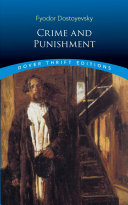
Crime and Punishment
Crime and Punishment by Fyodor Dostoyevsky (1866)
A destitute student murders a pawnbroker, believing himself to be an extraordinary man above moral law. What follows is one of literature's most intense psychological explorations of guilt, conscience, and redemption.
Historical Significance:
Dostoyevsky wrote Crime and Punishment while in severe financial distress, having lost his savings gambling in Wiesbaden. He serialized it in The Russian Messenger from January to December 1866. He was simultaneously writing another novel, The Gambler, to meet a crushing deadline — he dictated it to a young stenographer, Anna Snitkina, whom he married four months later.
The novel was partly inspired by the case of Pierre-François Lacenaire, a French murderer who justified his crimes through intellectual philosophy. Dostoyevsky, who had himself been sentenced to death (commuted at the last moment to hard labor in Siberia), understood the psychology of extreme situations better than perhaps any other novelist.
Raskolnikov's theory — that extraordinary people like Napoleon are above conventional morality — was Dostoyevsky's critique of the nihilism and utilitarianism spreading through Russian intellectual circles in the 1860s.
Cultural Impact:
Crime and Punishment is considered one of the greatest novels ever written and the founding text of psychological fiction. It influenced Nietzsche, Freud, Kafka, Camus, and virtually every crime novelist who followed. The "Raskolnikov complex" — intellectual justification for immoral acts — remains a concept in psychology and philosophy. The novel is required reading in universities worldwide.
This public domain classic was originally published in 1866. Free to read and share.
Free
eBook
FREE
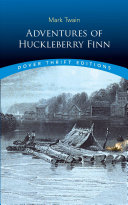
Adventures of Huckleberry Finn
Adventures of Huckleberry Finn by Mark Twain (1884)
"All modern American literature comes from one book by Mark Twain called Huckleberry Finn." — Ernest Hemingway. The story of a boy and a runaway slave rafting down the Mississippi River is America's most important — and most controversial — novel.
Historical Significance:
Mark Twain (Samuel Clemens) began writing Huckleberry Finn in 1876 as a sequel to Tom Sawyer, but set it aside for years. He returned to it intermittently, finally publishing it in the United Kingdom in December 1884 and in the United States in February 1885.
The novel was immediately banned by the Concord Public Library as "trash and suitable only for the slums." Twain responded: "That will sell 25,000 copies for us, sure." It has been banned, challenged, and debated continuously ever since — primarily for its use of racial language, which Twain employed deliberately to satirize racism, not to endorse it.
Written in Huck's own vernacular voice — uneducated, funny, and profoundly moral — the novel was revolutionary in its use of American dialect as a literary language. Twain's depiction of the friendship between Huck and Jim remains one of literature's most powerful arguments against racism.
Cultural Impact:
Huckleberry Finn is widely considered the Great American Novel alongside Moby-Dick. It influenced every major American writer who followed, from Hemingway to Faulkner to Toni Morrison. The novel continues to generate controversy and classroom discussion, which is precisely what Twain intended. It remains one of the most-read, most-taught, and most-debated books in history.
This public domain classic was originally published in 1884. Free to read and share.
Free

eBook
FREE
Wuthering Heights
Wuthering Heights by Emily Brontë (1847)
A dark, passionate, and utterly unique tale of doomed love on the Yorkshire moors. Heathcliff and Catherine Earnshaw's destructive obsession spans generations and defies every convention of Victorian fiction.
Historical Significance:
Emily Brontë published Wuthering Heights in December 1847 under the pseudonym "Ellis Bell." It was her only novel — she died of tuberculosis on December 19, 1848, at age 30, just one year after publication. She never knew the book would become one of the greatest novels in the English language.
Contemporary critics were baffled and horrified. The Spectator called it "wild, confused, disjointed, and improbable." The characters were considered too brutal, too passionate, and too morally ambiguous for Victorian taste. Unlike her sister Charlotte's Jane Eyre, there is no clear hero or moral lesson. The novel operates on a mythic, almost elemental level.
Emily Brontë, who rarely left the family parsonage in Haworth, Yorkshire, created a world of staggering emotional intensity from the raw landscape of the moors she walked daily. Her poetry — discovered by Charlotte in 1845 — reveals the same fierce, visionary imagination.
Cultural Impact:
Wuthering Heights is now considered one of the greatest novels in English literature. Kate Bush's 1978 song "Wuthering Heights" became a #1 hit. The novel has inspired films, operas, and countless adaptations. "Heathcliff" and "Catherine" have become bywords for passionate, destructive love.
This public domain classic was originally published in 1847. Free to read and share.
Free
eBook
FREE
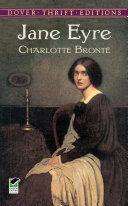
Jane Eyre
Jane Eyre: An Autobiography by Charlotte Brontë (1847)
"Reader, I married him." — The passionate, gothic love story of a plain but fiercely independent governess and the brooding Mr. Rochester, hiding a terrible secret in the attic of Thornfield Hall.
Historical Significance:
Charlotte Brontë published Jane Eyre on October 16, 1847, under the male pseudonym "Currer Bell" — the only way a woman could be taken seriously as a novelist in Victorian England. Her sisters Emily ("Ellis Bell," Wuthering Heights) and Anne ("Acton Bell," The Tenant of Wildfell Hall) published their own novels the same year.
The novel drew heavily on Charlotte's own difficult life: her childhood at the harsh Clergy Daughters' School at Cowan Bridge (the model for Lowood), her years as a governess, and her unrequited love for her Belgian professor Constantin Heger. The novel's frank depiction of female desire and Jane's declaration of moral and intellectual equality with Rochester was radical for its time.
Cultural Impact:
Jane Eyre has been adapted into over 30 films and TV productions. The "madwoman in the attic" (Bertha Mason Rochester) became a feminist symbol explored in Jean Rhys's Wide Sargasso Sea (1966). Jane's refusal to compromise her principles — "I am no bird; and no net ensnares me: I am a free human being with an independent will" — established a template for the strong female protagonist that endures to this day.
This public domain classic was originally published in 1847. Free to read and share.
Free

eBook
FREE
Little Women
Little Women by Louisa May Alcott (1868)
The beloved story of the four March sisters — Meg, Jo, Beth, and Amy — growing up during the Civil War. Jo March remains one of the most iconic heroines in American literature.
Historical Significance:
Alcott wrote Little Women at the request of her publisher Thomas Niles, who wanted "a girls' story." She was reluctant, writing in her journal: "Never liked girls or knew many, except my sisters." She based the March family closely on her own: Jo is Louisa herself, Meg is her older sister Anna, Beth is her younger sister Elizabeth (who died at 22), and Amy is her youngest sister May.
Published in two volumes (September 1868 and April 1869), the novel was an immediate bestseller, earning Alcott financial independence for the first time in her life. Her father, the Transcendentalist philosopher Bronson Alcott (friend of Emerson and Thoreau), had kept the family in genteel poverty for decades.
The novel was revolutionary in depicting girls as complex, ambitious individuals rather than passive angels. Jo March's refusal to marry Laurie — and her fierce desire to be a writer — shocked readers but inspired generations of women.
Cultural Impact:
Little Women has been continuously in print for over 155 years and adapted into numerous films, including Greta Gerwig's critically acclaimed 2019 version. Jo March is cited by countless women writers as their inspiration for pursuing literary careers. The novel is a foundational text of American feminism. Simone de Beauvoir, J.K. Rowling, and Elena Ferrante have all named it as a formative influence.
This public domain classic was originally published in 1868. Free to read and share.
Free
eBook
FREE
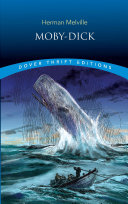
Moby Dick; Or, The Whale
Moby-Dick; or, The Whale by Herman Melville (1851)
"Call me Ishmael." — three words that open one of the greatest and most ambitious novels in the English language. Captain Ahab's obsessive hunt for the white whale is an epic meditation on obsession, nature, God, and the limits of human knowledge.
Historical Significance:
Melville wrote Moby-Dick between 1850 and 1851, during which time he developed an intense friendship with Nathaniel Hawthorne, to whom the novel is dedicated. Melville drew on his own experience as a sailor, including 18 months aboard the whaling ship Acushnet (1841-42), and on the true story of the Essex, a Nantucket whaler sunk by a sperm whale in 1820.
Published on October 18, 1851, by Richard Bentley in London (as "The Whale") and Harper & Brothers in New York, the novel was a commercial and critical disaster. It sold only 3,715 copies in Melville's lifetime and earned him $1,260 total. Critics found it baffling — too long, too digressive, too philosophical. Melville never recovered professionally and spent his last 19 years as a customs inspector in New York.
The novel's resurrection began in the 1920s, when scholars rediscovered it during the "Melville Revival." By mid-century, it was recognized as perhaps the greatest American novel ever written — a work so vast in scope that it encompasses cetology, philosophy, theology, economics, and the entire human condition.
Cultural Impact:
Moby-Dick is now considered the Great American Novel by many scholars. Captain Ahab and the white whale have become universal symbols of obsession and the unknowable. The novel has influenced writers from Faulkner to Cormac McCarthy, and has been adapted into films starring Gregory Peck (1956) and Patrick Stewart (1998). Starbucks coffee took its name from Ahab's first mate.
This public domain classic was originally published in 1851. Free to read and share.
Free
eBook
FREE
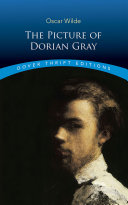
The Picture of Dorian Gray
The Picture of Dorian Gray by Oscar Wilde (1890)
Oscar Wilde's only novel — a Gothic masterpiece about beauty, corruption, and the price of eternal youth. A young man's portrait ages while he remains forever beautiful.
Historical Significance:
First published in the July 1890 issue of Lippincott's Monthly Magazine, the story caused immediate scandal. Critics called it "poisonous," "unclean," and "corrupt." The Daily Chronicle declared it would suit "none but outlawed noblemen and perverted telegraph boys" — a coded reference to homosexuality.
Wilde revised and expanded the novel for book publication in 1891, adding a preface containing his famous artistic manifesto: "All art is quite useless" and "There is no such thing as a moral or an immoral book. Books are well written, or badly written. That is all."
The novel's themes of hidden sin, the mask of respectability, and the gap between appearance and reality were deeply personal to Wilde, who was living a double life as a married father with secret homosexual relationships. Five years after publication, his own life would mirror the novel's themes when his relationship with Lord Alfred Douglas led to his criminal trial, imprisonment, and ruin.
Cultural Impact:
The novel has never gone out of print and has been adapted into over 30 films. The concept of a "Dorian Gray" — someone who appears youthful while hiding corruption — has entered the cultural lexicon. The story influenced countless works exploring vanity and moral decay, from The Twilight Zone to modern social media commentary. Wilde's epigrammatic prose style ("I can resist everything except temptation") remains endlessly quotable.
This public domain classic was originally published in 1890. Free to read and share.
Free
eBook
FREE
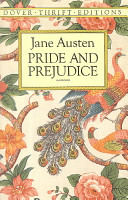
Pride and Prejudice
Pride and Prejudice by Jane Austen (1813)
"It is a truth universally acknowledged, that a single man in possession of a good fortune, must be in want of a wife." — one of the most famous opening lines in all of literature.
Historical Significance:
Jane Austen completed this novel in 1797 under the title "First Impressions," but it was rejected by the publisher Thomas Cadell. She revised it extensively before it was finally published by Thomas Egerton on January 28, 1813. Austen sold the copyright for just £110 (roughly £10,000 today).
The novel was an immediate success, with its first edition selling out within months. It offers a razor-sharp social commentary on class, marriage, and morality in Regency-era England, wrapped in one of literature's greatest love stories between Elizabeth Bennet and Fitzwilliam Darcy.
Austen wrote during the Napoleonic Wars, yet her novels deliberately focus on the domestic world — "the little bit (two Inches wide) of Ivory on which I work," as she described it. This deliberate narrowing of scope allowed her to examine human nature with microscopic precision.
Cultural Impact:
Pride and Prejudice has never gone out of print in over 200 years. It has been translated into every major language, adapted into dozens of films and TV series (the 1995 BBC adaptation with Colin Firth being perhaps the most beloved), and inspired countless modern retellings including Bridget Jones's Diary. It consistently appears on "greatest novels ever written" lists and sells over 800,000 copies annually.
This public domain classic was originally published in 1813. Free to read and share.
Free

eBook
FREE
The Great Gatsby
The Great Gatsby by F. Scott Fitzgerald (1925)
The defining novel of the Jazz Age and the American Dream, The Great Gatsby entered the public domain on January 1, 2021, becoming one of the most downloaded books in history overnight.
Historical Significance:
Fitzgerald wrote the novel in 1924 while living on the French Riviera, drawing on his experiences among the wealthy elite of Long Island's North Shore. Published by Scribner's on April 10, 1925, it was a commercial disappointment during Fitzgerald's lifetime, selling fewer than 20,000 copies before his death in 1940 at age 44.
The novel's resurrection began during World War II, when the U.S. government distributed 155,000 copies to soldiers overseas as part of the Armed Services Editions. Soldiers brought it home, teachers began assigning it, and by the 1960s it had become the most taught novel in American high schools — a position it still holds today.
Set in the summer of 1922, the novel follows narrator Nick Carraway's encounter with the mysterious millionaire Jay Gatsby, whose obsessive pursuit of the beautiful Daisy Buchanan serves as a meditation on wealth, class, love, and the corruption of the American Dream.
Cultural Impact:
The Great Gatsby now sells over 500,000 copies annually and has been adapted into five feature films, including Baz Luhrmann's 2013 version starring Leonardo DiCaprio. The green light at the end of Daisy's dock has become one of American literature's most enduring symbols. Fitzgerald's prose style — lyrical, precise, and devastating — influenced generations of writers.
This public domain classic was originally published in 1925. Free to read and share.
Free
No classics match your filters.