New eBooks
0 booksNo eBooks Yet
Be the first to publish an eBook on BoingyBooks!
🎓 Your Free Digital Library Awaits
Access 232+ classic ebooks — from Shakespeare to Sherlock Holmes. Read on any device, save your progress, build your library.
Create Free Account →Classic Literature
6 free classicsTimeless works from the public domain, beautifully formatted for the BoingyBooks reader.

eBook
FREE
The Autobiography of an Ex-Colored Man
The Autobiography of an Ex-Colored Man by James Weldon Johnson (1912)
A light-skinned man of mixed race navigates both Black and white worlds in turn-of-the-century America, ultimately choosing to "pass" as white — and living with the consequences of that choice. A groundbreaking novel of racial identity.
Historical Significance:
James Weldon Johnson — diplomat, songwriter ("Lift Every Voice and Sing," known as the Black national anthem), and NAACP executive secretary — published this novel anonymously in 1912, and many readers believed it was a true autobiography. The unnamed narrator's journey through ragtime clubs, European concert halls, lynching violence, and the decision to abandon his Black identity for the safety of whiteness was unprecedented in American fiction. The novel anticipated the Harlem Renaissance by a decade and explored questions of racial passing, cultural authenticity, and double consciousness that remain central to American life. It was republished under Johnson's name in 1927 to wide acclaim.
This public domain classic was originally published in 1912. Free to read and share.
Free
eBook
FREE
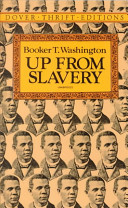
Up from Slavery
Up from Slavery by Booker T. Washington (1901)
The autobiography of a man born into slavery who founded the Tuskegee Institute and became the most powerful African American leader of his era — and the most controversial, as W.E.B. Du Bois challenged his accommodationist approach.
Historical Significance:
Booker T. Washington was born a slave in Virginia in 1856 and after emancipation worked in salt furnaces and coal mines before walking 500 miles to attend Hampton Normal and Agricultural Institute. He founded Tuskegee Institute in Alabama in 1881 and built it into the nation's premier Black educational institution. His 1895 "Atlanta Compromise" speech — accepting social segregation in exchange for economic opportunity — made him the most influential Black leader in America. Up from Slavery, published in 1901, became one of the most widely read American autobiographies. Though Du Bois criticized Washington's strategy in The Souls of Black Folk (1903), both men agreed on the fundamental goal of racial uplift.
This public domain classic was originally published in 1901. Free to read and share.
Free
eBook
FREE
The Confessions
The Confessions by Jean-Jacques Rousseau (1782-1789)
"I have resolved on an enterprise which has no precedent: to show a man in all the truth of nature; and this man shall be myself." The autobiography that invented the modern memoir — radically, shockingly honest about sex, shame, and the inner life.
Historical Significance:
Rousseau wrote his Confessions between 1764 and 1770, but they were published posthumously in 1782 and 1789. Unlike Augustine's Confessions (which served God) or Montaigne's Essays (which served wisdom), Rousseau's Confessions served truth — his own truth, no matter how embarrassing. He confessed to theft, sexual exhibitionism, masochism, and abandoning his five children to foundling homes. This radical honesty created the modern autobiography: the idea that a life is worth recording not because of great deeds but because of authentic experience. Every memoir, every confessional essay, every reality show descends from Rousseau's decision to tell all.
This public domain classic was originally published posthumously in 1782. Free to read and share.
Free
eBook
FREE
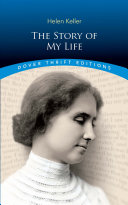
The Story of My Life
The Story of My Life by Helen Keller (1903)
The autobiography of the deaf-blind woman who learned to communicate, graduated from Radcliffe College, and became one of the most inspirational figures in American history. Written when Keller was just 22 years old.
Historical Significance:
Helen Keller lost her sight and hearing at 19 months due to illness (likely scarlet fever or meningitis). Her breakthrough moment — when teacher Anne Sullivan spelled W-A-T-E-R into her hand while water flowed over the other — is one of the most famous scenes in American autobiography. Published in 1903 while Keller was still a student at Radcliffe, the book became an international sensation. Keller went on to become a political activist, suffragist, and advocate for disability rights. She met every U.S. president from Grover Cleveland to Lyndon Johnson. Mark Twain, who befriended her, called her "the most marvelous person of her sex that has existed on this earth since Joan of Arc."
This public domain classic was originally published in 1903. Free to read and share.
Free

eBook
FREE
Autobiography of Benjamin Franklin
The Autobiography of Benjamin Franklin by Benjamin Franklin (written 1771-1790, published 1791)
America's first self-help book. Franklin's account of his rise from a runaway printer's apprentice to the most famous American of his age — scientist, inventor, diplomat, and Founding Father.
Historical Significance:
Franklin began writing his autobiography in 1771 at age 65 and worked on it intermittently until shortly before his death in 1790. It was first published in French translation in 1791. The book pioneered the rags-to-riches narrative that became central to the American Dream. Franklin's "13 Virtues" self-improvement program — temperance, silence, order, resolution, frugality, industry, sincerity, justice, moderation, cleanliness, tranquility, chastity, humility — is the direct ancestor of every self-help system from Dale Carnegie to Stephen Covey. The book has been continuously in print for over 230 years and remains one of the most widely read American autobiographies.
This public domain classic was originally published in 1791. Free to read and share.
Free
eBook
FREE
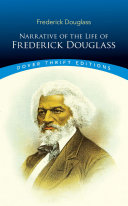
Narrative of the Life of Frederick Douglass
Narrative of the Life of Frederick Douglass, an American Slave by Frederick Douglass (1845)
The autobiography of a man who escaped slavery, taught himself to read, and became the most powerful voice for abolition in American history. One of the most important documents in American literature and civil rights history.
Historical Significance:
Frederick Douglass published his Narrative in 1845, just seven years after escaping slavery in Maryland. It was an immediate bestseller, selling 5,000 copies in four months and 30,000 copies within five years. The book was so eloquent that skeptics accused Douglass of being unable to have written it himself — precisely the kind of racist assumption the book was written to demolish.
Douglass' account of learning to read — his mistress began teaching him until her husband forbade it, saying literacy would make a slave unfit for slavery — is one of American literature's most powerful passages. The Narrative made Douglass internationally famous but also put him at risk of recapture under the Fugitive Slave Act, forcing him to flee to Britain for two years.
This public domain classic was originally published in 1845. Free to read and share.
Free
No classics match your filters.