New eBooks
0 booksNo eBooks Yet
Be the first to publish an eBook on BoingyBooks!
🎓 Your Free Digital Library Awaits
Access 232+ classic ebooks — from Shakespeare to Sherlock Holmes. Read on any device, save your progress, build your library.
Create Free Account →Classic Literature
7 free classicsTimeless works from the public domain, beautifully formatted for the BoingyBooks reader.
eBook
FREE
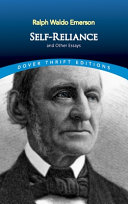
Self-Reliance and Other Essays
Self-Reliance and Other Essays by Ralph Waldo Emerson (1841)
"Trust thyself: every heart vibrates to that iron string." "A foolish consistency is the hobgoblin of little minds." "To be great is to be misunderstood." The most quoted American essayist — every sentence a proverb.
Historical Significance:
Ralph Waldo Emerson published his first series of Essays in 1841, establishing himself as the intellectual leader of American Transcendentalism and one of the most influential thinkers in American history. "Self-Reliance" — his most famous essay — argues for nonconformity, individual integrity, and trusting one's own intuition over social pressure. Emerson influenced Thoreau, Whitman, Dickinson, Nietzsche, William James, and every subsequent American writer and thinker who valued individualism. His Divinity School Address (1838), in which he challenged organized Christianity, got him banned from Harvard for 30 years. Obama, Jobs, and countless leaders have cited Emerson as foundational.
This public domain classic was originally published in 1841. Free to read and share.
Free

eBook
FREE
The Master Key System
The Master Key System by Charles F. Haanel (1912)
A 24-week course in mental science, originally distributed as a correspondence course. Haanel teaches that thought is creative energy and that disciplined thinking can achieve any goal. The book that allegedly inspired Bill Gates.
Historical Significance:
Charles F. Haanel, a St. Louis businessman, created The Master Key System as a mail-order course in 1912, later published as a book in 1916. Legend holds that a young Bill Gates read it at Harvard before dropping out to start Microsoft — though Gates has never confirmed this. What is confirmed is that Rhonda Byrne cited Haanel alongside Wallace Wattles as primary inspirations for The Secret. The Master Key System was banned by the Catholic Church in 1933, which only increased its underground popularity. Each of the 24 chapters ends with a practical mental exercise — a structured meditation program that anticipated modern mindfulness practices by a century.
This public domain classic was originally published in 1912. Free to read and share.
Free

eBook
FREE
The Game of Life and How to Play It
The Game of Life and How to Play It by Florence Scovel Shinn (1925)
"The game of life is a game of boomerangs. Our thoughts, deeds, and words return to us sooner or later with astounding accuracy." A metaphysical guide to using affirmations, intuition, and spiritual law to transform your life.
Historical Significance:
Florence Scovel Shinn, a New York artist and metaphysical teacher, self-published The Game of Life in 1925. It was largely unknown outside New Thought circles for decades, but experienced a massive revival in the 2010s through social media — particularly TikTok, where #florencescovelshinn has hundreds of millions of views. Shinn's practical, story-driven approach to manifestation — she illustrates principles with real-life examples from her counseling practice — makes the book more accessible than most metaphysical texts. She anticipated the modern manifestation movement by nearly a century. The book has sold millions of copies and is now considered a foundational text of the spiritual self-help genre.
This public domain classic was originally published in 1925. Free to read and share.
Free
eBook
FREE
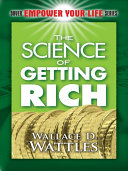
The Science of Getting Rich
The Science of Getting Rich by Wallace D. Wattles (1910)
A practical guide to wealth creation through "thinking in a Certain Way." Wattles argues that getting rich is an exact science governed by natural laws, and that anyone can learn to apply these laws.
Historical Significance:
Wallace Wattles, a socialist and New Thought writer from Indiana, published The Science of Getting Rich in 1910, three years before his death. The book languished in obscurity for nearly a century until Rhonda Byrne credited it as the primary inspiration for The Secret (2006), which sold over 30 million copies. Byrne said she discovered Wattles' book "at one of the darkest times in my life" and it transformed her thinking. The Science of Getting Rich is now one of the most downloaded self-help books on the internet. Its blend of practical advice and metaphysical philosophy anticipated the entire modern manifestation/abundance movement.
This public domain classic was originally published in 1910. Free to read and share.
Free
eBook
FREE
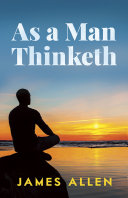
As a Man Thinketh
As a Man Thinketh by James Allen (1903)
"As a man thinketh in his heart, so is he." A short, powerful essay arguing that our thoughts shape our character, circumstances, and destiny. The grandfather of all self-help books.
Historical Significance:
James Allen, a British philosophical writer who lived in poverty for most of his life, published As a Man Thinketh in 1903. It was his second book and initially sold modestly. After his death in 1912, it became one of the bestselling self-help books of all time, influencing Norman Vincent Peale (The Power of Positive Thinking), Napoleon Hill (Think and Grow Rich), Dale Carnegie, and the entire modern personal development industry. At just 15,000 words, it can be read in under an hour — but its central idea, that thought precedes all achievement, has shaped millions of lives. The title is drawn from Proverbs 23:7.
This public domain classic was originally published in 1903. Free to read and share.
Free

eBook
FREE
Autobiography of Benjamin Franklin
The Autobiography of Benjamin Franklin by Benjamin Franklin (written 1771-1790, published 1791)
America's first self-help book. Franklin's account of his rise from a runaway printer's apprentice to the most famous American of his age — scientist, inventor, diplomat, and Founding Father.
Historical Significance:
Franklin began writing his autobiography in 1771 at age 65 and worked on it intermittently until shortly before his death in 1790. It was first published in French translation in 1791. The book pioneered the rags-to-riches narrative that became central to the American Dream. Franklin's "13 Virtues" self-improvement program — temperance, silence, order, resolution, frugality, industry, sincerity, justice, moderation, cleanliness, tranquility, chastity, humility — is the direct ancestor of every self-help system from Dale Carnegie to Stephen Covey. The book has been continuously in print for over 230 years and remains one of the most widely read American autobiographies.
This public domain classic was originally published in 1791. Free to read and share.
Free
eBook
FREE
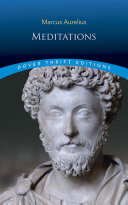
Meditations
Meditations by Marcus Aurelius (c. 161-180 AD)
The private journal of a Roman Emperor — never intended for publication. Marcus Aurelius' reflections on duty, mortality, self-discipline, and finding peace amid chaos. The most accessible and beloved work of Stoic philosophy.
Historical Significance:
Marcus Aurelius wrote the Meditations in Greek during his military campaigns on the Germanic frontier, between 170 and 180 AD. He was the last of the "Five Good Emperors" and the most powerful man in the world, yet his private writings reveal a man struggling with the same anxieties as anyone: anger, distraction, fear of death, and the search for meaning.
The Meditations were never meant to be read by anyone else — they are literally a man talking to himself. This intimacy is what makes them so powerful 1,800 years later. Bill Clinton, Tim Ferriss, and countless Silicon Valley executives cite Meditations as their most important book. The Stoic philosophy it contains — focus on what you can control, accept what you cannot — has become a cornerstone of modern self-help and cognitive behavioral therapy.
This public domain classic was originally written c. 170-180 AD. Free to read and share.
Free
No classics match your filters.