New eBooks
0 booksNo eBooks Yet
Be the first to publish an eBook on BoingyBooks!
🎓 Your Free Digital Library Awaits
Access 232+ classic ebooks — from Shakespeare to Sherlock Holmes. Read on any device, save your progress, build your library.
Create Free Account →Classic Literature
142 free classicsTimeless works from the public domain, beautifully formatted for the BoingyBooks reader.
eBook
FREE
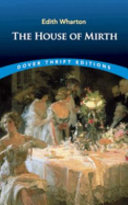
The House of Mirth
The House of Mirth by Edith Wharton (1905)
Lily Bart, beautiful and intelligent but impoverished, navigates New York high society's marriage market with increasing desperation, unable to secure the wealthy husband she needs or abandon the world that is slowly destroying her.
Historical Significance:
Edith Wharton's first major novel was serialized in Scribner's Magazine in 1905, boosting circulation by 100,000 copies. The novel sold 140,000 copies in its first year — extraordinary for literary fiction. Wharton, herself a member of the New York aristocracy she satirized, created in Lily Bart one of American literature's most tragic heroines: a woman too intelligent for the shallow world she inhabits but too conditioned by it to escape. The novel's unflinching depiction of how society destroys women who lack independent wealth remains devastatingly relevant.
This public domain classic was originally published in 1905. Free to read and share.
Free
eBook
FREE
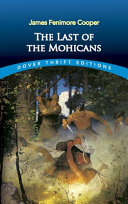
The Last of the Mohicans
The Last of the Mohicans by James Fenimore Cooper (1826)
During the French and Indian War, frontiersman Hawkeye (Natty Bumppo) and his Mohican companions Chingachgook and Uncas escort two sisters through hostile territory. The most famous American adventure novel of the 19th century.
Historical Significance:
Published in 1826, The Last of the Mohicans was the second of Cooper's five Leatherstocking Tales and his greatest commercial success. It was the bestselling American novel of the 19th century and was translated into virtually every European language. While Cooper's portrayal of Native Americans has been criticized as romanticized and stereotypical, the novel was groundbreaking in presenting indigenous characters as heroic protagonists. Daniel Day-Lewis's 1992 film adaptation revived interest in the novel. Cooper essentially invented the American frontier adventure genre.
This public domain classic was originally published in 1826. Free to read and share.
Free

eBook
FREE
Rip Van Winkle
Rip Van Winkle by Washington Irving (1819)
A lazy but likable Dutch-American farmer wanders into the Catskill Mountains, encounters mysterious men playing ninepins, drinks their liquor, and falls asleep for twenty years — waking to find his wife dead, his friends gone, and America transformed by revolution.
Historical Significance:
Published in 1819, "Rip Van Winkle" was the first great American short story and made Washington Irving the first American writer recognized in Europe. The tale draws on German folklore (the legend of Peter Klaus) but is thoroughly Americanized — Rip sleeps through the entire American Revolution. The phrase "Rip Van Winkle" has entered the English language as a term for anyone hopelessly out of touch with the times. The story captures a fundamental American anxiety: the fear of being left behind by progress.
This public domain classic was originally published in 1819. Free to read and share.
Free

eBook
FREE
The Legend of Sleepy Hollow
The Legend of Sleepy Hollow by Washington Irving (1820)
Schooltacher Ichabod Crane, courting the beautiful Katrina Van Tassel, encounters the terrifying Headless Horseman on a dark night ride through the haunted glen. America's most famous ghost story.
Historical Significance:
Published in 1820 as part of The Sketch Book of Geoffrey Crayon, this story and "Rip Van Winkle" made Washington Irving the first American author to achieve international fame. Irving wrote both stories while living in England, homesick for the Hudson Valley of his youth. The Headless Horseman — a Hessian soldier decapitated by a cannonball during the Revolutionary War — became one of America's most enduring folklore figures. Tim Burton's 1999 film starring Johnny Depp and Disney's 1949 animated adaptation brought the tale to new generations. Every Halloween, the real Sleepy Hollow in New York hosts thousands of visitors.
This public domain classic was originally published in 1820. Free to read and share.
Free
eBook
FREE
Kim
Kim by Rudyard Kipling (1901)
Kimball O'Hara, an Irish orphan raised as a street urchin in Lahore, becomes entangled in the "Great Game" of British espionage along the Grand Trunk Road of India. A picaresque masterpiece of adventure, spirituality, and cultural identity.
Historical Significance:
Considered Kipling's finest novel, Kim was published in 1901 and draws on Kipling's deep love for India, where he was born and spent his formative years. The novel is both a spy thriller and a spiritual quest — Kim serves the British Secret Service while also seeking enlightenment alongside a Tibetan lama. T.S. Eliot called it "a masterpiece." It remains the most vivid portrait of colonial India in English literature and has been praised for its sympathetic, detailed portrayal of Indian cultures and religions.
This public domain classic was originally published in 1901. Free to read and share.
Free

eBook
FREE
The Second Jungle Book
The Second Jungle Book by Rudyard Kipling
Five Mowgli stories continue his life in the jungle: How Fear Came, Letting in the Jungle, The King's Ankus, Red Dog and The Spring Running.
Three other stories complete the collection: The Miracle of Purun Bhagat, The Undertakers and Quiquern. Each story is accompanied by poetry.
This is the eight-story sequel to The Jungle Book, not a collection containing five additional non-Mowgli tales.
Retained text source: Project Gutenberg ebook 1937.
Free
eBook
FREE
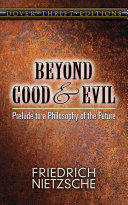
Beyond Good and Evil
Beyond Good and Evil by Friedrich Nietzsche (1886)
"He who fights with monsters should look to it that he himself does not become a monster. And if you gaze long into an abyss, the abyss also gazes into you." Nietzsche's most systematic critique of traditional morality and philosophy.
Historical Significance:
Published in 1886 at Nietzsche's own expense (it sold only 114 copies in its first year), Beyond Good and Evil challenges every assumption of Western philosophy since Plato. Nietzsche attacks democracy, nationalism, Christianity, utilitarianism, and the very concept of objective truth. He proposes that morality is not universal but created by the powerful to serve their interests — what he calls "master morality" versus "slave morality."
The book is Nietzsche at his most provocative and quotable. Its influence on 20th-century philosophy — existentialism, postmodernism, deconstructionism — is immeasurable. Foucault, Derrida, and Heidegger all built on Nietzsche's foundations. The book's aphoristic style makes it one of the most accessible works of serious philosophy.
This public domain classic was originally published in 1886. Free to read and share.
Free
eBook
FREE
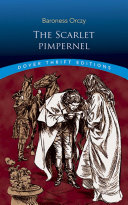
The Scarlet Pimpernel
The Scarlet Pimpernel by Baroness Orczy (1905)
During the French Revolution's Reign of Terror, a mysterious English nobleman secretly rescues French aristocrats from the guillotine, leaving only a small red flower as his calling card. The original secret-identity superhero.
Historical Significance:
Baroness Emmuska Orczy, a Hungarian-born British author, first wrote The Scarlet Pimpernel as a play in 1903, then novelized it in 1905. The character of Sir Percy Blakeney — an apparently foolish aristocrat who is secretly a brilliant hero — directly created the "secret identity" archetype that would define superheroes for the next century. Zorro (1919), Batman (1939), and Superman (1938) all owe a direct debt to the Scarlet Pimpernel. The novel also pioneered the "love triangle complicated by secret identity" plot that became a staple of superhero fiction. "Is he in heaven? Is he in hell? That demmed, elusive Pimpernel!" is one of adventure fiction's most famous verses.
This public domain classic was originally published in 1905. Free to read and share.
Free
eBook
FREE
A Princess of Mars
A Princess of Mars by Edgar Rice Burroughs (1912)
Civil War veteran John Carter is mysteriously transported to Mars (Barsoom), where he discovers a dying planet of warring alien races, four-armed green warriors, and the beautiful princess Dejah Thoris. The novel that inspired Star Wars, Avatar, and modern science fiction.
Historical Significance:
Serialized as "Under the Moons of Mars" in All-Story Magazine in 1912 (the same year as Tarzan), A Princess of Mars created the "planetary romance" genre. George Lucas has cited it as a major influence on Star Wars — the desert planet, the warrior princess, the fish-out-of-water hero transplanted to an alien world. James Cameron's Avatar drew heavily on Barsoom's ecology and warrior cultures. Ray Bradbury, Arthur C. Clarke, and Carl Sagan all acknowledged Burroughs' influence on their love of space exploration. Disney's 2012 film adaptation John Carter, while a box office disappointment, introduced a new generation to Burroughs' imaginative world.
This public domain classic was originally published in 1912. Free to read and share.
Free
eBook
FREE
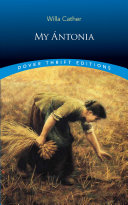
My Ántonia
My Ántonia by Willa Cather (1918)
The story of Ántonia Shimerda, a Bohemian immigrant girl on the Nebraska prairie, told through the memories of her childhood friend Jim Burden. A luminous, heartbreaking portrait of the American pioneer experience.
Historical Significance:
Willa Cather based Ántonia on Annie Sadilek Pavelka, a real Bohemian immigrant she knew growing up in Red Cloud, Nebraska. Published in 1918, the novel captured a vanishing world — the first generation of European immigrants who broke the Great Plains — with extraordinary beauty and empathy. Cather wrote, "the best thing I've done is My Ántonia. I feel I've made a contribution to American letters with that book."
The novel's celebration of immigrant resilience and its unflinching portrait of prairie hardship make it one of the great American novels. Cather won the Pulitzer Prize for One of Ours in 1923, but My Ántonia is considered her masterpiece.
This public domain classic was originally published in 1918. Free to read and share.
Free

eBook
FREE
Autobiography of Benjamin Franklin
The Autobiography of Benjamin Franklin by Benjamin Franklin (written 1771-1790, published 1791)
America's first self-help book. Franklin's account of his rise from a runaway printer's apprentice to the most famous American of his age — scientist, inventor, diplomat, and Founding Father.
Historical Significance:
Franklin began writing his autobiography in 1771 at age 65 and worked on it intermittently until shortly before his death in 1790. It was first published in French translation in 1791. The book pioneered the rags-to-riches narrative that became central to the American Dream. Franklin's "13 Virtues" self-improvement program — temperance, silence, order, resolution, frugality, industry, sincerity, justice, moderation, cleanliness, tranquility, chastity, humility — is the direct ancestor of every self-help system from Dale Carnegie to Stephen Covey. The book has been continuously in print for over 230 years and remains one of the most widely read American autobiographies.
This public domain classic was originally published in 1791. Free to read and share.
Free

eBook
FREE
The Communist Manifesto
The Communist Manifesto by Karl Marx and Friedrich Engels (1848)
"A spectre is haunting Europe — the spectre of communism." The most influential political pamphlet of the modern era. In just 12,000 words, Marx and Engels laid out a theory of history, class struggle, and revolution that would reshape the 20th century.
Historical Significance:
Commissioned by the Communist League and published in London on February 21, 1848, the Manifesto appeared just as revolutions erupted across Europe in the Spring of Nations. Marx was 29 years old. The text argues that all history is the history of class struggles, that capitalism contains the seeds of its own destruction, and that the working class will inevitably overthrow the bourgeoisie.
Whatever one thinks of communism as a political system, the Manifesto's influence on world history is undeniable. It inspired revolutions in Russia, China, Cuba, and Vietnam; shaped labor movements, social democratic parties, and welfare states worldwide; and fundamentally changed how we think about economics, class, and power. It remains one of the most assigned texts in university courses and one of the most debated documents in human history.
This public domain classic was originally published in 1848. Free to read and share.
Free

eBook
FREE
Common Sense
Common Sense by Thomas Paine (1776)
The pamphlet that started a revolution. In just 47 pages, Paine demolished the case for British rule, argued for American independence, and convinced a nation of colonists to become revolutionaries. The bestselling work of the 18th century.
Historical Significance:
Thomas Paine, an English immigrant who had arrived in America just 14 months earlier, published Common Sense anonymously on January 10, 1776. It sold 500,000 copies in its first year — in a country of 2.5 million people. Proportionally, it remains the bestselling American publication of all time.
Paine wrote in plain, direct language that ordinary people could understand, deliberately rejecting the learned style of political philosophy. "These are the times that try men's souls" (from his later Crisis papers) became a rallying cry. George Washington had Common Sense read aloud to his troops. John Adams said, "Without the pen of the author of Common Sense, the sword of Washington would have been raised in vain." The pamphlet directly precipitated the Declaration of Independence six months later.
This public domain classic was originally published in 1776. Free to read and share.
Free
eBook
FREE
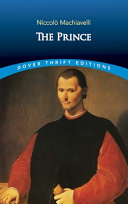
The Prince
The Prince by Niccolò Machiavelli (1532)
"It is better to be feared than loved, if you cannot be both." The most notorious political treatise ever written. Machiavelli's cold-eyed manual for acquiring and maintaining political power shocked the world and made his name a synonym for cunning.
Historical Significance:
Niccolò Machiavelli, a Florentine diplomat who had served the Republic of Florence, wrote The Prince in 1513 after being exiled, imprisoned, and tortured by the returning Medici family. He dedicated the book to Lorenzo de' Medici, hoping to regain political favor — it didn't work. Published posthumously in 1532, the book was condemned by the Pope and placed on the Index of Forbidden Books.
What made The Prince revolutionary was its rejection of idealism. Where previous political writers described how rulers should behave, Machiavelli described how they actually behave — and how to win. "Machiavellian" became an adjective meaning deviously cunning, though scholars argue Machiavelli was simply being honest about power. The Prince is required reading in political science programs worldwide.
This public domain classic was originally published in 1532. Free to read and share.
Free
eBook
FREE
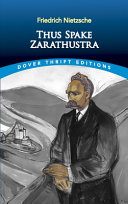
Thus Spoke Zarathustra
Thus Spoke Zarathustra by Friedrich Nietzsche (1883-1885)
"God is dead." The prophet Zarathustra descends from his mountain to teach humanity about the Übermensch (Superman), the eternal recurrence, and the will to power. Nietzsche's most ambitious and poetic work — part philosophy, part prophecy, part prose poem.
Historical Significance:
Nietzsche wrote Zarathustra in intense bursts of inspiration between 1883 and 1885, while wandering through Italy and Switzerland in near-poverty and failing health. He described Part One as having been written in just ten days. The book sold almost nothing during his lifetime — his sister later claimed he printed 40 copies of Part Four at his own expense.
Zarathustra's influence after Nietzsche's death in 1900 was enormous — and often disastrously misinterpreted. The Nazis appropriated the concept of the Übermensch for their racial ideology, which Nietzsche would have despised (he broke with Wagner over anti-Semitism). Properly understood, the Übermensch is an individual who creates their own values rather than following inherited morality. Richard Strauss' tone poem (1896) and Stanley Kubrick's use of it in 2001: A Space Odyssey made the opening bars among the most recognizable music in the world.
This public domain classic was originally published in 1883-1885. Free to read and share.
Free
eBook
FREE
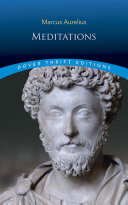
Meditations
Meditations by Marcus Aurelius (c. 161-180 AD)
The private journal of a Roman Emperor — never intended for publication. Marcus Aurelius' reflections on duty, mortality, self-discipline, and finding peace amid chaos. The most accessible and beloved work of Stoic philosophy.
Historical Significance:
Marcus Aurelius wrote the Meditations in Greek during his military campaigns on the Germanic frontier, between 170 and 180 AD. He was the last of the "Five Good Emperors" and the most powerful man in the world, yet his private writings reveal a man struggling with the same anxieties as anyone: anger, distraction, fear of death, and the search for meaning.
The Meditations were never meant to be read by anyone else — they are literally a man talking to himself. This intimacy is what makes them so powerful 1,800 years later. Bill Clinton, Tim Ferriss, and countless Silicon Valley executives cite Meditations as their most important book. The Stoic philosophy it contains — focus on what you can control, accept what you cannot — has become a cornerstone of modern self-help and cognitive behavioral therapy.
This public domain classic was originally written c. 170-180 AD. Free to read and share.
Free
eBook
FREE
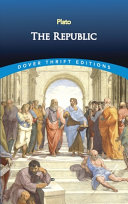
The Republic
The Republic by Plato (c. 380 BC)
The foundational text of Western philosophy. Socrates and his companions debate justice, the ideal state, the nature of the soul, and the famous Allegory of the Cave — where prisoners mistake shadows for reality.
Historical Significance:
Written around 380 BC as a Socratic dialogue, The Republic addresses the most fundamental question of political philosophy: what is justice? Plato's vision of the ideal state — ruled by philosopher-kings, with citizens divided into classes based on their nature — has been debated, admired, and condemned for 2,400 years. The Allegory of the Cave, in which prisoners chained in darkness mistake flickering shadows for reality, remains the most powerful metaphor for ignorance and enlightenment ever conceived. Every subsequent work of political philosophy, from Aristotle to Rawls, is in some way a response to The Republic.
This public domain classic was originally composed c. 380 BC. Free to read and share.
Free
eBook
FREE
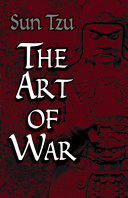
The Art of War
The Art of War by Sun Tzu (c. 5th century BC)
The oldest and most influential military strategy text ever written. "All warfare is based on deception." Thirteen chapters of strategic wisdom that transcend military application and are now studied in business schools, sports coaching, and leadership programs worldwide.
Historical Significance:
Attributed to Sun Tzu, a Chinese military general and strategist who may have lived around 544-496 BC during the Spring and Autumn period, The Art of War was compiled over centuries of military thought. The text was first translated into a European language (French) by Jesuit missionary Jean Joseph Marie Amiot in 1772. Napoleon reportedly studied it; the book was required reading for KGB agents during the Cold War.
In the late 20th century, The Art of War crossed over from military to business strategy. CEOs, athletes, lawyers, and politicians adopted its principles: "Know your enemy and know yourself," "Appear weak when you are strong," "The supreme art of war is to subdue the enemy without fighting." It remains one of the bestselling nonfiction books in the world.
This public domain classic was originally composed c. 5th century BC. Free to read and share.
Free

eBook
FREE
Civil Disobedience
Civil Disobedience by Henry David Thoreau (1849)
"That government is best which governs least." Thoreau's essay on the moral duty to resist unjust government — written after spending a night in jail for refusing to pay a poll tax in protest of slavery and the Mexican-American War.
Historical Significance:
Originally published as "Resistance to Civil Government" in 1849, this short essay became one of the most influential political texts in world history. Thoreau argued that individuals have a moral obligation to disobey unjust laws, even at personal cost. Mahatma Gandhi read it in a South African prison and credited it as a major inspiration for his campaign of nonviolent resistance. Martin Luther King Jr. read it as a student at Morehouse College and later wrote that it was his "first intellectual contact with the theory of nonviolent resistance." The essay has influenced every major civil rights and protest movement since.
This public domain classic was originally published in 1849. Free to read and share.
Free

eBook
FREE
Walden and Civil Disobedience
Walden and Civil Disobedience by Henry David Thoreau
This combined edition contains Walden, Thoreau's account of life beside Walden Pond, followed by the separate essay On the Duty of Civil Disobedience.
Walden explores daily work, the natural world, solitude and the choices that shape a life. The accompanying essay discusses conscience and an individual's relationship with government.
Retained text source: Project Gutenberg ebook 205. Civil Disobedience is also offered separately in the catalog; this edition includes it after Walden.
Free

eBook
FREE
The Souls of Black Folk
The Souls of Black Folk by W.E.B. Du Bois (1903)
"The problem of the twentieth century is the problem of the color-line." A groundbreaking collection of essays on race, identity, and the African American experience that changed the course of American history.
Historical Significance:
W.E.B. Du Bois — the first African American to earn a Ph.D. from Harvard — published The Souls of Black Folk in 1903, directly challenging Booker T. Washington's accommodationist approach to racial progress. Du Bois introduced the concept of "double consciousness" — the psychological tension of being both Black and American — that remains central to understanding racial identity. The book's chapter on the death of his infant son is one of the most heartbreaking passages in American literature. The Souls of Black Folk helped inspire the Niagara Movement and the founding of the NAACP. Martin Luther King Jr., James Baldwin, and Ta-Nehisi Coates all cited it as a foundational influence.
This public domain classic was originally published in 1903. Free to read and share.
Free
eBook
FREE
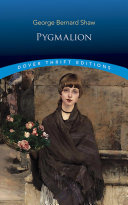
Pygmalion
Pygmalion by George Bernard Shaw (1913)
Professor Henry Higgins bets he can transform Cockney flower girl Eliza Doolittle into a duchess through elocution lessons. But Eliza has more to teach Higgins than he realizes. The play that became My Fair Lady.
Historical Significance:
Shaw wrote Pygmalion in 1912 and it premiered in Vienna in 1913, with its London premiere in 1914 starring Mrs. Patrick Campbell as Eliza. Shaw was furious when audiences wanted a romantic ending — he insisted the play was about class and language, not love. Despite his protests, the 1938 film added romantic elements, and the 1956 Lerner and Loewe musical My Fair Lady became one of the most successful musicals in history, winning eight Academy Awards in its 1964 film version. Shaw won the Nobel Prize for Literature in 1925, partly on the strength of Pygmalion.
This public domain classic was originally written in 1913. Free to read and share.
Free
eBook
FREE
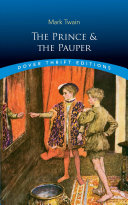
The Prince and the Pauper
The Prince and the Pauper by Mark Twain (1881)
Young Prince Edward VI and pauper Tom Canty, identical in appearance, swap places — the prince discovers the cruelty of poverty while the pauper struggles with the burden of power. Twain's first historical novel.
Historical Significance:
Set in 1547 England, The Prince and the Pauper was Twain's attempt to prove he could write "serious" literature beyond his humor. Published in 1881, it was his first novel set in England and his first attempt at historical fiction. The "switched identities" plot device, while not invented by Twain, was perfected here and has been imitated in hundreds of subsequent works from Disney's The Parent Trap to countless films. Twain's daughter Susy called it his best book. The novel's exploration of how circumstance shapes identity remains powerful.
This public domain classic was originally published in 1881. Free to read and share.
Free

eBook
FREE
The Memoirs of Sherlock Holmes
The Memoirs of Sherlock Holmes by Arthur Conan Doyle
Twelve Sherlock Holmes stories, from Silver Blaze to The Final Problem. This edition includes The Adventure of the Cardboard Box, which is omitted from some editions of the collection.
Other cases include The Musgrave Ritual, The Greek Interpreter and The Naval Treaty. In The Final Problem, Holmes confronts Professor Moriarty at the Reichenbach Falls.
Retained text source: Project Gutenberg ebook 834. The count follows the twelve numbered stories in this retained file.
Free
No classics match your filters.