New eBooks
0 booksNo eBooks Yet
Be the first to publish an eBook on BoingyBooks!
🎓 Your Free Digital Library Awaits
Access 232+ classic ebooks — from Shakespeare to Sherlock Holmes. Read on any device, save your progress, build your library.
Create Free Account →Classic Literature
155 free classicsTimeless works from the public domain, beautifully formatted for the BoingyBooks reader.
eBook
FREE
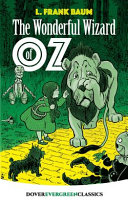
The Wonderful Wizard of Oz
The Wonderful Wizard of Oz by L. Frank Baum (1900)
Dorothy, Toto, the Scarecrow, the Tin Woodman, the Cowardly Lion, and the Emerald City — the first great American fairy tale, written to be distinctly American rather than European in spirit.
Historical Significance:
L. Frank Baum published The Wonderful Wizard of Oz on May 17, 1900, with illustrations by W.W. Denslow. In his introduction, Baum declared his intention to create "a modernized fairy tale, in which the wonderment and joy are retained and the heartaches and nightmares are left out." He wanted an American fairy tale, free from the darkness of Grimm and Andersen.
The book was an enormous success, becoming the bestselling children's book of 1900 and 1901. Baum went on to write 13 more Oz books, creating one of literature's richest fictional worlds. Some scholars interpret the story as a political allegory of 1890s populism — the Yellow Brick Road representing the gold standard, the silver slippers (ruby in the film) representing silver currency, and the Emerald City representing the deceptive greenback dollar.
Baum was a fascinating figure: a failed chicken farmer, newspaper editor, traveling salesman, and window dresser before becoming an author at age 44.
Cultural Impact:
The 1939 MGM film starring Judy Garland is the most-watched film in history. "There's no place like home," "We're not in Kansas anymore," and "Follow the Yellow Brick Road" are among the most quoted lines in cinema. The Wicked Witch of the West is one of fiction's greatest villains. Gregory Maguire's Wicked (1995) and its Broadway musical reimagined the story from the witch's perspective, becoming a cultural phenomenon.
This public domain classic was originally published in 1900. Free to read and share.
Free
eBook
FREE
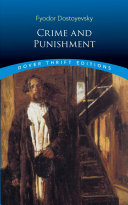
Crime and Punishment
Crime and Punishment by Fyodor Dostoyevsky (1866)
A destitute student murders a pawnbroker, believing himself to be an extraordinary man above moral law. What follows is one of literature's most intense psychological explorations of guilt, conscience, and redemption.
Historical Significance:
Dostoyevsky wrote Crime and Punishment while in severe financial distress, having lost his savings gambling in Wiesbaden. He serialized it in The Russian Messenger from January to December 1866. He was simultaneously writing another novel, The Gambler, to meet a crushing deadline — he dictated it to a young stenographer, Anna Snitkina, whom he married four months later.
The novel was partly inspired by the case of Pierre-François Lacenaire, a French murderer who justified his crimes through intellectual philosophy. Dostoyevsky, who had himself been sentenced to death (commuted at the last moment to hard labor in Siberia), understood the psychology of extreme situations better than perhaps any other novelist.
Raskolnikov's theory — that extraordinary people like Napoleon are above conventional morality — was Dostoyevsky's critique of the nihilism and utilitarianism spreading through Russian intellectual circles in the 1860s.
Cultural Impact:
Crime and Punishment is considered one of the greatest novels ever written and the founding text of psychological fiction. It influenced Nietzsche, Freud, Kafka, Camus, and virtually every crime novelist who followed. The "Raskolnikov complex" — intellectual justification for immoral acts — remains a concept in psychology and philosophy. The novel is required reading in universities worldwide.
This public domain classic was originally published in 1866. Free to read and share.
Free
eBook
FREE
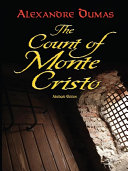
The Count of Monte Cristo
The Count of Monte Cristo by Alexandre Dumas (1844-1846)
The ultimate revenge story. A young sailor is wrongfully imprisoned for 14 years, escapes, discovers a vast treasure, and reinvents himself as the mysterious Count of Monte Cristo to exact elaborate vengeance on those who destroyed his life.
Historical Significance:
Alexandre Dumas published The Count of Monte Cristo as a serial in the Journal des Débats from August 1844 to January 1846. Serialization was the Netflix of the 19th century — readers waited eagerly for each installment, and Dumas was paid by the line, which partly explains the novel's epic length.
The story was inspired by a real case Dumas found in the police archives: François Picaud, a shoemaker who was falsely imprisoned for seven years by jealous friends, inherited a fortune from a fellow prisoner, and spent ten years pursuing revenge. Dumas transformed this into one of the most intricate and satisfying plots in all of fiction.
Dumas was the grandson of a Haitian slave — his father, General Thomas-Alexandre Dumas, was the highest-ranking person of color in any European army. The themes of injustice, identity, and the corrupting power of wealth in Monte Cristo may partly reflect Dumas' own experience of racial prejudice in French society.
Cultural Impact:
The Count of Monte Cristo has been adapted into over 40 films, TV series, and anime. It remains one of the most popular novels ever written, selling millions of copies annually. The phrase "Edmond Dantès" is a cultural shorthand for wrongful imprisonment. The novel's structure — patient, meticulous revenge served over years — has influenced everything from Batman to The Shawshank Redemption to Kill Bill.
This public domain classic was originally published in 1844. Free to read and share.
Free
eBook
FREE
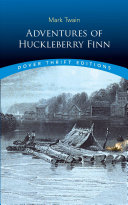
Adventures of Huckleberry Finn
Adventures of Huckleberry Finn by Mark Twain (1884)
"All modern American literature comes from one book by Mark Twain called Huckleberry Finn." — Ernest Hemingway. The story of a boy and a runaway slave rafting down the Mississippi River is America's most important — and most controversial — novel.
Historical Significance:
Mark Twain (Samuel Clemens) began writing Huckleberry Finn in 1876 as a sequel to Tom Sawyer, but set it aside for years. He returned to it intermittently, finally publishing it in the United Kingdom in December 1884 and in the United States in February 1885.
The novel was immediately banned by the Concord Public Library as "trash and suitable only for the slums." Twain responded: "That will sell 25,000 copies for us, sure." It has been banned, challenged, and debated continuously ever since — primarily for its use of racial language, which Twain employed deliberately to satirize racism, not to endorse it.
Written in Huck's own vernacular voice — uneducated, funny, and profoundly moral — the novel was revolutionary in its use of American dialect as a literary language. Twain's depiction of the friendship between Huck and Jim remains one of literature's most powerful arguments against racism.
Cultural Impact:
Huckleberry Finn is widely considered the Great American Novel alongside Moby-Dick. It influenced every major American writer who followed, from Hemingway to Faulkner to Toni Morrison. The novel continues to generate controversy and classroom discussion, which is precisely what Twain intended. It remains one of the most-read, most-taught, and most-debated books in history.
This public domain classic was originally published in 1884. Free to read and share.
Free

eBook
FREE
Wuthering Heights
Wuthering Heights by Emily Brontë (1847)
A dark, passionate, and utterly unique tale of doomed love on the Yorkshire moors. Heathcliff and Catherine Earnshaw's destructive obsession spans generations and defies every convention of Victorian fiction.
Historical Significance:
Emily Brontë published Wuthering Heights in December 1847 under the pseudonym "Ellis Bell." It was her only novel — she died of tuberculosis on December 19, 1848, at age 30, just one year after publication. She never knew the book would become one of the greatest novels in the English language.
Contemporary critics were baffled and horrified. The Spectator called it "wild, confused, disjointed, and improbable." The characters were considered too brutal, too passionate, and too morally ambiguous for Victorian taste. Unlike her sister Charlotte's Jane Eyre, there is no clear hero or moral lesson. The novel operates on a mythic, almost elemental level.
Emily Brontë, who rarely left the family parsonage in Haworth, Yorkshire, created a world of staggering emotional intensity from the raw landscape of the moors she walked daily. Her poetry — discovered by Charlotte in 1845 — reveals the same fierce, visionary imagination.
Cultural Impact:
Wuthering Heights is now considered one of the greatest novels in English literature. Kate Bush's 1978 song "Wuthering Heights" became a #1 hit. The novel has inspired films, operas, and countless adaptations. "Heathcliff" and "Catherine" have become bywords for passionate, destructive love.
This public domain classic was originally published in 1847. Free to read and share.
Free
eBook
FREE
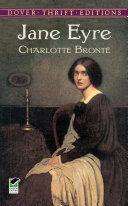
Jane Eyre
Jane Eyre: An Autobiography by Charlotte Brontë (1847)
"Reader, I married him." — The passionate, gothic love story of a plain but fiercely independent governess and the brooding Mr. Rochester, hiding a terrible secret in the attic of Thornfield Hall.
Historical Significance:
Charlotte Brontë published Jane Eyre on October 16, 1847, under the male pseudonym "Currer Bell" — the only way a woman could be taken seriously as a novelist in Victorian England. Her sisters Emily ("Ellis Bell," Wuthering Heights) and Anne ("Acton Bell," The Tenant of Wildfell Hall) published their own novels the same year.
The novel drew heavily on Charlotte's own difficult life: her childhood at the harsh Clergy Daughters' School at Cowan Bridge (the model for Lowood), her years as a governess, and her unrequited love for her Belgian professor Constantin Heger. The novel's frank depiction of female desire and Jane's declaration of moral and intellectual equality with Rochester was radical for its time.
Cultural Impact:
Jane Eyre has been adapted into over 30 films and TV productions. The "madwoman in the attic" (Bertha Mason Rochester) became a feminist symbol explored in Jean Rhys's Wide Sargasso Sea (1966). Jane's refusal to compromise her principles — "I am no bird; and no net ensnares me: I am a free human being with an independent will" — established a template for the strong female protagonist that endures to this day.
This public domain classic was originally published in 1847. Free to read and share.
Free

eBook
FREE
Little Women
Little Women by Louisa May Alcott (1868)
The beloved story of the four March sisters — Meg, Jo, Beth, and Amy — growing up during the Civil War. Jo March remains one of the most iconic heroines in American literature.
Historical Significance:
Alcott wrote Little Women at the request of her publisher Thomas Niles, who wanted "a girls' story." She was reluctant, writing in her journal: "Never liked girls or knew many, except my sisters." She based the March family closely on her own: Jo is Louisa herself, Meg is her older sister Anna, Beth is her younger sister Elizabeth (who died at 22), and Amy is her youngest sister May.
Published in two volumes (September 1868 and April 1869), the novel was an immediate bestseller, earning Alcott financial independence for the first time in her life. Her father, the Transcendentalist philosopher Bronson Alcott (friend of Emerson and Thoreau), had kept the family in genteel poverty for decades.
The novel was revolutionary in depicting girls as complex, ambitious individuals rather than passive angels. Jo March's refusal to marry Laurie — and her fierce desire to be a writer — shocked readers but inspired generations of women.
Cultural Impact:
Little Women has been continuously in print for over 155 years and adapted into numerous films, including Greta Gerwig's critically acclaimed 2019 version. Jo March is cited by countless women writers as their inspiration for pursuing literary careers. The novel is a foundational text of American feminism. Simone de Beauvoir, J.K. Rowling, and Elena Ferrante have all named it as a formative influence.
This public domain classic was originally published in 1868. Free to read and share.
Free

eBook
FREE
The Adventures of Sherlock Holmes
The Adventures of Sherlock Holmes by Arthur Conan Doyle (1892)
Twelve brilliant short stories featuring the world's most famous detective. "Elementary, my dear Watson" — though Holmes never actually says this exact phrase in any of the original stories.
Historical Significance:
Arthur Conan Doyle, a struggling doctor in Southsea, created Sherlock Holmes in 1887 with "A Study in Scarlet." The character was inspired by Dr. Joseph Bell, Doyle's professor at the University of Edinburgh Medical School, who amazed students with his powers of observation and deduction.
The Adventures of Sherlock Holmes was published on October 14, 1892, collecting twelve stories that had appeared in The Strand Magazine between July 1891 and June 1892. The Strand's circulation skyrocketed from 300,000 to 500,000 during the Holmes stories' run. When Doyle killed Holmes off in "The Final Problem" (1893), 20,000 readers cancelled their subscriptions and people wore black mourning bands in the streets.
The twelve stories in this collection include some of the most famous mysteries ever written: "A Scandal in Bohemia" (introducing Irene Adler, "the woman"), "The Red-Headed League," "The Adventure of the Speckled Band" (which Doyle himself considered his best), and "The Adventure of the Blue Carbuncle."
Holmes' methods of deductive reasoning, forensic science, and logical analysis were revolutionary for the 1890s and influenced the development of real-world criminal investigation techniques.
Cultural Impact:
Sherlock Holmes is the most portrayed literary character in film and television history, with over 250 actors playing the role. The character has appeared in more than 25,000 stage, film, radio, and TV adaptations. 221B Baker Street receives mail from fans worldwide. Holmes' deerstalker cap, magnifying glass, and pipe are universally recognized symbols. Benedict Cumberbatch and Robert Downey Jr. brought Holmes to new generations.
This public domain classic was originally published in 1892. Free to read and share.
Free
eBook
FREE
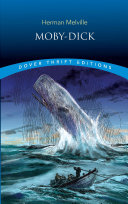
Moby Dick; Or, The Whale
Moby-Dick; or, The Whale by Herman Melville (1851)
"Call me Ishmael." — three words that open one of the greatest and most ambitious novels in the English language. Captain Ahab's obsessive hunt for the white whale is an epic meditation on obsession, nature, God, and the limits of human knowledge.
Historical Significance:
Melville wrote Moby-Dick between 1850 and 1851, during which time he developed an intense friendship with Nathaniel Hawthorne, to whom the novel is dedicated. Melville drew on his own experience as a sailor, including 18 months aboard the whaling ship Acushnet (1841-42), and on the true story of the Essex, a Nantucket whaler sunk by a sperm whale in 1820.
Published on October 18, 1851, by Richard Bentley in London (as "The Whale") and Harper & Brothers in New York, the novel was a commercial and critical disaster. It sold only 3,715 copies in Melville's lifetime and earned him $1,260 total. Critics found it baffling — too long, too digressive, too philosophical. Melville never recovered professionally and spent his last 19 years as a customs inspector in New York.
The novel's resurrection began in the 1920s, when scholars rediscovered it during the "Melville Revival." By mid-century, it was recognized as perhaps the greatest American novel ever written — a work so vast in scope that it encompasses cetology, philosophy, theology, economics, and the entire human condition.
Cultural Impact:
Moby-Dick is now considered the Great American Novel by many scholars. Captain Ahab and the white whale have become universal symbols of obsession and the unknowable. The novel has influenced writers from Faulkner to Cormac McCarthy, and has been adapted into films starring Gregory Peck (1956) and Patrick Stewart (1998). Starbucks coffee took its name from Ahab's first mate.
This public domain classic was originally published in 1851. Free to read and share.
Free

eBook
FREE
Strange Case of Dr Jekyll and Mr Hyde
Strange Case of Dr Jekyll and Mr Hyde by Robert Louis Stevenson (1886)
A chilling novella about the duality of human nature that gave the English language a permanent metaphor for the battle between good and evil within every person.
Historical Significance:
Stevenson wrote the first draft in just three days during a feverish period in late September 1885 in Bournemouth, England. According to legend, his wife Fanny read the draft and criticized it, whereupon Stevenson burned the manuscript and rewrote it from scratch in another three days. The published version appeared on January 5, 1886.
The novella was an instant sensation, selling 40,000 copies in Britain in six months. In America, it sold over 250,000 copies, partly as a cheap pirated edition. The story tapped into Victorian anxieties about respectability, repression, and the fear that beneath every gentleman lurked a beast.
Stevenson, a Scottish author already famous for Treasure Island, claimed the central idea came to him in a dream — the "fine bogey tale" of a man who drinks a potion and transforms into his evil alter ego. The novella's power lies in its restraint: the actual transformation is barely described, forcing the reader's imagination to fill in the horror.
Cultural Impact:
"Jekyll and Hyde" is now a universal metaphor for split personality and moral duality, used in psychology, law, journalism, and everyday conversation in every English-speaking country. The story has been adapted into over 120 films and stage productions. It directly influenced Freud's theories of the id and ego, and remains one of the most powerful explorations of human psychology in all of fiction.
This public domain classic was originally published in 1886. Free to read and share.
Free
eBook
FREE
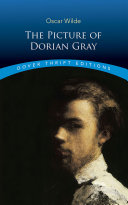
The Picture of Dorian Gray
The Picture of Dorian Gray by Oscar Wilde (1890)
Oscar Wilde's only novel — a Gothic masterpiece about beauty, corruption, and the price of eternal youth. A young man's portrait ages while he remains forever beautiful.
Historical Significance:
First published in the July 1890 issue of Lippincott's Monthly Magazine, the story caused immediate scandal. Critics called it "poisonous," "unclean," and "corrupt." The Daily Chronicle declared it would suit "none but outlawed noblemen and perverted telegraph boys" — a coded reference to homosexuality.
Wilde revised and expanded the novel for book publication in 1891, adding a preface containing his famous artistic manifesto: "All art is quite useless" and "There is no such thing as a moral or an immoral book. Books are well written, or badly written. That is all."
The novel's themes of hidden sin, the mask of respectability, and the gap between appearance and reality were deeply personal to Wilde, who was living a double life as a married father with secret homosexual relationships. Five years after publication, his own life would mirror the novel's themes when his relationship with Lord Alfred Douglas led to his criminal trial, imprisonment, and ruin.
Cultural Impact:
The novel has never gone out of print and has been adapted into over 30 films. The concept of a "Dorian Gray" — someone who appears youthful while hiding corruption — has entered the cultural lexicon. The story influenced countless works exploring vanity and moral decay, from The Twilight Zone to modern social media commentary. Wilde's epigrammatic prose style ("I can resist everything except temptation") remains endlessly quotable.
This public domain classic was originally published in 1890. Free to read and share.
Free
No classics match your filters.