New eBooks
0 booksNo eBooks Yet
Be the first to publish an eBook on BoingyBooks!
🎓 Your Free Digital Library Awaits
Access 232+ classic ebooks — from Shakespeare to Sherlock Holmes. Read on any device, save your progress, build your library.
Create Free Account →Classic Literature
155 free classicsTimeless works from the public domain, beautifully formatted for the BoingyBooks reader.
eBook
FREE
Main Street
Main Street by Sinclair Lewis (1920)
Carol Kennicott, an idealistic young woman, marries a small-town doctor and moves to Gopher Prairie, Minnesota — where she discovers that small-town America is not charming but narrow-minded, materialistic, and hostile to change.
Historical Significance:
Main Street was the bestselling novel of 1921 and made Sinclair Lewis the most talked-about writer in America. The novel shattered the myth of the wholesome American small town, portraying it instead as a place of stultifying conformity and cultural mediocrity. Lewis based Gopher Prairie on his hometown of Sauk Centre, Minnesota — and Sauk Centre's residents were furious.
Lewis became the first American to win the Nobel Prize for Literature in 1930, with the committee specifically citing Main Street. The novel spawned a national debate about small-town values that continues today, from Garrison Keillor's Lake Wobegon to the "flyover country" discourse. The phrase "Main Street" became shorthand for middle-American conservatism, used by politicians from both parties.
This public domain classic was originally published in 1920. Free to read and share.
Free
eBook
FREE
Sister Carrie
Sister Carrie by Theodore Dreiser (1900)
A young woman from small-town Wisconsin comes to Chicago, becomes the mistress of two men, and rises to fame as an actress — while the men who supported her are destroyed. The novel that launched American literary realism.
Historical Significance:
Theodore Dreiser's first novel was so frank in its treatment of sexuality, social climbing, and moral ambiguity that his own publisher, Doubleday, tried to suppress it after publication in 1900. Frank Norris, a reader at the publisher, championed the book, but Doubleday printed only 1,008 copies and refused to promote it. The novel sold just 456 copies and earned Dreiser $68.40.
Sister Carrie's radical innovation was its refusal to punish its heroine for her sexual transgressions — Carrie rises while the men fall, without moral judgment from the author. This was shocking in 1900 and established the naturalistic tradition in American fiction. The novel was rediscovered in the 1980s when the original manuscript was restored, revealing extensive cuts made by Dreiser's wife.
This public domain classic was originally published in 1900. Free to read and share.
Free
eBook
FREE
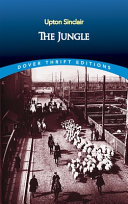
The Jungle
The Jungle by Upton Sinclair (1906)
Lithuanian immigrant Jurgis Rudkus works in Chicago's meatpacking plants, where he encounters appalling working conditions, corrupt bosses, and contaminated food. The novel that changed American food safety laws forever.
Historical Significance:
Upton Sinclair spent seven weeks undercover in Chicago's stockyards researching The Jungle. Published in 1906, the novel's graphic descriptions of unsanitary meatpacking practices — workers falling into rendering tanks, diseased meat being sold to consumers, rat droppings mixed into sausage — caused a national uproar. President Theodore Roosevelt, initially skeptical, sent investigators who confirmed Sinclair's findings. Within months, Congress passed the Pure Food and Drug Act and the Meat Inspection Act, creating the framework for modern food safety regulation.
Sinclair famously said, "I aimed at the public's heart, and by accident I hit it in the stomach." He had intended the novel as a socialist argument about labor exploitation, but readers focused on the food safety revelations. Nevertheless, the novel remains one of the most powerful examples of literature directly changing law.
This public domain classic was originally published in 1906. Free to read and share.
Free
eBook
FREE
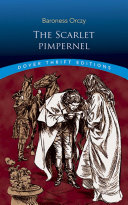
The Scarlet Pimpernel
The Scarlet Pimpernel by Baroness Orczy (1905)
During the French Revolution's Reign of Terror, a mysterious English nobleman secretly rescues French aristocrats from the guillotine, leaving only a small red flower as his calling card. The original secret-identity superhero.
Historical Significance:
Baroness Emmuska Orczy, a Hungarian-born British author, first wrote The Scarlet Pimpernel as a play in 1903, then novelized it in 1905. The character of Sir Percy Blakeney — an apparently foolish aristocrat who is secretly a brilliant hero — directly created the "secret identity" archetype that would define superheroes for the next century. Zorro (1919), Batman (1939), and Superman (1938) all owe a direct debt to the Scarlet Pimpernel. The novel also pioneered the "love triangle complicated by secret identity" plot that became a staple of superhero fiction. "Is he in heaven? Is he in hell? That demmed, elusive Pimpernel!" is one of adventure fiction's most famous verses.
This public domain classic was originally published in 1905. Free to read and share.
Free
eBook
FREE
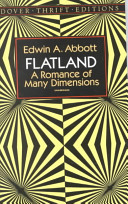
Flatland: A Romance of Many Dimensions
Flatland: A Romance of Many Dimensions by Edwin A. Abbott (1884)
A square living in a two-dimensional world is visited by a sphere from the third dimension, shattering everything he thought he knew about reality. A mathematical satire that is also a sharp social commentary on Victorian class and gender hierarchies.
Historical Significance:
Edwin Abbott Abbott, a schoolmaster and theologian, published Flatland in 1884 under the pseudonym "A Square." The novella uses dimensional analogy to explain higher mathematics: just as a two-dimensional being cannot comprehend three dimensions, perhaps we three-dimensional beings cannot perceive the fourth dimension. The book was largely forgotten until physicists and mathematicians rediscovered it in the 20th century.
Flatland is now beloved by STEM readers, taught in mathematics and physics courses worldwide, and cited in discussions of string theory and extra dimensions. Carl Sagan devoted a segment of his Cosmos TV series to explaining Flatland. It is also a cutting satire of Victorian social rigidity — women are mere lines, the working class are triangles, and priests are circles.
This public domain classic was originally published in 1884. Free to read and share.
Free
eBook
FREE
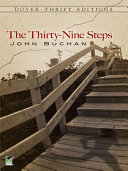
The Thirty-Nine Steps
The Thirty-Nine Steps by John Buchan (1915)
Richard Hannay, a bored mining engineer, stumbles into an international espionage conspiracy and must flee across the Scottish Highlands with both the police and enemy agents on his trail. The novel that invented the modern spy thriller.
Historical Significance:
John Buchan, a Scottish politician and future Governor-General of Canada, wrote The Thirty-Nine Steps in 1915 while recovering from illness during World War I. The novel created the "man on the run" thriller template: an innocent man is framed, pursues the real villains while being pursued himself, and must solve the mystery to clear his name. Alfred Hitchcock's 1935 film adaptation is one of his greatest works. Every spy thriller from James Bond to Jason Bourne follows the structural template Buchan established.
This public domain classic was originally published in 1915. Free to read and share.
Free
eBook
FREE
King Solomon's Mines
King Solomon's Mines by H. Rider Haggard (1885)
Allan Quatermain leads an expedition into uncharted Africa to find a missing man — and discovers the legendary diamond mines of King Solomon. The original adventure quest that set the template for Indiana Jones.
Historical Significance:
Haggard wrote King Solomon's Mines on a bet with his brother that he could write a novel as good as Treasure Island. Published in 1885, it became the first English adventure novel set in Africa and created the "lost world" genre. Allan Quatermain — tough, experienced, modest — became the archetype for every adventure hero from Indiana Jones to Lara Croft. Steven Spielberg and George Lucas have both acknowledged the novel's direct influence on the Indiana Jones franchise.
This public domain classic was originally published in 1885. Free to read and share.
Free

eBook
FREE
She: A History of Adventure
She: A History of Adventure by H. Rider Haggard (1887)
Two Englishmen journey to the heart of Africa and discover a lost kingdom ruled by Ayesha, "She-who-must-be-obeyed" — a 2,000-year-old white queen of supernatural beauty and terrifying power who has been waiting for her reincarnated lover.
Historical Significance:
H. Rider Haggard wrote She in just six weeks in 1886, calling it "a strange story." Published in 1887, it became one of the bestselling novels of all time, with over 83 million copies sold. Haggard was a colonial administrator in South Africa, and the novel reflects Victorian fascination with — and anxiety about — the "Dark Continent." Ayesha is one of fiction's most compelling and problematic characters: powerful, brilliant, and terrifying, yet also a product of colonial fantasy.
Freud and Jung both analyzed the novel. It influenced C.S. Lewis's Narnia and Tolkien's Galadriel. The phrase "She who must be obeyed" entered common usage (famously used in Rumpole of the Bailey).
This public domain classic was originally published in 1887. Free to read and share.
Free
eBook
FREE
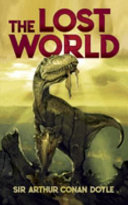
The Lost World
The Lost World by Arthur Conan Doyle (1912)
Professor Challenger leads an expedition to a South American plateau where dinosaurs still live. The original "lost world" adventure — the book that put dinosaurs into popular culture and directly inspired Jurassic Park.
Historical Significance:
Arthur Conan Doyle, seeking an escape from Sherlock Holmes, created the bombastic, brilliant Professor Challenger as a new hero. Published in 1912, The Lost World tapped into real excitement about paleontology — major dinosaur discoveries were being made in the American West and Argentina. Doyle promoted the book with an elaborate hoax, presenting doctored photographs of himself in "prehistoric" settings.
The novel established the template that Michael Crichton would follow 78 years later with Jurassic Park: scientists discover living dinosaurs in a remote location, with terrifying consequences. Every "lost world" story since — from King Kong to Jurassic World — follows the path Doyle blazed.
This public domain classic was originally published in 1912. Free to read and share.
Free
eBook
FREE
A Princess of Mars
A Princess of Mars by Edgar Rice Burroughs (1912)
Civil War veteran John Carter is mysteriously transported to Mars (Barsoom), where he discovers a dying planet of warring alien races, four-armed green warriors, and the beautiful princess Dejah Thoris. The novel that inspired Star Wars, Avatar, and modern science fiction.
Historical Significance:
Serialized as "Under the Moons of Mars" in All-Story Magazine in 1912 (the same year as Tarzan), A Princess of Mars created the "planetary romance" genre. George Lucas has cited it as a major influence on Star Wars — the desert planet, the warrior princess, the fish-out-of-water hero transplanted to an alien world. James Cameron's Avatar drew heavily on Barsoom's ecology and warrior cultures. Ray Bradbury, Arthur C. Clarke, and Carl Sagan all acknowledged Burroughs' influence on their love of space exploration. Disney's 2012 film adaptation John Carter, while a box office disappointment, introduced a new generation to Burroughs' imaginative world.
This public domain classic was originally published in 1912. Free to read and share.
Free
eBook
FREE
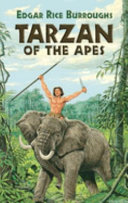
Tarzan of the Apes
Tarzan of the Apes by Edgar Rice Burroughs (1912)
An English nobleman's infant son, orphaned in the African jungle, is raised by great apes and becomes the Lord of the Jungle. Tarzan — one of fiction's most enduring characters, spawning the most successful franchise of the early 20th century.
Historical Significance:
Edgar Rice Burroughs, a 36-year-old failed businessman, wrote Tarzan of the Apes in 1911 while working as a pencil sharpener wholesaler. Published in All-Story Magazine in October 1912, it was an immediate sensation. Burroughs went on to write 24 Tarzan novels, but the character's cultural footprint extends far beyond the books — over 200 films, TV series, radio shows, comics, and merchandise made Tarzan one of the most recognized fictional characters in the world. The famous Tarzan yell (created for Johnny Weissmuller's 1932 film) is one of the most iconic sounds in cinema history. Tarzan has been translated into more than 60 languages.
This public domain classic was originally published in 1912. Free to read and share.
Free
eBook
FREE
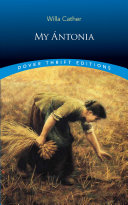
My Ántonia
My Ántonia by Willa Cather (1918)
The story of Ántonia Shimerda, a Bohemian immigrant girl on the Nebraska prairie, told through the memories of her childhood friend Jim Burden. A luminous, heartbreaking portrait of the American pioneer experience.
Historical Significance:
Willa Cather based Ántonia on Annie Sadilek Pavelka, a real Bohemian immigrant she knew growing up in Red Cloud, Nebraska. Published in 1918, the novel captured a vanishing world — the first generation of European immigrants who broke the Great Plains — with extraordinary beauty and empathy. Cather wrote, "the best thing I've done is My Ántonia. I feel I've made a contribution to American letters with that book."
The novel's celebration of immigrant resilience and its unflinching portrait of prairie hardship make it one of the great American novels. Cather won the Pulitzer Prize for One of Ours in 1923, but My Ántonia is considered her masterpiece.
This public domain classic was originally published in 1918. Free to read and share.
Free
eBook
FREE
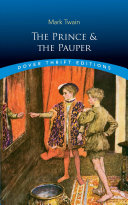
The Prince and the Pauper
The Prince and the Pauper by Mark Twain (1881)
Young Prince Edward VI and pauper Tom Canty, identical in appearance, swap places — the prince discovers the cruelty of poverty while the pauper struggles with the burden of power. Twain's first historical novel.
Historical Significance:
Set in 1547 England, The Prince and the Pauper was Twain's attempt to prove he could write "serious" literature beyond his humor. Published in 1881, it was his first novel set in England and his first attempt at historical fiction. The "switched identities" plot device, while not invented by Twain, was perfected here and has been imitated in hundreds of subsequent works from Disney's The Parent Trap to countless films. Twain's daughter Susy called it his best book. The novel's exploration of how circumstance shapes identity remains powerful.
This public domain classic was originally published in 1881. Free to read and share.
Free
eBook
FREE
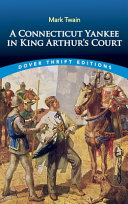
A Connecticut Yankee in King Arthur's Court
A Connecticut Yankee in King Arthur's Court by Mark Twain (1889)
A 19th-century American factory superintendent is knocked unconscious and wakes up in 6th-century Camelot, where he uses his modern knowledge to become "The Boss" — industrializing medieval England with guns, telephones, and democracy.
Historical Significance:
Twain's novel is simultaneously one of the earliest time travel stories, a savage satire of monarchy and aristocracy, and a prescient warning about the destructive power of technology. Published in 1889, it attacked the romanticization of the Middle Ages popularized by Tennyson's Idylls of the King. The novel's ending — where the Yankee's modern weapons massacre thousands of knights — is one of the darkest conclusions in American fiction, foreshadowing the industrialized slaughter of World War I by 25 years. Bing Crosby's 1949 musical film softened the story considerably.
This public domain classic was originally published in 1889. Free to read and share.
Free

eBook
FREE
The Sign of the Four
The Sign of the Four by Arthur Conan Doyle (1890)
The second Sherlock Holmes novel. A young woman seeks Holmes' help after receiving mysterious pearls annually for six years following her father's disappearance. The case leads to a stolen Indian treasure, a one-legged convict, and a dramatic Thames river chase.
Historical Significance:
Commissioned at a dinner party where Doyle met Oscar Wilde (who was simultaneously commissioned to write The Picture of Dorian Gray), The Sign of the Four was published in Lippincott's Monthly Magazine in February 1890. It introduced Holmes' cocaine habit ("a seven-per-cent solution"), deepened his character with his famous observation that his brain "rebels at stagnation," and provided Watson with a wife — Mary Morstan. The novel's depiction of British colonialism in India and the theft of treasure reflects Victorian anxieties about empire.
This public domain classic was originally published in 1890. Free to read and share.
Free

eBook
FREE
The Memoirs of Sherlock Holmes
The Memoirs of Sherlock Holmes by Arthur Conan Doyle
Twelve Sherlock Holmes stories, from Silver Blaze to The Final Problem. This edition includes The Adventure of the Cardboard Box, which is omitted from some editions of the collection.
Other cases include The Musgrave Ritual, The Greek Interpreter and The Naval Treaty. In The Final Problem, Holmes confronts Professor Moriarty at the Reichenbach Falls.
Retained text source: Project Gutenberg ebook 834. The count follows the twelve numbered stories in this retained file.
Free

eBook
FREE
The Return of Sherlock Holmes
The Return of Sherlock Holmes by Arthur Conan Doyle (1905)
Holmes is alive! Thirteen stories marking the detective's triumphant return from the dead after "The Final Problem." Including "The Adventure of the Empty House," "The Adventure of the Dancing Men," and "The Adventure of the Six Napoleons."
Historical Significance:
After killing Holmes at Reichenbach Falls in 1893, Doyle resisted enormous pressure to revive him for ten years. The American magazine Collier's finally offered such a staggering sum ($45,000 for 13 stories — over $1.5 million today) that Doyle relented. "The Adventure of the Empty House," published in October 1903, caused a sensation — queues formed at newsstands, and The Strand Magazine's print run sold out immediately. Holmes' explanation of his survival (a fictional martial art called "baritsu") is one of the great hand-waving moments in literature.
This public domain classic was originally published in 1905. Free to read and share.
Free

eBook
FREE
Mansfield Park
Mansfield Park by Jane Austen (1814)
Fanny Price, a poor relation taken in by wealthy relatives, quietly observes their moral failures while struggling with her own feelings for her cousin Edmund. Austen's most morally complex and controversial novel.
Historical Significance:
Published in 1814, Mansfield Park divided readers from the start — and still does. Its heroine Fanny Price is passive, pious, and judgmental where Elizabeth Bennet is witty and bold. But Austen was doing something radical: showing that moral clarity and quiet strength are their own form of heroism. The novel addresses slavery (Sir Thomas Bertram's wealth comes from a plantation in Antigua), theatricality versus sincerity, and the corruption of London versus the stability of the countryside. Modern scholars consider it Austen's most sophisticated work, even if it is her least immediately lovable.
This public domain classic was originally published in 1814. Free to read and share.
Free
eBook
FREE
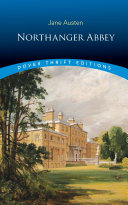
Northanger Abbey
Northanger Abbey by Jane Austen (1817)
Catherine Morland, an avid reader of Gothic novels, visits the ancient Northanger Abbey and lets her imagination run wild, suspecting her host of terrible crimes. Austen's delightful satire of Gothic fiction and the dangers of confusing novels with reality.
Historical Significance:
Austen wrote Northanger Abbey around 1798-99 (originally titled "Susan"), making it one of her earliest completed works, though it was published posthumously in December 1817 alongside Persuasion. The novel is both a loving parody of Gothic novels like Ann Radcliffe's The Mysteries of Udolpho and a sharp commentary on the expectations placed on young women. Catherine Morland is Austen's most naive heroine — her education through disillusionment is both comic and touching. The novel's defense of the novel as an art form ("only a novel!") remains one of the most important early statements of fiction's literary value.
This public domain classic was originally published posthumously in 1817. Free to read and share.
Free
eBook
FREE
The Prisoner of Zenda
The Prisoner of Zenda by Anthony Hope (1894)
An English gentleman on holiday in the fictional kingdom of Ruritania discovers he is the exact double of the king — and must impersonate him to save the throne. The original swashbuckling adventure romance.
Historical Significance:
Anthony Hope wrote The Prisoner of Zenda in just 30 days in 1894. It created the "Ruritanian romance" genre — adventure stories set in small fictional European kingdoms — that influenced everything from The Scarlet Pimpernel to Star Wars' Princess Leia storyline. The novel has been adapted into over a dozen films and inspired countless imitators. "Ruritania" entered the English language as a word for any small, romantically unstable European kingdom.
This public domain classic was originally published in 1894. Free to read and share.
Free

eBook
FREE
Little Lord Fauntleroy
Little Lord Fauntleroy by Frances Hodgson Burnett (1886)
A poor American boy discovers he is heir to an English earldom. His innocent goodness transforms his crusty grandfather and everyone he meets. The novel that made Burnett famous and launched a fashion craze.
Historical Significance:
Serialized in St. Nicholas Magazine in 1885-86, Little Lord Fauntleroy was the bestselling children's novel of the decade and one of the bestselling books of the entire 19th century. It sparked the "Fauntleroy suit" fashion craze — velvet suits with lace collars that mothers forced on reluctant boys for a generation. The novel made Burnett wealthy and internationally famous. It was adapted into a hit play and three films. While its sentimentality fell out of fashion in the 20th century, it remains a fascinating artifact of Victorian idealism and the belief that a child's innocence could redeem the world.
This public domain classic was originally published in 1886. Free to read and share.
Free

eBook
FREE
Rebecca of Sunnybrook Farm
Rebecca of Sunnybrook Farm by Kate Douglas Wiggin (1903)
Spirited, imaginative Rebecca Rowena Randall is sent to live with her stern aunts and transforms their lives — and an entire town — with her irrepressible optimism and creativity. A forerunner to Anne of Green Gables.
Historical Significance:
Published in 1903, five years before Anne of Green Gables, Rebecca was the bestselling children's novel of its era. Kate Douglas Wiggin was already famous as a kindergarten pioneer — she established the first free kindergarten on the West Coast in 1878. Jack London called Rebecca "one of the very best characters in American fiction." Shirley Temple's 1938 film adaptation was a box office hit. The novel influenced L.M. Montgomery, who acknowledged that Anne Shirley owed a debt to Rebecca Randall.
This public domain classic was originally published in 1903. Free to read and share.
Free

eBook
FREE
The King in Yellow
The King in Yellow by Robert W. Chambers (1895)
A collection of stories linked by a mysterious play called "The King in Yellow" — anyone who reads Act II goes insane. Carcosa, the Yellow Sign, and the Pallid Mask created a mythology of cosmic horror that influenced H.P. Lovecraft and inspired HBO's True Detective.
Historical Significance:
Robert W. Chambers published The King in Yellow in 1895, drawing on Ambrose Bierce's story "An Inhabitant of Carcosa" (1893). The first four stories are interconnected weird fiction; the remaining stories are more conventional. Chambers never returned to horror, becoming instead a bestselling romance novelist — but these early stories became foundational texts of cosmic horror. H.P. Lovecraft incorporated Chambers' mythology into his own Cthulhu Mythos. The book experienced a massive revival in 2014 when HBO's True Detective Season 1 referenced Carcosa, the Yellow King, and other elements, sending the book to the top of Amazon's bestseller list over a century after publication.
This public domain classic was originally published in 1895. Free to read and share.
Free
eBook
FREE
Middlemarch
Middlemarch: A Study of Provincial Life by George Eliot (1872)
The novel Virginia Woolf called "one of the few English novels written for grown-up people." Dorothea Brooke, Dr. Lydgate, and a vast cast navigate marriage, ambition, politics, and moral choice in a fictional English Midlands town during the Reform era of 1829-1832.
Historical Significance:
George Eliot (Mary Ann Evans) published Middlemarch in eight installments from 1871 to 1872. She used a male pen name because she wanted her work judged on its merits, not dismissed as "mere feminine fiction." The novel weaves together multiple storylines — idealistic Dorothea's disastrous marriage to the pedantic Casaubon, ambitious Dr. Lydgate's entanglement with the beautiful but materialistic Rosamond — into a panoramic portrait of English society in transition. It is consistently voted the greatest novel in the English language in surveys of writers and critics. Martin Amis and Julian Barnes both called it "the greatest novel."
This public domain classic was originally published in 1872. Free to read and share.
Free
No classics match your filters.