New eBooks
0 booksNo eBooks Yet
Be the first to publish an eBook on BoingyBooks!
🎓 Your Free Digital Library Awaits
Access 232+ classic ebooks — from Shakespeare to Sherlock Holmes. Read on any device, save your progress, build your library.
Create Free Account →Classic Literature
81 free classicsTimeless works from the public domain, beautifully formatted for the BoingyBooks reader.
eBook
FREE
Herland
Herland by Charlotte Perkins Gilman (1915)
Three male explorers discover a hidden country inhabited entirely by women who reproduce through parthenogenesis. The men's assumptions about gender are systematically demolished. A feminist utopia by the author of "The Yellow Wallpaper."
Historical Significance:
Charlotte Perkins Gilman serialized Herland in her own magazine, The Forerunner, in 1915. It was not published as a book until 1979, when feminist scholars rediscovered it. The novel uses the "lost world" adventure format to expose the absurdity of patriarchal assumptions: the male explorers expect the women to be helpless, irrational, and in need of male guidance, and are baffled when they find an advanced, peaceful, ecologically sustainable civilization that functions perfectly without men. Gilman's satire is sharp but good-humored — the men are not villains but products of their conditioning. The novel anticipates contemporary discussions about gender essentialism, reproductive rights, and environmental sustainability by a century.
This public domain classic was originally published in 1915. Free to read and share.
Free
eBook
FREE
A Portrait of the Artist as a Young Man
A Portrait of the Artist as a Young Man by James Joyce (1916)
Stephen Dedalus grows from infancy through a Jesuit education to his declaration of artistic independence: "I will not serve." Joyce's autobiographical novel about the birth of an artist's consciousness.
Historical Significance:
Joyce serialized Portrait in the magazine The Egoist from 1914 to 1915, with the book published in 1916. It is the bridge between the realism of Dubliners and the revolutionary experimentation of Ulysses. Joyce's technique evolves with Stephen's consciousness — the opening pages mimic a baby's language, the middle sections capture a schoolboy's world, and the final pages soar with the poetic prose of a young man discovering his vocation. The novel's famous epiphany on the beach — Stephen's vision of a girl wading that transforms into a vision of artistic destiny — is one of the most celebrated passages in modernist literature. "Welcome, O life! I go to encounter for the millionth time the reality of experience and to forge in the smithy of my soul the uncreated conscience of my race."
This public domain classic was originally published in 1916. Free to read and share.
Free
eBook
FREE
The Canterbury Tales
The Canterbury Tales by Geoffrey Chaucer (c. 1387-1400)
Thirty pilgrims journey from London to Canterbury Cathedral, each telling a tale to pass the time. From the bawdy Miller's Tale to the noble Knight's Tale — a panoramic portrait of medieval English society told with humor, humanity, and genius.
Historical Significance:
Chaucer began The Canterbury Tales around 1387 and worked on them until his death in 1400, leaving the collection unfinished (24 of a planned 120 tales). Written in Middle English rather than Latin or French, the Tales established English as a legitimate literary language. Chaucer drew on Boccaccio's Decameron for the frame narrative but created something uniquely English — a cross-section of 14th-century society from knight to nun to drunken cook, each speaking in their own voice. The Wife of Bath, with her frank defense of female sexuality and serial marriage, is one of literature's most vivid and modern characters — created 600 years ago. Chaucer is called the "Father of English Literature" for good reason.
This public domain classic was originally composed c. 1387-1400. Free to read and share.
Free

eBook
FREE
The Autobiography of an Ex-Colored Man
The Autobiography of an Ex-Colored Man by James Weldon Johnson (1912)
A light-skinned man of mixed race navigates both Black and white worlds in turn-of-the-century America, ultimately choosing to "pass" as white — and living with the consequences of that choice. A groundbreaking novel of racial identity.
Historical Significance:
James Weldon Johnson — diplomat, songwriter ("Lift Every Voice and Sing," known as the Black national anthem), and NAACP executive secretary — published this novel anonymously in 1912, and many readers believed it was a true autobiography. The unnamed narrator's journey through ragtime clubs, European concert halls, lynching violence, and the decision to abandon his Black identity for the safety of whiteness was unprecedented in American fiction. The novel anticipated the Harlem Renaissance by a decade and explored questions of racial passing, cultural authenticity, and double consciousness that remain central to American life. It was republished under Johnson's name in 1927 to wide acclaim.
This public domain classic was originally published in 1912. Free to read and share.
Free
eBook
FREE
The Red and the Black
The Red and the Black by Stendhal (1830)
Julien Sorel, a brilliant, ambitious carpenter's son in Restoration France, uses seduction and hypocrisy to climb the social ladder — until his passions destroy him. The first great psychological novel of the 19th century.
Historical Significance:
Stendhal (Henri Beyle) published Le Rouge et le Noir in 1830, based on a real criminal case. The novel was ahead of its time — it sold poorly and was largely ignored until the 1880s, when critics recognized it as a masterpiece. Stendhal wrote on his manuscript: "To the Happy Few," acknowledging that his audience would be small but discerning. The "red" and "black" of the title have been interpreted as representing the army and the church, passion and ambition, revolution and reaction. Julien Sorel — intelligent, ruthless, and ultimately self-destructive — is the prototype for every ambitious anti-hero in modern fiction, from Gatsby to Ripley.
This public domain classic was originally published in 1830. Free to read and share.
Free

eBook
FREE
Nana (French edition)
Nana by Émile Zola
Language: French
This edition contains the original French text of Zola's novel, not an English translation. Nana, an actress and courtesan in Paris, becomes entangled with the wealthy society around her. The novel forms part of Zola's Rougon-Macquart cycle.
Retained French text source: Project Gutenberg ebook 5250.
Free

eBook
FREE
The Hunchback of Notre-Dame
The Hunchback of Notre-Dame by Victor Hugo (1831)
Quasimodo, the deaf, deformed bell-ringer of Notre-Dame Cathedral, loves the beautiful Romani dancer Esmeralda, who is pursued by the fanatical Archdeacon Frollo. A Gothic masterpiece set against the vivid medieval Paris of 1482.
Historical Significance:
Victor Hugo wrote Notre-Dame de Paris (its French title) partly to save the real cathedral, which was crumbling from neglect and faced demolition. Published in 1831, the novel sparked a Gothic revival and a massive restoration campaign for Notre-Dame led by architect Eugène Viollet-le-Duc. When Notre-Dame caught fire on April 15, 2019, Hugo's novel surged to #1 on Amazon within hours. Disney's 1996 animated film softened the story considerably — Hugo's original is far darker, with Esmeralda hanged and Quasimodo dying of grief beside her skeleton. The novel is Hugo's most passionate argument that architecture is civilization's greatest art.
This public domain classic was originally published in 1831. Free to read and share.
Free
eBook
FREE
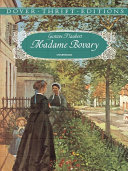
Madame Bovary
Madame Bovary by Gustave Flaubert (1857)
Emma Bovary, a doctor's wife in provincial Normandy, seeks escape from her dull marriage through passionate love affairs and reckless spending — with devastating consequences. The novel that invented literary realism.
Historical Significance:
Flaubert was prosecuted for obscenity after Madame Bovary was serialized in 1856 — the trial made it a sensation. Acquitted, Flaubert became the most influential French novelist of his century. His obsession with "le mot juste" (the exact right word), his invisible narrator who refuses to judge, and his merciless dissection of bourgeois self-deception created the template for modern literary fiction. "Madame Bovary, c'est moi," Flaubert allegedly said — "Madame Bovary is me." The novel influenced Tolstoy, Henry James, Proust, and virtually every realist novelist who followed. It remains the most widely taught French novel in the world.
This public domain classic was originally published in 1857. Free to read and share.
Free

eBook
FREE
Resurrection
Resurrection by Leo Tolstoy (1899)
Prince Nekhlyudov, serving on a jury, recognizes the accused prostitute as a woman he seduced and abandoned years ago. Consumed by guilt, he follows her through the Russian prison system, seeking to make amends. Tolstoy's last major novel.
Historical Significance:
Tolstoy wrote Resurrection at age 71, donating all proceeds to the Doukhobors, a persecuted Russian religious sect he was helping emigrate to Canada. Published in 1899, it is his most overtly political novel — a savage indictment of the Russian legal system, the Orthodox Church, and the aristocratic class to which Tolstoy himself belonged. The novel led to his excommunication from the Russian Orthodox Church in 1901. It was Tolstoy's final fictional statement of his radical Christian philosophy: that all institutions are corrupt and only personal moral transformation can save humanity.
This public domain classic was originally published in 1899. Free to read and share.
Free
eBook
FREE
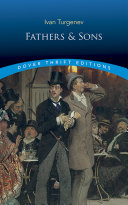
Fathers and Sons
Fathers and Sons by Ivan Turgenev (1862)
Bazarov, a young nihilist who rejects all authority, tradition, and sentiment, clashes with the older generation — until love makes a mockery of his philosophy. The novel that introduced the word "nihilism" to the world.
Historical Significance:
Published in 1862, Fathers and Sons captured the generational conflict tearing Russian society apart in the 1860s. Turgenev coined the term "nihilist" to describe Bazarov's rejection of all established values — and the word immediately entered every European language. Both radicals and conservatives attacked the novel: radicals felt Bazarov was a caricature, conservatives felt he was glorified. Turgenev, devastated by the backlash, spent most of his remaining years in Western Europe. The novel's exploration of how each generation rebels against its parents, only to be betrayed by its own contradictions, remains timeless.
This public domain classic was originally published in 1862. Free to read and share.
Free
eBook
FREE
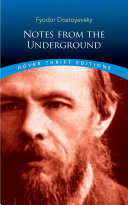
Notes from Underground
Notes from Underground by Fyodor Dostoyevsky (1864)
"I am a sick man... I am a spiteful man." The anguished, paradoxical confessions of a retired civil servant — bitter, self-aware, and unable to change. The first existentialist novel and the birth of the modern anti-hero.
Historical Significance:
Published in 1864, Notes from Underground is the hinge between classical and modern literature. Its unnamed narrator — contradictory, self-loathing, paralyzed by consciousness — was something entirely new in fiction. He rejects the optimistic rationalism of his era, arguing that humans are inherently irrational and will deliberately act against their own interests just to assert their freedom. The novella directly influenced Nietzsche, Kafka, Camus, and Sartre. Walter Kaufmann called it "the best overture for existentialism ever written." Every unreliable narrator, every alienated anti-hero in modern fiction descends from the Underground Man.
This public domain classic was originally published in 1864. Free to read and share.
Free
eBook
FREE
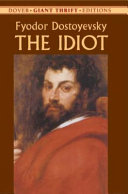
The Idiot
The Idiot by Fyodor Dostoyevsky (1869)
Prince Myshkin, a genuinely good man — innocent, compassionate, and epileptic — returns to Russia from a Swiss sanatorium and is destroyed by a society that cannot comprehend or tolerate his goodness.
Historical Significance:
Dostoyevsky set himself an impossible challenge with The Idiot: "to portray a perfectly beautiful man." He modeled Myshkin partly on Christ and partly on Don Quixote — a pure soul in a corrupt world. Published serially in 1868-69, the novel explores whether genuine goodness is sustainable in human society. Dostoyevsky's answer is devastating: Myshkin's compassion for everyone ultimately helps no one and destroys himself. Akira Kurosawa's 1951 film adaptation transposed the story to post-war Japan. The novel remains Dostoyevsky's most debated work — simultaneously his most heartfelt and most troubling.
This public domain classic was originally published in 1869. Free to read and share.
Free
eBook
FREE
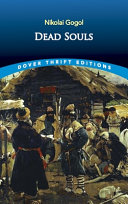
Dead Souls
Dead Souls by Nikolai Gogol (1842)
Chichikov, a charming con man, travels through provincial Russia buying "dead souls" — serfs who have died but still appear on the census rolls — as collateral for a fraudulent mortgage scheme. Russia's greatest satirical novel.
Historical Significance:
Gogol published Part One of Dead Souls in 1842, intending a three-part work modeled on Dante's Divine Comedy: Part One as Inferno (Russia's corruption), Part Two as Purgatorio (moral awakening), and Part Three as Paradiso (redemption). He burned the manuscript of Part Two shortly before his death in 1852, believing it was not worthy. Part One alone — a panorama of provincial Russian absurdity — is considered a masterpiece. Every character Chichikov meets embodies a different human vice: miserliness, gluttony, sentimentality, brutality. Nabokov called it "the greatest Russian novel." It influenced Dostoyevsky, Bulgakov, and every subsequent Russian satirist.
This public domain classic was originally published in 1842. Free to read and share.
Free
eBook
FREE
Arrowsmith
Arrowsmith by Sinclair Lewis (1925)
Martin Arrowsmith, an idealistic young doctor, battles against commercial medicine, institutional politics, and his own ambition to pursue pure scientific research. Lewis' most sympathetic novel and his tribute to the scientific spirit.
Historical Significance:
Published in 1925, Arrowsmith was awarded the Pulitzer Prize for Fiction — which Lewis famously declined, saying the prize was awarded not for the best novel but for the one that "best presents the wholesome atmosphere of American life." Lewis' refusal was a deliberate provocation that made national headlines. The novel was written with extensive research assistance from bacteriologist Paul de Kruif, giving it scientific accuracy rare in fiction. It remains the most beloved American novel about medicine and science, inspiring generations of young people to pursue research careers.
This public domain classic was originally published in 1925. Free to read and share.
Free
eBook
FREE
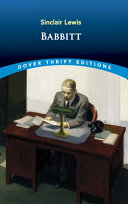
Babbitt
Babbitt by Sinclair Lewis (1922)
George F. Babbitt, a middle-aged real estate broker in the fictional city of Zenith, is the ultimate conformist — booster, joiner, and upholder of conventional values — until a midlife crisis drives him to rebellion. The definitive satire of American middle-class life.
Historical Significance:
Published in 1922, Babbitt made "Babbitt" and "Babbittry" permanent additions to the English language, meaning smug, materialistic conformity. Lewis' satirical portrait of a man who believes everything his culture tells him — that success means money, that conformity means virtue, that possessions mean happiness — was so precise that readers across America recognized themselves or their neighbors. The novel contributed to Lewis becoming the first American to win the Nobel Prize for Literature in 1930. H.L. Mencken called it "the best picture of an American community ever done."
This public domain classic was originally published in 1922. Free to read and share.
Free
eBook
FREE
The Magnificent Ambersons
The Magnificent Ambersons by Booth Tarkington (1918)
The decline of the aristocratic Amberson family as the automobile age transforms their Midwestern city. George Amberson Minafer, spoiled and arrogant, gets his "comeuppance" as the world his family built crumbles around him.
Historical Significance:
Booth Tarkington won the Pulitzer Prize for The Magnificent Ambersons in 1919 — his second Pulitzer (a feat matched only by William Faulkner). The novel captures the moment when American small-town life was destroyed by industrialization and the automobile. Orson Welles' 1942 film adaptation is considered one of the greatest American films, despite being drastically re-edited by the studio against Welles' wishes. The novel's theme — that progress creates losers as well as winners — resonates in every era of technological disruption.
This public domain classic was originally published in 1918. Free to read and share.
Free
eBook
FREE
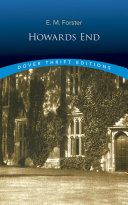
Howards End
Howards End by E.M. Forster (1910)
"Only connect!" The Schlegel sisters (intellectual, liberal) and the Wilcox family (practical, conservative) are drawn together by a country house called Howards End. Forster's meditation on class, culture, and the soul of England.
Historical Significance:
Published in 1910, Howards End was Forster's most ambitious attempt to bridge the divisions in Edwardian England — between rich and poor, head and heart, culture and commerce. The novel's epigraph, "Only connect the prose and the passion," became one of literature's most quoted injunctions. The Merchant Ivory 1992 film, starring Anthony Hopkins and Emma Thompson (who won the Oscar), was a critical and commercial triumph. The novel anticipated England's transformation from an imperial power to a modern welfare state, making it one of the most prescient novels of its era.
This public domain classic was originally published in 1910. Free to read and share.
Free

eBook
FREE
The Voyage Out
The Voyage Out by Virginia Woolf (1915)
Rachel Vinrace, a sheltered young Englishwoman, sails to South America, falls in love, and confronts the mysteries of adulthood, desire, and death. Woolf's first novel — already showing the brilliance that would transform English fiction.
Historical Significance:
Virginia Woolf spent six years writing and rewriting The Voyage Out, completing it in 1913 but suffering a severe mental breakdown before its publication in 1915. The novel already contains the seeds of everything Woolf would become: the sensitivity to consciousness, the feminist questioning of women's roles, the lyrical prose, and the preoccupation with death. Rachel's sudden death from fever has been read as both a rejection of the marriage plot and a reflection of Woolf's own precarious mental state. It is a remarkable debut that announces one of the 20th century's greatest literary voices.
This public domain classic was originally published in 1915. Free to read and share.
Free

eBook
FREE
Mrs Dalloway
Mrs Dalloway by Virginia Woolf (1925)
"Mrs. Dalloway said she would buy the flowers herself." One day in the life of Clarissa Dalloway as she prepares for a party in post-war London, her consciousness flowing between past and present, joy and despair.
Historical Significance:
Published in 1925, Mrs Dalloway was Virginia Woolf's fourth novel and her first masterpiece. Using a stream-of-consciousness technique influenced by James Joyce, Woolf mapped the interior lives of her characters with unprecedented delicacy. The novel takes place on a single day in June 1923, paralleling the society hostess Clarissa with the shell-shocked war veteran Septimus Warren Smith — connected only by the striking of Big Ben. Michael Cunningham's The Hours (1998) reimagined Mrs Dalloway across three time periods, winning the Pulitzer Prize. Nicole Kidman won an Oscar playing Woolf in the 2002 film adaptation.
This public domain classic was originally published in 1925. Free to read and share.
Free
eBook
FREE
The Rainbow
The Rainbow by D.H. Lawrence (1915)
Three generations of the Brangwen family in the English Midlands, from the agricultural rhythms of the 1840s to the industrial upheaval of the early 1900s. Lawrence's most lyrical novel — and the one that got him prosecuted for obscenity.
Historical Significance:
Published in September 1915, The Rainbow was seized by police and all copies destroyed by court order in November 1915 under the Obscene Publications Act. The prosecution was motivated less by sexual content (mild by modern standards) than by Lawrence's positive depiction of a lesbian relationship and his anti-war stance during World War I. The suppression devastated Lawrence and contributed to his self-imposed exile from England. The novel was not republished in Britain until 1949. It is now recognized as one of the great English novels — a sweeping family saga that traces how industrialization and modernity transformed English life and consciousness.
This public domain classic was originally published in 1915. Free to read and share.
Free
eBook
FREE
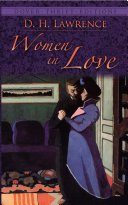
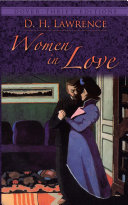
Women in Love
Women in Love by D.H. Lawrence (1920)
Two sisters — Ursula and Gudrun Brangwen — pursue relationships with two friends — Rupert Birkin and Gerald Crich — through a radical exploration of love, power, sexuality, and modern industrial civilization.
Historical Significance:
Lawrence completed Women in Love in 1916 but could not find a publisher until 1920 — it was considered too sexually explicit and too critical of English society during wartime. The novel is now regarded as Lawrence's greatest achievement: a fierce, visionary work that rejects both Victorian repression and modern mechanization. The wrestling scene between Birkin and Gerald is one of the most famous and analyzed passages in English literature. Ken Russell's 1969 film adaptation, starring Glenda Jackson and Oliver Reed, won Jackson the Academy Award for Best Actress.
This public domain classic was originally published in 1920. Free to read and share.
Free
eBook
FREE
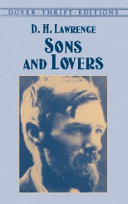
Sons and Lovers
Sons and Lovers by D.H. Lawrence (1913)
Paul Morel, a sensitive young man in a Nottinghamshire mining town, is torn between his intensely possessive mother and the women he loves. Lawrence's autobiographical masterpiece and the novel that launched his career.
Historical Significance:
Published in 1913, Sons and Lovers was Lawrence's third novel and his breakthrough. It drew directly on his own childhood — his father was a coal miner, his mother was educated and ambitious, and their volatile marriage dominated his emotional life. Freud's theories were just reaching England, and the novel is one of the earliest and most powerful explorations of the Oedipus complex in fiction. Lawrence's working-class perspective was revolutionary — no major English novelist before him had depicted the mining communities of the industrial Midlands with such intimacy and authority.
This public domain classic was originally published in 1913. Free to read and share.
Free

eBook
FREE
The Return of the Native
The Return of the Native by Thomas Hardy (1878)
On the brooding Egdon Heath, Clym Yeobright returns from Paris, the beautiful Eustacia Vye longs to escape, and the reddleman Diggory Venn watches over all. A tragedy of thwarted desires set against Hardy's most powerful landscape.
Historical Significance:
Published in 1878, The Return of the Native opens with one of literature's most famous descriptive chapters — "A Face on Which Time Makes but Little Impression" — establishing Egdon Heath as a dark, elemental presence that dwarfs the human dramas played out upon it. Hardy was influenced by Greek tragedy, and the novel follows a near-classical structure of inevitability and doom. Eustacia Vye — passionate, restless, modern — is one of Hardy's most compelling and sympathetic characters, trapped in a world too small for her ambitions.
This public domain classic was originally published in 1878. Free to read and share.
Free
eBook
FREE
Jude the Obscure
Jude the Obscure by Thomas Hardy (1895)
Jude Fawley, a self-taught stonemason, dreams of studying at the university of Christminster (Oxford) but is thwarted at every turn by class, convention, and his own disastrous relationships. Hardy's darkest and most controversial novel.
Historical Significance:
The critical reaction to Jude the Obscure was so savage that Hardy never wrote another novel. The Bishop of Wakefield burned his copy. Critics called it "Jude the Obscene" for its frank treatment of sexuality, marriage, and the hypocrisy of the church. Hardy was devastated and spent the remaining 33 years of his life writing poetry instead. The novel's attack on the class barriers to education, its sympathetic portrayal of divorce and free love, and the horrifying fate of the children made it genuinely shocking in 1895. Modern readers recognize it as Hardy's most powerful and prophetic work.
This public domain classic was originally published in 1895. Free to read and share.
Free
No classics match your filters.