New eBooks
0 booksNo eBooks Yet
Be the first to publish an eBook on BoingyBooks!
🎓 Your Free Digital Library Awaits
Access 232+ classic ebooks — from Shakespeare to Sherlock Holmes. Read on any device, save your progress, build your library.
Create Free Account →Classic Literature
26 free classicsTimeless works from the public domain, beautifully formatted for the BoingyBooks reader.
eBook
FREE
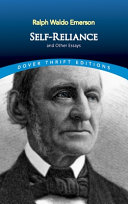
Self-Reliance and Other Essays
Self-Reliance and Other Essays by Ralph Waldo Emerson (1841)
"Trust thyself: every heart vibrates to that iron string." "A foolish consistency is the hobgoblin of little minds." "To be great is to be misunderstood." The most quoted American essayist — every sentence a proverb.
Historical Significance:
Ralph Waldo Emerson published his first series of Essays in 1841, establishing himself as the intellectual leader of American Transcendentalism and one of the most influential thinkers in American history. "Self-Reliance" — his most famous essay — argues for nonconformity, individual integrity, and trusting one's own intuition over social pressure. Emerson influenced Thoreau, Whitman, Dickinson, Nietzsche, William James, and every subsequent American writer and thinker who valued individualism. His Divinity School Address (1838), in which he challenged organized Christianity, got him banned from Harvard for 30 years. Obama, Jobs, and countless leaders have cited Emerson as foundational.
This public domain classic was originally published in 1841. Free to read and share.
Free

eBook
FREE
The Princess and the Goblin
The Princess and the Goblin by George MacDonald (1872)
Princess Irene discovers a mysterious great-great-grandmother spinning in a tower, while miner boy Curdie uncovers a goblin plot to invade the castle from below. The fairy tale that inspired Tolkien, Lewis, and modern fantasy.
Historical Significance:
George MacDonald, a Scottish minister and author, published The Princess and the Goblin in 1872. C.S. Lewis wrote that reading MacDonald's Phantastes at age 16 "baptized my imagination" and called MacDonald "my master." Tolkien acknowledged MacDonald's influence on The Hobbit — the goblins tunneling beneath mountains are directly descended from MacDonald's goblins. G.K. Chesterton called The Princess and the Goblin "a book that has made a difference to my whole existence." Without MacDonald, there would likely be no Narnia, no Middle-earth, and no modern fantasy genre as we know it.
This public domain classic was originally published in 1872. Free to read and share.
Free
eBook
FREE
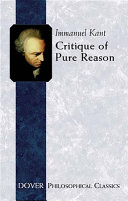
The Critique of Pure Reason
The Critique of Pure Reason by Immanuel Kant (1781)
The most important work of modern philosophy. Kant asks: what can we know? His answer — that the mind actively structures experience rather than passively receiving it — revolutionized every branch of human knowledge.
Historical Significance:
Immanuel Kant, a professor in Königsberg, Prussia, who famously never traveled more than 10 miles from his birthplace, published the Critique of Pure Reason in 1781 after a decade of intensive work. The book is notoriously difficult — Kant himself called it "dry, obscure, contrary to all ordinary ideas, and on top of that prolix" — but its conclusions transformed philosophy, science, and culture. Kant demonstrated that space, time, and causality are not features of the world itself but structures imposed by the human mind. This "Copernican revolution in philosophy" influenced everything from Einstein's relativity to cognitive science to postmodern theory.
This public domain classic was originally published in 1781. Free to read and share.
Free

eBook
FREE
Pragmatism
Pragmatism: A New Name for Some Old Ways of Thinking by William James (1907)
America's most original contribution to world philosophy. James argues that the truth of an idea is determined by its practical consequences — "truth happens to an idea; it is made true by events."
Historical Significance:
William James — Harvard professor, brother of novelist Henry James, and founder of American psychology — delivered the lectures that became Pragmatism in 1906-07. The book synthesized ideas from Charles Sanders Peirce and John Dewey into a distinctly American philosophy that rejected abstract metaphysics in favor of practical results. An idea is true if it works; beliefs are tools for navigating reality, not mirrors reflecting an absolute truth. Pragmatism influenced John Dewey's educational reforms, Oliver Wendell Holmes' legal philosophy, and Barack Obama's political approach. It remains America's most distinctive philosophical tradition.
This public domain classic was originally published in 1907. Free to read and share.
Free
eBook
FREE
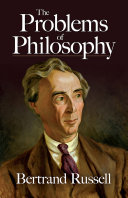
The Problems of Philosophy
The Problems of Philosophy by Bertrand Russell (1912)
The best introduction to philosophy ever written. In just 100 pages, Russell — Nobel laureate, mathematician, and public intellectual — explains what philosophy is, why it matters, and how it trains the mind to think clearly.
Historical Significance:
Russell wrote The Problems of Philosophy in 1912 for the Home University Library, a series of affordable educational books. He intended it as a simple introduction but produced a work of lasting brilliance. The book covers perception, reality, knowledge, truth, and the value of philosophy with extraordinary clarity. Russell's famous "table argument" — how do we know the table we see is real? — has introduced millions of students to epistemology. The final chapter, "The Value of Philosophy," is one of the most eloquent defenses of liberal education ever written: philosophy "keeps alive our sense of wonder" and frees us from "the tyranny of custom."
This public domain classic was originally published in 1912. Free to read and share.
Free

eBook
FREE
The Essays of Montaigne
The Essays of Michel de Montaigne (1580-1592)
"Que sais-je?" — "What do I know?" Montaigne invented the essay form: short, personal, digressive explorations of everything from cannibals to kidney stones, from death to the education of children.
Historical Significance:
Michel de Montaigne, a French nobleman who retired to his château's tower library in 1571, spent the rest of his life writing Essais — literally "attempts" or "trials." Published in three volumes (1580, 1588, 1595), the Essays invented a new literary form: the personal essay, in which the author's own experience and self-observation become the primary subject. Montaigne's radical skepticism, his tolerance, his curiosity about other cultures (he was one of the first Europeans to write sympathetically about indigenous peoples), and his unflinching self-examination made him the first truly modern writer. Shakespeare read him; Emerson worshipped him; every essayist since writes in his shadow.
This public domain classic was originally published 1580-1592. Free to read and share.
Free
eBook
FREE
The Confessions
The Confessions by Jean-Jacques Rousseau (1782-1789)
"I have resolved on an enterprise which has no precedent: to show a man in all the truth of nature; and this man shall be myself." The autobiography that invented the modern memoir — radically, shockingly honest about sex, shame, and the inner life.
Historical Significance:
Rousseau wrote his Confessions between 1764 and 1770, but they were published posthumously in 1782 and 1789. Unlike Augustine's Confessions (which served God) or Montaigne's Essays (which served wisdom), Rousseau's Confessions served truth — his own truth, no matter how embarrassing. He confessed to theft, sexual exhibitionism, masochism, and abandoning his five children to foundling homes. This radical honesty created the modern autobiography: the idea that a life is worth recording not because of great deeds but because of authentic experience. Every memoir, every confessional essay, every reality show descends from Rousseau's decision to tell all.
This public domain classic was originally published posthumously in 1782. Free to read and share.
Free
eBook
FREE
Notes from Underground
Notes from Underground by Fyodor Dostoyevsky (1864)
"I am a sick man... I am a spiteful man." The anguished, paradoxical confessions of a retired civil servant — bitter, self-aware, and unable to change. The first existentialist novel and the birth of the modern anti-hero.
Historical Significance:
Published in 1864, Notes from Underground is the hinge between classical and modern literature. Its unnamed narrator — contradictory, self-loathing, paralyzed by consciousness — was something entirely new in fiction. He rejects the optimistic rationalism of his era, arguing that humans are inherently irrational and will deliberately act against their own interests just to assert their freedom. The novella directly influenced Nietzsche, Kafka, Camus, and Sartre. Walter Kaufmann called it "the best overture for existentialism ever written." Every unreliable narrator, every alienated anti-hero in modern fiction descends from the Underground Man.
This public domain classic was originally published in 1864. Free to read and share.
Free

eBook
FREE
The Genealogy of Morals
The Genealogy of Morals by Friedrich Nietzsche
Three essays examine the development of moral concepts, guilt and ascetic ideals. This edition contains the main work together with the separate supplementary fragment Peoples and Countries.
The Genealogy of Morals is translated by Horace Barnett Samuel. Peoples and Countries is translated by J. M. Kennedy. The edition is volume thirteen of The Complete Works of Friedrich Nietzsche, edited by Oscar Levy. The fragment label applies to the supplement, not to the three Genealogy essays.
Retained English text source: Project Gutenberg ebook 52319.
Free
eBook
FREE
Nicomachean Ethics
Nicomachean Ethics by Aristotle (c. 340 BC)
Aristotle's investigation into the nature of the good life. What is happiness? What is virtue? How should we live? The foundational text of Western ethical philosophy, still studied in every philosophy department on Earth.
Historical Significance:
Named for Aristotle's son Nicomachus, the Ethics was likely compiled from Aristotle's lecture notes at the Lyceum in Athens around 340 BC. Aristotle's central concept — eudaimonia, often translated as "happiness" but better understood as "human flourishing" — remains the basis of virtue ethics. His idea that virtue is a "golden mean" between extremes (courage is the mean between cowardice and recklessness) has influenced moral philosophy for 2,300 years. Thomas Aquinas built Catholic moral theology on Aristotle's framework. The Ethics remains the most widely assigned philosophy text in universities worldwide.
This public domain classic was originally composed c. 340 BC. Free to read and share.
Free
eBook
FREE
The Social Contract
The Social Contract by Jean-Jacques Rousseau (1762)
"Man is born free, and everywhere he is in chains." Rousseau's radical argument that legitimate political authority must rest on the "general will" of the people — the philosophical dynamite that helped ignite the French Revolution.
Historical Significance:
Published in 1762, The Social Contract was immediately banned in France and Geneva. Rousseau argued that sovereignty belongs to the people, not to kings — a revolutionary idea that influenced the French Revolution's Declaration of the Rights of Man (1789) and the American Constitution. Robespierre carried a copy; Napoleon claimed to have read it. The book's concept of the "general will" has been both celebrated as the foundation of democracy and criticized as a justification for totalitarianism. It remains one of the most debated texts in political philosophy.
This public domain classic was originally published in 1762. Free to read and share.
Free
eBook
FREE
Leviathan
Leviathan by Thomas Hobbes (1651)
"The life of man: solitary, poor, nasty, brutish, and short." Hobbes' argument that only a powerful sovereign can prevent the war of "all against all" — the most influential work of political philosophy in the English language.
Historical Significance:
Thomas Hobbes published Leviathan in 1651 during the English Civil War, arguing that peace requires surrendering individual freedoms to an absolute sovereign (the "Leviathan"). Writing from exile in Paris, Hobbes created the concept of the social contract — the idea that government derives its authority from the consent of the governed, even if that consent is motivated by fear. Locke, Rousseau, and every subsequent political philosopher responded to Hobbes. The book remains essential reading in political science, philosophy, and law programs worldwide.
This public domain classic was originally published in 1651. Free to read and share.
Free
eBook
FREE
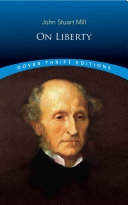
On Liberty
On Liberty by John Stuart Mill (1859)
"The only purpose for which power can be rightfully exercised over any member of a civilized community, against his will, is to prevent harm to others." The foundational text of classical liberalism and individual rights.
Historical Significance:
Published in 1859 — the same year as On the Origin of Species — Mill's essay is the most important defense of individual liberty in Western philosophy. Mill argued that society has no right to restrict individual behavior unless it harms others (the "harm principle"). He defended freedom of speech even for opinions society finds repugnant, arguing that suppressing ideas — even wrong ideas — harms everyone. Written partly in collaboration with his wife Harriet Taylor Mill, On Liberty influenced the development of civil liberties law worldwide. The harm principle is cited in Supreme Court decisions and human rights charters to this day.
This public domain classic was originally published in 1859. Free to read and share.
Free

eBook
FREE
Faust, Part One
Faust, Part One by Johann Wolfgang von Goethe
English translation by Bayard Taylor
Dissatisfied scholar Faust encounters Mephistopheles and enters a bargain that leads him into the life of Gretchen. Goethe's drama moves between verse, dialogue and changing scenes.
This edition contains Part One only, ending with the prison scene. It does not include Faust, Part Two. Taylor's translation presents the work in English in the original metres.
Retained text source: Project Gutenberg ebook 14591.
Free
eBook
FREE
Tao Te Ching
Tao Te Ching by Lao Tzu (c. 4th century BC)
"The Tao that can be told is not the eternal Tao." Eighty-one short, enigmatic verses on the nature of existence, leadership, and living in harmony with the universe. The foundational text of Taoism and one of the most translated books in human history.
Historical Significance:
Attributed to Lao Tzu ("Old Master"), a semi-legendary Chinese philosopher who may have lived in the 6th or 4th century BC, the Tao Te Ching is the second most translated book in the world after the Bible. In just 5,000 Chinese characters, it outlines a philosophy of effortless action (wu wei), humility, and alignment with nature that has influenced everything from martial arts to management theory to environmental ethics. The text's paradoxical style — "The softest thing in the universe overcomes the hardest" — continues to generate new interpretations after 2,500 years. Silicon Valley leaders, military strategists, and therapists all draw on its wisdom.
This public domain classic was originally composed c. 4th century BC. Free to read and share.
Free
eBook
FREE
The Age of Reason
The Age of Reason by Thomas Paine (1794-1807)
Thomas Paine's explosive attack on organized religion and defense of deism — the belief in God through reason and nature rather than scripture and clergy. The book that made Paine the most hated man in America.
Historical Significance:
Paine wrote The Age of Reason while imprisoned in Paris during the French Revolution's Terror — he narrowly escaped the guillotine when the chalk mark on his cell door was accidentally placed on the wrong side. Published in three parts (1794, 1795, 1807), the book systematically challenged the Bible's claims to divine authorship, pointing out contradictions, historical errors, and moral problems.
The backlash was immediate and devastating. Paine, who had been a hero of the American Revolution for writing Common Sense, was vilified as an atheist (he wasn't — he believed in God, just not in organized religion). Theodore Roosevelt called him "a filthy little atheist." Paine died in poverty in 1809, with only six people attending his funeral. History has been kinder — The Age of Reason is now recognized as a foundational text of religious skepticism and freethought.
This public domain classic was originally published in 1794. Free to read and share.
Free
eBook
FREE
Beyond Good and Evil
Beyond Good and Evil by Friedrich Nietzsche (1886)
"He who fights with monsters should look to it that he himself does not become a monster. And if you gaze long into an abyss, the abyss also gazes into you." Nietzsche's most systematic critique of traditional morality and philosophy.
Historical Significance:
Published in 1886 at Nietzsche's own expense (it sold only 114 copies in its first year), Beyond Good and Evil challenges every assumption of Western philosophy since Plato. Nietzsche attacks democracy, nationalism, Christianity, utilitarianism, and the very concept of objective truth. He proposes that morality is not universal but created by the powerful to serve their interests — what he calls "master morality" versus "slave morality."
The book is Nietzsche at his most provocative and quotable. Its influence on 20th-century philosophy — existentialism, postmodernism, deconstructionism — is immeasurable. Foucault, Derrida, and Heidegger all built on Nietzsche's foundations. The book's aphoristic style makes it one of the most accessible works of serious philosophy.
This public domain classic was originally published in 1886. Free to read and share.
Free
eBook
FREE
A Princess of Mars
A Princess of Mars by Edgar Rice Burroughs (1912)
Civil War veteran John Carter is mysteriously transported to Mars (Barsoom), where he discovers a dying planet of warring alien races, four-armed green warriors, and the beautiful princess Dejah Thoris. The novel that inspired Star Wars, Avatar, and modern science fiction.
Historical Significance:
Serialized as "Under the Moons of Mars" in All-Story Magazine in 1912 (the same year as Tarzan), A Princess of Mars created the "planetary romance" genre. George Lucas has cited it as a major influence on Star Wars — the desert planet, the warrior princess, the fish-out-of-water hero transplanted to an alien world. James Cameron's Avatar drew heavily on Barsoom's ecology and warrior cultures. Ray Bradbury, Arthur C. Clarke, and Carl Sagan all acknowledged Burroughs' influence on their love of space exploration. Disney's 2012 film adaptation John Carter, while a box office disappointment, introduced a new generation to Burroughs' imaginative world.
This public domain classic was originally published in 1912. Free to read and share.
Free
eBook
FREE
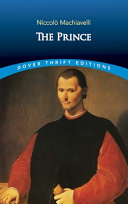
The Prince
The Prince by Niccolò Machiavelli (1532)
"It is better to be feared than loved, if you cannot be both." The most notorious political treatise ever written. Machiavelli's cold-eyed manual for acquiring and maintaining political power shocked the world and made his name a synonym for cunning.
Historical Significance:
Niccolò Machiavelli, a Florentine diplomat who had served the Republic of Florence, wrote The Prince in 1513 after being exiled, imprisoned, and tortured by the returning Medici family. He dedicated the book to Lorenzo de' Medici, hoping to regain political favor — it didn't work. Published posthumously in 1532, the book was condemned by the Pope and placed on the Index of Forbidden Books.
What made The Prince revolutionary was its rejection of idealism. Where previous political writers described how rulers should behave, Machiavelli described how they actually behave — and how to win. "Machiavellian" became an adjective meaning deviously cunning, though scholars argue Machiavelli was simply being honest about power. The Prince is required reading in political science programs worldwide.
This public domain classic was originally published in 1532. Free to read and share.
Free
eBook
FREE
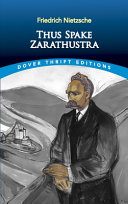
Thus Spoke Zarathustra
Thus Spoke Zarathustra by Friedrich Nietzsche (1883-1885)
"God is dead." The prophet Zarathustra descends from his mountain to teach humanity about the Übermensch (Superman), the eternal recurrence, and the will to power. Nietzsche's most ambitious and poetic work — part philosophy, part prophecy, part prose poem.
Historical Significance:
Nietzsche wrote Zarathustra in intense bursts of inspiration between 1883 and 1885, while wandering through Italy and Switzerland in near-poverty and failing health. He described Part One as having been written in just ten days. The book sold almost nothing during his lifetime — his sister later claimed he printed 40 copies of Part Four at his own expense.
Zarathustra's influence after Nietzsche's death in 1900 was enormous — and often disastrously misinterpreted. The Nazis appropriated the concept of the Übermensch for their racial ideology, which Nietzsche would have despised (he broke with Wagner over anti-Semitism). Properly understood, the Übermensch is an individual who creates their own values rather than following inherited morality. Richard Strauss' tone poem (1896) and Stanley Kubrick's use of it in 2001: A Space Odyssey made the opening bars among the most recognizable music in the world.
This public domain classic was originally published in 1883-1885. Free to read and share.
Free
eBook
FREE
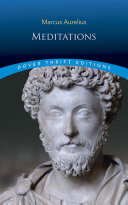
Meditations
Meditations by Marcus Aurelius (c. 161-180 AD)
The private journal of a Roman Emperor — never intended for publication. Marcus Aurelius' reflections on duty, mortality, self-discipline, and finding peace amid chaos. The most accessible and beloved work of Stoic philosophy.
Historical Significance:
Marcus Aurelius wrote the Meditations in Greek during his military campaigns on the Germanic frontier, between 170 and 180 AD. He was the last of the "Five Good Emperors" and the most powerful man in the world, yet his private writings reveal a man struggling with the same anxieties as anyone: anger, distraction, fear of death, and the search for meaning.
The Meditations were never meant to be read by anyone else — they are literally a man talking to himself. This intimacy is what makes them so powerful 1,800 years later. Bill Clinton, Tim Ferriss, and countless Silicon Valley executives cite Meditations as their most important book. The Stoic philosophy it contains — focus on what you can control, accept what you cannot — has become a cornerstone of modern self-help and cognitive behavioral therapy.
This public domain classic was originally written c. 170-180 AD. Free to read and share.
Free
eBook
FREE
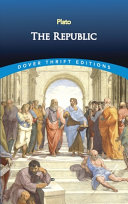
The Republic
The Republic by Plato (c. 380 BC)
The foundational text of Western philosophy. Socrates and his companions debate justice, the ideal state, the nature of the soul, and the famous Allegory of the Cave — where prisoners mistake shadows for reality.
Historical Significance:
Written around 380 BC as a Socratic dialogue, The Republic addresses the most fundamental question of political philosophy: what is justice? Plato's vision of the ideal state — ruled by philosopher-kings, with citizens divided into classes based on their nature — has been debated, admired, and condemned for 2,400 years. The Allegory of the Cave, in which prisoners chained in darkness mistake flickering shadows for reality, remains the most powerful metaphor for ignorance and enlightenment ever conceived. Every subsequent work of political philosophy, from Aristotle to Rawls, is in some way a response to The Republic.
This public domain classic was originally composed c. 380 BC. Free to read and share.
Free
eBook
FREE
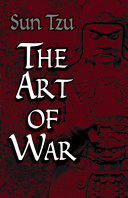
The Art of War
The Art of War by Sun Tzu (c. 5th century BC)
The oldest and most influential military strategy text ever written. "All warfare is based on deception." Thirteen chapters of strategic wisdom that transcend military application and are now studied in business schools, sports coaching, and leadership programs worldwide.
Historical Significance:
Attributed to Sun Tzu, a Chinese military general and strategist who may have lived around 544-496 BC during the Spring and Autumn period, The Art of War was compiled over centuries of military thought. The text was first translated into a European language (French) by Jesuit missionary Jean Joseph Marie Amiot in 1772. Napoleon reportedly studied it; the book was required reading for KGB agents during the Cold War.
In the late 20th century, The Art of War crossed over from military to business strategy. CEOs, athletes, lawyers, and politicians adopted its principles: "Know your enemy and know yourself," "Appear weak when you are strong," "The supreme art of war is to subdue the enemy without fighting." It remains one of the bestselling nonfiction books in the world.
This public domain classic was originally composed c. 5th century BC. Free to read and share.
Free

eBook
FREE
Walden and Civil Disobedience
Walden and Civil Disobedience by Henry David Thoreau
This combined edition contains Walden, Thoreau's account of life beside Walden Pond, followed by the separate essay On the Duty of Civil Disobedience.
Walden explores daily work, the natural world, solitude and the choices that shape a life. The accompanying essay discusses conscience and an individual's relationship with government.
Retained text source: Project Gutenberg ebook 205. Civil Disobedience is also offered separately in the catalog; this edition includes it after Walden.
Free
No classics match your filters.