New eBooks
0 booksNo eBooks Yet
Be the first to publish an eBook on BoingyBooks!
🎓 Your Free Digital Library Awaits
Access 232+ classic ebooks — from Shakespeare to Sherlock Holmes. Read on any device, save your progress, build your library.
Create Free Account →Classic Literature
142 free classicsTimeless works from the public domain, beautifully formatted for the BoingyBooks reader.

eBook
FREE
The Return of Sherlock Holmes
The Return of Sherlock Holmes by Arthur Conan Doyle (1905)
Holmes is alive! Thirteen stories marking the detective's triumphant return from the dead after "The Final Problem." Including "The Adventure of the Empty House," "The Adventure of the Dancing Men," and "The Adventure of the Six Napoleons."
Historical Significance:
After killing Holmes at Reichenbach Falls in 1893, Doyle resisted enormous pressure to revive him for ten years. The American magazine Collier's finally offered such a staggering sum ($45,000 for 13 stories — over $1.5 million today) that Doyle relented. "The Adventure of the Empty House," published in October 1903, caused a sensation — queues formed at newsstands, and The Strand Magazine's print run sold out immediately. Holmes' explanation of his survival (a fictional martial art called "baritsu") is one of the great hand-waving moments in literature.
This public domain classic was originally published in 1905. Free to read and share.
Free

eBook
FREE
Mansfield Park
Mansfield Park by Jane Austen (1814)
Fanny Price, a poor relation taken in by wealthy relatives, quietly observes their moral failures while struggling with her own feelings for her cousin Edmund. Austen's most morally complex and controversial novel.
Historical Significance:
Published in 1814, Mansfield Park divided readers from the start — and still does. Its heroine Fanny Price is passive, pious, and judgmental where Elizabeth Bennet is witty and bold. But Austen was doing something radical: showing that moral clarity and quiet strength are their own form of heroism. The novel addresses slavery (Sir Thomas Bertram's wealth comes from a plantation in Antigua), theatricality versus sincerity, and the corruption of London versus the stability of the countryside. Modern scholars consider it Austen's most sophisticated work, even if it is her least immediately lovable.
This public domain classic was originally published in 1814. Free to read and share.
Free
eBook
FREE
Northanger Abbey
Northanger Abbey by Jane Austen (1817)
Catherine Morland, an avid reader of Gothic novels, visits the ancient Northanger Abbey and lets her imagination run wild, suspecting her host of terrible crimes. Austen's delightful satire of Gothic fiction and the dangers of confusing novels with reality.
Historical Significance:
Austen wrote Northanger Abbey around 1798-99 (originally titled "Susan"), making it one of her earliest completed works, though it was published posthumously in December 1817 alongside Persuasion. The novel is both a loving parody of Gothic novels like Ann Radcliffe's The Mysteries of Udolpho and a sharp commentary on the expectations placed on young women. Catherine Morland is Austen's most naive heroine — her education through disillusionment is both comic and touching. The novel's defense of the novel as an art form ("only a novel!") remains one of the most important early statements of fiction's literary value.
This public domain classic was originally published posthumously in 1817. Free to read and share.
Free
eBook
FREE
Middlemarch
Middlemarch: A Study of Provincial Life by George Eliot (1872)
The novel Virginia Woolf called "one of the few English novels written for grown-up people." Dorothea Brooke, Dr. Lydgate, and a vast cast navigate marriage, ambition, politics, and moral choice in a fictional English Midlands town during the Reform era of 1829-1832.
Historical Significance:
George Eliot (Mary Ann Evans) published Middlemarch in eight installments from 1871 to 1872. She used a male pen name because she wanted her work judged on its merits, not dismissed as "mere feminine fiction." The novel weaves together multiple storylines — idealistic Dorothea's disastrous marriage to the pedantic Casaubon, ambitious Dr. Lydgate's entanglement with the beautiful but materialistic Rosamond — into a panoramic portrait of English society in transition. It is consistently voted the greatest novel in the English language in surveys of writers and critics. Martin Amis and Julian Barnes both called it "the greatest novel."
This public domain classic was originally published in 1872. Free to read and share.
Free
eBook
FREE
The Blue Castle
The Blue Castle by L.M. Montgomery (1926)
Valancy Stirling, a 29-year-old woman suffocated by her controlling family, receives a terminal diagnosis — and decides to finally live. She breaks every rule, speaks her mind, and finds unexpected love. Montgomery's most beloved adult novel.
Historical Significance:
L.M. Montgomery, famous for Anne of Green Gables, wrote The Blue Castle as her only novel set outside Prince Edward Island, placing it in Ontario's Muskoka region. Published in 1926, it was largely overlooked for decades until a 21st-century rediscovery made it a viral sensation — it now has nearly 50,000 downloads on Project Gutenberg, making it one of the most downloaded books on the platform. Modern readers connect with Valancy's rebellion against family expectations and her refusal to live a small, safe life. It has been called "the original hot girl summer novel."
This public domain classic was originally published in 1926. Free to read and share.
Free
eBook
FREE
A Room with a View
A Room with a View by E.M. Forster (1908)
Lucy Honeychurch, a young Englishwoman on holiday in Florence, is torn between the passionate, freethinking George Emerson and the stuffy, conventional Cecil Vyse. A sparkling comedy about breaking free from social convention to follow your heart.
Historical Significance:
Forster wrote A Room with a View during the Edwardian era, when England's rigid class system was beginning to crack. The novel contrasts the emotional freedom of Italy with the suffocating propriety of English society. Lucy's journey from repression to self-knowledge mirrors the broader social awakening of women in the early 20th century. The Merchant Ivory 1985 film adaptation, starring Helena Bonham Carter and Daniel Day-Lewis, won three Academy Awards and introduced Forster to a new generation. With over 60,000 downloads on Project Gutenberg, it remains one of the most beloved English novels.
This public domain classic was originally published in 1908. Free to read and share.
Free
eBook
FREE
David Copperfield
David Copperfield by Charles Dickens (1850)
"Whether I shall turn out to be the hero of my own life, or whether that station will be held by anybody else, these pages must show." Dickens' most autobiographical novel, following young David from a troubled childhood through the discovery of his true calling as a writer.
Historical Significance:
Dickens called David Copperfield "my favourite child" among all his novels. Serialized from May 1849 to November 1850, it drew heavily on his own experiences: like David, young Charles Dickens was put to work in a factory while his father was imprisoned for debt. Mr. Micawber — eternally optimistic, perpetually in debt, always expecting "something to turn up" — was based directly on Dickens' father, John Dickens. The cruel Mr. Murdstone, the eccentric Aunt Betsey Trotwood, and the villainous Uriah Heep are among Dickens' most memorable creations. Tolstoy, Henry James, and Virginia Woolf all cited it as a masterpiece.
This public domain classic was originally published in 1850. Free to read and share.
Free

eBook
FREE
Candide
Candide, or Optimism by Voltaire (1759)
A naive young man, taught that "all is for the best in the best of all possible worlds," is expelled from paradise and experiences every catastrophe imaginable — war, earthquake, slavery, disease — yet somehow survives. The most devastating satire of the Enlightenment.
Historical Significance:
Voltaire wrote Candide in 1758-1759, partly in response to the Lisbon earthquake of 1755, which killed 30,000-50,000 people and shook European confidence in a benevolent God. The novella was published simultaneously in five countries in January 1759 and immediately banned everywhere — which only increased its sales. Voltaire denied authorship for years.
Candide is a sustained attack on Leibniz's philosophical optimism (satirized through Dr. Pangloss) and on religious hypocrisy, war, and human cruelty. Its final line — "we must cultivate our garden" — has been interpreted as Voltaire's practical philosophy: stop theorizing about the world and do useful work. It remains one of the most widely read works of the French Enlightenment.
This public domain classic was originally published in 1759. Free to read and share.
Free

eBook
FREE
The Awakening and Selected Short Stories
The Awakening and Selected Short Stories by Kate Chopin
The Awakening follows Edna Pontellier as she questions the expectations placed on her as a wife and mother in Louisiana. This edition contains the novel together with eight additional short stories by Chopin.
The stories are Beyond the Bayou, Ma'ame Pelagie, Desiree's Baby, A Respectable Woman, The Kiss, A Pair of Silk Stockings, The Locket and A Reflection. They follow the novel as separate works.
Retained text source: Project Gutenberg ebook 160.
Free
eBook
FREE
Narrative of the Life of Frederick Douglass
Narrative of the Life of Frederick Douglass, an American Slave by Frederick Douglass (1845)
The autobiography of a man who escaped slavery, taught himself to read, and became the most powerful voice for abolition in American history. One of the most important documents in American literature and civil rights history.
Historical Significance:
Frederick Douglass published his Narrative in 1845, just seven years after escaping slavery in Maryland. It was an immediate bestseller, selling 5,000 copies in four months and 30,000 copies within five years. The book was so eloquent that skeptics accused Douglass of being unable to have written it himself — precisely the kind of racist assumption the book was written to demolish.
Douglass' account of learning to read — his mistress began teaching him until her husband forbade it, saying literacy would make a slave unfit for slavery — is one of American literature's most powerful passages. The Narrative made Douglass internationally famous but also put him at risk of recapture under the Fugitive Slave Act, forcing him to flee to Britain for two years.
This public domain classic was originally published in 1845. Free to read and share.
Free

eBook
FREE
Siddhartha
Siddhartha by Hermann Hesse (1922)
A young Brahmin's spiritual journey through asceticism, sensual pleasure, wealth, and despair to find enlightenment by a river. Not about the historical Buddha, but about a man named Siddhartha seeking his own path to wisdom.
Historical Significance:
Hermann Hesse, a German-Swiss Nobel laureate, wrote Siddhartha during a period of personal crisis following psychoanalysis with a student of Carl Jung. Published in 1922 in German, it was not translated into English until 1951. The novel became a phenomenon during the 1960s counterculture movement, when millions of young Westerners discovered Eastern philosophy.
Hesse's message — that wisdom cannot be taught but must be experienced — resonated with a generation questioning Western materialism. The novel has sold over 10 million copies in the US alone and remains one of the most influential books on spiritual seeking. Steve Jobs, who read it as a young man, listed it as one of his most important influences.
This public domain classic was originally published in 1922. Free to read and share.
Free

eBook
FREE
The Turn of the Screw
The Turn of the Screw by Henry James (1898)
A governess at a remote English estate becomes convinced that two ghostly figures are corrupting the children in her care. But are the ghosts real, or is she descending into madness? The most brilliantly ambiguous ghost story ever written.
Historical Significance:
Henry James published The Turn of the Screw in 1898, describing it as a "trap for the unwary." Over a century of scholarship has failed to resolve its central ambiguity: are the ghosts of Peter Quint and Miss Jessel real supernatural entities, or hallucinations of a repressed, unreliable narrator? James deliberately refused to clarify, making the story a Rorschach test for readers' own anxieties.
The novella has been adapted into Benjamin Britten's opera (1954), Jack Clayton's film The Innocents (1961) — one of the greatest horror films ever made — and Netflix's The Haunting of Bly Manor (2020). It remains the gold standard for psychological horror and literary ambiguity.
This public domain classic was originally published in 1898. Free to read and share.
Free

eBook
FREE
The Age of Innocence
The Age of Innocence by Edith Wharton (1920)
Newland Archer is engaged to the perfect May Welland but falls passionately in love with her unconventional cousin, the Countess Olenska. Set in 1870s New York high society, a devastating portrait of how social conventions destroy authentic feeling.
Historical Significance:
Edith Wharton became the first woman to win the Pulitzer Prize for Fiction with The Age of Innocence in 1921. She wrote the novel in her 50s, looking back at the Gilded Age New York of her youth with both nostalgia and ruthless clarity. The "innocence" of the title is deeply ironic — it refers not to purity but to willful ignorance, the polite society that crushes individuality and passion beneath an impenetrable surface of good manners. Martin Scorsese's 1993 film adaptation, starring Daniel Day-Lewis and Michelle Pfeiffer, captured the novel's exquisite claustrophobia.
This public domain classic was originally published in 1920. Free to read and share.
Free

eBook
FREE
Ulysses
Ulysses by James Joyce (1922)
One day in Dublin — June 16, 1904. Leopold Bloom, an advertising canvasser, wanders through Dublin in a modern retelling of Homer's Odyssey. The novel that changed literature forever and was banned as obscene for over a decade.
Historical Significance:
Joyce spent seven years writing Ulysses, publishing it in Paris on his 40th birthday, February 2, 1922, through Sylvia Beach's Shakespeare and Company bookshop. It was immediately banned in the United States and United Kingdom for obscenity — the Molly Bloom soliloquy, with its frank depiction of female sexuality, scandalized authorities.
The landmark 1933 court decision United States v. One Book Called Ulysses lifted the ban, with Judge John Woolsey declaring the book was not pornographic but a "sincere and honest effort to show how the minds of certain characters work." The decision was a milestone for literary freedom.
June 16 is now celebrated worldwide as "Bloomsday." T.S. Eliot called the novel "the most important expression which the present age has found." It consistently tops lists of the greatest novels of the 20th century.
This public domain classic was originally published in 1922. Free to read and share.
Free

eBook
FREE
Andersen's Fairy Tales
Andersen's Fairy Tales by Hans Christian Andersen
Eighteen stories, including The Emperor's New Clothes, The Snow Queen, The Little Match Girl, The Red Shoes, The Fir Tree and The Shadow.
The selection also contains The Swineherd, The Real Princess, The Shoes of Fortune, The Leap-Frog, The Elderbush, The Bell, The Old House, The Happy Family, The Story of a Mother, The False Collar, The Dream of Little Tuk and The Naughty Boy.
This edition does not include The Ugly Duckling, The Little Mermaid or Thumbelina.
Retained English text source: Project Gutenberg ebook 1597.
Free

eBook
FREE
Grimm's Fairy Tales
Grimm's Fairy Tales by Jacob and Wilhelm Grimm
A selection of 62 tales in English, based on translations by Edgar Taylor and Marian Edwardes. This edition includes Rapunzel, Hansel and Gretel, Rumpelstiltskin, Little Red-Cap, Briar Rose, Ashputtel and many other stories.
This is a selected collection, not the complete collection of more than 200 Grimm tales. Some familiar stories appear under older English titles: Ashputtel is Cinderella, Briar Rose is Sleeping Beauty, and Snowdrop is Snow White.
Retained text source: Project Gutenberg ebook 2591.
Free

eBook
FREE
Black Beauty
Black Beauty by Anna Sewell (1877)
The autobiography of a horse. From a happy colt in an English meadow through years of varying treatment — kindness and cruelty, wealth and poverty — Black Beauty's story changed how the world treats animals.
Historical Significance:
Anna Sewell wrote Black Beauty as her first and only novel while bedridden with a debilitating illness. She dictated portions to her mother, completing it in 1877. She sold it to the publisher Jarrolds for £20 and died five months after publication, never knowing that her book would become one of the bestselling novels of all time (over 50 million copies).
The novel was written specifically to promote the humane treatment of horses. It directly influenced the abolition of the bearing rein (a device that forced horses' heads into uncomfortable positions) and supported the growing animal welfare movement. The RSPCA and American Humane Association used it as advocacy literature. It is credited as the book that changed humanity's relationship with animals.
This public domain classic was originally published in 1877. Free to read and share.
Free
eBook
FREE
The Wind in the Willows
The Wind in the Willows by Kenneth Grahame (1908)
Mole, Ratty, Badger, and the irrepressible Toad of Toad Hall — a gentle pastoral tale of friendship, adventure, and the English countryside. One of the most cherished children's books in the English language.
Historical Significance:
Kenneth Grahame, Secretary of the Bank of England, began the stories as bedtime tales and letters for his son Alastair ("Mouse"). Published in 1908, the book received mixed reviews — critics expected something different from the author of The Golden Age. But readers loved it, and it gradually became a classic. A.A. Milne's 1929 stage adaptation, Toad of Toad Hall, introduced the story to millions. President Theodore Roosevelt wrote Grahame a fan letter saying he had "read it and reread it, and have come to accept the characters as old friends."
This public domain classic was originally published in 1908. Free to read and share.
Free
eBook
FREE
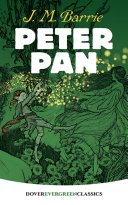
Peter Pan
Peter and Wendy (Peter Pan) by J.M. Barrie (1911)
The boy who never grows up. Peter Pan, Wendy Darling, Captain Hook, Tinker Bell, the Lost Boys, and Neverland — the ultimate fantasy of eternal childhood, tinged with melancholy and the ache of growing up.
Historical Significance:
Peter Pan first appeared in Barrie's 1902 novel The Little White Bird, then became a phenomenally successful play in 1904, before being novelized as Peter and Wendy in 1911. Barrie, a Scottish playwright haunted by the death of his older brother David at age 13 (after which his mother idealized the boy who would never grow up), created Peter Pan partly from his friendship with the Llewelyn Davies boys, whom he eventually adopted.
Barrie donated the copyright of Peter Pan to Great Ormond Street Hospital for Sick Children in London, which has earned millions in royalties for the hospital. Peter Pan is the rare literary character who belongs genuinely to the collective imagination — "All children, except one, grow up."
This public domain classic was originally published in 1911. Free to read and share.
Free

eBook
FREE
A Little Princess
A Little Princess by Frances Hodgson Burnett (1905)
Sara Crewe, a wealthy boarding school student, loses everything when her father dies penniless — yet maintains her dignity, imagination, and kindness through poverty and cruelty. A story about the true meaning of being a princess.
Historical Significance:
Originally a short story called "Sara Crewe" (1888), Burnett expanded it into a play (1902) and then this novel (1905). The story was partly autobiographical — Burnett herself experienced dramatic reversals of fortune, going from poverty to wealth to poverty again. Sara's philosophy — "Whatever comes cannot alter one thing. If I am a princess in rags and tatters, I can be a princess inside" — has inspired children for over a century. The 1995 Alfonso Cuarón film is considered one of the finest children's films ever made.
This public domain classic was originally published in 1905. Free to read and share.
Free
eBook
FREE
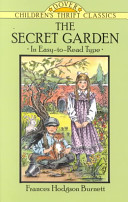
The Secret Garden
The Secret Garden by Frances Hodgson Burnett (1911)
Spoiled, unloved Mary Lennox is sent to live at her uncle's gloomy Yorkshire manor, where she discovers a hidden, neglected garden — and in nurturing it back to life, heals herself and everyone around her. One of the most beloved children's novels ever written.
Historical Significance:
Frances Hodgson Burnett, already famous for Little Lord Fauntleroy, wrote The Secret Garden while living at Great Maytham Hall in Kent, which had its own walled garden. Serialized in The American Magazine from November 1910 to August 1911, the novel was not initially considered her best work. It was only after her death in 1924 that it gradually surpassed her other books in popularity, becoming one of the most treasured children's classics of the 20th century.
The novel's themes of healing through nature, the power of positive thinking, and the resilience of children were ahead of their time. Modern horticultural therapy programs cite it as an early articulation of their principles.
This public domain classic was originally published in 1911. Free to read and share.
Free
eBook
FREE
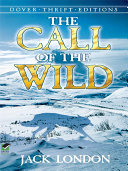
The Call of the Wild
The Call of the Wild by Jack London (1903)
Buck, a domesticated dog stolen from a California estate and sold into the Yukon gold rush as a sled dog, gradually sheds civilization and answers the primal call of the wild. A brutal, beautiful novella about survival and the animal nature within us all.
Historical Significance:
Jack London wrote The Call of the Wild in just 30 days in 1903, drawing on his own experience in the Klondike Gold Rush of 1897-98. Published first in the Saturday Evening Post, it was an immediate sensation. London sold the book rights for just $2,000 — he later called it the worst business decision of his life, as the novel became one of the bestselling American books of the 20th century. At age 27, London became the highest-paid author in America. The novel is credited with helping establish the Yukon as a mythic landscape in American imagination.
This public domain classic was originally published in 1903. Free to read and share.
Free
eBook
FREE
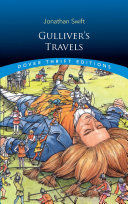
Gulliver's Travels
Gulliver's Travels by Jonathan Swift (1726)
Lemuel Gulliver voyages to Lilliput (tiny people), Brobdingnag (giants), Laputa (flying island of mad scientists), and the land of the Houyhnhnms (intelligent horses). Often read as a children's adventure, it is actually the most savage satire in the English language.
Historical Significance:
Jonathan Swift, the Anglo-Irish Dean of St Patrick's Cathedral in Dublin, published Gulliver's Travels anonymously in 1726. The book was an immediate bestseller — the first edition sold out in a week. Swift used each voyage to satirize different aspects of human folly: Lilliput mocks petty politics, Brobdingnag exposes human cruelty, Laputa ridicules impractical intellectualism, and the Houyhnhnms question whether humans are rational at all. The novel coined the words "Lilliputian" and "yahoo" (the degraded human-like creatures). It remains the greatest satire in English and a devastating critique of human nature.
This public domain classic was originally published in 1726. Free to read and share.
Free
eBook
FREE
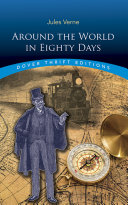
Around the World in Eighty Days
Around the World in Eighty Days by Jules Verne (1873)
Phileas Fogg wagers £20,000 that he can circumnavigate the globe in just 80 days. With his loyal valet Passepartout, he races across continents by steamer, train, and elephant — with a detective in pursuit who suspects him of bank robbery.
Historical Significance:
Serialized in Le Temps in 1872, the novel was inspired by real advances in transportation: the completion of the Suez Canal (1869) and the First Transcontinental Railroad (1869) had dramatically shortened global travel times. Journalist Nellie Bly famously recreated Fogg's journey in 1889, completing it in 72 days. The novel was Verne's biggest commercial success, adapted into the 1956 Best Picture-winning film starring David Niven. It established the "race against time" narrative template used by countless adventure stories since.
This public domain classic was originally published in 1873. Free to read and share.
Free
No classics match your filters.