New eBooks
0 booksNo eBooks Yet
Be the first to publish an eBook on BoingyBooks!
🎓 Your Free Digital Library Awaits
Access 232+ classic ebooks — from Shakespeare to Sherlock Holmes. Read on any device, save your progress, build your library.
Create Free Account →Classic Literature
14 free classicsTimeless works from the public domain, beautifully formatted for the BoingyBooks reader.

eBook
FREE
Sonnets from the Portuguese
Sonnets from the Portuguese by Elizabeth Barrett Browning (1850)
"How do I love thee? Let me count the ways." Forty-four love sonnets written secretly during Elizabeth Barrett's courtship with Robert Browning — the most famous love poems in the English language.
Historical Significance:
Elizabeth Barrett was a famous poet and semi-invalid when Robert Browning wrote her a fan letter in 1845: "I love your verses with all my heart, dear Miss Barrett." Their courtship, conducted largely through letters, was one of the great love stories of the 19th century. Elizabeth wrote these sonnets during the courtship but showed them to Robert only after their secret marriage and elopement to Italy in 1846. He insisted she publish them, disguised as translations "from the Portuguese." Sonnet 43 ("How Do I Love Thee?") is the most famous love poem in English. The Brownings' love story has been the subject of plays, films, and the musical Robert and Elizabeth.
This public domain classic was originally published in 1850. Free to read and share.
Free

eBook
FREE
Far from the Madding Crowd
Far from the Madding Crowd by Thomas Hardy (1874)
Bathsheba Everdene, a fiercely independent woman farmer, attracts three very different suitors: the steadfast shepherd Gabriel Oak, the reckless soldier Sergeant Troy, and the obsessive farmer Boldwood. Hardy's most beloved and accessible novel.
Historical Significance:
Published in 1874, Far from the Madding Crowd was Hardy's first major success and established the fictional Wessex that would become his literary landscape. The title comes from Thomas Gray's "Elegy Written in a Country Churchyard." Bathsheba Everdene — resourceful, proud, and flawed — was a remarkably modern heroine for the 1870s, running her own farm in a world of men. Suzanne Collins named her Hunger Games heroine Katniss Everdeen as a deliberate homage. The 2015 film starring Carey Mulligan was a critical success.
This public domain classic was originally published in 1874. Free to read and share.
Free
eBook
FREE
The Enchanted April
The Enchanted April by Elizabeth Von Arnim (1922)
Four very different Englishwomen escape their dreary London lives by renting a medieval Italian castle for the month of April. Under the spell of wisteria, sunshine, and the Mediterranean, each woman is transformed.
Historical Significance:
Elizabeth Von Arnim wrote The Enchanted April from personal experience — she had lived in Italy and knew the transformative power of the Mediterranean on repressed English souls. Published in 1922, it was a bestseller on both sides of the Atlantic. The 1991 stage adaptation and 1992 film (nominated for three Academy Awards) revived interest in this enchanting novel. With 45,000+ Gutenberg downloads, it is one of the most popular comfort reads in the public domain — a book people return to when they need to believe in the possibility of happiness.
This public domain classic was originally published in 1922. Free to read and share.
Free
eBook
FREE
The Blue Castle
The Blue Castle by L.M. Montgomery (1926)
Valancy Stirling, a 29-year-old woman suffocated by her controlling family, receives a terminal diagnosis — and decides to finally live. She breaks every rule, speaks her mind, and finds unexpected love. Montgomery's most beloved adult novel.
Historical Significance:
L.M. Montgomery, famous for Anne of Green Gables, wrote The Blue Castle as her only novel set outside Prince Edward Island, placing it in Ontario's Muskoka region. Published in 1926, it was largely overlooked for decades until a 21st-century rediscovery made it a viral sensation — it now has nearly 50,000 downloads on Project Gutenberg, making it one of the most downloaded books on the platform. Modern readers connect with Valancy's rebellion against family expectations and her refusal to live a small, safe life. It has been called "the original hot girl summer novel."
This public domain classic was originally published in 1926. Free to read and share.
Free
eBook
FREE
A Room with a View
A Room with a View by E.M. Forster (1908)
Lucy Honeychurch, a young Englishwoman on holiday in Florence, is torn between the passionate, freethinking George Emerson and the stuffy, conventional Cecil Vyse. A sparkling comedy about breaking free from social convention to follow your heart.
Historical Significance:
Forster wrote A Room with a View during the Edwardian era, when England's rigid class system was beginning to crack. The novel contrasts the emotional freedom of Italy with the suffocating propriety of English society. Lucy's journey from repression to self-knowledge mirrors the broader social awakening of women in the early 20th century. The Merchant Ivory 1985 film adaptation, starring Helena Bonham Carter and Daniel Day-Lewis, won three Academy Awards and introduced Forster to a new generation. With over 60,000 downloads on Project Gutenberg, it remains one of the most beloved English novels.
This public domain classic was originally published in 1908. Free to read and share.
Free
eBook
FREE
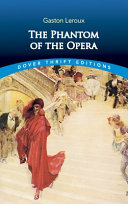
The Phantom of the Opera
The Phantom of the Opera by Gaston Leroux (1910)
The masked genius haunting the Paris Opera House, his obsessive love for the soprano Christine Daaé, the underground lake, the chandelier crash — the Gothic romance that spawned the longest-running Broadway musical in history.
Historical Significance:
Leroux, a French journalist and novelist, serialized Le Fantôme de l'Opéra in 1909-1910. He based the novel on real events at the Palais Garnier opera house: an underground lake does exist beneath the building, a counterweight from the chandelier did fall during a performance in 1896, and the opera house's labyrinthine basement passages fueled rumors of ghosts. Andrew Lloyd Webber's 1986 musical has grossed over $1.3 billion on Broadway alone, making it the highest-grossing entertainment event in history. Lon Chaney's 1925 silent film performance remains one of cinema's most iconic images.
This public domain classic was originally published in 1910. Free to read and share.
Free
eBook
FREE
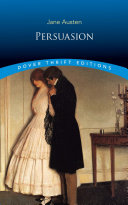
Persuasion
Persuasion by Jane Austen (1817)
Austen's last completed novel and her most mature love story. Anne Elliot, persuaded at 19 to break her engagement to Captain Wentworth, meets him again eight years later — older, wiser, and still in love. A tender meditation on second chances and the constancy of true feeling.
Historical Significance:
Austen completed Persuasion in August 1816, while already suffering from the illness (likely Addison's disease) that would kill her in July 1817. Published posthumously in December 1817 alongside Northanger Abbey, with a biographical note by her brother Henry revealing her identity for the first time. Captain Wentworth's letter — "You pierce my soul. I am half agony, half hope" — is considered one of the greatest love declarations in English literature.
This public domain classic was originally published posthumously in 1817. Free to read and share.
Free
eBook
FREE
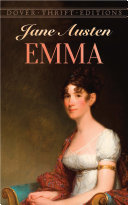
Emma
Emma by Jane Austen (1815)
"Emma Woodhouse, handsome, clever, and rich" — a young woman convinced of her matchmaking genius repeatedly misreads everyone around her, including herself. Austen's most sophisticated comedy and her personal favorite.
Historical Significance:
Austen described Emma as "a heroine whom no one but myself will much like." She was wrong — Emma Woodhouse became one of literature's most beloved characters precisely because of her flaws. The novel is dedicated to the Prince Regent (later George IV), who was a fan of Austen's work. Published in December 1815 by John Murray (Lord Byron's publisher), it was the last novel published in Austen's lifetime — she died in July 1817 at age 41. The 1995 film Clueless transposed the plot to a Beverly Hills high school, proving Austen's social observations are timeless.
This public domain classic was originally published in 1815. Free to read and share.
Free
eBook
FREE
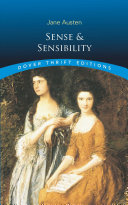
Sense and Sensibility
Sense and Sensibility by Jane Austen (1811)
Austen's first published novel. Sisters Elinor (sense) and Marianne (sensibility) Dashwood navigate love, heartbreak, and financial insecurity after their father's death leaves them nearly destitute. A masterful exploration of the tension between reason and emotion.
Historical Significance:
Published in 1811 under the pseudonym "A Lady," Sense and Sensibility was Austen's debut — though she had drafted it as "Elinor and Marianne" in her teens. She self-published it with help from her brother Henry, and it sold out its first edition of 750 copies, earning Austen £140. The novel established her signature style: wit, social observation, and the marriage plot as a lens for examining economic and moral questions. Ang Lee's 1995 film adaptation, starring Emma Thompson and Kate Winslet, won the Academy Award for Best Adapted Screenplay.
This public domain classic was originally published in 1811. Free to read and share.
Free
eBook
FREE
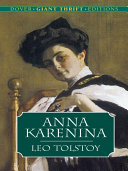
Anna Karenina
Anna Karenina by Leo Tolstoy (1877)
"All happy families are alike; each unhappy family is unhappy in its own way." Anna Karenina's passionate, destructive affair with Count Vronsky unfolds against the backdrop of Russian aristocratic society — a novel Dostoyevsky called "flawless as a work of art."
Historical Significance:
Tolstoy serialized Anna Karenina in The Russian Messenger from 1875 to 1877. The novel was inspired by a real event: in 1872, a woman named Anna Pirogova threw herself under a train at a railway station near Tolstoy's estate after being abandoned by her lover. Tolstoy attended the autopsy.
The novel interweaves Anna's tragic love story with Levin's search for meaning through farming and family — Levin being Tolstoy's autobiographical portrait of himself. Faulkner, Nabokov, and Thomas Mann all named it the greatest novel ever written. In 2007, Time magazine's list of the 10 greatest novels placed it at number one.
This public domain classic was originally published in 1877. Free to read and share.
Free

eBook
FREE
Wuthering Heights
Wuthering Heights by Emily Brontë (1847)
A dark, passionate, and utterly unique tale of doomed love on the Yorkshire moors. Heathcliff and Catherine Earnshaw's destructive obsession spans generations and defies every convention of Victorian fiction.
Historical Significance:
Emily Brontë published Wuthering Heights in December 1847 under the pseudonym "Ellis Bell." It was her only novel — she died of tuberculosis on December 19, 1848, at age 30, just one year after publication. She never knew the book would become one of the greatest novels in the English language.
Contemporary critics were baffled and horrified. The Spectator called it "wild, confused, disjointed, and improbable." The characters were considered too brutal, too passionate, and too morally ambiguous for Victorian taste. Unlike her sister Charlotte's Jane Eyre, there is no clear hero or moral lesson. The novel operates on a mythic, almost elemental level.
Emily Brontë, who rarely left the family parsonage in Haworth, Yorkshire, created a world of staggering emotional intensity from the raw landscape of the moors she walked daily. Her poetry — discovered by Charlotte in 1845 — reveals the same fierce, visionary imagination.
Cultural Impact:
Wuthering Heights is now considered one of the greatest novels in English literature. Kate Bush's 1978 song "Wuthering Heights" became a #1 hit. The novel has inspired films, operas, and countless adaptations. "Heathcliff" and "Catherine" have become bywords for passionate, destructive love.
This public domain classic was originally published in 1847. Free to read and share.
Free
eBook
FREE
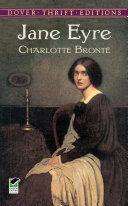
Jane Eyre
Jane Eyre: An Autobiography by Charlotte Brontë (1847)
"Reader, I married him." — The passionate, gothic love story of a plain but fiercely independent governess and the brooding Mr. Rochester, hiding a terrible secret in the attic of Thornfield Hall.
Historical Significance:
Charlotte Brontë published Jane Eyre on October 16, 1847, under the male pseudonym "Currer Bell" — the only way a woman could be taken seriously as a novelist in Victorian England. Her sisters Emily ("Ellis Bell," Wuthering Heights) and Anne ("Acton Bell," The Tenant of Wildfell Hall) published their own novels the same year.
The novel drew heavily on Charlotte's own difficult life: her childhood at the harsh Clergy Daughters' School at Cowan Bridge (the model for Lowood), her years as a governess, and her unrequited love for her Belgian professor Constantin Heger. The novel's frank depiction of female desire and Jane's declaration of moral and intellectual equality with Rochester was radical for its time.
Cultural Impact:
Jane Eyre has been adapted into over 30 films and TV productions. The "madwoman in the attic" (Bertha Mason Rochester) became a feminist symbol explored in Jean Rhys's Wide Sargasso Sea (1966). Jane's refusal to compromise her principles — "I am no bird; and no net ensnares me: I am a free human being with an independent will" — established a template for the strong female protagonist that endures to this day.
This public domain classic was originally published in 1847. Free to read and share.
Free

eBook
FREE
Romeo and Juliet
Romeo and Juliet by William Shakespeare (c. 1595)
The most famous love story ever written. Shakespeare's tragedy of "star-cross'd lovers" has defined romantic love in Western culture for over four centuries.
Historical Significance:
Shakespeare wrote Romeo and Juliet around 1594-1596, early in his career. It was first published in a quarto edition in 1597. The story was not entirely original — Shakespeare adapted it from Arthur Brooke's narrative poem "The Tragical History of Romeus and Juliet" (1562), which itself derived from Italian sources going back to Masuccio Salernitano (1476).
What Shakespeare added was genius: the balcony scene, the Nurse's comic warmth, Mercutio's brilliant wordplay ("A plague on both your houses!"), and above all, the poetry. "But soft, what light through yonder window breaks?" and "What's in a name? That which we call a rose by any other name would smell as sweet" are among the most quoted lines in English.
The play was enormously popular in Shakespeare's lifetime and was performed by his company, the Lord Chamberlain's Men, at The Theatre and later the Globe. It was one of the first plays revived after the Restoration in 1660.
Cultural Impact:
Romeo and Juliet has been adapted into every art form: Prokofiev's ballet (1935), Bernstein's West Side Story (1957), Zeffirelli's film (1968), Baz Luhrmann's modern retelling (1996), and thousands more. "Romeo" has become a synonym for a romantic young man in multiple languages. The play is performed more often than any other Shakespeare work and is typically the first Shakespeare students encounter.
This public domain classic was originally written c. 1595. Free to read and share.
Free
eBook
FREE
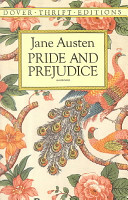
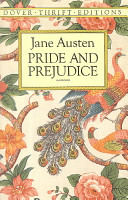
Pride and Prejudice
Pride and Prejudice by Jane Austen (1813)
"It is a truth universally acknowledged, that a single man in possession of a good fortune, must be in want of a wife." — one of the most famous opening lines in all of literature.
Historical Significance:
Jane Austen completed this novel in 1797 under the title "First Impressions," but it was rejected by the publisher Thomas Cadell. She revised it extensively before it was finally published by Thomas Egerton on January 28, 1813. Austen sold the copyright for just £110 (roughly £10,000 today).
The novel was an immediate success, with its first edition selling out within months. It offers a razor-sharp social commentary on class, marriage, and morality in Regency-era England, wrapped in one of literature's greatest love stories between Elizabeth Bennet and Fitzwilliam Darcy.
Austen wrote during the Napoleonic Wars, yet her novels deliberately focus on the domestic world — "the little bit (two Inches wide) of Ivory on which I work," as she described it. This deliberate narrowing of scope allowed her to examine human nature with microscopic precision.
Cultural Impact:
Pride and Prejudice has never gone out of print in over 200 years. It has been translated into every major language, adapted into dozens of films and TV series (the 1995 BBC adaptation with Colin Firth being perhaps the most beloved), and inspired countless modern retellings including Bridget Jones's Diary. It consistently appears on "greatest novels ever written" lists and sells over 800,000 copies annually.
This public domain classic was originally published in 1813. Free to read and share.
Free
No classics match your filters.