New eBooks
0 booksNo eBooks Yet
Be the first to publish an eBook on BoingyBooks!
🎓 Your Free Digital Library Awaits
Access 232+ classic ebooks — from Shakespeare to Sherlock Holmes. Read on any device, save your progress, build your library.
Create Free Account →Classic Literature
21 free classicsTimeless works from the public domain, beautifully formatted for the BoingyBooks reader.

eBook
FREE
The Princess and the Goblin
The Princess and the Goblin by George MacDonald (1872)
Princess Irene discovers a mysterious great-great-grandmother spinning in a tower, while miner boy Curdie uncovers a goblin plot to invade the castle from below. The fairy tale that inspired Tolkien, Lewis, and modern fantasy.
Historical Significance:
George MacDonald, a Scottish minister and author, published The Princess and the Goblin in 1872. C.S. Lewis wrote that reading MacDonald's Phantastes at age 16 "baptized my imagination" and called MacDonald "my master." Tolkien acknowledged MacDonald's influence on The Hobbit — the goblins tunneling beneath mountains are directly descended from MacDonald's goblins. G.K. Chesterton called The Princess and the Goblin "a book that has made a difference to my whole existence." Without MacDonald, there would likely be no Narnia, no Middle-earth, and no modern fantasy genre as we know it.
This public domain classic was originally published in 1872. Free to read and share.
Free
eBook
FREE
A Room of One's Own
A Room of One's Own by Virginia Woolf (1929)
"A woman must have money and a room of her own if she is to write fiction." Woolf's extended essay on women and literature — arguing that women's absence from the literary canon is not due to lack of talent but lack of opportunity.
Historical Significance:
Based on two lectures Woolf delivered at Cambridge in October 1928, A Room of One's Own was published in 1929 and became the foundational text of feminist literary criticism. Woolf imagined "Shakespeare's sister" — a woman equally talented who would have been married off, mocked, and driven to suicide. The essay argues that economic independence and physical space are prerequisites for creative work — a seemingly simple observation that had revolutionary implications. It influenced Simone de Beauvoir, Betty Friedan, and every subsequent feminist thinker. The title has become shorthand for women's need for independence and creative autonomy.
This public domain classic was originally published in 1929. Free to read and share.
Free
eBook
FREE
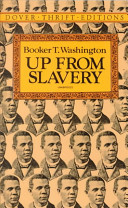
Up from Slavery
Up from Slavery by Booker T. Washington (1901)
The autobiography of a man born into slavery who founded the Tuskegee Institute and became the most powerful African American leader of his era — and the most controversial, as W.E.B. Du Bois challenged his accommodationist approach.
Historical Significance:
Booker T. Washington was born a slave in Virginia in 1856 and after emancipation worked in salt furnaces and coal mines before walking 500 miles to attend Hampton Normal and Agricultural Institute. He founded Tuskegee Institute in Alabama in 1881 and built it into the nation's premier Black educational institution. His 1895 "Atlanta Compromise" speech — accepting social segregation in exchange for economic opportunity — made him the most influential Black leader in America. Up from Slavery, published in 1901, became one of the most widely read American autobiographies. Though Du Bois criticized Washington's strategy in The Souls of Black Folk (1903), both men agreed on the fundamental goal of racial uplift.
This public domain classic was originally published in 1901. Free to read and share.
Free
eBook
FREE
Democracy in America
Democracy in America by Alexis de Tocqueville (1835/1840)
A young French aristocrat visits the United States in 1831 and writes the most penetrating analysis of American democracy ever produced — identifying both its strengths and its dangers with prophetic accuracy.
Historical Significance:
Alexis de Tocqueville, just 25 years old, traveled through America for nine months in 1831-32, ostensibly to study the prison system. Instead, he produced a two-volume masterwork (1835 and 1840) that remains the most quoted analysis of American society. Tocqueville predicted the tyranny of the majority, the isolating effects of individualism, the tension between liberty and equality, and the dangers of materialism — diagnoses that are more relevant today than when he made them. He also predicted that America and Russia would one day divide the world between them — 110 years before the Cold War. Presidents, Supreme Court justices, and political theorists of every persuasion cite Tocqueville as essential reading.
This public domain classic was originally published in 1835. Free to read and share.
Free
eBook
FREE
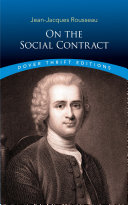
The Social Contract
The Social Contract by Jean-Jacques Rousseau (1762)
"Man is born free, and everywhere he is in chains." Rousseau's radical argument that legitimate political authority must rest on the "general will" of the people — the philosophical dynamite that helped ignite the French Revolution.
Historical Significance:
Published in 1762, The Social Contract was immediately banned in France and Geneva. Rousseau argued that sovereignty belongs to the people, not to kings — a revolutionary idea that influenced the French Revolution's Declaration of the Rights of Man (1789) and the American Constitution. Robespierre carried a copy; Napoleon claimed to have read it. The book's concept of the "general will" has been both celebrated as the foundation of democracy and criticized as a justification for totalitarianism. It remains one of the most debated texts in political philosophy.
This public domain classic was originally published in 1762. Free to read and share.
Free
eBook
FREE
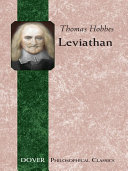
Leviathan
Leviathan by Thomas Hobbes (1651)
"The life of man: solitary, poor, nasty, brutish, and short." Hobbes' argument that only a powerful sovereign can prevent the war of "all against all" — the most influential work of political philosophy in the English language.
Historical Significance:
Thomas Hobbes published Leviathan in 1651 during the English Civil War, arguing that peace requires surrendering individual freedoms to an absolute sovereign (the "Leviathan"). Writing from exile in Paris, Hobbes created the concept of the social contract — the idea that government derives its authority from the consent of the governed, even if that consent is motivated by fear. Locke, Rousseau, and every subsequent political philosopher responded to Hobbes. The book remains essential reading in political science, philosophy, and law programs worldwide.
This public domain classic was originally published in 1651. Free to read and share.
Free

eBook
FREE
Utopia
Utopia by Thomas More (1516)
The book that gave us the word "utopia" — literally "no place." More describes an ideal island society with communal property, religious tolerance, and a six-hour workday. But is he serious, or is it all an elaborate joke?
Historical Significance:
Sir Thomas More, Lord Chancellor of England (later beheaded by Henry VIII for refusing to acknowledge the king's supremacy over the Church), wrote Utopia in Latin in 1516. The work invented a genre: the utopian novel. More's imaginary island has no private property, no lawyers, and universal education — radical ideas for the 16th century that influenced socialist thought for centuries. The deliberate ambiguity of whether More endorsed or satirized his fictional society has generated 500 years of debate. The word "utopia" — a pun on the Greek "eu-topos" (good place) and "ou-topos" (no place) — perfectly captures this ambiguity.
This public domain classic was originally published in 1516. Free to read and share.
Free
eBook
FREE
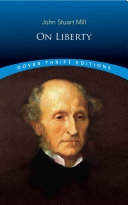
On Liberty
On Liberty by John Stuart Mill (1859)
"The only purpose for which power can be rightfully exercised over any member of a civilized community, against his will, is to prevent harm to others." The foundational text of classical liberalism and individual rights.
Historical Significance:
Published in 1859 — the same year as On the Origin of Species — Mill's essay is the most important defense of individual liberty in Western philosophy. Mill argued that society has no right to restrict individual behavior unless it harms others (the "harm principle"). He defended freedom of speech even for opinions society finds repugnant, arguing that suppressing ideas — even wrong ideas — harms everyone. Written partly in collaboration with his wife Harriet Taylor Mill, On Liberty influenced the development of civil liberties law worldwide. The harm principle is cited in Supreme Court decisions and human rights charters to this day.
This public domain classic was originally published in 1859. Free to read and share.
Free

eBook
FREE
The Second Jungle Book
The Second Jungle Book by Rudyard Kipling
Five Mowgli stories continue his life in the jungle: How Fear Came, Letting in the Jungle, The King's Ankus, Red Dog and The Spring Running.
Three other stories complete the collection: The Miracle of Purun Bhagat, The Undertakers and Quiquern. Each story is accompanied by poetry.
This is the eight-story sequel to The Jungle Book, not a collection containing five additional non-Mowgli tales.
Retained text source: Project Gutenberg ebook 1937.
Free
eBook
FREE
The Age of Reason
The Age of Reason by Thomas Paine (1794-1807)
Thomas Paine's explosive attack on organized religion and defense of deism — the belief in God through reason and nature rather than scripture and clergy. The book that made Paine the most hated man in America.
Historical Significance:
Paine wrote The Age of Reason while imprisoned in Paris during the French Revolution's Terror — he narrowly escaped the guillotine when the chalk mark on his cell door was accidentally placed on the wrong side. Published in three parts (1794, 1795, 1807), the book systematically challenged the Bible's claims to divine authorship, pointing out contradictions, historical errors, and moral problems.
The backlash was immediate and devastating. Paine, who had been a hero of the American Revolution for writing Common Sense, was vilified as an atheist (he wasn't — he believed in God, just not in organized religion). Theodore Roosevelt called him "a filthy little atheist." Paine died in poverty in 1809, with only six people attending his funeral. History has been kinder — The Age of Reason is now recognized as a foundational text of religious skepticism and freethought.
This public domain classic was originally published in 1794. Free to read and share.
Free
eBook
FREE
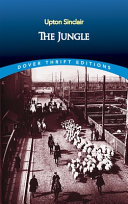
The Jungle
The Jungle by Upton Sinclair (1906)
Lithuanian immigrant Jurgis Rudkus works in Chicago's meatpacking plants, where he encounters appalling working conditions, corrupt bosses, and contaminated food. The novel that changed American food safety laws forever.
Historical Significance:
Upton Sinclair spent seven weeks undercover in Chicago's stockyards researching The Jungle. Published in 1906, the novel's graphic descriptions of unsanitary meatpacking practices — workers falling into rendering tanks, diseased meat being sold to consumers, rat droppings mixed into sausage — caused a national uproar. President Theodore Roosevelt, initially skeptical, sent investigators who confirmed Sinclair's findings. Within months, Congress passed the Pure Food and Drug Act and the Meat Inspection Act, creating the framework for modern food safety regulation.
Sinclair famously said, "I aimed at the public's heart, and by accident I hit it in the stomach." He had intended the novel as a socialist argument about labor exploitation, but readers focused on the food safety revelations. Nevertheless, the novel remains one of the most powerful examples of literature directly changing law.
This public domain classic was originally published in 1906. Free to read and share.
Free
eBook
FREE
A Princess of Mars
A Princess of Mars by Edgar Rice Burroughs (1912)
Civil War veteran John Carter is mysteriously transported to Mars (Barsoom), where he discovers a dying planet of warring alien races, four-armed green warriors, and the beautiful princess Dejah Thoris. The novel that inspired Star Wars, Avatar, and modern science fiction.
Historical Significance:
Serialized as "Under the Moons of Mars" in All-Story Magazine in 1912 (the same year as Tarzan), A Princess of Mars created the "planetary romance" genre. George Lucas has cited it as a major influence on Star Wars — the desert planet, the warrior princess, the fish-out-of-water hero transplanted to an alien world. James Cameron's Avatar drew heavily on Barsoom's ecology and warrior cultures. Ray Bradbury, Arthur C. Clarke, and Carl Sagan all acknowledged Burroughs' influence on their love of space exploration. Disney's 2012 film adaptation John Carter, while a box office disappointment, introduced a new generation to Burroughs' imaginative world.
This public domain classic was originally published in 1912. Free to read and share.
Free

eBook
FREE
The Communist Manifesto
The Communist Manifesto by Karl Marx and Friedrich Engels (1848)
"A spectre is haunting Europe — the spectre of communism." The most influential political pamphlet of the modern era. In just 12,000 words, Marx and Engels laid out a theory of history, class struggle, and revolution that would reshape the 20th century.
Historical Significance:
Commissioned by the Communist League and published in London on February 21, 1848, the Manifesto appeared just as revolutions erupted across Europe in the Spring of Nations. Marx was 29 years old. The text argues that all history is the history of class struggles, that capitalism contains the seeds of its own destruction, and that the working class will inevitably overthrow the bourgeoisie.
Whatever one thinks of communism as a political system, the Manifesto's influence on world history is undeniable. It inspired revolutions in Russia, China, Cuba, and Vietnam; shaped labor movements, social democratic parties, and welfare states worldwide; and fundamentally changed how we think about economics, class, and power. It remains one of the most assigned texts in university courses and one of the most debated documents in human history.
This public domain classic was originally published in 1848. Free to read and share.
Free

eBook
FREE
Common Sense
Common Sense by Thomas Paine (1776)
The pamphlet that started a revolution. In just 47 pages, Paine demolished the case for British rule, argued for American independence, and convinced a nation of colonists to become revolutionaries. The bestselling work of the 18th century.
Historical Significance:
Thomas Paine, an English immigrant who had arrived in America just 14 months earlier, published Common Sense anonymously on January 10, 1776. It sold 500,000 copies in its first year — in a country of 2.5 million people. Proportionally, it remains the bestselling American publication of all time.
Paine wrote in plain, direct language that ordinary people could understand, deliberately rejecting the learned style of political philosophy. "These are the times that try men's souls" (from his later Crisis papers) became a rallying cry. George Washington had Common Sense read aloud to his troops. John Adams said, "Without the pen of the author of Common Sense, the sword of Washington would have been raised in vain." The pamphlet directly precipitated the Declaration of Independence six months later.
This public domain classic was originally published in 1776. Free to read and share.
Free
eBook
FREE
The Prince
The Prince by Niccolò Machiavelli (1532)
"It is better to be feared than loved, if you cannot be both." The most notorious political treatise ever written. Machiavelli's cold-eyed manual for acquiring and maintaining political power shocked the world and made his name a synonym for cunning.
Historical Significance:
Niccolò Machiavelli, a Florentine diplomat who had served the Republic of Florence, wrote The Prince in 1513 after being exiled, imprisoned, and tortured by the returning Medici family. He dedicated the book to Lorenzo de' Medici, hoping to regain political favor — it didn't work. Published posthumously in 1532, the book was condemned by the Pope and placed on the Index of Forbidden Books.
What made The Prince revolutionary was its rejection of idealism. Where previous political writers described how rulers should behave, Machiavelli described how they actually behave — and how to win. "Machiavellian" became an adjective meaning deviously cunning, though scholars argue Machiavelli was simply being honest about power. The Prince is required reading in political science programs worldwide.
This public domain classic was originally published in 1532. Free to read and share.
Free

eBook
FREE
Civil Disobedience
Civil Disobedience by Henry David Thoreau (1849)
"That government is best which governs least." Thoreau's essay on the moral duty to resist unjust government — written after spending a night in jail for refusing to pay a poll tax in protest of slavery and the Mexican-American War.
Historical Significance:
Originally published as "Resistance to Civil Government" in 1849, this short essay became one of the most influential political texts in world history. Thoreau argued that individuals have a moral obligation to disobey unjust laws, even at personal cost. Mahatma Gandhi read it in a South African prison and credited it as a major inspiration for his campaign of nonviolent resistance. Martin Luther King Jr. read it as a student at Morehouse College and later wrote that it was his "first intellectual contact with the theory of nonviolent resistance." The essay has influenced every major civil rights and protest movement since.
This public domain classic was originally published in 1849. Free to read and share.
Free

eBook
FREE
The Souls of Black Folk
The Souls of Black Folk by W.E.B. Du Bois (1903)
"The problem of the twentieth century is the problem of the color-line." A groundbreaking collection of essays on race, identity, and the African American experience that changed the course of American history.
Historical Significance:
W.E.B. Du Bois — the first African American to earn a Ph.D. from Harvard — published The Souls of Black Folk in 1903, directly challenging Booker T. Washington's accommodationist approach to racial progress. Du Bois introduced the concept of "double consciousness" — the psychological tension of being both Black and American — that remains central to understanding racial identity. The book's chapter on the death of his infant son is one of the most heartbreaking passages in American literature. The Souls of Black Folk helped inspire the Niagara Movement and the founding of the NAACP. Martin Luther King Jr., James Baldwin, and Ta-Nehisi Coates all cited it as a foundational influence.
This public domain classic was originally published in 1903. Free to read and share.
Free
eBook
FREE
The Prince and the Pauper
The Prince and the Pauper by Mark Twain (1881)
Young Prince Edward VI and pauper Tom Canty, identical in appearance, swap places — the prince discovers the cruelty of poverty while the pauper struggles with the burden of power. Twain's first historical novel.
Historical Significance:
Set in 1547 England, The Prince and the Pauper was Twain's attempt to prove he could write "serious" literature beyond his humor. Published in 1881, it was his first novel set in England and his first attempt at historical fiction. The "switched identities" plot device, while not invented by Twain, was perfected here and has been imitated in hundreds of subsequent works from Disney's The Parent Trap to countless films. Twain's daughter Susy called it his best book. The novel's exploration of how circumstance shapes identity remains powerful.
This public domain classic was originally published in 1881. Free to read and share.
Free
eBook
FREE
Narrative of the Life of Frederick Douglass
Narrative of the Life of Frederick Douglass, an American Slave by Frederick Douglass (1845)
The autobiography of a man who escaped slavery, taught himself to read, and became the most powerful voice for abolition in American history. One of the most important documents in American literature and civil rights history.
Historical Significance:
Frederick Douglass published his Narrative in 1845, just seven years after escaping slavery in Maryland. It was an immediate bestseller, selling 5,000 copies in four months and 30,000 copies within five years. The book was so eloquent that skeptics accused Douglass of being unable to have written it himself — precisely the kind of racist assumption the book was written to demolish.
Douglass' account of learning to read — his mistress began teaching him until her husband forbade it, saying literacy would make a slave unfit for slavery — is one of American literature's most powerful passages. The Narrative made Douglass internationally famous but also put him at risk of recapture under the Fugitive Slave Act, forcing him to flee to Britain for two years.
This public domain classic was originally published in 1845. Free to read and share.
Free

eBook
FREE
A Little Princess
A Little Princess by Frances Hodgson Burnett (1905)
Sara Crewe, a wealthy boarding school student, loses everything when her father dies penniless — yet maintains her dignity, imagination, and kindness through poverty and cruelty. A story about the true meaning of being a princess.
Historical Significance:
Originally a short story called "Sara Crewe" (1888), Burnett expanded it into a play (1902) and then this novel (1905). The story was partly autobiographical — Burnett herself experienced dramatic reversals of fortune, going from poverty to wealth to poverty again. Sara's philosophy — "Whatever comes cannot alter one thing. If I am a princess in rags and tatters, I can be a princess inside" — has inspired children for over a century. The 1995 Alfonso Cuarón film is considered one of the finest children's films ever made.
This public domain classic was originally published in 1905. Free to read and share.
Free

eBook
FREE
The Jungle Book
The Jungle Book by Rudyard Kipling (1894)
Mowgli, Baloo, Bagheera, Shere Khan, and Kaa — the timeless stories of a boy raised by wolves in the jungles of India, learning the Law of the Jungle and finding his place between two worlds.
Historical Significance:
Rudyard Kipling wrote The Jungle Book in 1893-1894 while living in Brattleboro, Vermont, with his American wife Carrie. He was already the most famous writer in the English-speaking world, and these stories cemented his reputation as a master storyteller.
Born in Bombay (now Mumbai) in 1865, Kipling spent his early childhood in India before being sent to England for education — an experience of abandonment and cruelty he never forgot. The Jungle Book reflects his deep love for India and his understanding of the complex relationship between civilization and nature.
The Mowgli stories are set in the Seoni hills of central India, and Kipling researched Indian wildlife extensively, consulting Robert Armitage Sterndale's "Natural History of the Mammalia of India." The non-Mowgli stories ("Rikki-Tikki-Tavi," "Toomai of the Elephants," "The White Seal") are equally beloved.
In 1907, Kipling became the first English-language writer to receive the Nobel Prize in Literature.
Cultural Impact:
Disney's animated adaptation (1967) with its beloved songs became one of the most popular animated films ever made. The 2016 live-action/CGI remake grossed nearly $1 billion worldwide. The Cub Scouts movement adopted Jungle Book terminology (Akela, den, pack). Kipling's "Law of the Jungle" — "the strength of the pack is the wolf, and the strength of the wolf is the pack" — is quoted in contexts from business to military.
This public domain classic was originally published in 1894. Free to read and share.
Free
No classics match your filters.