New eBooks
0 booksNo eBooks Yet
Be the first to publish an eBook on BoingyBooks!
🎓 Your Free Digital Library Awaits
Access 232+ classic ebooks — from Shakespeare to Sherlock Holmes. Read on any device, save your progress, build your library.
Create Free Account →Classic Literature
10 free classicsTimeless works from the public domain, beautifully formatted for the BoingyBooks reader.
eBook
FREE
The Hunchback of Notre-Dame
The Hunchback of Notre-Dame by Victor Hugo (1831)
Quasimodo, the deaf, deformed bell-ringer of Notre-Dame Cathedral, loves the beautiful Romani dancer Esmeralda, who is pursued by the fanatical Archdeacon Frollo. A Gothic masterpiece set against the vivid medieval Paris of 1482.
Historical Significance:
Victor Hugo wrote Notre-Dame de Paris (its French title) partly to save the real cathedral, which was crumbling from neglect and faced demolition. Published in 1831, the novel sparked a Gothic revival and a massive restoration campaign for Notre-Dame led by architect Eugène Viollet-le-Duc. When Notre-Dame caught fire on April 15, 2019, Hugo's novel surged to #1 on Amazon within hours. Disney's 1996 animated film softened the story considerably — Hugo's original is far darker, with Esmeralda hanged and Quasimodo dying of grief beside her skeleton. The novel is Hugo's most passionate argument that architecture is civilization's greatest art.
This public domain classic was originally published in 1831. Free to read and share.
Free
eBook
FREE
The White Company
The White Company by Arthur Conan Doyle (1891)
A young Saxon monk leaves his abbey and joins Sir Nigel Loring's "White Company" of English longbowmen during the Hundred Years' War. Doyle's personal favorite among all his books — the novel he wished to be remembered for instead of Sherlock Holmes.
Historical Significance:
Arthur Conan Doyle considered The White Company his best work and was perpetually frustrated that the public preferred Sherlock Holmes. Published in 1891, the novel is a meticulously researched historical romance set in 1366, during Edward III's wars in France and Spain. Doyle's depiction of medieval warfare, archery, and chivalry drew on extensive primary source research. The novel was hugely popular in its time and remains one of the finest historical adventure novels in English. Doyle wrote a prequel, Sir Nigel (1906), which he also valued above Holmes.
This public domain classic was originally published in 1891. Free to read and share.
Free
eBook
FREE
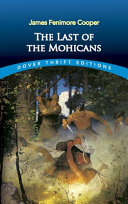
The Last of the Mohicans
The Last of the Mohicans by James Fenimore Cooper (1826)
During the French and Indian War, frontiersman Hawkeye (Natty Bumppo) and his Mohican companions Chingachgook and Uncas escort two sisters through hostile territory. The most famous American adventure novel of the 19th century.
Historical Significance:
Published in 1826, The Last of the Mohicans was the second of Cooper's five Leatherstocking Tales and his greatest commercial success. It was the bestselling American novel of the 19th century and was translated into virtually every European language. While Cooper's portrayal of Native Americans has been criticized as romanticized and stereotypical, the novel was groundbreaking in presenting indigenous characters as heroic protagonists. Daniel Day-Lewis's 1992 film adaptation revived interest in the novel. Cooper essentially invented the American frontier adventure genre.
This public domain classic was originally published in 1826. Free to read and share.
Free
eBook
FREE
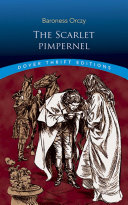
The Scarlet Pimpernel
The Scarlet Pimpernel by Baroness Orczy (1905)
During the French Revolution's Reign of Terror, a mysterious English nobleman secretly rescues French aristocrats from the guillotine, leaving only a small red flower as his calling card. The original secret-identity superhero.
Historical Significance:
Baroness Emmuska Orczy, a Hungarian-born British author, first wrote The Scarlet Pimpernel as a play in 1903, then novelized it in 1905. The character of Sir Percy Blakeney — an apparently foolish aristocrat who is secretly a brilliant hero — directly created the "secret identity" archetype that would define superheroes for the next century. Zorro (1919), Batman (1939), and Superman (1938) all owe a direct debt to the Scarlet Pimpernel. The novel also pioneered the "love triangle complicated by secret identity" plot that became a staple of superhero fiction. "Is he in heaven? Is he in hell? That demmed, elusive Pimpernel!" is one of adventure fiction's most famous verses.
This public domain classic was originally published in 1905. Free to read and share.
Free
eBook
FREE
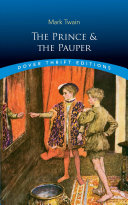
The Prince and the Pauper
The Prince and the Pauper by Mark Twain (1881)
Young Prince Edward VI and pauper Tom Canty, identical in appearance, swap places — the prince discovers the cruelty of poverty while the pauper struggles with the burden of power. Twain's first historical novel.
Historical Significance:
Set in 1547 England, The Prince and the Pauper was Twain's attempt to prove he could write "serious" literature beyond his humor. Published in 1881, it was his first novel set in England and his first attempt at historical fiction. The "switched identities" plot device, while not invented by Twain, was perfected here and has been imitated in hundreds of subsequent works from Disney's The Parent Trap to countless films. Twain's daughter Susy called it his best book. The novel's exploration of how circumstance shapes identity remains powerful.
This public domain classic was originally published in 1881. Free to read and share.
Free

eBook
FREE
War and Peace
War and Peace by Leo Tolstoy (1869)
The Russian epic. Five aristocratic families navigate love, loss, and destiny against Napoleon's 1812 invasion of Russia. At 587,287 words, it is one of the longest novels ever written — and many consider it the greatest.
Historical Significance:
Tolstoy published War and Peace in serial form from 1865 to 1869, then in book form. He began writing it after visiting the battlefield of Borodino, where 70,000 men died in a single day in 1812. Tolstoy's genius was to show history not through generals and emperors but through the daily lives of ordinary people caught in extraordinary events.
The novel required immense research — Tolstoy read every account of the Napoleonic Wars he could find, interviewed survivors, and visited every battlefield. He rewrote the opening sentence dozens of times. His wife Sophia copied the entire manuscript seven times by hand. The novel permanently changed what fiction could achieve — no longer just entertainment, but a philosophical investigation of free will, fate, and the forces that drive history.
This public domain classic was originally published in 1869. Free to read and share.
Free
eBook
FREE
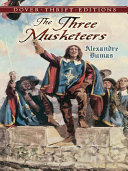
The Three Musketeers
The Three Musketeers by Alexandre Dumas (1844)
"All for one and one for all!" Young d'Artagnan travels to Paris to join the King's Musketeers and befriends Athos, Porthos, and Aramis in this swashbuckling adventure of swordplay, intrigue, and romance in 17th-century France.
Historical Significance:
Serialized in the newspaper Le Siècle from March to July 1844, The Three Musketeers made Dumas the most popular author in the world. The novel is loosely based on Mémoires de M. d'Artagnan by Gatien de Courtilz de Sandras (1700), which fictionalized a real musketeer named Charles de Batz-Castelmore d'Artagnan.
Dumas' genius was pacing — the novel reads like a modern thriller, with cliffhangers at every chapter break. Cardinal Richelieu, the scheming Milady de Winter, and the diamond studs plot create one of fiction's most intricate webs of intrigue. Dumas wrote with such speed (aided by collaborator Auguste Maquet) that he produced over 100,000 pages in his lifetime.
This public domain classic was originally published in 1844. Free to read and share.
Free
eBook
FREE
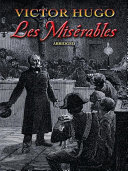
Les Misérables
Les Misérables by Victor Hugo (1862)
The epic story of Jean Valjean — imprisoned 19 years for stealing bread, redeemed by a bishop's mercy, hunted by the relentless Inspector Javert — set against the turbulent backdrop of post-Napoleonic France. A sweeping meditation on justice, love, and the possibility of redemption.
Historical Significance:
Victor Hugo spent 17 years writing Les Misérables, publishing it in 1862 while in political exile on Guernsey. The novel was an immediate worldwide sensation — so anticipated that crowds lined up at bookstores in Paris at dawn on release day. Hugo's publisher reportedly sent him a telegram consisting of a single "?" to ask about sales. Hugo replied with a single "!" — both the shortest and most eloquent sales report in publishing history.
The novel's depiction of poverty, social injustice, and the redemptive power of love influenced social reform movements across Europe. The musical adaptation (1985) became the world's longest-running musical, translated into 22 languages and seen by over 130 million people.
This public domain classic was originally published in 1862. Free to read and share.
Free
eBook
FREE
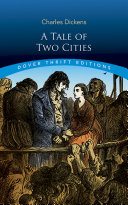
A Tale of Two Cities
A Tale of Two Cities by Charles Dickens (1859)
"It was the best of times, it was the worst of times" — the most famous opening line in English literature. Set against the French Revolution, this is Dickens' most dramatic and emotionally devastating novel, culminating in one of literature's greatest acts of self-sacrifice.
Historical Significance:
Dickens serialized A Tale of Two Cities in his own weekly journal, All the Year Round, from April to November 1859. It was inspired by Thomas Carlyle's The French Revolution and by Dickens' involvement in amateur theatricals — particularly The Frozen Deep by Wilkie Collins, in which Dickens played a man who sacrifices his life for his rival in love.
With approximately 200 million copies sold, it is possibly the bestselling novel of all time. Sydney Carton's final words — "It is a far, far better thing that I do, than I have ever done; it is a far, far better rest that I go to than I have ever known" — are among the most quoted passages in English literature.
This public domain classic was originally published in 1859. Free to read and share.
Free
eBook
FREE
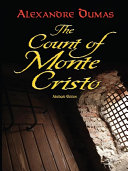
The Count of Monte Cristo
The Count of Monte Cristo by Alexandre Dumas (1844-1846)
The ultimate revenge story. A young sailor is wrongfully imprisoned for 14 years, escapes, discovers a vast treasure, and reinvents himself as the mysterious Count of Monte Cristo to exact elaborate vengeance on those who destroyed his life.
Historical Significance:
Alexandre Dumas published The Count of Monte Cristo as a serial in the Journal des Débats from August 1844 to January 1846. Serialization was the Netflix of the 19th century — readers waited eagerly for each installment, and Dumas was paid by the line, which partly explains the novel's epic length.
The story was inspired by a real case Dumas found in the police archives: François Picaud, a shoemaker who was falsely imprisoned for seven years by jealous friends, inherited a fortune from a fellow prisoner, and spent ten years pursuing revenge. Dumas transformed this into one of the most intricate and satisfying plots in all of fiction.
Dumas was the grandson of a Haitian slave — his father, General Thomas-Alexandre Dumas, was the highest-ranking person of color in any European army. The themes of injustice, identity, and the corrupting power of wealth in Monte Cristo may partly reflect Dumas' own experience of racial prejudice in French society.
Cultural Impact:
The Count of Monte Cristo has been adapted into over 40 films, TV series, and anime. It remains one of the most popular novels ever written, selling millions of copies annually. The phrase "Edmond Dantès" is a cultural shorthand for wrongful imprisonment. The novel's structure — patient, meticulous revenge served over years — has influenced everything from Batman to The Shawshank Redemption to Kill Bill.
This public domain classic was originally published in 1844. Free to read and share.
Free
No classics match your filters.