New eBooks
0 booksNo eBooks Yet
Be the first to publish an eBook on BoingyBooks!
🎓 Your Free Digital Library Awaits
Access 232+ classic ebooks — from Shakespeare to Sherlock Holmes. Read on any device, save your progress, build your library.
Create Free Account →Classic Literature
155 free classicsTimeless works from the public domain, beautifully formatted for the BoingyBooks reader.
eBook
FREE
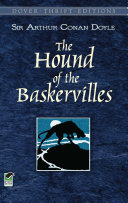
The Hound of the Baskervilles
The Hound of the Baskervilles by Arthur Conan Doyle (1902)
The greatest Sherlock Holmes novel. A spectral hound stalks the Baskerville family on the fog-shrouded moors of Devon. Is the curse supernatural, or is there a human villain? Holmes investigates the most atmospheric and terrifying case of his career.
Historical Significance:
Doyle wrote The Hound after a friend, journalist Bertram Fletcher Robinson, told him legends of ghostly hounds on Dartmoor. Published in The Strand Magazine from August 1901 to April 1902, it was technically set before Holmes' death at Reichenbach Falls (Doyle had killed him off in 1893), allowing Doyle to capitalize on Holmes' popularity without committing to reviving him — though he eventually did.
The Strand's circulation doubled during serialization. The novel perfectly blends Gothic horror with rational detection. The image of a glowing hound bounding across moonlit moors is one of the most vivid in all detective fiction.
This public domain classic was originally published in 1902. Free to read and share.
Free
eBook
FREE
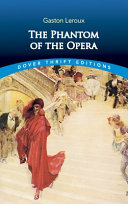
The Phantom of the Opera
The Phantom of the Opera by Gaston Leroux (1910)
The masked genius haunting the Paris Opera House, his obsessive love for the soprano Christine Daaé, the underground lake, the chandelier crash — the Gothic romance that spawned the longest-running Broadway musical in history.
Historical Significance:
Leroux, a French journalist and novelist, serialized Le Fantôme de l'Opéra in 1909-1910. He based the novel on real events at the Palais Garnier opera house: an underground lake does exist beneath the building, a counterweight from the chandelier did fall during a performance in 1896, and the opera house's labyrinthine basement passages fueled rumors of ghosts. Andrew Lloyd Webber's 1986 musical has grossed over $1.3 billion on Broadway alone, making it the highest-grossing entertainment event in history. Lon Chaney's 1925 silent film performance remains one of cinema's most iconic images.
This public domain classic was originally published in 1910. Free to read and share.
Free
eBook
FREE
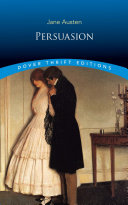
Persuasion
Persuasion by Jane Austen (1817)
Austen's last completed novel and her most mature love story. Anne Elliot, persuaded at 19 to break her engagement to Captain Wentworth, meets him again eight years later — older, wiser, and still in love. A tender meditation on second chances and the constancy of true feeling.
Historical Significance:
Austen completed Persuasion in August 1816, while already suffering from the illness (likely Addison's disease) that would kill her in July 1817. Published posthumously in December 1817 alongside Northanger Abbey, with a biographical note by her brother Henry revealing her identity for the first time. Captain Wentworth's letter — "You pierce my soul. I am half agony, half hope" — is considered one of the greatest love declarations in English literature.
This public domain classic was originally published posthumously in 1817. Free to read and share.
Free
eBook
FREE
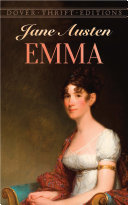
Emma
Emma by Jane Austen (1815)
"Emma Woodhouse, handsome, clever, and rich" — a young woman convinced of her matchmaking genius repeatedly misreads everyone around her, including herself. Austen's most sophisticated comedy and her personal favorite.
Historical Significance:
Austen described Emma as "a heroine whom no one but myself will much like." She was wrong — Emma Woodhouse became one of literature's most beloved characters precisely because of her flaws. The novel is dedicated to the Prince Regent (later George IV), who was a fan of Austen's work. Published in December 1815 by John Murray (Lord Byron's publisher), it was the last novel published in Austen's lifetime — she died in July 1817 at age 41. The 1995 film Clueless transposed the plot to a Beverly Hills high school, proving Austen's social observations are timeless.
This public domain classic was originally published in 1815. Free to read and share.
Free
eBook
FREE
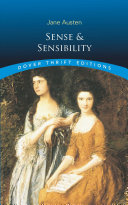
Sense and Sensibility
Sense and Sensibility by Jane Austen (1811)
Austen's first published novel. Sisters Elinor (sense) and Marianne (sensibility) Dashwood navigate love, heartbreak, and financial insecurity after their father's death leaves them nearly destitute. A masterful exploration of the tension between reason and emotion.
Historical Significance:
Published in 1811 under the pseudonym "A Lady," Sense and Sensibility was Austen's debut — though she had drafted it as "Elinor and Marianne" in her teens. She self-published it with help from her brother Henry, and it sold out its first edition of 750 copies, earning Austen £140. The novel established her signature style: wit, social observation, and the marriage plot as a lens for examining economic and moral questions. Ang Lee's 1995 film adaptation, starring Emma Thompson and Kate Winslet, won the Academy Award for Best Adapted Screenplay.
This public domain classic was originally published in 1811. Free to read and share.
Free
eBook
FREE
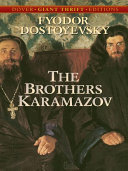
The Brothers Karamazov
The Brothers Karamazov by Fyodor Dostoyevsky (1880)
Dostoyevsky's final and greatest novel. Three brothers — the passionate Dmitri, the intellectual Ivan, and the saintly Alyosha — are drawn into the murder of their despicable father. A murder mystery that becomes the deepest exploration of faith, doubt, morality, and free will in all of literature.
Historical Significance:
Serialized in The Russian Messenger from 1879 to 1880, The Brothers Karamazov was completed just months before Dostoyevsky's death in January 1881. He had planned a sequel that was never written. The novel contains "The Grand Inquisitor," a parable within the story that is considered one of the most powerful pieces of philosophical writing ever composed.
Freud called it "the most magnificent novel ever written." Einstein said it taught him more about the world than any scientific paper. The novel asks the question that has haunted philosophy for millennia: if God does not exist, is everything permitted? Dostoyevsky's answer is complex, devastating, and ultimately hopeful.
This public domain classic was originally published in 1880. Free to read and share.
Free

eBook
FREE
War and Peace
War and Peace by Leo Tolstoy (1869)
The Russian epic. Five aristocratic families navigate love, loss, and destiny against Napoleon's 1812 invasion of Russia. At 587,287 words, it is one of the longest novels ever written — and many consider it the greatest.
Historical Significance:
Tolstoy published War and Peace in serial form from 1865 to 1869, then in book form. He began writing it after visiting the battlefield of Borodino, where 70,000 men died in a single day in 1812. Tolstoy's genius was to show history not through generals and emperors but through the daily lives of ordinary people caught in extraordinary events.
The novel required immense research — Tolstoy read every account of the Napoleonic Wars he could find, interviewed survivors, and visited every battlefield. He rewrote the opening sentence dozens of times. His wife Sophia copied the entire manuscript seven times by hand. The novel permanently changed what fiction could achieve — no longer just entertainment, but a philosophical investigation of free will, fate, and the forces that drive history.
This public domain classic was originally published in 1869. Free to read and share.
Free
eBook
FREE
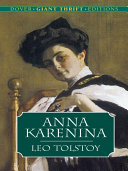
Anna Karenina
Anna Karenina by Leo Tolstoy (1877)
"All happy families are alike; each unhappy family is unhappy in its own way." Anna Karenina's passionate, destructive affair with Count Vronsky unfolds against the backdrop of Russian aristocratic society — a novel Dostoyevsky called "flawless as a work of art."
Historical Significance:
Tolstoy serialized Anna Karenina in The Russian Messenger from 1875 to 1877. The novel was inspired by a real event: in 1872, a woman named Anna Pirogova threw herself under a train at a railway station near Tolstoy's estate after being abandoned by her lover. Tolstoy attended the autopsy.
The novel interweaves Anna's tragic love story with Levin's search for meaning through farming and family — Levin being Tolstoy's autobiographical portrait of himself. Faulkner, Nabokov, and Thomas Mann all named it the greatest novel ever written. In 2007, Time magazine's list of the 10 greatest novels placed it at number one.
This public domain classic was originally published in 1877. Free to read and share.
Free
eBook
FREE
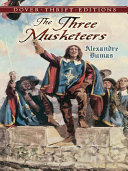
The Three Musketeers
The Three Musketeers by Alexandre Dumas (1844)
"All for one and one for all!" Young d'Artagnan travels to Paris to join the King's Musketeers and befriends Athos, Porthos, and Aramis in this swashbuckling adventure of swordplay, intrigue, and romance in 17th-century France.
Historical Significance:
Serialized in the newspaper Le Siècle from March to July 1844, The Three Musketeers made Dumas the most popular author in the world. The novel is loosely based on Mémoires de M. d'Artagnan by Gatien de Courtilz de Sandras (1700), which fictionalized a real musketeer named Charles de Batz-Castelmore d'Artagnan.
Dumas' genius was pacing — the novel reads like a modern thriller, with cliffhangers at every chapter break. Cardinal Richelieu, the scheming Milady de Winter, and the diamond studs plot create one of fiction's most intricate webs of intrigue. Dumas wrote with such speed (aided by collaborator Auguste Maquet) that he produced over 100,000 pages in his lifetime.
This public domain classic was originally published in 1844. Free to read and share.
Free
eBook
FREE
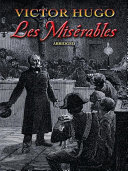
Les Misérables
Les Misérables by Victor Hugo (1862)
The epic story of Jean Valjean — imprisoned 19 years for stealing bread, redeemed by a bishop's mercy, hunted by the relentless Inspector Javert — set against the turbulent backdrop of post-Napoleonic France. A sweeping meditation on justice, love, and the possibility of redemption.
Historical Significance:
Victor Hugo spent 17 years writing Les Misérables, publishing it in 1862 while in political exile on Guernsey. The novel was an immediate worldwide sensation — so anticipated that crowds lined up at bookstores in Paris at dawn on release day. Hugo's publisher reportedly sent him a telegram consisting of a single "?" to ask about sales. Hugo replied with a single "!" — both the shortest and most eloquent sales report in publishing history.
The novel's depiction of poverty, social injustice, and the redemptive power of love influenced social reform movements across Europe. The musical adaptation (1985) became the world's longest-running musical, translated into 22 languages and seen by over 130 million people.
This public domain classic was originally published in 1862. Free to read and share.
Free

eBook
FREE
Don Quixote
Don Quixote by Miguel de Cervantes (1605/1615)
The first modern novel. An aging Spanish gentleman reads so many chivalric romances that he loses his mind, dubs himself "Don Quixote de la Mancha," and sets out to right wrongs — tilting at windmills he believes are giants, with his faithful squire Sancho Panza.
Historical Significance:
Cervantes published Part One in 1605 and Part Two in 1615. He wrote much of it while in prison and dire poverty. The novel was an immediate bestseller across Europe and has never gone out of print in over 400 years. In 2002, the Norwegian Book Club's survey of 100 prominent authors named Don Quixote the greatest work of fiction ever written.
Cervantes invented the modern novel by creating fiction that is aware of itself as fiction — characters in Part Two have read Part One. The phrase "tilting at windmills" (fighting imaginary enemies) has entered every European language. Don Quixote and Sancho Panza represent the eternal tension between idealism and pragmatism.
This public domain classic was originally published in 1605. Free to read and share.
Free
eBook
FREE
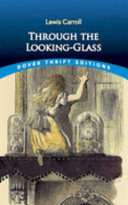
Through the Looking-Glass
Through the Looking-Glass, and What Alice Found There by Lewis Carroll (1871)
Alice steps through a mirror into a world where everything is reversed — a giant chess game where she must become a queen. Featuring Tweedledee and Tweedledum, the Jabberwocky, Humpty Dumpty, and the Red Queen's race where you must run just to stay in place.
Historical Significance:
Carroll's sequel to Alice's Adventures in Wonderland was published in December 1871, again illustrated by John Tenniel. While the first Alice book was pure nonsense, Looking-Glass has a more structured plot — based on an actual chess game that can be played out on a board. Carroll, a mathematics lecturer at Oxford, embedded logical puzzles and wordplay that continue to delight mathematicians.
The Jabberwocky poem ("'Twas brillig, and the slithy toves") is the most famous nonsense poem in English. Humpty Dumpty's declaration that "When I use a word, it means just what I choose it to mean" has been cited in Supreme Court decisions and philosophy papers. The Red Queen's hypothesis in evolutionary biology takes its name from this book.
This public domain classic was originally published in 1871. Free to read and share.
Free
eBook
FREE
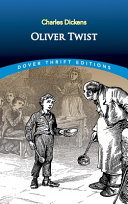
Oliver Twist
Oliver Twist by Charles Dickens (1838)
"Please, sir, I want some more." The orphan boy who dared to ask for a second helping of gruel — and was thrust into London's criminal underworld of Fagin, the Artful Dodger, and the murderous Bill Sikes. Dickens' furious attack on the workhouse system and child exploitation.
Historical Significance:
Oliver Twist was Dickens' second novel, serialized in Bentley's Miscellany from February 1837 to April 1839. Dickens was just 25 when he began it. The novel was a direct assault on the Poor Law Amendment Act of 1834, which created the brutal workhouse system. Dickens had experienced poverty firsthand as a child, working in a boot-blacking factory at age 12 while his father was in debtors' prison.
The character of Fagin was based partly on the real criminal Ikey Solomon. The novel's depiction of Fagin has been controversial for its anti-Semitic stereotyping, though Dickens later expressed regret and created more sympathetic Jewish characters. The 1968 musical film Oliver! won the Academy Award for Best Picture.
This public domain classic was originally published in 1838. Free to read and share.
Free

eBook
FREE
Great Expectations
Great Expectations by Charles Dickens (1861)
Young orphan Pip encounters an escaped convict, inherits mysterious wealth from an unknown benefactor, and learns that true gentility comes from character, not fortune. Dickens' most personal and psychologically complex novel.
Historical Significance:
Serialized in All the Year Round from December 1860 to August 1861, Great Expectations was written when Dickens was at the height of his powers — and in personal crisis, having separated from his wife Catherine and begun a secret relationship with the actress Ellen Ternan. Pip's shame about his origins and his desperate desire to reinvent himself mirror Dickens' own feelings about his impoverished childhood and his father's imprisonment in the Marshalsea debtors' prison.
Miss Havisham — jilted at the altar, still wearing her wedding dress decades later, her clocks stopped at twenty minutes to nine — is one of the most extraordinary characters in all fiction. The original ending, in which Pip and Estella do not reunite, was changed at the urging of Edward Bulwer-Lytton. Both endings survive and are still debated by scholars.
This public domain classic was originally published in 1861. Free to read and share.
Free
eBook
FREE
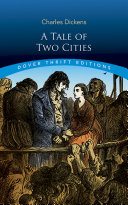
A Tale of Two Cities
A Tale of Two Cities by Charles Dickens (1859)
"It was the best of times, it was the worst of times" — the most famous opening line in English literature. Set against the French Revolution, this is Dickens' most dramatic and emotionally devastating novel, culminating in one of literature's greatest acts of self-sacrifice.
Historical Significance:
Dickens serialized A Tale of Two Cities in his own weekly journal, All the Year Round, from April to November 1859. It was inspired by Thomas Carlyle's The French Revolution and by Dickens' involvement in amateur theatricals — particularly The Frozen Deep by Wilkie Collins, in which Dickens played a man who sacrifices his life for his rival in love.
With approximately 200 million copies sold, it is possibly the bestselling novel of all time. Sydney Carton's final words — "It is a far, far better thing that I do, than I have ever done; it is a far, far better rest that I go to than I have ever known" — are among the most quoted passages in English literature.
This public domain classic was originally published in 1859. Free to read and share.
Free
eBook
FREE
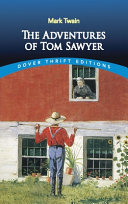
The Adventures of Tom Sawyer
The Adventures of Tom Sawyer by Mark Twain (1876)
The novel that captured American boyhood forever. Tom Sawyer, Huck Finn, Becky Thatcher, Injun Joe, and the whitewashed fence — set along the Mississippi River in the fictional town of St. Petersburg, Missouri.
Historical Significance:
Mark Twain drew directly from his own childhood in Hannibal, Missouri for this novel, published in 1876 — America's centennial year. Tom Sawyer was Twain's first solo novel and established him as more than a humorist: a literary artist capable of capturing the American experience. The famous fence-whitewashing scene, where Tom tricks his friends into doing his chore by pretending it's a privilege, has become a universal metaphor for persuasion and the psychology of desire.
Twain claimed "most of the adventures recorded in this book really occurred; one or two were experiences of my own, the rest those of boys who were schoolmates of mine." Tom was a composite of three real boys; Huck Finn was based on Tom Blankenship, the son of the town drunkard. The novel's cave scenes were inspired by the real Mark Twain Cave in Hannibal.
Cultural Impact:
Tom Sawyer has been translated into every major language, adapted into dozens of films, and remains one of the most-read American novels. "Tom Sawyer" has become shorthand for a mischievous but good-hearted boy. The novel spawned one of literature's greatest sequels — Adventures of Huckleberry Finn. The fence-whitewashing trick is studied in business schools as an example of reverse psychology marketing.
This public domain classic was originally published in 1876. Free to read and share.
Free

eBook
FREE
Metamorphosis
The Metamorphosis by Franz Kafka (1915)
"One morning, when Gregor Samsa woke from troubled dreams, he found himself transformed in his bed into a horrible vermin." — The most famous opening line in 20th-century literature. A traveling salesman becomes a giant insect and watches his family's love curdle into disgust.
Historical Significance:
Franz Kafka wrote Die Verwandlung (The Metamorphosis) in late 1912 in a burst of creative energy, completing it in about three weeks. It was published in the October 1915 issue of the literary magazine Die Weißen Blätter. Kafka, a German-speaking Jew living in Prague, worked as an insurance clerk — a soul-crushing job that informed the story's themes of alienation and dehumanization.
Kafka famously instructed his friend Max Brod to burn all his unpublished manuscripts after his death. Brod refused, preserving The Trial, The Castle, and Amerika for the world. Kafka died of tuberculosis in 1924 at age 40, having published very little during his lifetime.
The Metamorphosis defies simple interpretation. Is it about alienation in modern capitalism? The burden of family obligation? Anti-Semitism? Disability? Depression? Kafka himself offered no explanation, and the story's power lies precisely in its resistance to reduction.
Cultural Impact:
"Kafkaesque" has become an adjective in virtually every language, describing absurd, nightmarish bureaucratic situations. The Metamorphosis is the most widely read work of 20th-century German literature and is taught in universities worldwide. It influenced existentialist philosophy, the Theatre of the Absurd, and every writer who has explored alienation and identity — from Camus to Murakami. The image of Gregor Samsa as a beetle is one of literature's most haunting and unforgettable.
This public domain classic was originally published in 1915. Free to read and share.
Free

eBook
FREE
The Scarlet Letter
The Scarlet Letter by Nathaniel Hawthorne (1850)
Hester Prynne, forced to wear a scarlet "A" for adultery in Puritan Boston, endures public shame with quiet dignity while the father of her child hides in plain sight. A searing examination of sin, guilt, hypocrisy, and the American conscience.
Historical Significance:
Hawthorne wrote The Scarlet Letter in 1849 after losing his job at the Salem Custom House, channeling his frustration into a novel about his own Puritan ancestors. His great-great-grandfather John Hathorne was one of the judges in the Salem witch trials of 1692 — a source of deep ancestral guilt that pervades the novel.
Published on March 16, 1850, it was an immediate bestseller, with the first edition of 2,500 copies selling out in ten days. Critics recognized its power immediately, though some condemned its sympathetic portrayal of an adulteress.
The novel is set in the 1640s but speaks directly to 1850s America, where debates about women's rights, religious hypocrisy, and individual freedom versus community judgment were intensifying. Hester Prynne's transformation of the scarlet letter from a mark of shame into a symbol of strength was revolutionary.
Cultural Impact:
The Scarlet Letter is one of the most-read American novels and a staple of high school and college curricula. The scarlet letter "A" has become a universal symbol of public shaming and societal judgment. The novel anticipated modern discussions about cancel culture, public confession, and the relationship between private sin and public morality. Demi Moore's 1995 film and numerous other adaptations have kept the story in popular culture.
This public domain classic was originally published in 1850. Free to read and share.
Free

eBook
FREE
Heart of Darkness
Heart of Darkness by Joseph Conrad (1899)
"The horror! The horror!" — A haunting journey up the Congo River into the heart of European colonialism's darkest impulses. One of the most powerful and controversial novellas in English literature.
Historical Significance:
Joseph Conrad, born Józef Teodor Konrad Korzeniowski in Poland, drew on his own 1890 experience commanding a steamboat on the Congo River for Belgium's King Leopold II. What he witnessed — the systematic brutalization and enslavement of Congolese people in the rubber trade — traumatized him and fueled this devastating novella.
Serialized in Blackwood's Magazine in 1899, Heart of Darkness follows the narrator Marlow as he travels deeper into the Congo to find the enigmatic ivory trader Kurtz, who has abandoned civilization's pretenses and become a brutal tyrant worshipped as a god.
Conrad's genius was to frame the story as a critique of imperialism while also exploring the universal human capacity for evil. The "darkness" is not Africa — it is the darkness within European civilization itself.
Cultural Impact:
Heart of Darkness directly inspired Francis Ford Coppola's Apocalypse Now (1979), transposing the story to the Vietnam War. It is one of the most taught novellas in English literature, though it has also been criticized — notably by Chinua Achebe — for its portrayal of Africans. This ongoing debate makes it one of the most important texts for understanding colonialism, racism, and the responsibilities of literature.
This public domain classic was originally published in 1899. Free to read and share.
Free

eBook
FREE
The Time Machine
The Time Machine by H.G. Wells (1895)
The novella that invented time travel as a science fiction concept. A Victorian scientist journeys to the year 802,701 AD and discovers humanity has evolved into two species: the childlike Eloi and the predatory Morlocks.
Historical Significance:
H.G. Wells published The Time Machine as his first novel in 1895, at age 28. It originated as an 1888 essay called "The Chronic Argonauts" and went through several revisions. Wells, a biology student of T.H. Huxley (Darwin's most famous advocate), used the story to explore the implications of evolution and class division taken to their logical extreme.
The Eloi — beautiful, idle, and helpless — represent the upper class, while the Morlocks — underground, industrial, and cannibalistic — represent the working class. Wells, a committed socialist, was warning that Victorian class divisions could literally evolve humanity into separate species.
The concept of a "time machine" — a device that moves through time as a vehicle moves through space — was Wells' invention. The idea that time is a "fourth dimension" was cutting-edge physics at the time, drawing on the work of mathematician Charles Howard Hinton.
Cultural Impact:
The Time Machine created the entire time travel genre. Every subsequent time travel story — from Doctor Who to Back to the Future to Interstellar — owes a debt to Wells. The novel has been adapted into numerous films (1960, 2002) and inspired the naming of the DeLorean time machine. The terms "time machine," "time travel," and "fourth dimension" entered everyday language through this book.
This public domain classic was originally published in 1895. Free to read and share.
Free

eBook
FREE
The War of the Worlds
The War of the Worlds by H.G. Wells (1898)
The first and greatest alien invasion novel. Martian war machines stride across the English countryside on metal legs, annihilating everything in their path with heat rays and poisonous black smoke. Humanity faces extinction.
Historical Significance:
H.G. Wells serialized The War of the Worlds in Pearson's Magazine from April to December 1897. The novel was partly inspired by the British colonization of Tasmania, where indigenous peoples were nearly wiped out by technologically superior invaders. Wells asked: what if it happened to us?
Wells wrote the novel during a period of intense speculation about life on Mars, following astronomer Giovanni Schiaparelli's 1877 observation of "canali" (channels) on the Martian surface, which English speakers mistranslated as "canals" — implying intelligent construction.
The novel's most famous moment comes not from the book itself but from Orson Welles' 1938 radio adaptation, broadcast as realistic news bulletins on Halloween night. Listeners who tuned in late believed Martians had actually invaded New Jersey, causing widespread panic — one of the most famous media events of the 20th century.
Cultural Impact:
The War of the Worlds established virtually every trope of the alien invasion genre: superior technology, desperate resistance, unexpected resolution, and the critique of human arrogance. Steven Spielberg's 2005 film, Jeff Wayne's musical version (1978), and countless other adaptations have kept the story alive. The "tripod" war machine is an iconic image of science fiction.
This public domain classic was originally published in 1898. Free to read and share.
Free
eBook
FREE
Anne of Green Gables
Anne of Green Gables by L.M. Montgomery (1908)
The irrepressible, imaginative, red-haired orphan Anne Shirley arrives at Green Gables on Prince Edward Island and transforms every life she touches. One of the most beloved characters in children's literature.
Historical Significance:
Lucy Maud Montgomery drew on her own childhood in Cavendish, Prince Edward Island, to create Anne's world. She began writing the novel in 1905 after finding a notebook entry about "a couple who applied to an orphan asylum for a boy. By mistake a girl was sent them." The manuscript was rejected by five publishers before L.C. Page & Company of Boston accepted it.
Published in June 1908, Anne of Green Gables was an immediate bestseller. Mark Twain called Anne "the dearest child of fiction since the immortal Alice." Montgomery went on to write seven more Anne books, following the character from childhood through marriage and motherhood.
Montgomery's own life was far less idyllic than Anne's. She was raised by strict grandparents after her mother's death, endured a difficult marriage to a minister suffering from depression, and struggled with her own mental health while maintaining the public persona of a cheerful author.
Cultural Impact:
Anne of Green Gables has sold over 50 million copies and been translated into 36 languages. It is a cultural phenomenon in Japan, where it has been beloved since a 1952 translation — Japanese tourists make up a significant portion of visitors to Prince Edward Island. The 1985 CBC television film and Netflix's Anne with an E brought the character to new generations. Anne Shirley remains a powerful symbol of female independence, imagination, and resilience.
This public domain classic was originally published in 1908. Free to read and share.
Free

eBook
FREE
The Jungle Book
The Jungle Book by Rudyard Kipling (1894)
Mowgli, Baloo, Bagheera, Shere Khan, and Kaa — the timeless stories of a boy raised by wolves in the jungles of India, learning the Law of the Jungle and finding his place between two worlds.
Historical Significance:
Rudyard Kipling wrote The Jungle Book in 1893-1894 while living in Brattleboro, Vermont, with his American wife Carrie. He was already the most famous writer in the English-speaking world, and these stories cemented his reputation as a master storyteller.
Born in Bombay (now Mumbai) in 1865, Kipling spent his early childhood in India before being sent to England for education — an experience of abandonment and cruelty he never forgot. The Jungle Book reflects his deep love for India and his understanding of the complex relationship between civilization and nature.
The Mowgli stories are set in the Seoni hills of central India, and Kipling researched Indian wildlife extensively, consulting Robert Armitage Sterndale's "Natural History of the Mammalia of India." The non-Mowgli stories ("Rikki-Tikki-Tavi," "Toomai of the Elephants," "The White Seal") are equally beloved.
In 1907, Kipling became the first English-language writer to receive the Nobel Prize in Literature.
Cultural Impact:
Disney's animated adaptation (1967) with its beloved songs became one of the most popular animated films ever made. The 2016 live-action/CGI remake grossed nearly $1 billion worldwide. The Cub Scouts movement adopted Jungle Book terminology (Akela, den, pack). Kipling's "Law of the Jungle" — "the strength of the pack is the wolf, and the strength of the wolf is the pack" — is quoted in contexts from business to military.
This public domain classic was originally published in 1894. Free to read and share.
Free

eBook
FREE
Treasure Island
Treasure Island by Robert Louis Stevenson (1883)
The ultimate pirate adventure. Young Jim Hawkins, Long John Silver, buried treasure, the Black Spot, and "fifteen men on a dead man's chest" — Stevenson created every pirate trope we know.
Historical Significance:
Stevenson began the story in the summer of 1881 while on holiday in Braemar, Scotland, drawing a watercolor treasure map with his stepson Lloyd Osbourne. The map inspired the story, which was serialized as "The Sea Cook" in the children's magazine Young Folks from October 1881 to January 1882.
Published as a book in 1883, Treasure Island was the novel that made Stevenson famous. He drew on Daniel Defoe's Robinson Crusoe, Washington Irving's tales, and Edgar Allan Poe's "The Gold-Bug," but synthesized them into something entirely new — the modern adventure novel.
Long John Silver, the charming one-legged pirate cook, is one of literature's greatest morally ambiguous characters. Stevenson based him partly on his friend W.E. Henley (author of "Invictus"), who had lost a leg to tuberculosis.
Cultural Impact:
Treasure Island invented the popular image of pirates: buried treasure with X marks the spot, treasure maps, one-legged pirates with parrots, the Black Spot death curse, and the skull-and-crossbones flag. Before Stevenson, pirates in literature were straightforward villains. Every pirate film, book, and theme park attraction owes a debt to this novel. Disney's Pirates of the Caribbean franchise draws directly from Stevenson's template.
This public domain classic was originally published in 1883. Free to read and share.
Free
No classics match your filters.