New eBooks
0 booksNo eBooks Yet
Be the first to publish an eBook on BoingyBooks!
🎓 Your Free Digital Library Awaits
Access 232+ classic ebooks — from Shakespeare to Sherlock Holmes. Read on any device, save your progress, build your library.
Create Free Account →Classic Literature
6 free classicsTimeless works from the public domain, beautifully formatted for the BoingyBooks reader.

eBook
FREE
The Second Jungle Book
The Second Jungle Book by Rudyard Kipling
Five Mowgli stories continue his life in the jungle: How Fear Came, Letting in the Jungle, The King's Ankus, Red Dog and The Spring Running.
Three other stories complete the collection: The Miracle of Purun Bhagat, The Undertakers and Quiquern. Each story is accompanied by poetry.
This is the eight-story sequel to The Jungle Book, not a collection containing five additional non-Mowgli tales.
Retained text source: Project Gutenberg ebook 1937.
Free

eBook
FREE
Black Beauty
Black Beauty by Anna Sewell (1877)
The autobiography of a horse. From a happy colt in an English meadow through years of varying treatment — kindness and cruelty, wealth and poverty — Black Beauty's story changed how the world treats animals.
Historical Significance:
Anna Sewell wrote Black Beauty as her first and only novel while bedridden with a debilitating illness. She dictated portions to her mother, completing it in 1877. She sold it to the publisher Jarrolds for £20 and died five months after publication, never knowing that her book would become one of the bestselling novels of all time (over 50 million copies).
The novel was written specifically to promote the humane treatment of horses. It directly influenced the abolition of the bearing rein (a device that forced horses' heads into uncomfortable positions) and supported the growing animal welfare movement. The RSPCA and American Humane Association used it as advocacy literature. It is credited as the book that changed humanity's relationship with animals.
This public domain classic was originally published in 1877. Free to read and share.
Free
eBook
FREE
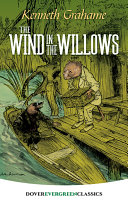
The Wind in the Willows
The Wind in the Willows by Kenneth Grahame (1908)
Mole, Ratty, Badger, and the irrepressible Toad of Toad Hall — a gentle pastoral tale of friendship, adventure, and the English countryside. One of the most cherished children's books in the English language.
Historical Significance:
Kenneth Grahame, Secretary of the Bank of England, began the stories as bedtime tales and letters for his son Alastair ("Mouse"). Published in 1908, the book received mixed reviews — critics expected something different from the author of The Golden Age. But readers loved it, and it gradually became a classic. A.A. Milne's 1929 stage adaptation, Toad of Toad Hall, introduced the story to millions. President Theodore Roosevelt wrote Grahame a fan letter saying he had "read it and reread it, and have come to accept the characters as old friends."
This public domain classic was originally published in 1908. Free to read and share.
Free
eBook
FREE
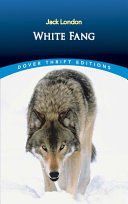
White Fang
White Fang by Jack London (1906)
The companion novel to The Call of the Wild, told in reverse: a wild wolf-dog hybrid is gradually domesticated. Where Buck journeys from civilization to wilderness, White Fang journeys from wilderness to civilization. London's meditation on nature versus nurture.
Historical Significance:
London intended White Fang as "a companion book to The Call of the Wild — the reverse process, the evolution and domestication of an animal." Serialized in the magazine Outing from May to October 1906, it explored whether love and kindness could overcome a lifetime of brutality — a question London, who had survived a desperate childhood of poverty and abuse, knew intimately. The novel has been adapted into multiple films and remains one of the most popular animal stories ever written.
This public domain classic was originally published in 1906. Free to read and share.
Free
eBook
FREE
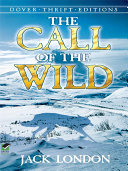
The Call of the Wild
The Call of the Wild by Jack London (1903)
Buck, a domesticated dog stolen from a California estate and sold into the Yukon gold rush as a sled dog, gradually sheds civilization and answers the primal call of the wild. A brutal, beautiful novella about survival and the animal nature within us all.
Historical Significance:
Jack London wrote The Call of the Wild in just 30 days in 1903, drawing on his own experience in the Klondike Gold Rush of 1897-98. Published first in the Saturday Evening Post, it was an immediate sensation. London sold the book rights for just $2,000 — he later called it the worst business decision of his life, as the novel became one of the bestselling American books of the 20th century. At age 27, London became the highest-paid author in America. The novel is credited with helping establish the Yukon as a mythic landscape in American imagination.
This public domain classic was originally published in 1903. Free to read and share.
Free

eBook
FREE
The Jungle Book
The Jungle Book by Rudyard Kipling (1894)
Mowgli, Baloo, Bagheera, Shere Khan, and Kaa — the timeless stories of a boy raised by wolves in the jungles of India, learning the Law of the Jungle and finding his place between two worlds.
Historical Significance:
Rudyard Kipling wrote The Jungle Book in 1893-1894 while living in Brattleboro, Vermont, with his American wife Carrie. He was already the most famous writer in the English-speaking world, and these stories cemented his reputation as a master storyteller.
Born in Bombay (now Mumbai) in 1865, Kipling spent his early childhood in India before being sent to England for education — an experience of abandonment and cruelty he never forgot. The Jungle Book reflects his deep love for India and his understanding of the complex relationship between civilization and nature.
The Mowgli stories are set in the Seoni hills of central India, and Kipling researched Indian wildlife extensively, consulting Robert Armitage Sterndale's "Natural History of the Mammalia of India." The non-Mowgli stories ("Rikki-Tikki-Tavi," "Toomai of the Elephants," "The White Seal") are equally beloved.
In 1907, Kipling became the first English-language writer to receive the Nobel Prize in Literature.
Cultural Impact:
Disney's animated adaptation (1967) with its beloved songs became one of the most popular animated films ever made. The 2016 live-action/CGI remake grossed nearly $1 billion worldwide. The Cub Scouts movement adopted Jungle Book terminology (Akela, den, pack). Kipling's "Law of the Jungle" — "the strength of the pack is the wolf, and the strength of the wolf is the pack" — is quoted in contexts from business to military.
This public domain classic was originally published in 1894. Free to read and share.
Free
No classics match your filters.