New eBooks
0 booksNo eBooks Yet
Be the first to publish an eBook on BoingyBooks!
🎓 Your Free Digital Library Awaits
Access 232+ classic ebooks — from Shakespeare to Sherlock Holmes. Read on any device, save your progress, build your library.
Create Free Account →Classic Literature
4 free classicsTimeless works from the public domain, beautifully formatted for the BoingyBooks reader.
eBook
FREE
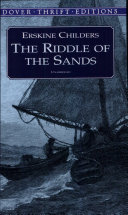
The Riddle of the Sands
The Riddle of the Sands by Erskine Childers (1903)
Two young Englishmen on a sailing holiday in the Frisian Islands stumble upon a German plot to invade England. The first modern spy novel — written as a warning that became terrifyingly prophetic.
Historical Significance:
Erskine Childers, an Anglo-Irish civil servant and expert sailor, published The Riddle of the Sands in 1903 to alert Britain to the real threat of German naval expansion. The novel's detailed descriptions of North Sea sailing, tidal navigation, and coastal geography were so accurate that the German government believed it was based on actual intelligence. The book influenced the British Admiralty to establish naval bases at Scapa Flow and Rosyth. Childers himself went on to become an Irish Republican revolutionary and was executed by the Irish Free State in 1922. His dying words to the firing squad were: "Take a step or two forwards, lads. It will be easier that way."
This public domain classic was originally published in 1903. Free to read and share.
Free
eBook
FREE
Greenmantle
Greenmantle by John Buchan (1916)
Richard Hannay is sent behind enemy lines during World War I to investigate a German plot to use Islamic jihad to destabilize the British Empire. A thrilling spy adventure across wartime Europe to Constantinople.
Historical Significance:
The sequel to The Thirty-Nine Steps, published in 1916 during World War I, Greenmantle was remarkably prescient about the strategic importance of the Middle East and the potential weaponization of religious fervor. Buchan, who worked in British military intelligence, based the plot on real German attempts to foment an Islamic uprising against Britain. The novel introduced the villain Doktor von Doorn and the memorable American character John S. Blenkiron. It remains one of the finest World War I adventure novels and a landmark of the spy thriller genre.
This public domain classic was originally published in 1916. Free to read and share.
Free
eBook
FREE
The Secret Agent
The Secret Agent by Joseph Conrad (1907)
A seedy London shop owner who is secretly an anarchist agent provocateur is ordered to bomb the Greenwich Observatory. Conrad's darkest novel — a proto-thriller about terrorism, surveillance, and the corruption that links governments and the criminals they fight.
Historical Significance:
Based on the real 1894 Greenwich bombing, The Secret Agent was published in 1907 and is widely considered the first modern political thriller. Conrad's London is a city of fog, paranoia, and moral ambiguity where the line between law enforcement and criminality has dissolved. Alfred Hitchcock's Sabotage (1936) was based on the novel. In the post-9/11 era, the book's themes — state surveillance, manufactured terrorism, the banality of political violence — have made it more relevant than ever.
This public domain classic was originally published in 1907. Free to read and share.
Free
eBook
FREE
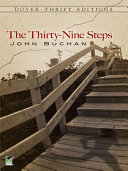
The Thirty-Nine Steps
The Thirty-Nine Steps by John Buchan (1915)
Richard Hannay, a bored mining engineer, stumbles into an international espionage conspiracy and must flee across the Scottish Highlands with both the police and enemy agents on his trail. The novel that invented the modern spy thriller.
Historical Significance:
John Buchan, a Scottish politician and future Governor-General of Canada, wrote The Thirty-Nine Steps in 1915 while recovering from illness during World War I. The novel created the "man on the run" thriller template: an innocent man is framed, pursues the real villains while being pursued himself, and must solve the mystery to clear his name. Alfred Hitchcock's 1935 film adaptation is one of his greatest works. Every spy thriller from James Bond to Jason Bourne follows the structural template Buchan established.
This public domain classic was originally published in 1915. Free to read and share.
Free
No classics match your filters.