New eBooks
0 booksNo eBooks Yet
Be the first to publish an eBook on BoingyBooks!
🎓 Your Free Digital Library Awaits
Access 232+ classic ebooks — from Shakespeare to Sherlock Holmes. Read on any device, save your progress, build your library.
Create Free Account →Classic Literature
18 free classicsTimeless works from the public domain, beautifully formatted for the BoingyBooks reader.
eBook
FREE
The Last Man
The Last Man by Mary Shelley (1826)
A devastating plague sweeps across the world in the late 21st century, reducing humanity to a single survivor who wanders the empty ruins of civilization. The first apocalyptic novel — by the author of Frankenstein.
Historical Significance:
Mary Shelley published The Last Man in 1826, eight years after Frankenstein and four years after her husband Percy Bysshe Shelley's death by drowning. The novel is deeply personal — its characters are thinly veiled portraits of Percy Shelley, Lord Byron, and their circle, and the plague that destroys the world mirrors the deaths that devastated Mary's own life (she lost her husband, three of her four children, and several close friends in quick succession).
The novel was savaged by critics and largely forgotten for 150 years. Its rediscovery in the 1960s revealed it as astonishingly prophetic — the first novel to imagine a global pandemic destroying civilization, predating every subsequent apocalyptic narrative from The Stand to The Road to Station Eleven. It is now recognized as Mary Shelley's second masterpiece and the founding text of apocalyptic fiction.
This public domain classic was originally published in 1826. Free to read and share.
Free

eBook
FREE
At the Earth's Core
At the Earth's Core by Edgar Rice Burroughs (1914)
David Innes and inventor Abner Perry drill through the Earth's crust in a mechanical "iron mole" and discover Pellucidar — a savage prehistoric world inside the hollow Earth, lit by a central sun, where humans are enslaved by telepathic reptiles.
Historical Significance:
Published in 1914, At the Earth's Core launched Burroughs' Pellucidar series — seven novels set inside a hollow Earth populated by dinosaurs, cavemen, and bizarre creatures. The hollow Earth theory was still taken semi-seriously in the early 20th century, and Burroughs exploited it brilliantly. The novel's influence extends to every "lost world" and "journey to the center of the earth" story that followed. The 1976 film starred Peter Cushing and Doug McClure.
This public domain classic was originally published in 1914. Free to read and share.
Free

eBook
FREE
The Warlord of Mars
The Warlord of Mars by Edgar Rice Burroughs (1914)
John Carter pursues the villains who have kidnapped his wife Dejah Thoris across the entire planet of Barsoom — from the equatorial seas to the frozen north pole. The climactic third volume of the original Mars trilogy.
Historical Significance:
Serialized in 1913-14, The Warlord of Mars completes Carter's rise from stranger to supreme ruler of Mars. Burroughs' breakneck pacing — the novel is essentially one long chase sequence — set the standard for pulp adventure fiction. The trilogy's arc, from bewildered outsider to planetary champion, established the template for the "chosen one" narrative that dominates modern fantasy and science fiction from Luke Skywalker to Harry Potter.
This public domain classic was originally published in 1914. Free to read and share.
Free
eBook
FREE
The Gods of Mars
The Gods of Mars by Edgar Rice Burroughs (1913)
John Carter returns to Barsoom (Mars) and discovers that the planet's religion is a fraud maintained by a race of false gods who feed on the faithful. A thrilling sequel that demolishes organized religion with adventure-fiction panache.
Historical Significance:
Serialized in 1913, The Gods of Mars continues the Barsoom saga with Carter descending into the Valley Dor — Mars' promised paradise — only to find it a death trap. Burroughs' attack on religious hypocrisy was bold for 1913. The novel introduced Thuvia of Ptarth and expanded the Martian world with new races, landscapes, and political intrigue. The Barsoom series' influence on science fiction — from Flash Gordon to Star Wars to Avatar — makes these among the most consequential adventure novels ever written.
This public domain classic was originally published in 1913. Free to read and share.
Free
eBook
FREE
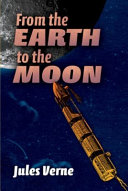
From the Earth to the Moon
From the Earth to the Moon by Jules Verne (1865)
After the Civil War, the Baltimore Gun Club decides to fire a projectile at the Moon — and three men volunteer to ride inside it. Verne's remarkably prophetic novel predicted the Apollo program with uncanny accuracy.
Historical Significance:
Published in 1865, Verne's novel predicted: the launch site in Florida (near Cape Canaveral), a crew of three Americans, the use of a cannon-like launch system, weightlessness in space, a splashdown in the Pacific, and the cost approximately matching NASA's Apollo budget (adjusted for inflation). NASA's actual trajectory to the Moon was almost identical to Verne's fictional one. The novel, written 104 years before Apollo 11, is the most prophetic work of science fiction ever written. Georges Méliès' 1902 film A Trip to the Moon was based partly on this novel.
This public domain classic was originally published in 1865. Free to read and share.
Free

eBook
FREE
The Mysterious Island
The Mysterious Island by Jules Verne (1875)
Five American prisoners of war escape by balloon during the Civil War and are stranded on an uncharted Pacific island, where they must use science and ingenuity to survive — aided by a mysterious, unseen benefactor.
Historical Significance:
Published in 1875, The Mysterious Island is Verne's longest and most scientifically detailed novel — a Robinson Crusoe for the industrial age, where the castaways literally reinvent civilization from scratch using chemistry, engineering, and natural resources. The novel connects to Verne's larger universe: the mysterious benefactor is revealed to be Captain Nemo from Twenty Thousand Leagues Under the Seas, now old and dying. It is Verne's most optimistic work, celebrating human intelligence and the power of applied science to overcome any obstacle.
This public domain classic was originally published in 1875. Free to read and share.
Free

eBook
FREE
The First Men in the Moon
The First Men in the Moon by H.G. Wells (1901)
An eccentric scientist invents "Cavorite," a substance that blocks gravity, and travels to the Moon with a bankrupt businessman. They discover an underground civilization of insect-like Selenites organized into a rigid caste system.
Historical Significance:
Published in 1901 — 68 years before the actual Moon landing — Wells created a lunar journey that is both thrilling adventure and social satire. The Selenite society, where every individual is physically shaped from birth for their specific role, is a dark critique of specialization and social engineering. Wells' anti-gravity substance was scientifically implausible but narratively brilliant. Ray Harryhausen's 1964 film adaptation featured his celebrated stop-motion effects. When Apollo 11 astronauts walked on the Moon in 1969, they acknowledged Wells' imaginative precedent.
This public domain classic was originally published in 1901. Free to read and share.
Free
eBook
FREE
The Food of the Gods
The Food of the Gods and How It Came to Earth by H.G. Wells (1904)
Two scientists create a substance that causes everything that eats it to grow to enormous size — insects, plants, animals, and eventually children. As the giant children grow up, they clash with a fearful humanity that wants to destroy them.
Historical Significance:
Published in 1904, The Food of the Gods is Wells at his most allegorical. The giant children represent the next stage of human evolution — superior, visionary, and despised by the ordinary-sized people who fear change. Wells was exploring themes that obsessed him throughout his career: the conflict between progress and conservatism, the fear of the new, and the question of whether humanity will embrace or destroy its own future. The novel influenced countless giant-monster stories and remains a powerful metaphor for generational conflict.
This public domain classic was originally published in 1904. Free to read and share.
Free
eBook
FREE
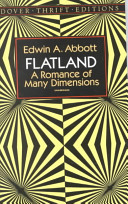
Flatland: A Romance of Many Dimensions
Flatland: A Romance of Many Dimensions by Edwin A. Abbott (1884)
A square living in a two-dimensional world is visited by a sphere from the third dimension, shattering everything he thought he knew about reality. A mathematical satire that is also a sharp social commentary on Victorian class and gender hierarchies.
Historical Significance:
Edwin Abbott Abbott, a schoolmaster and theologian, published Flatland in 1884 under the pseudonym "A Square." The novella uses dimensional analogy to explain higher mathematics: just as a two-dimensional being cannot comprehend three dimensions, perhaps we three-dimensional beings cannot perceive the fourth dimension. The book was largely forgotten until physicists and mathematicians rediscovered it in the 20th century.
Flatland is now beloved by STEM readers, taught in mathematics and physics courses worldwide, and cited in discussions of string theory and extra dimensions. Carl Sagan devoted a segment of his Cosmos TV series to explaining Flatland. It is also a cutting satire of Victorian social rigidity — women are mere lines, the working class are triangles, and priests are circles.
This public domain classic was originally published in 1884. Free to read and share.
Free
eBook
FREE
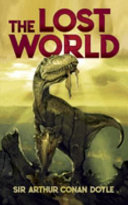
The Lost World
The Lost World by Arthur Conan Doyle (1912)
Professor Challenger leads an expedition to a South American plateau where dinosaurs still live. The original "lost world" adventure — the book that put dinosaurs into popular culture and directly inspired Jurassic Park.
Historical Significance:
Arthur Conan Doyle, seeking an escape from Sherlock Holmes, created the bombastic, brilliant Professor Challenger as a new hero. Published in 1912, The Lost World tapped into real excitement about paleontology — major dinosaur discoveries were being made in the American West and Argentina. Doyle promoted the book with an elaborate hoax, presenting doctored photographs of himself in "prehistoric" settings.
The novel established the template that Michael Crichton would follow 78 years later with Jurassic Park: scientists discover living dinosaurs in a remote location, with terrifying consequences. Every "lost world" story since — from King Kong to Jurassic World — follows the path Doyle blazed.
This public domain classic was originally published in 1912. Free to read and share.
Free
eBook
FREE
A Princess of Mars
A Princess of Mars by Edgar Rice Burroughs (1912)
Civil War veteran John Carter is mysteriously transported to Mars (Barsoom), where he discovers a dying planet of warring alien races, four-armed green warriors, and the beautiful princess Dejah Thoris. The novel that inspired Star Wars, Avatar, and modern science fiction.
Historical Significance:
Serialized as "Under the Moons of Mars" in All-Story Magazine in 1912 (the same year as Tarzan), A Princess of Mars created the "planetary romance" genre. George Lucas has cited it as a major influence on Star Wars — the desert planet, the warrior princess, the fish-out-of-water hero transplanted to an alien world. James Cameron's Avatar drew heavily on Barsoom's ecology and warrior cultures. Ray Bradbury, Arthur C. Clarke, and Carl Sagan all acknowledged Burroughs' influence on their love of space exploration. Disney's 2012 film adaptation John Carter, while a box office disappointment, introduced a new generation to Burroughs' imaginative world.
This public domain classic was originally published in 1912. Free to read and share.
Free
eBook
FREE
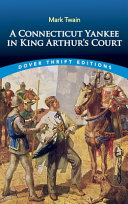
A Connecticut Yankee in King Arthur's Court
A Connecticut Yankee in King Arthur's Court by Mark Twain (1889)
A 19th-century American factory superintendent is knocked unconscious and wakes up in 6th-century Camelot, where he uses his modern knowledge to become "The Boss" — industrializing medieval England with guns, telephones, and democracy.
Historical Significance:
Twain's novel is simultaneously one of the earliest time travel stories, a savage satire of monarchy and aristocracy, and a prescient warning about the destructive power of technology. Published in 1889, it attacked the romanticization of the Middle Ages popularized by Tennyson's Idylls of the King. The novel's ending — where the Yankee's modern weapons massacre thousands of knights — is one of the darkest conclusions in American fiction, foreshadowing the industrialized slaughter of World War I by 25 years. Bing Crosby's 1949 musical film softened the story considerably.
This public domain classic was originally published in 1889. Free to read and share.
Free

eBook
FREE
The Island of Doctor Moreau
The Island of Doctor Moreau by H.G. Wells (1896)
A shipwrecked man discovers an island where a mad scientist surgically transforms animals into human-like beings. A horrifying exploration of vivisection, evolution, and the thin line between human and beast.
Historical Significance:
Published in 1896, one year after The Time Machine, The Island of Doctor Moreau caused a sensation for its graphic depictions of surgical experimentation. Wells wrote it during heated public debate over vivisection (animal experimentation), which was legal and widespread in Victorian England. The novel asks: if we can make animals human, what does that say about our own humanity? Dr. Moreau's creatures, chanting their "Laws" — "Are we not Men?" — are among the most disturbing images in science fiction. The novel has been adapted into three major films and influenced everything from Planet of the Apes to Jurassic Park.
This public domain classic was originally published in 1896. Free to read and share.
Free
eBook
FREE
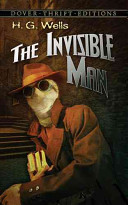
The Invisible Man
The Invisible Man by H.G. Wells (1897)
A scientist discovers the secret of invisibility — then discovers that being unseen drives him to madness and murder. A chilling exploration of power without accountability.
Historical Significance:
Published in 1897, the same year as The War of the Worlds, The Invisible Man cemented Wells' reputation as a master of scientific horror. Griffin, the invisible scientist, begins as a sympathetic figure — a brilliant man driven to extreme measures — but invisibility corrupts him absolutely. Wells was exploring a theme that would define the 20th century: what happens when technology outpaces morality? The 1933 Universal film starring Claude Rains was a landmark in special effects. The concept has been adapted into dozens of films, most recently Leigh Whannell's 2020 horror thriller.
This public domain classic was originally published in 1897. Free to read and share.
Free
eBook
FREE
Twenty Thousand Leagues Under the Seas
Twenty Thousand Leagues Under the Seas by Jules Verne (1870)
Captain Nemo and the submarine Nautilus — a visionary adventure beneath the world's oceans, written 90 years before nuclear submarines made Verne's fiction reality.
Historical Significance:
Verne published Vingt mille lieues sous les mers in 1870, predicting submarines, scuba diving, electric propulsion, and underwater exploration with remarkable accuracy. Captain Nemo — whose name means "No One" in Latin — is a complex anti-hero: a brilliant scientist waging war against imperialism from beneath the waves. Verne based some of Nemo's characteristics on real engineers and rebels of his era. The novel established Verne as the "Father of Science Fiction" alongside H.G. Wells. Disney's 1954 film starring James Mason as Nemo won two Academy Awards and remains a classic.
This public domain classic was originally published in 1870. Free to read and share.
Free

eBook
FREE
The Time Machine
The Time Machine by H.G. Wells (1895)
The novella that invented time travel as a science fiction concept. A Victorian scientist journeys to the year 802,701 AD and discovers humanity has evolved into two species: the childlike Eloi and the predatory Morlocks.
Historical Significance:
H.G. Wells published The Time Machine as his first novel in 1895, at age 28. It originated as an 1888 essay called "The Chronic Argonauts" and went through several revisions. Wells, a biology student of T.H. Huxley (Darwin's most famous advocate), used the story to explore the implications of evolution and class division taken to their logical extreme.
The Eloi — beautiful, idle, and helpless — represent the upper class, while the Morlocks — underground, industrial, and cannibalistic — represent the working class. Wells, a committed socialist, was warning that Victorian class divisions could literally evolve humanity into separate species.
The concept of a "time machine" — a device that moves through time as a vehicle moves through space — was Wells' invention. The idea that time is a "fourth dimension" was cutting-edge physics at the time, drawing on the work of mathematician Charles Howard Hinton.
Cultural Impact:
The Time Machine created the entire time travel genre. Every subsequent time travel story — from Doctor Who to Back to the Future to Interstellar — owes a debt to Wells. The novel has been adapted into numerous films (1960, 2002) and inspired the naming of the DeLorean time machine. The terms "time machine," "time travel," and "fourth dimension" entered everyday language through this book.
This public domain classic was originally published in 1895. Free to read and share.
Free

eBook
FREE
The War of the Worlds
The War of the Worlds by H.G. Wells (1898)
The first and greatest alien invasion novel. Martian war machines stride across the English countryside on metal legs, annihilating everything in their path with heat rays and poisonous black smoke. Humanity faces extinction.
Historical Significance:
H.G. Wells serialized The War of the Worlds in Pearson's Magazine from April to December 1897. The novel was partly inspired by the British colonization of Tasmania, where indigenous peoples were nearly wiped out by technologically superior invaders. Wells asked: what if it happened to us?
Wells wrote the novel during a period of intense speculation about life on Mars, following astronomer Giovanni Schiaparelli's 1877 observation of "canali" (channels) on the Martian surface, which English speakers mistranslated as "canals" — implying intelligent construction.
The novel's most famous moment comes not from the book itself but from Orson Welles' 1938 radio adaptation, broadcast as realistic news bulletins on Halloween night. Listeners who tuned in late believed Martians had actually invaded New Jersey, causing widespread panic — one of the most famous media events of the 20th century.
Cultural Impact:
The War of the Worlds established virtually every trope of the alien invasion genre: superior technology, desperate resistance, unexpected resolution, and the critique of human arrogance. Steven Spielberg's 2005 film, Jeff Wayne's musical version (1978), and countless other adaptations have kept the story alive. The "tripod" war machine is an iconic image of science fiction.
This public domain classic was originally published in 1898. Free to read and share.
Free
eBook
FREE
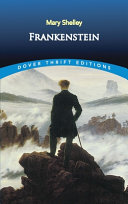
Frankenstein
Frankenstein; or, The Modern Prometheus by Mary Wollstonecraft Shelley (1818)
The most downloaded book on Project Gutenberg and one of the most influential novels ever written. Mary Shelley conceived this masterpiece at age 18 during the famous ghost story contest at the Villa Diodati on Lake Geneva in the summer of 1816, alongside Lord Byron and Percy Bysshe Shelley.
Historical Significance:
Frankenstein is widely considered the first true science fiction novel, predating the genre by decades. It was born from the "Year Without a Summer" (1816), when the eruption of Mount Tambora in Indonesia caused global climate disruption, trapping Shelley's literary circle indoors with nothing to do but tell ghost stories.
The novel explores themes that remain urgently relevant: the ethics of scientific creation, the responsibility of creators to their creations, the dangers of unchecked ambition, and the nature of humanity itself. Victor Frankenstein's unnamed creature — often mistakenly called "Frankenstein" — is one of literature's most tragic figures, rejected by his creator and society alike.
The 1818 first edition was published anonymously; many assumed Percy Shelley had written it. The 1831 revised edition, with Mary Shelley's name, is the version most commonly read today. This edition preserves the original 1818 text.
Cultural Impact:
The novel has been adapted into over 100 films, countless stage productions, and has become a cornerstone of Gothic literature. The word "Frankenstein" has entered everyday language as a metaphor for any creation that turns against its creator. It remains required reading in universities worldwide and consistently ranks among the top 10 most-read classic novels.
This public domain classic was originally published in 1818. Free to read and share.
Free
No classics match your filters.