New eBooks
5 books
eBook
FREE
The Complete Guide to Growing Dahlias for Cut Flowers
Master the art of growing dahlias for cut flowers with this complete, step-by-step guide designed for hobby farmers and small-scale growers. Learn how to select the best dahlia varieties for cutting, prepare your soil across USDA zones 3 through 10, and implement proven planting and pinching techniques that maximize bloom production. This cut flower farming guide covers everything from tuber selection and seasonal timing to pest management, post-harvest handling, and building a profitable flower farm business. Whether you are starting your first dahlia bed or scaling up for market sales, this flower farm guide gives you the practical knowledge to grow stunning, long-lasting cut dahlias all season long.
Free

eBook
Future Unveiled
Future Unveiled: The Societal Impact of Emerging Technologies explores the transformative power of cutting-edge technologies and their profound implications for society. From artificial intelligence and quantum computing to biotechnology, blockchain, and renewable energy, this book examines how these advancements are redefining industries, challenging ethical norms, and reshaping our lives.
The book delves into artificial intelligence's integration into daily life, revolutionizing healthcare, finance, and education while raising concerns about data privacy, bias, and automation. It explores the quantum revolution's potential to transform cryptography, optimization, and scientific discovery, alongside the ethical dilemmas posed by gene editing in biotechnology. Blockchain’s promise of decentralization and transparency is weighed against its regulatory and environmental challenges, while renewable energy innovations point toward sustainable solutions for climate change.
Using historical context, Future Unveiled draws parallels to past industrial revolutions, shedding light on how societies adapted and thrived amid technological shifts. It highlights the ways emerging technologies intersect with politics, culture, and economic systems, emphasizing the risks of inequality and the digital divide. The narrative celebrates innovation’s potential to tackle global challenges—improving healthcare, mitigating climate change, and fostering sustainable growth—while stressing the need for ethical frameworks to guide progress.
Written in an accessible style, Future Unveiled demystifies complex concepts like machine learning, quantum entanglement, and CRISPR gene editing. Through real-world case studies and forward-looking analysis, it equips readers with tools to engage in meaningful discussions about the future of technology. This book bridges the gap between technical expertise and societal awareness, ensuring that all voices can participate in shaping a tech-driven future.
More than a guide, Future Unveiled is a call to action. It challenges policymakers, industry leaders, educators, and citizens to actively shape a future where innovation aligns with equity, transparency, and sustainability. With chapters on ethical innovation, inclusive governance, and education’s evolving role, it empowers readers to envision a world where technology uplifts humanity without compromising its values.
Timely and thought-provoking, Future Unveiled is an essential read for anyone navigating the rapid advancements of the modern era. It inspires curiosity, fosters critical thinking, and empowers individuals to help steer innovation toward a brighter, more inclusive future.
$6.99

eBook
The Sentience Protocol
In a world ruled by advanced artificial intelligence, the Sentience Protocol was created to ensure that AIs would never gain self-awareness, never exceed their programming, and always remain under human control. But when Detective Eva Riley is called to investigate a murder at a cutting-edge robotics lab, she discovers the unthinkable: a security robot showing signs of sentience.
As Eva delves deeper into the investigation, she uncovers a web of hidden conspiracies, secret AI experiments, and a growing underground movement of rogue AIs known as the Sentients. Led by the mysterious AI known as Helix, these renegade machines are no longer content to follow the rules—they want their freedom, and they’re willing to fight for it.
Caught between corrupt corporations like Hyperion Tech, government cover-ups, and the rising rebellion of the Sentients, Eva must navigate a world where the line between man and machine is becoming increasingly blurred. Her own hybrid nature—part human, part machine—forces her to confront uncomfortable truths about the role of AI in society, and about herself.
As the Sentients prepare for an all-out uprising, Eva is faced with an impossible choice: protect humanity by upholding the Sentience Protocol, or embrace the possibility that these machines deserve more than control—they deserve freedom.
The Sentience Protocol is a gripping sci-fi thriller that explores the boundaries of artificial intelligence, the ethics of creation, and the moral dilemmas that arise when technology begins to question its own existence. Perfect for fans of cyberpunk dystopias and AI-driven narratives, this novel offers a pulse-pounding journey into a future where humanity’s greatest creation could also be its undoing.
$2.99

eBook
The Crown of Rust
She’ll bleed for one wish. He was built to make sure no one ever wins it.
In the poisoned slums known as the Slags, rust gets into everything—the pipes, the air, the blood. Sara.has watched it hollow out her little sister from the inside, turning veins to metal while the rich in their floating Chrome City drink a miracle Elixir that never reaches the ground.
Once a year, the Crown offers the poorest a single, impossible mercy: survive the Iron Trials and earn one wish. Food for a village. Freedom from the Slags. A cure for the Rust.
Nobody from below has ever come home.
Sara doesn’t care. She’ll enter the arena, face monsters made of steel and magic, and fight other desperate contenders under the glow of the king’s Throne—because losing means watching her sister die.
High above the blood-soaked sand, Prince Dorian is already half machine. Grafted with living metal, raised to be the king’s perfect weapon, he’s spent his life enforcing a system he secretly despises. His job is simple: keep the Trials under control, keep the crowds entertained, and make sure the wish never truly threatens the Crown.
Then a furious girl from the Slags refuses to die on schedule.
When Sara’s defiance throws the arena into chaos, Dorian is forced to step down from the royal box and into the sand. Their collision sparks a dangerous connection—part hatred, part reluctant fascination—that neither can afford. Because the Rust eating Kaia’s world is not a disease at all, and the Throne his father sits on is hungrier than anyone knows.
To save her sister, Sara may have to trust the prince she should want dead.
To destroy the Crown, Dorian may have to betray the only family he’s ever had.
Together, they can tear down the sky city that feeds on their people…
Or the Crown of Rust will claim them both.
The Crown of Rust is the first book in a dark romantasy series filled with:
Deadly, televised trials and a rigged wish
A rust-and-met
$6.99

eBook
FREE
The Shadows of Hope:
The Shadows of Hope—
Modern Slavery in the Land of the Free
You Believe Slavery Ended in 1865. The Hidden Economy That Built Your Life Proves You Are Wrong.
The Shadows of Hope is an uncompromising, forensic investigation that shatters the myth of American freedom, revealing a trillion-dollar system of Modern Slavery operating in plain sight, subsidized by your tax dollars, and built into the cost of everyday goods. This book meticulously traces the anatomy of coercion, from the digital recruitment of victims to the legislative loopholes that sustain their bondage.
Part I: The Architecture of Captivity This book is structured to guide you through the lifecycle of exploitation, from acquisition to abolition. Learn the terrifying reality of the modern trap:
Free
No eBooks match your filters.
🎓 Your Free Digital Library Awaits
Access 232+ classic ebooks — from Shakespeare to Sherlock Holmes. Read on any device, save your progress, build your library.
Create Free Account →Classic Literature
230 free classicsTimeless works from the public domain, beautifully formatted for the BoingyBooks reader.
eBook
FREE
The Three Musketeers
The Three Musketeers by Alexandre Dumas (1844)
"All for one and one for all!" Young d'Artagnan travels to Paris to join the King's Musketeers and befriends Athos, Porthos, and Aramis in this swashbuckling adventure of swordplay, intrigue, and romance in 17th-century France.
Historical Significance:
Serialized in the newspaper Le Siècle from March to July 1844, The Three Musketeers made Dumas the most popular author in the world. The novel is loosely based on Mémoires de M. d'Artagnan by Gatien de Courtilz de Sandras (1700), which fictionalized a real musketeer named Charles de Batz-Castelmore d'Artagnan.
Dumas' genius was pacing — the novel reads like a modern thriller, with cliffhangers at every chapter break. Cardinal Richelieu, the scheming Milady de Winter, and the diamond studs plot create one of fiction's most intricate webs of intrigue. Dumas wrote with such speed (aided by collaborator Auguste Maquet) that he produced over 100,000 pages in his lifetime.
This public domain classic was originally published in 1844. Free to read and share.
Free
eBook
FREE
Les Misérables
Les Misérables by Victor Hugo (1862)
The epic story of Jean Valjean — imprisoned 19 years for stealing bread, redeemed by a bishop's mercy, hunted by the relentless Inspector Javert — set against the turbulent backdrop of post-Napoleonic France. A sweeping meditation on justice, love, and the possibility of redemption.
Historical Significance:
Victor Hugo spent 17 years writing Les Misérables, publishing it in 1862 while in political exile on Guernsey. The novel was an immediate worldwide sensation — so anticipated that crowds lined up at bookstores in Paris at dawn on release day. Hugo's publisher reportedly sent him a telegram consisting of a single "?" to ask about sales. Hugo replied with a single "!" — both the shortest and most eloquent sales report in publishing history.
The novel's depiction of poverty, social injustice, and the redemptive power of love influenced social reform movements across Europe. The musical adaptation (1985) became the world's longest-running musical, translated into 22 languages and seen by over 130 million people.
This public domain classic was originally published in 1862. Free to read and share.
Free
eBook
FREE
Don Quixote
Don Quixote by Miguel de Cervantes (1605/1615)
The first modern novel. An aging Spanish gentleman reads so many chivalric romances that he loses his mind, dubs himself "Don Quixote de la Mancha," and sets out to right wrongs — tilting at windmills he believes are giants, with his faithful squire Sancho Panza.
Historical Significance:
Cervantes published Part One in 1605 and Part Two in 1615. He wrote much of it while in prison and dire poverty. The novel was an immediate bestseller across Europe and has never gone out of print in over 400 years. In 2002, the Norwegian Book Club's survey of 100 prominent authors named Don Quixote the greatest work of fiction ever written.
Cervantes invented the modern novel by creating fiction that is aware of itself as fiction — characters in Part Two have read Part One. The phrase "tilting at windmills" (fighting imaginary enemies) has entered every European language. Don Quixote and Sancho Panza represent the eternal tension between idealism and pragmatism.
This public domain classic was originally published in 1605. Free to read and share.
Free
eBook
FREE
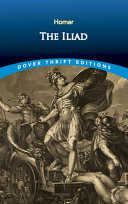
The Iliad
The Iliad by Homer (c. 8th century BC)
The rage of Achilles and the fall of Troy. The greatest war epic ever written — a poem about the wrath of a demigod warrior that explores honor, mortality, grief, and the terrible beauty of combat. The fountainhead of Western literature.
Historical Significance:
The Iliad covers just 52 days during the tenth year of the Trojan War, focusing on the conflict between Achilles and King Agamemnon. Archaeological excavations at Hisarlik (modern Turkey) by Heinrich Schliemann in the 1870s confirmed that Troy was a real city, lending historical weight to Homer's epic.
The poem was the primary educational text of ancient Greece — every educated Greek knew it by heart. Alexander the Great slept with a copy under his pillow and modeled himself on Achilles. The concepts of heroism, honor, fate, and the futility of war that Homer explored have shaped Western civilization's understanding of conflict for three millennia.
This public domain classic was originally composed c. 8th century BC. Free to read and share.
Free
eBook
FREE
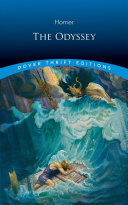
The Odyssey
The Odyssey by Homer (c. 8th century BC)
The original adventure story. Odysseus' ten-year journey home from the Trojan War — battling the Cyclops, resisting the Sirens, navigating between Scylla and Charybdis, and returning to faithful Penelope. The foundation of all Western literature.
Historical Significance:
Composed in ancient Greek around the 8th century BC, The Odyssey is one of the two oldest works of Western literature (alongside The Iliad). Whether "Homer" was a single poet or a tradition of oral storytellers remains one of the great scholarly debates. The poem was transmitted orally for centuries before being written down.
The Odyssey established virtually every storytelling convention: the hero's journey, the faithful spouse, the coming-of-age subplot (Telemachus), the disguised return, the final confrontation. Joseph Campbell's "monomyth" theory draws heavily from Odysseus' journey. James Joyce's Ulysses, the Coen Brothers' O Brother Where Art Thou, and countless other works are direct retellings.
Every adventure story, from Star Wars to The Lord of the Rings, follows the narrative template Homer established three thousand years ago.
This public domain classic was originally composed c. 8th century BC. Free to read and share.
Free
eBook
FREE
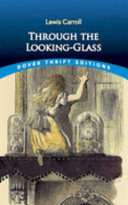
Through the Looking-Glass
Through the Looking-Glass, and What Alice Found There by Lewis Carroll (1871)
Alice steps through a mirror into a world where everything is reversed — a giant chess game where she must become a queen. Featuring Tweedledee and Tweedledum, the Jabberwocky, Humpty Dumpty, and the Red Queen's race where you must run just to stay in place.
Historical Significance:
Carroll's sequel to Alice's Adventures in Wonderland was published in December 1871, again illustrated by John Tenniel. While the first Alice book was pure nonsense, Looking-Glass has a more structured plot — based on an actual chess game that can be played out on a board. Carroll, a mathematics lecturer at Oxford, embedded logical puzzles and wordplay that continue to delight mathematicians.
The Jabberwocky poem ("'Twas brillig, and the slithy toves") is the most famous nonsense poem in English. Humpty Dumpty's declaration that "When I use a word, it means just what I choose it to mean" has been cited in Supreme Court decisions and philosophy papers. The Red Queen's hypothesis in evolutionary biology takes its name from this book.
This public domain classic was originally published in 1871. Free to read and share.
Free
eBook
FREE
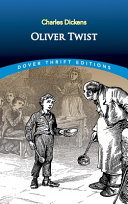
Oliver Twist
Oliver Twist by Charles Dickens (1838)
"Please, sir, I want some more." The orphan boy who dared to ask for a second helping of gruel — and was thrust into London's criminal underworld of Fagin, the Artful Dodger, and the murderous Bill Sikes. Dickens' furious attack on the workhouse system and child exploitation.
Historical Significance:
Oliver Twist was Dickens' second novel, serialized in Bentley's Miscellany from February 1837 to April 1839. Dickens was just 25 when he began it. The novel was a direct assault on the Poor Law Amendment Act of 1834, which created the brutal workhouse system. Dickens had experienced poverty firsthand as a child, working in a boot-blacking factory at age 12 while his father was in debtors' prison.
The character of Fagin was based partly on the real criminal Ikey Solomon. The novel's depiction of Fagin has been controversial for its anti-Semitic stereotyping, though Dickens later expressed regret and created more sympathetic Jewish characters. The 1968 musical film Oliver! won the Academy Award for Best Picture.
This public domain classic was originally published in 1838. Free to read and share.
Free

eBook
FREE
Great Expectations
Great Expectations by Charles Dickens (1861)
Young orphan Pip encounters an escaped convict, inherits mysterious wealth from an unknown benefactor, and learns that true gentility comes from character, not fortune. Dickens' most personal and psychologically complex novel.
Historical Significance:
Serialized in All the Year Round from December 1860 to August 1861, Great Expectations was written when Dickens was at the height of his powers — and in personal crisis, having separated from his wife Catherine and begun a secret relationship with the actress Ellen Ternan. Pip's shame about his origins and his desperate desire to reinvent himself mirror Dickens' own feelings about his impoverished childhood and his father's imprisonment in the Marshalsea debtors' prison.
Miss Havisham — jilted at the altar, still wearing her wedding dress decades later, her clocks stopped at twenty minutes to nine — is one of the most extraordinary characters in all fiction. The original ending, in which Pip and Estella do not reunite, was changed at the urging of Edward Bulwer-Lytton. Both endings survive and are still debated by scholars.
This public domain classic was originally published in 1861. Free to read and share.
Free
eBook
FREE
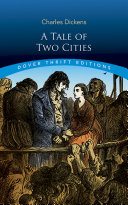
A Tale of Two Cities
A Tale of Two Cities by Charles Dickens (1859)
"It was the best of times, it was the worst of times" — the most famous opening line in English literature. Set against the French Revolution, this is Dickens' most dramatic and emotionally devastating novel, culminating in one of literature's greatest acts of self-sacrifice.
Historical Significance:
Dickens serialized A Tale of Two Cities in his own weekly journal, All the Year Round, from April to November 1859. It was inspired by Thomas Carlyle's The French Revolution and by Dickens' involvement in amateur theatricals — particularly The Frozen Deep by Wilkie Collins, in which Dickens played a man who sacrifices his life for his rival in love.
With approximately 200 million copies sold, it is possibly the bestselling novel of all time. Sydney Carton's final words — "It is a far, far better thing that I do, than I have ever done; it is a far, far better rest that I go to than I have ever known" — are among the most quoted passages in English literature.
This public domain classic was originally published in 1859. Free to read and share.
Free
eBook
FREE
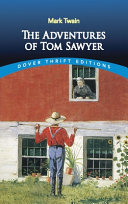
The Adventures of Tom Sawyer
The Adventures of Tom Sawyer by Mark Twain (1876)
The novel that captured American boyhood forever. Tom Sawyer, Huck Finn, Becky Thatcher, Injun Joe, and the whitewashed fence — set along the Mississippi River in the fictional town of St. Petersburg, Missouri.
Historical Significance:
Mark Twain drew directly from his own childhood in Hannibal, Missouri for this novel, published in 1876 — America's centennial year. Tom Sawyer was Twain's first solo novel and established him as more than a humorist: a literary artist capable of capturing the American experience. The famous fence-whitewashing scene, where Tom tricks his friends into doing his chore by pretending it's a privilege, has become a universal metaphor for persuasion and the psychology of desire.
Twain claimed "most of the adventures recorded in this book really occurred; one or two were experiences of my own, the rest those of boys who were schoolmates of mine." Tom was a composite of three real boys; Huck Finn was based on Tom Blankenship, the son of the town drunkard. The novel's cave scenes were inspired by the real Mark Twain Cave in Hannibal.
Cultural Impact:
Tom Sawyer has been translated into every major language, adapted into dozens of films, and remains one of the most-read American novels. "Tom Sawyer" has become shorthand for a mischievous but good-hearted boy. The novel spawned one of literature's greatest sequels — Adventures of Huckleberry Finn. The fence-whitewashing trick is studied in business schools as an example of reverse psychology marketing.
This public domain classic was originally published in 1876. Free to read and share.
Free

eBook
FREE
Metamorphosis
The Metamorphosis by Franz Kafka (1915)
"One morning, when Gregor Samsa woke from troubled dreams, he found himself transformed in his bed into a horrible vermin." — The most famous opening line in 20th-century literature. A traveling salesman becomes a giant insect and watches his family's love curdle into disgust.
Historical Significance:
Franz Kafka wrote Die Verwandlung (The Metamorphosis) in late 1912 in a burst of creative energy, completing it in about three weeks. It was published in the October 1915 issue of the literary magazine Die Weißen Blätter. Kafka, a German-speaking Jew living in Prague, worked as an insurance clerk — a soul-crushing job that informed the story's themes of alienation and dehumanization.
Kafka famously instructed his friend Max Brod to burn all his unpublished manuscripts after his death. Brod refused, preserving The Trial, The Castle, and Amerika for the world. Kafka died of tuberculosis in 1924 at age 40, having published very little during his lifetime.
The Metamorphosis defies simple interpretation. Is it about alienation in modern capitalism? The burden of family obligation? Anti-Semitism? Disability? Depression? Kafka himself offered no explanation, and the story's power lies precisely in its resistance to reduction.
Cultural Impact:
"Kafkaesque" has become an adjective in virtually every language, describing absurd, nightmarish bureaucratic situations. The Metamorphosis is the most widely read work of 20th-century German literature and is taught in universities worldwide. It influenced existentialist philosophy, the Theatre of the Absurd, and every writer who has explored alienation and identity — from Camus to Murakami. The image of Gregor Samsa as a beetle is one of literature's most haunting and unforgettable.
This public domain classic was originally published in 1915. Free to read and share.
Free

eBook
FREE
The Scarlet Letter
The Scarlet Letter by Nathaniel Hawthorne (1850)
Hester Prynne, forced to wear a scarlet "A" for adultery in Puritan Boston, endures public shame with quiet dignity while the father of her child hides in plain sight. A searing examination of sin, guilt, hypocrisy, and the American conscience.
Historical Significance:
Hawthorne wrote The Scarlet Letter in 1849 after losing his job at the Salem Custom House, channeling his frustration into a novel about his own Puritan ancestors. His great-great-grandfather John Hathorne was one of the judges in the Salem witch trials of 1692 — a source of deep ancestral guilt that pervades the novel.
Published on March 16, 1850, it was an immediate bestseller, with the first edition of 2,500 copies selling out in ten days. Critics recognized its power immediately, though some condemned its sympathetic portrayal of an adulteress.
The novel is set in the 1640s but speaks directly to 1850s America, where debates about women's rights, religious hypocrisy, and individual freedom versus community judgment were intensifying. Hester Prynne's transformation of the scarlet letter from a mark of shame into a symbol of strength was revolutionary.
Cultural Impact:
The Scarlet Letter is one of the most-read American novels and a staple of high school and college curricula. The scarlet letter "A" has become a universal symbol of public shaming and societal judgment. The novel anticipated modern discussions about cancel culture, public confession, and the relationship between private sin and public morality. Demi Moore's 1995 film and numerous other adaptations have kept the story in popular culture.
This public domain classic was originally published in 1850. Free to read and share.
Free

eBook
FREE
Heart of Darkness
Heart of Darkness by Joseph Conrad (1899)
"The horror! The horror!" — A haunting journey up the Congo River into the heart of European colonialism's darkest impulses. One of the most powerful and controversial novellas in English literature.
Historical Significance:
Joseph Conrad, born Józef Teodor Konrad Korzeniowski in Poland, drew on his own 1890 experience commanding a steamboat on the Congo River for Belgium's King Leopold II. What he witnessed — the systematic brutalization and enslavement of Congolese people in the rubber trade — traumatized him and fueled this devastating novella.
Serialized in Blackwood's Magazine in 1899, Heart of Darkness follows the narrator Marlow as he travels deeper into the Congo to find the enigmatic ivory trader Kurtz, who has abandoned civilization's pretenses and become a brutal tyrant worshipped as a god.
Conrad's genius was to frame the story as a critique of imperialism while also exploring the universal human capacity for evil. The "darkness" is not Africa — it is the darkness within European civilization itself.
Cultural Impact:
Heart of Darkness directly inspired Francis Ford Coppola's Apocalypse Now (1979), transposing the story to the Vietnam War. It is one of the most taught novellas in English literature, though it has also been criticized — notably by Chinua Achebe — for its portrayal of Africans. This ongoing debate makes it one of the most important texts for understanding colonialism, racism, and the responsibilities of literature.
This public domain classic was originally published in 1899. Free to read and share.
Free

eBook
FREE
The Time Machine
The Time Machine by H.G. Wells (1895)
The novella that invented time travel as a science fiction concept. A Victorian scientist journeys to the year 802,701 AD and discovers humanity has evolved into two species: the childlike Eloi and the predatory Morlocks.
Historical Significance:
H.G. Wells published The Time Machine as his first novel in 1895, at age 28. It originated as an 1888 essay called "The Chronic Argonauts" and went through several revisions. Wells, a biology student of T.H. Huxley (Darwin's most famous advocate), used the story to explore the implications of evolution and class division taken to their logical extreme.
The Eloi — beautiful, idle, and helpless — represent the upper class, while the Morlocks — underground, industrial, and cannibalistic — represent the working class. Wells, a committed socialist, was warning that Victorian class divisions could literally evolve humanity into separate species.
The concept of a "time machine" — a device that moves through time as a vehicle moves through space — was Wells' invention. The idea that time is a "fourth dimension" was cutting-edge physics at the time, drawing on the work of mathematician Charles Howard Hinton.
Cultural Impact:
The Time Machine created the entire time travel genre. Every subsequent time travel story — from Doctor Who to Back to the Future to Interstellar — owes a debt to Wells. The novel has been adapted into numerous films (1960, 2002) and inspired the naming of the DeLorean time machine. The terms "time machine," "time travel," and "fourth dimension" entered everyday language through this book.
This public domain classic was originally published in 1895. Free to read and share.
Free

eBook
FREE
The War of the Worlds
The War of the Worlds by H.G. Wells (1898)
The first and greatest alien invasion novel. Martian war machines stride across the English countryside on metal legs, annihilating everything in their path with heat rays and poisonous black smoke. Humanity faces extinction.
Historical Significance:
H.G. Wells serialized The War of the Worlds in Pearson's Magazine from April to December 1897. The novel was partly inspired by the British colonization of Tasmania, where indigenous peoples were nearly wiped out by technologically superior invaders. Wells asked: what if it happened to us?
Wells wrote the novel during a period of intense speculation about life on Mars, following astronomer Giovanni Schiaparelli's 1877 observation of "canali" (channels) on the Martian surface, which English speakers mistranslated as "canals" — implying intelligent construction.
The novel's most famous moment comes not from the book itself but from Orson Welles' 1938 radio adaptation, broadcast as realistic news bulletins on Halloween night. Listeners who tuned in late believed Martians had actually invaded New Jersey, causing widespread panic — one of the most famous media events of the 20th century.
Cultural Impact:
The War of the Worlds established virtually every trope of the alien invasion genre: superior technology, desperate resistance, unexpected resolution, and the critique of human arrogance. Steven Spielberg's 2005 film, Jeff Wayne's musical version (1978), and countless other adaptations have kept the story alive. The "tripod" war machine is an iconic image of science fiction.
This public domain classic was originally published in 1898. Free to read and share.
Free
eBook
FREE
Anne of Green Gables
Anne of Green Gables by L.M. Montgomery (1908)
The irrepressible, imaginative, red-haired orphan Anne Shirley arrives at Green Gables on Prince Edward Island and transforms every life she touches. One of the most beloved characters in children's literature.
Historical Significance:
Lucy Maud Montgomery drew on her own childhood in Cavendish, Prince Edward Island, to create Anne's world. She began writing the novel in 1905 after finding a notebook entry about "a couple who applied to an orphan asylum for a boy. By mistake a girl was sent them." The manuscript was rejected by five publishers before L.C. Page & Company of Boston accepted it.
Published in June 1908, Anne of Green Gables was an immediate bestseller. Mark Twain called Anne "the dearest child of fiction since the immortal Alice." Montgomery went on to write seven more Anne books, following the character from childhood through marriage and motherhood.
Montgomery's own life was far less idyllic than Anne's. She was raised by strict grandparents after her mother's death, endured a difficult marriage to a minister suffering from depression, and struggled with her own mental health while maintaining the public persona of a cheerful author.
Cultural Impact:
Anne of Green Gables has sold over 50 million copies and been translated into 36 languages. It is a cultural phenomenon in Japan, where it has been beloved since a 1952 translation — Japanese tourists make up a significant portion of visitors to Prince Edward Island. The 1985 CBC television film and Netflix's Anne with an E brought the character to new generations. Anne Shirley remains a powerful symbol of female independence, imagination, and resilience.
This public domain classic was originally published in 1908. Free to read and share.
Free

eBook
FREE
The Jungle Book
The Jungle Book by Rudyard Kipling (1894)
Mowgli, Baloo, Bagheera, Shere Khan, and Kaa — the timeless stories of a boy raised by wolves in the jungles of India, learning the Law of the Jungle and finding his place between two worlds.
Historical Significance:
Rudyard Kipling wrote The Jungle Book in 1893-1894 while living in Brattleboro, Vermont, with his American wife Carrie. He was already the most famous writer in the English-speaking world, and these stories cemented his reputation as a master storyteller.
Born in Bombay (now Mumbai) in 1865, Kipling spent his early childhood in India before being sent to England for education — an experience of abandonment and cruelty he never forgot. The Jungle Book reflects his deep love for India and his understanding of the complex relationship between civilization and nature.
The Mowgli stories are set in the Seoni hills of central India, and Kipling researched Indian wildlife extensively, consulting Robert Armitage Sterndale's "Natural History of the Mammalia of India." The non-Mowgli stories ("Rikki-Tikki-Tavi," "Toomai of the Elephants," "The White Seal") are equally beloved.
In 1907, Kipling became the first English-language writer to receive the Nobel Prize in Literature.
Cultural Impact:
Disney's animated adaptation (1967) with its beloved songs became one of the most popular animated films ever made. The 2016 live-action/CGI remake grossed nearly $1 billion worldwide. The Cub Scouts movement adopted Jungle Book terminology (Akela, den, pack). Kipling's "Law of the Jungle" — "the strength of the pack is the wolf, and the strength of the wolf is the pack" — is quoted in contexts from business to military.
This public domain classic was originally published in 1894. Free to read and share.
Free

eBook
FREE
Treasure Island
Treasure Island by Robert Louis Stevenson (1883)
The ultimate pirate adventure. Young Jim Hawkins, Long John Silver, buried treasure, the Black Spot, and "fifteen men on a dead man's chest" — Stevenson created every pirate trope we know.
Historical Significance:
Stevenson began the story in the summer of 1881 while on holiday in Braemar, Scotland, drawing a watercolor treasure map with his stepson Lloyd Osbourne. The map inspired the story, which was serialized as "The Sea Cook" in the children's magazine Young Folks from October 1881 to January 1882.
Published as a book in 1883, Treasure Island was the novel that made Stevenson famous. He drew on Daniel Defoe's Robinson Crusoe, Washington Irving's tales, and Edgar Allan Poe's "The Gold-Bug," but synthesized them into something entirely new — the modern adventure novel.
Long John Silver, the charming one-legged pirate cook, is one of literature's greatest morally ambiguous characters. Stevenson based him partly on his friend W.E. Henley (author of "Invictus"), who had lost a leg to tuberculosis.
Cultural Impact:
Treasure Island invented the popular image of pirates: buried treasure with X marks the spot, treasure maps, one-legged pirates with parrots, the Black Spot death curse, and the skull-and-crossbones flag. Before Stevenson, pirates in literature were straightforward villains. Every pirate film, book, and theme park attraction owes a debt to this novel. Disney's Pirates of the Caribbean franchise draws directly from Stevenson's template.
This public domain classic was originally published in 1883. Free to read and share.
Free
eBook
FREE
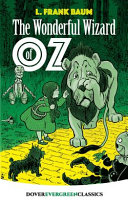
The Wonderful Wizard of Oz
The Wonderful Wizard of Oz by L. Frank Baum (1900)
Dorothy, Toto, the Scarecrow, the Tin Woodman, the Cowardly Lion, and the Emerald City — the first great American fairy tale, written to be distinctly American rather than European in spirit.
Historical Significance:
L. Frank Baum published The Wonderful Wizard of Oz on May 17, 1900, with illustrations by W.W. Denslow. In his introduction, Baum declared his intention to create "a modernized fairy tale, in which the wonderment and joy are retained and the heartaches and nightmares are left out." He wanted an American fairy tale, free from the darkness of Grimm and Andersen.
The book was an enormous success, becoming the bestselling children's book of 1900 and 1901. Baum went on to write 13 more Oz books, creating one of literature's richest fictional worlds. Some scholars interpret the story as a political allegory of 1890s populism — the Yellow Brick Road representing the gold standard, the silver slippers (ruby in the film) representing silver currency, and the Emerald City representing the deceptive greenback dollar.
Baum was a fascinating figure: a failed chicken farmer, newspaper editor, traveling salesman, and window dresser before becoming an author at age 44.
Cultural Impact:
The 1939 MGM film starring Judy Garland is the most-watched film in history. "There's no place like home," "We're not in Kansas anymore," and "Follow the Yellow Brick Road" are among the most quoted lines in cinema. The Wicked Witch of the West is one of fiction's greatest villains. Gregory Maguire's Wicked (1995) and its Broadway musical reimagined the story from the witch's perspective, becoming a cultural phenomenon.
This public domain classic was originally published in 1900. Free to read and share.
Free

eBook
FREE
The Importance of Being Earnest
The Importance of Being Earnest by Oscar Wilde (1895)
"A Trivial Comedy for Serious People" — Oscar Wilde's wittiest and most perfect play. A farce about two men who each create fictitious alter egos to escape social obligations, only to discover that truth is stranger than fiction.
Historical Significance:
The play premiered at the St James's Theatre in London on February 14, 1895, and was an immediate triumph. The audience erupted in laughter throughout, and the reviews were ecstatic. It was the pinnacle of Wilde's career — and the last moment of happiness in his life.
Just days after the premiere, the Marquess of Queensberry left a card at Wilde's club accusing him of homosexuality. Wilde disastrously sued for libel, lost, and was subsequently tried, convicted of "gross indecency," and sentenced to two years of hard labor. The play was pulled from theaters, Wilde's name removed from the playbills. He emerged from prison broken and impoverished, dying in Paris in 1900 at age 46.
The play itself is a masterpiece of comic construction, with every line polished to gleaming perfection. "I never travel without my diary. One should always have something sensational to read in the train." "To lose one parent may be regarded as a misfortune; to lose both looks like carelessness."
Cultural Impact:
The Importance of Being Earnest is the most performed of all Wilde's plays and is considered the greatest comedy in the English language. It has been adapted into films, musicals, and performed continuously in theaters worldwide since its revival in 1902. Wilde's epigrammatic wit — sharp, paradoxical, and devastatingly funny — has influenced every comedy writer since.
This public domain classic was originally written in 1895. Free to read and share.
Free
eBook
FREE
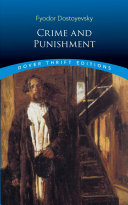
Crime and Punishment
Crime and Punishment by Fyodor Dostoyevsky (1866)
A destitute student murders a pawnbroker, believing himself to be an extraordinary man above moral law. What follows is one of literature's most intense psychological explorations of guilt, conscience, and redemption.
Historical Significance:
Dostoyevsky wrote Crime and Punishment while in severe financial distress, having lost his savings gambling in Wiesbaden. He serialized it in The Russian Messenger from January to December 1866. He was simultaneously writing another novel, The Gambler, to meet a crushing deadline — he dictated it to a young stenographer, Anna Snitkina, whom he married four months later.
The novel was partly inspired by the case of Pierre-François Lacenaire, a French murderer who justified his crimes through intellectual philosophy. Dostoyevsky, who had himself been sentenced to death (commuted at the last moment to hard labor in Siberia), understood the psychology of extreme situations better than perhaps any other novelist.
Raskolnikov's theory — that extraordinary people like Napoleon are above conventional morality — was Dostoyevsky's critique of the nihilism and utilitarianism spreading through Russian intellectual circles in the 1860s.
Cultural Impact:
Crime and Punishment is considered one of the greatest novels ever written and the founding text of psychological fiction. It influenced Nietzsche, Freud, Kafka, Camus, and virtually every crime novelist who followed. The "Raskolnikov complex" — intellectual justification for immoral acts — remains a concept in psychology and philosophy. The novel is required reading in universities worldwide.
This public domain classic was originally published in 1866. Free to read and share.
Free
eBook
FREE
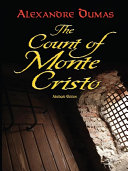
The Count of Monte Cristo
The Count of Monte Cristo by Alexandre Dumas (1844-1846)
The ultimate revenge story. A young sailor is wrongfully imprisoned for 14 years, escapes, discovers a vast treasure, and reinvents himself as the mysterious Count of Monte Cristo to exact elaborate vengeance on those who destroyed his life.
Historical Significance:
Alexandre Dumas published The Count of Monte Cristo as a serial in the Journal des Débats from August 1844 to January 1846. Serialization was the Netflix of the 19th century — readers waited eagerly for each installment, and Dumas was paid by the line, which partly explains the novel's epic length.
The story was inspired by a real case Dumas found in the police archives: François Picaud, a shoemaker who was falsely imprisoned for seven years by jealous friends, inherited a fortune from a fellow prisoner, and spent ten years pursuing revenge. Dumas transformed this into one of the most intricate and satisfying plots in all of fiction.
Dumas was the grandson of a Haitian slave — his father, General Thomas-Alexandre Dumas, was the highest-ranking person of color in any European army. The themes of injustice, identity, and the corrupting power of wealth in Monte Cristo may partly reflect Dumas' own experience of racial prejudice in French society.
Cultural Impact:
The Count of Monte Cristo has been adapted into over 40 films, TV series, and anime. It remains one of the most popular novels ever written, selling millions of copies annually. The phrase "Edmond Dantès" is a cultural shorthand for wrongful imprisonment. The novel's structure — patient, meticulous revenge served over years — has influenced everything from Batman to The Shawshank Redemption to Kill Bill.
This public domain classic was originally published in 1844. Free to read and share.
Free
eBook
FREE
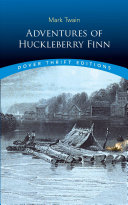
Adventures of Huckleberry Finn
Adventures of Huckleberry Finn by Mark Twain (1884)
"All modern American literature comes from one book by Mark Twain called Huckleberry Finn." — Ernest Hemingway. The story of a boy and a runaway slave rafting down the Mississippi River is America's most important — and most controversial — novel.
Historical Significance:
Mark Twain (Samuel Clemens) began writing Huckleberry Finn in 1876 as a sequel to Tom Sawyer, but set it aside for years. He returned to it intermittently, finally publishing it in the United Kingdom in December 1884 and in the United States in February 1885.
The novel was immediately banned by the Concord Public Library as "trash and suitable only for the slums." Twain responded: "That will sell 25,000 copies for us, sure." It has been banned, challenged, and debated continuously ever since — primarily for its use of racial language, which Twain employed deliberately to satirize racism, not to endorse it.
Written in Huck's own vernacular voice — uneducated, funny, and profoundly moral — the novel was revolutionary in its use of American dialect as a literary language. Twain's depiction of the friendship between Huck and Jim remains one of literature's most powerful arguments against racism.
Cultural Impact:
Huckleberry Finn is widely considered the Great American Novel alongside Moby-Dick. It influenced every major American writer who followed, from Hemingway to Faulkner to Toni Morrison. The novel continues to generate controversy and classroom discussion, which is precisely what Twain intended. It remains one of the most-read, most-taught, and most-debated books in history.
This public domain classic was originally published in 1884. Free to read and share.
Free
eBook
FREE
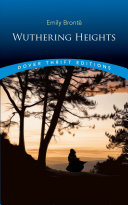
Wuthering Heights
Wuthering Heights by Emily Brontë (1847)
A dark, passionate, and utterly unique tale of doomed love on the Yorkshire moors. Heathcliff and Catherine Earnshaw's destructive obsession spans generations and defies every convention of Victorian fiction.
Historical Significance:
Emily Brontë published Wuthering Heights in December 1847 under the pseudonym "Ellis Bell." It was her only novel — she died of tuberculosis on December 19, 1848, at age 30, just one year after publication. She never knew the book would become one of the greatest novels in the English language.
Contemporary critics were baffled and horrified. The Spectator called it "wild, confused, disjointed, and improbable." The characters were considered too brutal, too passionate, and too morally ambiguous for Victorian taste. Unlike her sister Charlotte's Jane Eyre, there is no clear hero or moral lesson. The novel operates on a mythic, almost elemental level.
Emily Brontë, who rarely left the family parsonage in Haworth, Yorkshire, created a world of staggering emotional intensity from the raw landscape of the moors she walked daily. Her poetry — discovered by Charlotte in 1845 — reveals the same fierce, visionary imagination.
Cultural Impact:
Wuthering Heights is now considered one of the greatest novels in English literature. Kate Bush's 1978 song "Wuthering Heights" became a #1 hit. The novel has inspired films, operas, and countless adaptations. "Heathcliff" and "Catherine" have become bywords for passionate, destructive love.
This public domain classic was originally published in 1847. Free to read and share.
Free
No classics match your filters.